Overview
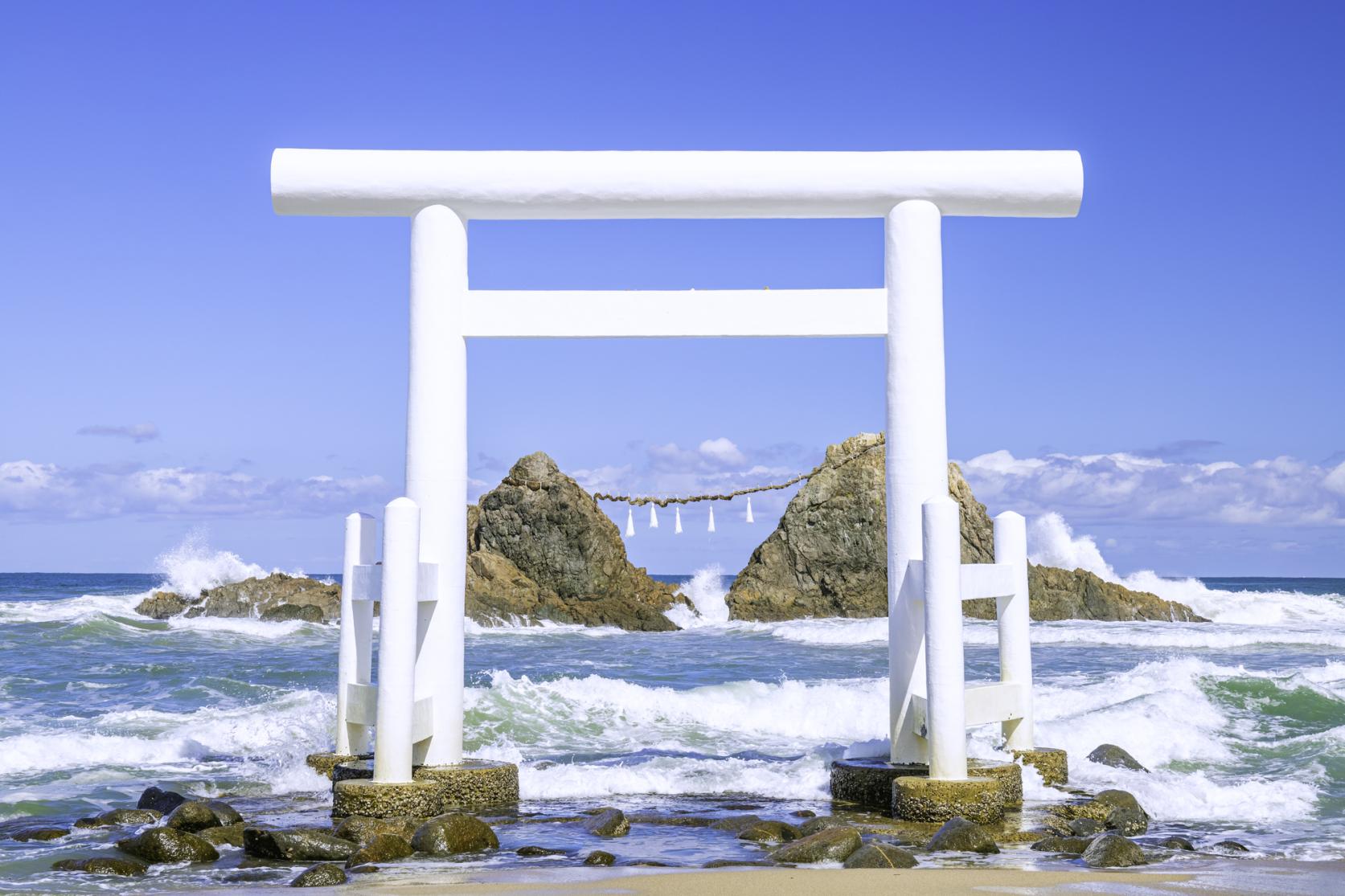 The iconic Sakurai Futamigaura with its white torii gate framing the sacred Meoto Iwa rocks - Source: Visit Fukuoka Official Tourism Guide
Itoshima Peninsula stands as a remarkable fusion of sacred spirituality, ancient history, and natural coastal beauty in Fukuoka Prefecture. This enchanting region served as the center of the powerful ancient Itokoku Kingdom (300 BCE - 300 CE), documented in Chinese historical records as a kingdom with over 1,000 households ruled by hereditary kings and functioning as a crucial diplomatic hub between ancient Japan, China, and Korea. 🔗 The archaeological legacy, including National Treasure bronze mirrors from royal tombs, interweaves with vibrant Shinto traditions and Buddhist heritage throughout the peninsula's landscape. 🔗
The peninsula's spiritual traditions are exemplified by shimenawa rope-making customs, where sacred twisted ropes mark the boundary between sacred and profane spaces. The iconic 30-meter, 1-ton shimenawa connecting the Meoto Iwa (Wedded Rocks) represents one of Japan's most dramatic expressions of this ancient Shinto practice, ceremonially replaced each spring by approximately 80 people during the annual festival. 🔗 This living tradition connects mythology to contemporary spiritual practice, symbolizing the divine union of Izanagi and Izanami. 🔗
Itoshima's agricultural heritage extends to sake brewing, with two historic breweries—Shiraito Shuzo (founded 1855) and Hamachi Shuzo (founded 1870)—preserving traditional methods using peninsula-grown Yamada Nishiki rice and pristine water from Mount Raizan. 🔗 Shiraito Shuzo maintains the ancient haneki-shibori lever-press technique from the Edo period, creating sake with pure, mellow flavors that reflect centuries of craftsmanship. 🔗
Beyond its archaeological treasures and brewing traditions, Itoshima has evolved into an internationally recognized creative community, home to over 120 craft studios and galleries where international artists blend with local traditions, ranked 3rd on Monocle's Small Cities Index in 2020. 🔗 The peninsula uniquely combines millennia-old spiritual sites with contemporary art spaces, pristine beaches, and artisan workshops, making it an ideal destination for cultural immersion, artistic exploration, and natural appreciation. 🔗
The November timing offers exceptional advantages with comfortable autumn conditions—average temperatures of 15.3°C (59.5°F), with highs of 17°C (63°F) and lows of 11°C (52°F), creating ideal outdoor exploration weather. 🔗 Early November experiences 61% clear skies and only 23% rain probability, with moderately breezy coastal conditions averaging 13 mph winds. 🔗 Layered clothing is recommended for the 11-17°C range and coastal wind exposure, with light jackets, sweaters, and wind-resistant outer layers providing comfortable temperature regulation. 🔗 Early November captures the beginning stages of autumn foliage transformation at mountain temples like Raizan Sennyoji, with peak crimson displays arriving mid-November. 🔗 The visit timing allows for sunset viewing at coastal sites (approximately 5:10-5:30 PM), autumn-season oyster huts at their peak, and ideal conditions for exploring craft studios and galleries while avoiding summer crowds. 🔗
Key Districts & Neighborhoods
Sakurai Futamigaura serves as the spiritual heart with its sacred offshore rocks and white torii gate, surrounded by trendy beachside cafes and restaurants. 🔗 The Maebaru district functions as the cultural center, with galleries like Artistation Itoshima clustered near Chikuzen-Maebaru Station, while the Nijo coastal area hosts Studio Kura artist residencies and craft studios in traditional rural houses. 🔗 The mountain areas around Mount Raizan offer Buddhist temple complexes and hiking trails with spectacular autumn foliage. 🔗 Coastal fishing villages like Kafuri and Keya provide authentic maritime culture with seasonal oyster huts, traditional harbors, and artisan woodworking studios. 🔗
Food Culture
Itoshima's culinary identity centers on Genkai Sea's abundant marine resources, with kakigoya (oyster huts) serving as the region's signature dining experience from October through April, with November representing prime oyster season when they are at their sweetest and creamiest. 🔗 Over 20 oyster huts operate across six fishing districts (Fukuyoshi, Fukae, Kafuri, Kishi, Funakoshi, and Nogita), offering DIY charcoal-grilled oysters harvested from the cold Genkai Sea waters. 🔗 Traditional mountain cuisine incorporates locally grown Yamada Nishiki rice used in heritage sake brewing at Shiraito Shuzo and Hamachi Shuzo breweries, which offer tasting experiences and seasonal kurabiraki festivals. 🔗 The peninsula's fertile valleys produce exceptional vegetables featured at the Itoshima Farmers' Market, while local sake pairs perfectly with the region's fresh seafood. 🔗
Day Trips from Itoshima
Mount Raizan temple complex offers challenging hiking trails combined with Buddhist cultural experiences and spectacular autumn foliage viewing. 🔗 Shiraito Falls provides scenic waterfall exploration with seasonal maple viewing opportunities. 🔗 The broader Genkai Sea coastal drive reveals numerous fishing villages, hidden beaches, and scenic overlooks perfect for autumn exploration.
Transportation & Logistics
Access from Fukuoka City: Itoshima is accessible via 30-minute toll road or 40-60 minute coastal drive along scenic Route 202 (Sunset Road). 🔗 Car rental at Chikuzen-Maebaru Station provides maximum flexibility for exploring scattered peninsula attractions including beaches, shrines, oyster huts, and craft studios. 🔗
Peninsula Navigation: National Route 202 (Sunset Road) serves as the main coastal artery, extending 33.3 kilometers from Benten Bridge to Sakurai Futamigaura. 🔗 Central locations along this route (such as the Nijōfukae area) provide balanced access to eastern spiritual sites (5-15 minutes), western natural attractions (20-30 minutes), and southern mountain areas (20-35 minutes), minimizing backtracking and enabling flexible daily routing. Multiple sunset viewing locations within 5-15 minutes of central coastal positions allow daily venue changes based on activities and conditions.
Public Transportation: JR Chikuhi Line (45 minutes, ¥620 from Fukuoka Airport) and Showa Bus routes serve major coastal sites but have limited frequency for multi-attraction touring. 🔗 Chikuzen-Fukae Station provides additional rail access with connections to broader peninsula bus routes.
Cycling Options: Eight bike rental shops offer regular and e-bikes (¥500-¥5,500) for exploring the flat 33 km Sunset Road coastal circuit. 🔗 November conditions are ideal for driving or cycling with mild temperatures (15.3°C/59.5°F) and no winter road concerns, though coastal wind exposure should be considered for cycling. 🔗
Location: View on Google Maps
Cultural & Historic Sites
- Itokoku History Museum - Cultural & Historic Sites
- Kakigoya (Oyster Huts) at Fukuyoshi - Culinary experience, cultural tradition, interactive dining
- Local Galleries in Itoshima - Art & Cultural Spaces
- Peninsula Craft Studios - Art & Cultural Spaces
- Raizansennyoji Taihioin Temple - Historic Buddhist temple complex
- Shinmachi Dolmen Cluster (新町支石墓群) - Archaeological site, National Historic Site
Temples & Shrines
- Futamigaura Beach (Sakurai Futamigaura) - Sacred Shinto site, scenic beach, photography destination
- Hakoshima Jinja (箱島神社) - Shinto shrine, coastal spiritual site, power spot
- Meoto Iwa (Wedded Rocks) - Sacred Shinto site
- Mount Raizan (雷山) - Sacred mountain, hiking destination, temple complex
- Sakurai Shrine - Shinto shrine
Traditional Experiences
- Itonowa Pottery Workshop - Hands-on pottery workshop and gallery
- Kakigoya at Kafuri Fishing Harbor - Traditional culinary experience, seafood dining
Natural & Scenic
- Anego no Hama Beach (Singing Sand) - Natural beach with rare acoustic sand phenomenon
- Genkai Sea Scenic Drive - Coastal scenic driving route
- Keya Beach - Coastal beach, fishing port, natural monument cave access
- Keya no Oto Park (Totoro Forest) - National Natural Monument, sea cave, forest hiking trail
- Mount Tateishi (立石山) - Beginner-friendly coastal mountain, scenic viewpoint
- Nogita Beach - Natural beach, surfing spot, scenic location
- Shiraito Falls (白糸の滝) - Natural waterfall, hiking destination, spiritual power spot
Culinary Experiences
- Hamayaki Shirahamaya - Year-round seafood barbecue restaurant
- Kakigoya at Funakoshi Fishing Port - Seasonal seafood dining experience
- Kakigoya at Kishi Fishing Port - Seasonal seafood dining experience
Other
- Fukae Beach - Family-friendly beach and photography location
- Itoshima Farmers' Market "Ito Sai Sai" - JA Direct-Sale Farmers Market
- Studio Kura - International artist-in-residence program / Art gallery
- Yashinoki Blanco (Palm Tree Swings) - Photo spot, recreational beach area
Generated from research: destinations/itoshima.md
📍 Attraction Map
Click on any pin to visit the attraction's detail page