
About
 Indo-Pacific bottlenose dolphin (Tursiops aduncus), the species that inhabits Amakusa waters year-round. Source: Wikimedia Commons
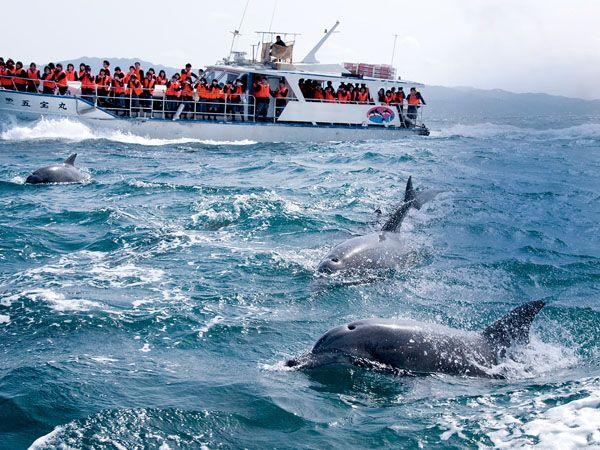 Wild dolphins in Amakusa waters with tour boat. Source: Kumamoto Prefecture Official Tourism Website
In the beautiful blue sea between the Shimabara Peninsula and the northern point of Amakusa Shimoshima Island lives a pod of around 200 wild Indo-Pacific Bottlenose Dolphins (Tursiops aduncus). 🔗 These dolphins are a year-round resident population, making Amakusa one of the rare places in the world where wild dolphins can be encountered throughout all seasons with exceptional reliability. 🔗
The Indo-Pacific bottlenose dolphins of Amakusa inhabit the waters off Tsujishima Island in Itsuwamachi Town, specifically in the Hayasakiseto Strait between Nagasaki and Kumamoto Prefectures. 🔗 The undulating sea floor and strong tidal currents create rich feeding grounds filled with small fish, providing the dolphins with a sustainable year-round habitat. 🔗 This abundance of food resources has enabled the population to remain resident rather than migrating, a phenomenon that is considered rare globally. 🔗
Scientific research has documented this population extensively. Population size estimates in 2007 and 2008 were 230 individuals (CV = 2.5%) and 216 individuals (CV = 2.1%) respectively, based on mark-recapture techniques. 🔗 A total of 172 individual dolphins have been photo-identified, representing most members of this population, with mean group sizes exceeding 100 individuals. 🔗
The Indo-Pacific bottlenose dolphin is generally smaller than the common bottlenose dolphin, with an average length of 2.6 meters (8.5 feet) and weight up to 230 kg (510 pounds). 🔗 These dolphins are characterized by their friendly and active personalities, frequently jumping out of the sea, catching fish, and swimming playfully alongside boats. 🔗 Man and dolphin have long lived in harmony in this area, contributing to the dolphins' calm and tender disposition toward boats and visitors. 🔗
The Roadside Station Amakusa Dolphin Center serves as the primary hub for dolphin watching tourism. 🔗 Located in the northern part of Shimoshima, the largest island in Amakusa, this comprehensive facility includes tour booking services, a VR area for experiencing wild dolphin encounters, a seafood restaurant, and a local specialty products shop. 🔗 The center operates as both an information station and departure point for dolphin watching cruises, providing visitors with educational resources about dolphin ecology before embarking on tours. 🔗
Cultural & Ecological Significance
Amakusa's dolphin watching experiences are part of the broader Unzen-Amakusa National Park, where conservation and sustainable tourism practices protect these marine mammals while allowing meaningful wildlife encounters. 🔗 The year-round resident population represents a globally rare phenomenon, with most wild dolphin populations being migratory.
The harmonious coexistence between humans and dolphins in Amakusa waters reflects centuries of mutual respect. Local fishing communities and dolphin tourism operators have developed sustainable practices that maintain this delicate balance, ensuring the population's continued health and accessibility for future generations.
Visiting Information
Hours:
- April-October: 8:00 AM - 5:00 PM
- November-March: 8:00 AM - 4:00 PM 🔗
Admission:
- Adults (junior high and older): ¥3,000
- Elementary school children: ¥1,500
- Children (older than two): ¥1,000 🔗
- Online booking available from ¥2,700 through platforms like Activity Japan 🔗
Booking Information:
- Tours can be booked just before the day or the day before through Activity Japan 🔗
- Online reservations available through Amakusa Dolphin Watching General Information Center 🔗
- English inquiries: Contact 0969-26-4500 (between 08:00-20:00) 🔗
- International booking platforms: Klook, VELTRA, Activity Japan
Best time to visit:
- Year-round availability with 99% encounter rate 🔗
- Spring and summer considered optimal for best weather and sea conditions 🔗
- November offers excellent viewing with fewer crowds, though waters may be rougher and air temperature colder
- Dolphins can be encountered as early as 5-10 minutes after departure 🔗
Current status:
- Operating year-round, weather permitting
- Tours operate in light rain but may cancel during storms or severe weather with operator notification 🔗
- High seas may result in cruise cancellation 🔗
- 99% success rate guarantee: if dolphins are not sighted (1% chance), visitors receive a free return ticket 🔗
Getting There
From Kumamoto City by Express Bus (Recommended for Non-Drivers):
- Depart from Kumamoto Bus Terminal (Kumamoto Kotsu Center) in city center via Kumamoto Station
- Express Bus "Amakusa" stops at Maejima bus stop near dolphin watching operators 🔗
- Journey time: Approximately 1 hour 15 minutes to Matsushima (Maejima)
- Frequency: Every 1-2 hours
- Cost: ¥2,500 one way
- Full journey to Hondo Bus Center: 145 minutes 🔗
From Kumamoto City by Car (Recommended):
- Distance: Approximately 65-70 km
- Drive time: 1.5-2 hours
- Route: Take National Routes 57 and 324 from Uto City towards Amakusa 🔗
- Cross the famous Amakusa Gokyo (Five Bridges) connecting Kyushu mainland to Amakusa Islands 🔗
- The bridges span a total distance of 12 km and were completed in 1966, forming the "Amakusa Pearl Line" 🔗
- Parking available at the Dolphin Center and various viewpoints along the bridges
From Kumamoto by Train + Ferry:
- Take JR Amakusa Line (Limited Express A-TRAIN) from Kumamoto Station to Misumi Port (50 minutes) 🔗
- Transfer to Amakusa Takarajima Ferry line to Hondo port (1 hour)
- Ferry timetable coordinated with train arrival times 🔗
Alternative Ferry Route (from Nagasaki/Shimabara):
- Shimatetsu ferry: 30-minute crossing between Oniike Port (Amakusa) and Kuchinotsu Port (Nagasaki)
- Operating hours: 6:30 AM - 6:30 PM
- Frequency: 15-17 crossings daily 🔗
The Dolphin Watching Experience
Pre-Tour Activities at the Dolphin Center:
Before boarding, visitors can explore the Roadside Station Amakusa Dolphin Center's educational facilities. The center features a VR area where guests can experience virtual dolphin encounters and learn about dolphin ecology and behavior. 🔗 Educational displays provide context about the resident dolphin population, conservation efforts, and the unique ecological conditions that support this year-round habitat.
The Boat Tour:
Tours depart from the Roadside Station Amakusa Dolphin Center and quickly reach the prime dolphin habitat in Hayasakiseto waters. Within just 5-10 minutes of departure, visitors typically encounter the first dolphins. 🔗 As the boat approaches the dolphin grounds, groups of dolphins become visible jumping offshore, with schools ranging from dozens to over 100 individuals swimming together. 🔗
The Indo-Pacific bottlenose dolphins of Amakusa are notably friendly and curious. When boats approach, the dolphins actively surface and perform for visitors, displaying their natural behaviors including jumping, fishing, and playful swimming alongside the vessels. 🔗 Sometimes 50 to 200 dolphins gather and migrate together, creating spectacular viewing opportunities that are rare for such large schools. 🔗
The dolphins are calm and tender in their interactions, having coexisted harmoniously with humans in this area for generations. 🔗 Observers can watch dolphins catching fish in their natural habitat, leaping from the waves, and engaging in social behaviors with other pod members. In winter months like November, dolphins particularly enjoy playing with the waves when big swells hit Amakusa, offering dynamic viewing experiences. 🔗
Boat Facilities:
Tour boats are designed for passenger comfort across all age groups. Vessels are equipped with toilets and air conditioning, making them suitable for elderly visitors, women, and children. 🔗 Boats feature covered seating areas with roofs and provide free raincoats if needed during wet conditions. 🔗 The boats safely navigate the rapid waters of Amakusa while maintaining respectful distances from the dolphins.
November Visit Considerations
Weather and Sea Conditions:
- November falls within the winter season when offshore conditions become cold 🔗
- Water temperatures and air temperatures both decrease, requiring appropriate preparation
- November marks the end of typhoon season, reducing extreme weather risks 🔗
- Sea conditions may be rougher with larger swells, which dolphins enjoy playing in 🔗
- Tours operate in light rain but cancel during severe weather with advance notification
Dolphin Behavior in November:
- Dolphins remain year-round residents with consistent presence
- Winter dolphins actively play with larger wave swells
- 99% encounter rate maintained throughout all seasons including November 🔗
- Group sizes and behaviors remain consistent with other seasons
Recommended Preparation for November:
- Wear warm clothes due to cold offshore conditions - layering essential 🔗
- Windproof outer layer recommended as wind can cause water splash 🔗
- Waterproof clothing or use provided raincoats
- Sturdy, non-slip footwear (avoid high heels) 🔗
- Bring motion sickness medication if prone to seasickness 🔗
- Camera or phone with waterproof cover for photography
- Sun protection even in winter (reflection off water)
Practical Visiting Tips
Motion Sickness Prevention:
- Bring motion sickness medication if prone to seasickness - available at all Japanese drug stores 🔗
- Take medication 30-60 minutes before departure for optimal effectiveness
- Choose seating in the middle of the boat where motion is minimized
- Focus on the horizon rather than looking down at phone/camera continuously
- Morning tours often have calmer seas
What to Wear and Bring:
- Clothes that are easy to move in and can get dirty 🔗
- November requires warm, layered clothing due to cold offshore conditions
- Windproof jacket essential as spray from wind and waves is common
- Non-slip, comfortable shoes (avoid high-heeled shoes) 🔗
- Free raincoats provided by operators, but bring waterproof layers
- Waterproof bag or case for electronics and valuables
- Sun protection: hat, sunglasses, sunscreen (water reflection intensifies exposure)
Photography Best Practices:
- Use high ISO (400+) and fast shutter speed (1/1000s or faster) for moving dolphins 🔗
- Wide-angle lens (11-35mm) ideal for close dolphin approaches 🔗
- Continuous autofocus mode to track fast-moving dolphins 🔗
- Protect camera equipment with waterproof housing or splash protection
- Keep camera ready - dolphins surface unpredictably
- Shoot in burst mode to capture jumping sequences
Wildlife Etiquette:
- Maintain respectful distance from marine mammals (20m minimum for wild animals) 🔗
- Never feed dolphins - feeding alters natural behaviors and is dangerous for animals 🔗
- Follow crew instructions about viewing positions and behavior
- Keep voices moderate to avoid disturbing wildlife
- No touching or attempting to interact directly with dolphins
- Respect the dolphins' space and habitat - observe from boats only
- Support conservation by choosing operators following sustainable practices
Booking Strategies:
- Book at least 1 day in advance through online platforms for guaranteed spots
- Same-day bookings possible but may have limited availability
- English support available via phone (0969-26-4500) 🔗
- Compare operators on Activity Japan, Klook, or VELTRA for best prices (from ¥2,700) 🔗
- Consider package deals combining dolphin watching with bus transfers from Kumamoto
- Check weather forecast before booking for November tours
Money-Saving Options:
- Book through online platforms (Activity Japan, Klook) for lower prices than walk-up rates
- Lowest price available: ¥2,700 versus standard ¥3,000 🔗
- Package deals with round-trip bus transfers from Kumamoto may offer value
- Free return ticket if dolphins not spotted (99% see dolphins, 1% get free return) 🔗
- Consider sharing rental car costs if traveling as group from Kumamoto
Nearby Attractions
On Amakusa Islands (Day Trip Combination):
- Sakitsu Catholic Church: Historic Hidden Christian site and UNESCO World Heritage location in Sakitsu village, southern Amakusa 🔗
- Oe Church: Another significant Hidden Christian church with white facade, scenic coastal setting
- Amakusa Gokyo Bridges (Five Bridges): Scenic driving route connecting mainland to Amakusa, completed 1966, total 12km span with multiple viewpoints 🔗
- Takabutoyama and Sengan-san Mountains: Viewpoints along the Pearl Line route offering panoramic views of Amakusa archipelago 🔗
Returning to Kumamoto City:
- Kumamoto Castle: Major historical castle in Kumamoto City
- Suizenji Garden: Traditional Japanese landscape garden in Kumamoto
- Kumamoto City dining districts: Access to local specialties including basashi (horse meat sashimi), karashi renkon, and Akaushi beef
Important Notes
Conservation Context:
The Amakusa dolphin population faces conservation challenges. Scientific research (2007-2008) documented 12-14 dolphin deaths annually from bycatch in bottom-set gillnets, considered unsustainable for this local population of approximately 200 individuals. 🔗 This represents approximately 6-7% annual mortality from fishing-related deaths alone. Responsible tourism that follows wildlife viewing guidelines supports conservation efforts by demonstrating the economic value of living dolphins versus consumptive uses.
Indo-Pacific bottlenose dolphins are classified as "Near Threatened" on the IUCN Red List globally. 🔗 The Amakusa population's year-round resident nature and limited geographic range make it particularly vulnerable to local threats including fishing gear entanglement, marine pollution, and habitat degradation.
Weather Cancellations:
November weather can be unpredictable. Tours operate in light rain but cancel during storms or high seas. 🔗 Operators provide advance notification of cancellations when possible. The 99% dolphin sighting guarantee only applies to completed tours - weather cancellations receive refunds, not the free return ticket. Plan flexible schedules allowing potential rescheduling if traveling during winter months.
Physical Accessibility:
While boats are designed to accommodate elderly visitors and children, boarding requires navigating gangways and boat stairs. 🔗 Guests with significant mobility limitations should contact operators in advance to discuss specific accessibility needs and boat configurations. Wheelchairs may not be accommodated on all vessels due to safety regulations and boat design.
Return Guarantee Details:
The 99% encounter rate comes with a unique guarantee: if dolphins are not spotted during a tour (1% probability), participants receive a free ticket to return another day. 🔗 This guarantee requires proof of the unsuccessful tour and may have specific terms varying by operator. For November 1 stopover visitors continuing to Beppu, the return ticket may have limited practical value unless planning future Kyushu travel.
Location: View on Google Maps
Source: attractions/kumamoto/amakusa-dolphin-watching.md