
About
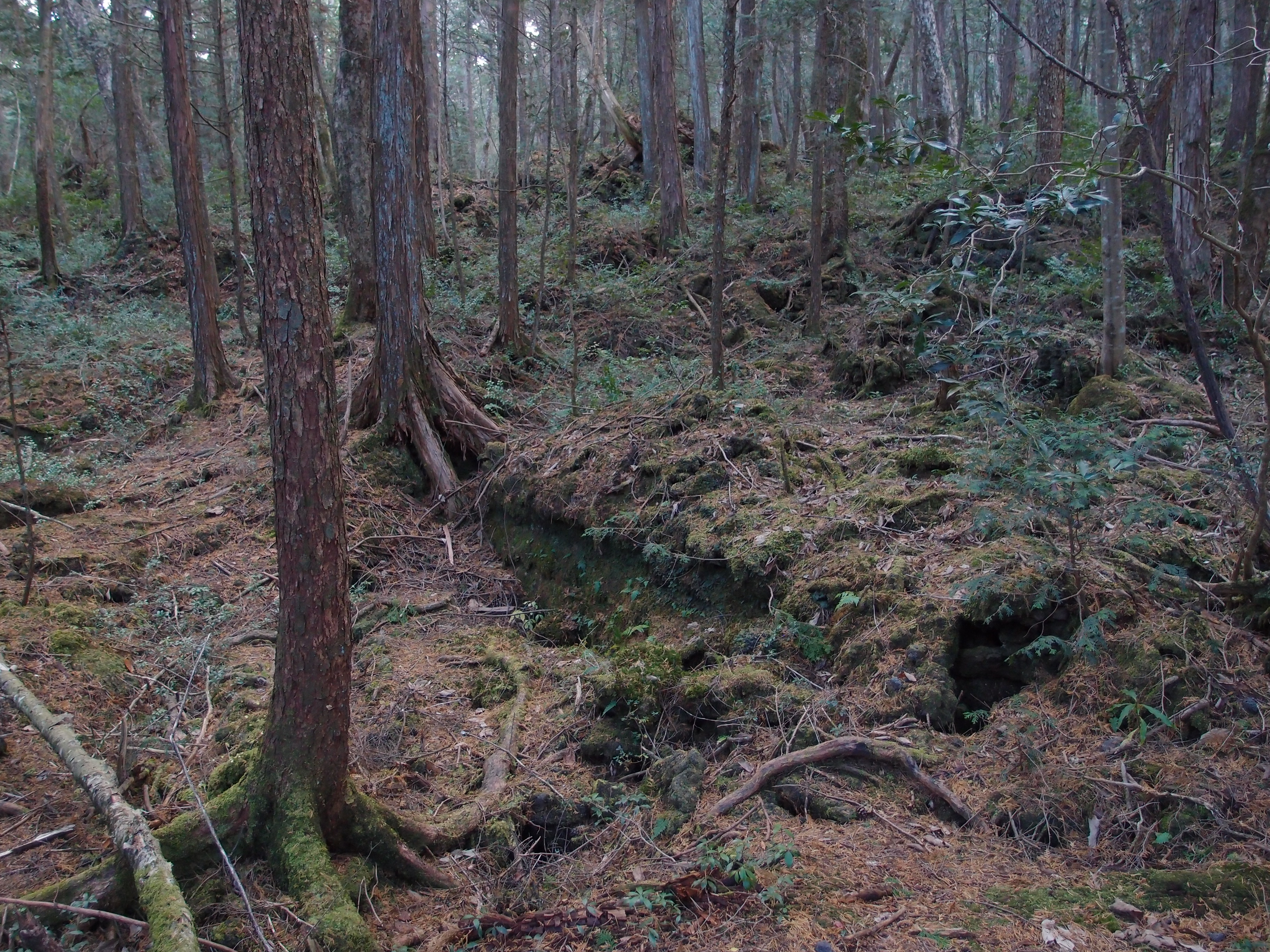 Dense primeval forest canopy showcasing the "Sea of Trees" appearance
Aokigahara Forest, known as "Jukai" (樹海 - Sea of Trees), is a 30-square-kilometer dense primeval forest of mixed coniferous and broadleaf trees located at the northwestern base of Mount Fuji. The forest was formed in 864 CE when Mount Fuji's Jōgan eruption created the lava fields that became the foundation for this unique ecosystem. 🔗
The forest holds profound cultural and spiritual significance in Japanese tradition, historically considered a liminal space between the living and the dead. During the Heian to Edo periods, Buddhist ascetics imbued the forest with spiritual meaning, with some monks practicing extreme forms of asceticism including sokushinbutsu (self-mummification) in this sacred space.
Cultural & Religious Significance
The unique geological foundation of porous volcanic rock creates remarkable acoustic properties - the lava absorbs sound, contributing to a profound sense of solitude. Local folklore speaks of yūrei (ghosts) inhabiting the dense woods, and the forest is traditionally viewed as a pathway to Yomi (the underworld). 🔗
The cool, humid environment provides ideal conditions for bryophytes like mosses and lichen, creating an exceptionally green landscape where deer, foxes, wild rabbits, and diverse bird species thrive. The forest serves as a living testament to the spiritual connection between Japanese culture and the natural world.
Visiting Information
Hours: Saiko Nature Center: March-November 9:00-17:00 (last entry 16:00); December-February 9:30-16:30 (last entry 16:00). Forest trails accessible during daylight hours year-round. 🔗
Official Guided Tours (Saiko Nature Center): Regular tours ¥700 per person (minimum 2 people); Reserved tours: Up to 4 people ¥3,000/hour; 5+ people ¥700 per person/hour. Tours at 10:00, 11:15, 13:00, 14:15, 15:30. 🔗
Private Tour Options: Aokigahara Wonderland Guided Hiking Tour from ¥40,000 for up to 6 people (3+ hours), includes transportation from Fujisan Station. 🔗
Transportation: From Kawaguchiko Station: Saiko Tour Bus to forest entrances (35-45 minutes). Bus stops at "Saiko Bat Cave," "Ryugu Cave Entrance," and "Saiko Wild Bird Forest Park."
The Experience
Official Guided Tour Options: Fujikawaguchiko Town certified naturalist guides provide 1-hour circuits around Saiko Bat Cave with expert commentary. Extended 2-3 hour routes include Wild Bird Drinking Area, Dragon Cave, and Ryugu Cave. Guides possess "accurate and wide-ranging knowledge" about forest ecology and cultural significance. 🔗
Key Forest Features: Well-maintained hiking trails connect major attractions including the lava cave system (Narusawa Ice Cave, Fugaku Wind Cave, West Lake Bat Cave). Visitors can experience the forest's remarkable acoustic properties where sound is absorbed by porous lava rock, creating an unusually quiet environment.
Wildlife Observation: The forest supports deer, foxes, wild rabbits, and diverse bird species. Guided tours provide education about the unique ecosystem that thrives on volcanic soil, including the extensive moss and lichen communities that give the forest its distinctive green appearance.
Visit-Specific Information
October 2025 Seasonal Considerations: Characteristic Mt. Fuji weather changeability with potential fog/mist creates mystical atmosphere. Peak autumn colors provide vibrant contrasts with black lava terrain. Tours operate rain or shine with guides providing weather-appropriate commentary. 🔗
Photography Conditions: Early morning mist creates most mystical atmosphere ideal for photography. Autumn foliage against volcanic rock provides exceptional contrast. Equipment considerations include trekking shoes with good grip essential for slippery lava terrain.
Cultural Preparation: Tours emphasize the forest's spiritual significance and cultural sensitivity, helping visitors understand the deep connection between Japanese spirituality and natural environments.
Practical Visiting Tips
Safety and Navigation: Stay on designated paths as dense forest and lava terrain make navigation difficult. Mobile signal often unstable inside forest. Guided tours recommended especially for first-time visitors unfamiliar with terrain. 🔗
Cultural Etiquette: Respectful behavior acknowledging the forest's spiritual significance and cultural sensitivity. Environmental protection following Leave No Trace principles - designated guide system protects ecosystem. Photography mindfulness considering other visitors seeking contemplative experiences.
Booking Requirements: October Peak Season requires advanced reservations for all tour types. Contact Saiko Nature Center (0555-82-3111) at least 2 days advance for reserved tours. Private tours book through respective operators' online systems.
Weather Preparation: Layered clothing essential for temperature changes and weather variability. Waterproof gear recommended for October's unpredictable weather. Sturdy footwear mandatory for lava terrain safety.
Location: View on Google Maps
Source: attractions/fujikawaguchiko/aokigahara-forest-guided-tours.md