
About
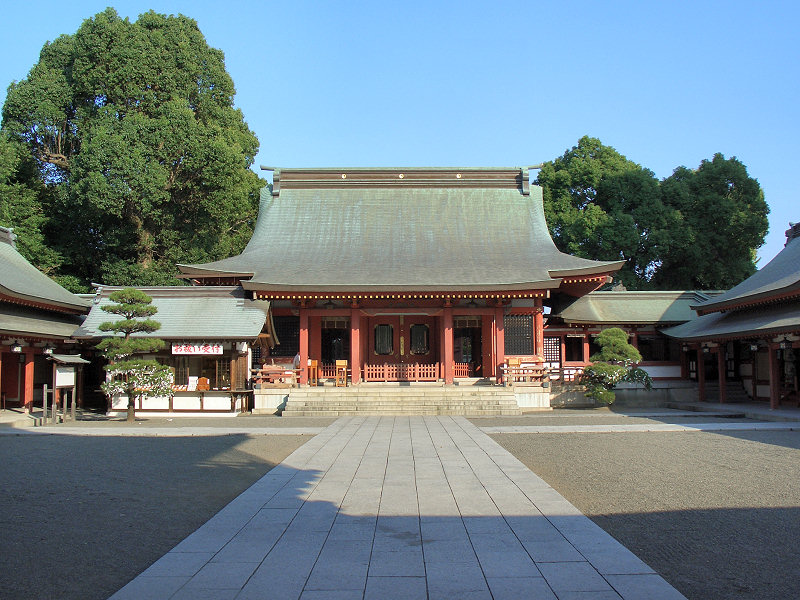 The honden (main shrine building) of Fujisaki Hachimangu. Source: Wikimedia Commons
Fujisaki Hachimangu stands as Kumamoto's most revered Shinto shrine, with a history spanning over 1,000 years as the spiritual guardian of the region. 🔗 Established in 935 CE by order of Emperor Suzaku, the shrine was founded with a divided spirit (bunrei) from the prestigious Iwashimizu Hachimangu in Kyoto, one of Japan's most important Hachiman shrines. 🔗
The shrine's name derives from a legend that a wisteria (fuji) whip, planted by the imperial messenger during the shrine's founding, miraculously took root and flourished at the site. 🔗 The shrine is dedicated to Emperor Ōjin, Empress Jingū, and Sumiyoshi Sanjin, enshrined as protectors of Higo Province (the former name for Kumamoto Prefecture). 🔗
Cultural & Religious Significance
Originally located on the grounds of Kumamoto Castle, the shrine was destroyed by fire during the Satsuma Rebellion in 1877 and subsequently rebuilt at its current location about 1 kilometer east of the castle. 🔗 In 1542, Emperor Go-Nara presented a wooden frame inscribed with the characters "八幡藤崎宮," which remains engraved above the torii gate - a unique distinction where the character "旛" (meaning "banner" or "flag") signifies the shrine's imperial importance. 🔗
The shrine's deep connection to Kumamoto's samurai heritage is particularly significant. Fearsome warrior and castle-builder Kato Kiyomasa was a devout patron of the shrine, and the spectacular autumn festival is said to have originated from his triumphant return from campaigns in Korea in the late 16th century, when he led his warriors to the shrine to give thanks. After the Kato clan's rule ended, the influential Hosokawa clan continued to venerate and support the shrine, covering expenses for its elaborate festivals and rituals. High-ranking samurai families would present decorated horses for the festival, a tradition that continues to this day.
The shrine achieved recognition as a nationally significant third-class shrine (kokuhei-shōsha) in 1915 and was recognized as a religious corporation in 1952. 🔗 Among its treasures are wooden statues of Hachiman and a female deity designated as Important Cultural Properties of Japan. 🔗
Visiting Information
Getting There:
From Kumamoto Station:
- Tram (Recommended): Take the tram heading for Kengunmachi from Kumamotoekimae stop, get off at Suidocho stop (approximately 15 minutes, ¥180 flat fare), walk 15 minutes to the shrine 🔗
- Bus: Take bus to "Kumamoto Kotsu Center" (~10 minutes), transfer to bus for Fujisakigu-Mae (~15 minutes), 5-minute walk from bus stop 🔗
The shrine is located along Route 3 and is famous for the enormous torii gate visible from the road. 🔗
Hours:
- April-September: 5:30 AM - 8:00 PM
- October-March: 6:00 AM - Sunset (~6:00 PM)
- Prayer Reception: 9:00 AM - 5:00 PM daily
- Office Hours: 8:30 AM - 5:00 PM 🔗
Admission: Free 🔗
Best Time to Visit:
- Early morning or late afternoon on weekdays for peaceful atmosphere
- Late October to mid-November for autumn foliage 🔗
- Mid-September for the famous autumn festival (note: general tourists not permitted during major festival events) 🔗
Accessibility: Wheelchair accessible with ramps to the tower gate and accessible bathroom available 🔗
Contact:
- Tel: +81-(0)96-343-1543
- Fax: +81-(0)96-344-9077
- Website: https://fujisakigu.or.jp/ 🔗
The Experience
The Grand Entrance
The shrine's most iconic feature is the enormous vermilion torii gate standing at the entrance along Route 3, visible from the road and serving as a dramatic introduction to the sacred space. 🔗 Entering through this torii, visitors walk down a long tree-lined approach shaded by ancient camphor trees and other sacred trees, creating a serene transition from the bustling city. 🔗
Two-Story Tower Gate
After the tree-lined approach, visitors encounter a magnificent two-story gate (rōmon) decorated with intricate carvings and traditional vermilion lacquer. The gate houses a fine pair of zuijin (guardian statues) that are particularly noteworthy for their craftsmanship and detail. 🔗
Main Worship Hall (Haiden)
The vermilion-painted haiden (worship hall) stands as one of the shrine's iconic symbols, representing beautiful traditional Japanese shrine architecture. 🔗 Flanking the honden (inner sanctuary) are ornate komainu (lion-dog guardian statues) showcasing exceptional craftsmanship. 🔗
Sacred Forest
The large camphor trees and other ancient trees throughout the grounds are considered sacred and contribute powerfully to the shrine's spiritual atmosphere, creating a peaceful oasis that feels removed from downtown Kumamoto.
Practical Visiting Tips
Cultural Etiquette
Entering the Shrine:
- Bow once before passing through the torii gate and again when leaving
- Walk to the side of the path, not the center (the center is reserved for the kami/deities)
Purification Ritual (Chōzuya):
- Rinse your left hand with the ladle
- Rinse your right hand
- Pour water into your left hand and rinse your mouth (spit water out beside the basin, not back in)
- Rinse the ladle handle by tilting it vertically
Prayer at Main Hall:
- Toss a coin into the offering box (5-yen coins are considered lucky)
- Ring the bell if present
- Bow twice deeply
- Clap twice
- Offer a silent prayer
- Bow once more
General Conduct:
- Dress respectfully (avoid overly casual attire)
- Remove hats when praying
- Do not step on thresholds of gates
- Speak quietly and maintain peaceful atmosphere
Photography Guidelines
- Photography generally permitted throughout outdoor grounds
- Photography usually prohibited inside shrine buildings - look for posted signs or ask shrine staff
- Always request permission before photographing priests, shrine staff, or other visitors
- Best Photo Spots: The massive torii gate from Route 3, tree-lined approach with dappled light, two-story tower gate with guardian statues, vermilion worship hall and main sanctuary
Visiting Strategy
- Timing: Arrive early morning (6:00-8:00 AM) for the most peaceful experience and best photography light
- Duration: Allow 1-2 hours for a thorough visit including purification, prayer, exploration, and photography 🔗
- Combine with: The shrine is approximately 0.7 miles (1.4 km) from Kumamoto Castle, making it easy to visit both in one day 🔗
November Visit Considerations
- November visit places you just after the famous Fujisaki Hachimangu Grand Autumn Festival (held mid-September), providing peaceful, contemplative atmosphere without festival crowds 🔗
- Shrine grounds may still feature autumn colors in early November, particularly among ancient trees along approach path 🔗
- For photography, morning visits offer soft light filtering through tree canopy, while late afternoon provides warm golden-hour lighting on vermilion structures
- Outside festival period, shrine experiences moderate local visitor traffic, creating authentic spiritual atmosphere
Location: View on Google Maps
Source: attractions/kumamoto/fujisaki-hachimangu.md