
About
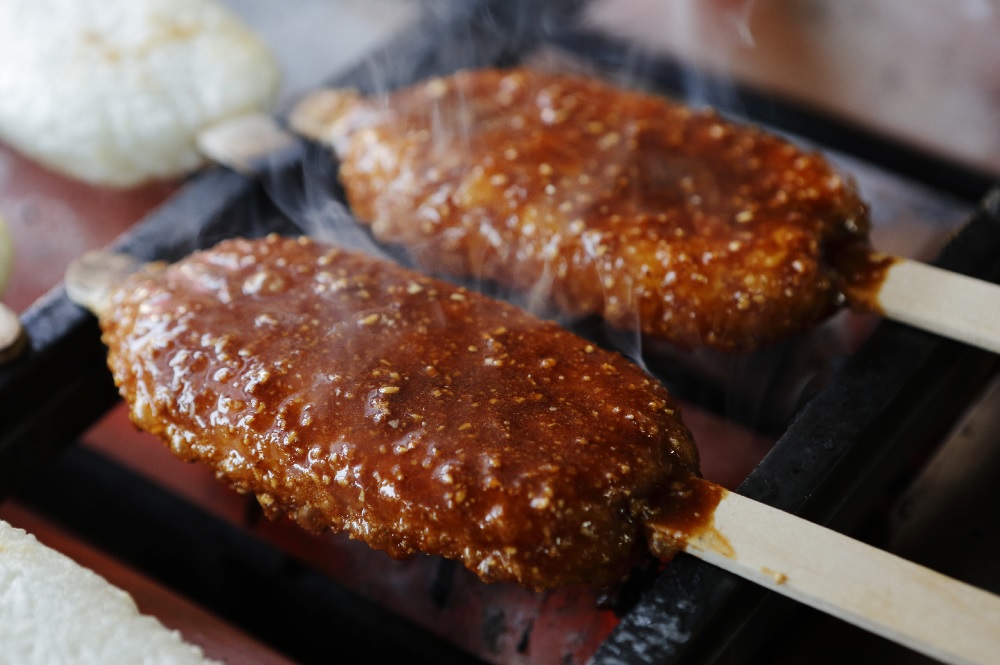 Traditional Goheimochi being grilled over charcoal with sweet miso glaze
Goheimochi represents one of Japan's most authentic regional culinary traditions, originating with mountain workers in Gifu's Tono and Hida regions as a portable, nutritious food source for harsh mountain conditions. This traditional street food consists of regular steamed rice that is pounded and shaped around wooden skewers, then carefully grilled over charcoal fires until the exterior develops a slightly crispy texture. 🔗
The defining characteristic is the sweet and savory glaze - a carefully crafted sauce combining miso, soy sauce, and secret ingredients that vary by vendor, often including walnuts, sesame seeds, peanuts, or the distinctive egoma (perilla seeds) popular in Gifu Prefecture. Each vendor maintains their own closely guarded sauce recipe, creating distinctive flavor profiles that range from sweet and nutty to more savory and complex combinations. 🔗
Cultural & Religious Significance
Goheimochi earned its name from its resemblance to the "gohei," a sacred staff with plaited paper streamers offered to Shinto deities. This connection to spiritual practices reflects the deep reverence mountain workers held for their sustenance. The dish gained international recognition through its prominent appearance in the acclaimed anime film "Your Name" (Kimi no Nawa), which featured scenes modeled after Hida and Takayama. 🔗
The flat, oval shape (resembling traditional waraji sandals) versus round dumpling variations each have regional significance and family traditions passed down through generations. The food represents mountain survival culture and the practical adaptation of rice-based nutrition to portable, preservation-friendly forms suitable for mountain labor. 🔗
Visiting Information
Primary Vendor Locations:
- Sanmachi Historic District: Multiple street vendors throughout the three historic streets, concentrated around Kamisannomachi area (9:00 AM - 5:00 PM daily)
- Miyagawa Morning Market: 7:00 AM - 12:00 PM (8:00 AM - 12:00 PM December-March)
- Jinya-mae Morning Market: 6:00 AM - 12:00 PM (7:00 AM - 12:00 PM January-March)
Specific Confirmed Vendors:
- Fukutarou: 58 Shimosanno-machi, 9:00 AM - 6:00 PM, ¥250 🔗
- Akebonoya: 3-181-3 Showamachi, 9:00 AM - 9:00 PM (closed Sundays), ¥200
From Ryokan Murayama: 5-minute walk to Sanmachi historic district via Yasugawa shopping street, 10-minute walk to Miyagawa Morning Market along the river, 3-minute walk to central shopping areas with multiple vendor options. 🔗
The Experience
Visit multiple vendors to appreciate the diverse interpretations of this traditional food. Each vendor offers a unique sauce recipe and grilling technique, creating distinctly different flavor profiles from the same basic rice cake foundation. Watch the traditional preparation process as vendors shape the pounded rice around wooden skewers, brush on their signature sauce, and carefully rotate the skewers over glowing charcoal fires. 🔗
October Seasonal Context: Your visit coincides with the post-harvest season when Goheimochi traditionally played a crucial role in preserving rice for winter months. The autumn weather provides perfect conditions for outdoor grilling, and many vendors increase their production during this period. The charcoal grilling process creates particularly inviting aromas in the crisp autumn air.
The grilling process over traditional charcoal fires provides excellent photo opportunities, especially during early morning hours when steam and smoke create atmospheric effects. Most vendors welcome photography of the preparation process, though always ask permission first. 🔗
Practical Visiting Tips
Vendor Selection Strategy:
- Start with established vendors like Fukutarou for authentic traditional preparation
- Sample from 2-3 different vendors to compare sauce variations
- Ask vendors about their specific sauce ingredients and preparation methods
- Morning market vendors often offer the freshest preparation and slightly lower prices (¥100-200 vs ¥200-250 in tourist areas)
Cultural Etiquette:
- Consume Goheimochi while standing near the vendor stall, as is traditional
- Express appreciation (oishii desu) for the vendor's work
- Handle the wooden skewer carefully and dispose of properly
- Take time to watch the grilling process - vendors appreciate interested observers
Practical Considerations:
- Most street vendors accept cash only - bring small denominations (¥100 and ¥500 coins)
- Time visits during active grilling periods for full sensory experience
- Combine with broader exploration of traditional Takayama food culture
- Morning market prices tend to be slightly lower with more traditional atmosphere
Location: View on Google Maps
Source: attractions/takayama/goheimochi-vendors.md