
About
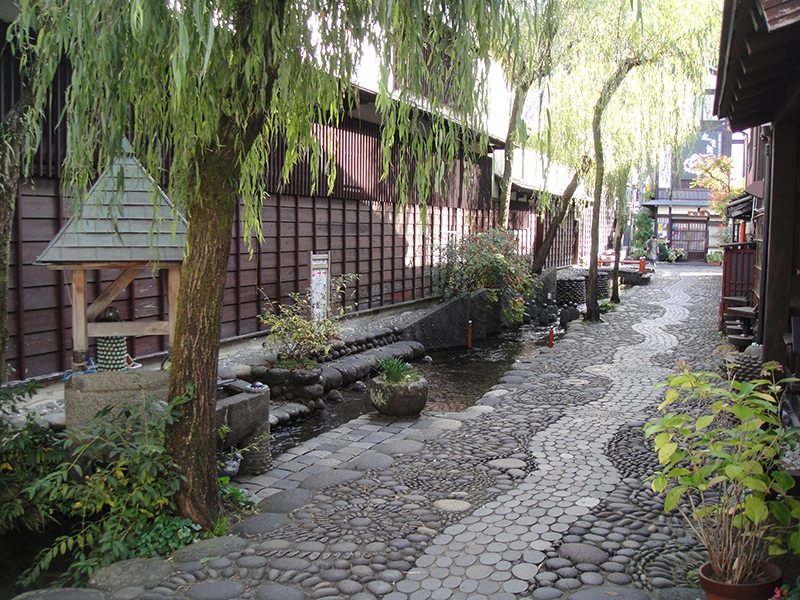 Historic castle town of Gujo Hachiman with traditional waterways and castle perched on Mount Hachiman
Gujo Hachiman is a beautifully preserved castle town that has maintained its Edo-period character for over 400 years. Located at the confluence of the Yoshida, Kodara, and Nagara rivers in Gifu Prefecture, this "water city" is renowned for its pristine waterway system that flows through every neighborhood. The town centers around Gujo Hachiman Castle, a wooden reconstruction perched 350 meters above town on Mount Hachiman, earning the nickname "Castle in the Sky" when morning mists surround its base. 🔗
The waterways weren't original to the town but were constructed after a devastating 1652 fire by feudal lord Tsunetomo Endo for fire protection. These channels bring river water directly to residents' homes via an ingenious system of mizufune (water boats) - layered wooden basins where the top spigot provides drinking water while lower levels are used for washing vegetables and feeding fish that act as natural filters. The town is also the birthplace of Japan's food replica industry, producing 60% of all sampuru (food replicas) sold nationwide. 🔗
Cultural & Religious Significance
Historically, Gujo Hachiman served as an important trade center with districts named for specific crafts - Shokunin-machi (craftsmen's town) and Kajiya-machi (blacksmith town). The water management system represents a remarkable example of Edo-period engineering and community cooperation, where residents maintain the waterways through a cooperative cleaning system that has operated for over 350 years. 🔗
The castle town planning reflects traditional Japanese urban design principles, with the samurai district (Yanagimachi) featuring distinctive winged walls between houses for privacy and protection. The preservation of traditional architecture and water systems provides insight into sustainable community management practices that modern urban planners study as models for ecological city design. 🔗
Visiting Information
Access via Seseragi Kaido Scenic Drive from Takayama:
- Distance: 65km, Driving time: 90 minutes with scenic stops
- Route highlights: Mountain plateaus, birch and larch forests, 700m altitude change
- Scenic features: Follows Yoshidagawa, Mazegawa, and Kawakamigawa rivers
- Rest stops: Komorebi Plaza, Okura Falls Nature Trail Park, Roadside Meiho 🔗
Operating Hours:
- Castle: 9:00-17:00 (June-August: 8:00-18:00, November-February: 9:00-16:30)
- Town exploration and waterways: 24 hours daily
- Food replica workshops: Various hours, typically 9:00-17:00 🔗
Admission Costs:
- Gujo Hachiman Castle: ¥400 adults, ¥200 children
- Food replica workshops: ¥800-¥1,200 (30-60 minutes)
- Waterways exploration: Free
- Traditional craft experiences: Varies by workshop 🔗
The Experience
Historic Waterways District:
- Igawa Lane: 119-meter canal path featuring large koi fish and traditional architecture
- Yanaka Lane: Stone-paved alley (80,000 stones from Nagara River) with willow trees
- Sogi-sui Spring: Historic spring where locals have washed rice and vegetables for centuries
- Yanagimachi District: Preserved samurai village with distinctive winged walls between houses 🔗
Gujo Hachiman Castle Experience: The wooden reconstruction (1933) offers panoramic views of the castle town and Okumino mountains. Notable as one of Japan's oldest wooden castle reconstructions, it houses a museum detailing local history and samurai culture. The castle provides the best vantage point for understanding the town's ingenious water management system layout. 🔗
Food Replica Workshops:
- Sample Village Iwasaki: Main store with hands-on classes creating wax food replicas
- Sample Kobo: Town center location offering tempura and ice cream replica making
- Step-by-step guidance for creating authentic-looking food replicas, suitable for all ages 🔗
Practical Visiting Tips
Photography and Cultural Experience:
- Best photo spots: Castle from Yoshida River for reflection shots, Igawa Lane for waterway and koi photography
- Optimal timing: Early morning for peaceful waterway scenes, evening for castle illumination
- Cultural respect: Waterway cleanliness maintained through resident cooperation - respect local customs 🔗
Transportation Strategy:
- Allow minimum 8-hour day trip from Takayama accommodation
- Depart Takayama early morning (8:00 AM) for best lighting at castle
- Return via Seseragi Kaido for different scenic perspectives
- Weather conditions on mountain passes should be checked in October 🔗
Crowd Management:
- Visit castle immediately upon opening (9:00 AM)
- Explore waterways during early morning or late afternoon
- Avoid weekends if possible during autumn season
- Food replica workshops have consistent availability year-round 🔗
Local Etiquette:
- Remove shoes when entering traditional buildings
- Photography permitted but be mindful of residents using water channels
- Support local economy through craft workshops and local dining
- Respect designated areas and traditional architecture preservation 🔗
October-Specific Considerations:
- Ideal weather for walking tours and outdoor photography
- Early autumn colors in surrounding mountains (peak foliage mid-November)
- Comfortable walking shoes essential for stone-paved streets
- Light jacket recommended for mountain elevation differences 🔗
Location: View on Google Maps
Source: attractions/takayama/gujo-hachiman.md