
About
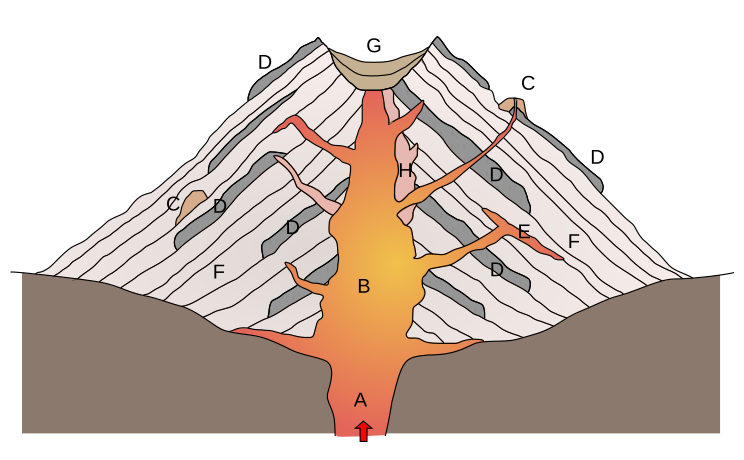 Stratovolcano cross-section diagram similar to educational exhibits at the Izu Oshima Volcano Museum
The Izu Oshima Museum Geonous (伊豆大島ミュージアム ジオノス) represents a comprehensive renovation of the original Izu Oshima Volcano Museum, which closed March 16, 2024 after 34 years of operation. The new museum opened July 1, 2025, embracing the concept of "the entire island as a museum" (伊豆大島ぜんぶ博物館), serving as the central hub for the Izu Oshima Geopark. 🔗
The museum's comprehensive exhibits document the 1986 Mt. Mihara eruption that necessitated the largest peacetime evacuation in Japanese history - over 12,000 residents and tourists evacuated in less than 12 hours using 39 vessels. This dramatic event, which occurred November 15-21, 1986, saw lava fountains reaching 1,600 meters high and lava flows advancing to within 1 kilometer of Motomachi town. 🔗 Remarkably, 5,200 islanders had participated in evacuation drills earlier on November 21, just hours before the actual emergency evacuation became necessary. 🔗
The new Geonous museum goes beyond volcanic history to explore how the island's residents have coexisted with active volcanism throughout history. Long ago, islanders revered the red sky created by exploding magma, calling it "Gojinka" (sacred fire). Today, volcanic features have been integrated into daily life - flat craters serve as baseball fields and cemeteries, lava capes function as piers, and sea cliff coves provide natural fishing ports. 🔗
The museum contextualizes Izu Oshima within the broader volcanic landscape of Japan and the world, featuring comparative exhibits on volcanoes in the Izu Islands, across Japan, and internationally. 🔗
Cultural & Educational Significance
The museum represents the transformation of volcanic hazard into educational asset following the 1986 eruption. The original Volcano Museum (1990-2024) was established to preserve the memory of the dramatic evacuation and help visitors understand volcanic processes. The 2025 renovation as "Geonous" expands this mission to teach not just volcanic formation and topography, but also ecosystems, daily life, and disaster prevention - reflecting a holistic approach to volcanic coexistence. 🔗
As the central hub for Izu Oshima Geopark, the museum embodies the philosophy that "the entire island is a museum," connecting visitors to the broader network of geological sites across Oshima. The Geopark's theme explicitly addresses the central challenge revealed by the 1986 experience: "how to live in harmony with the volcano, which will continue to erupt in the future, and how to protect and make the most of the island's limited resources and unique culture and ecosystem." 🔗
The 4K theater experience introduces the secrets and beauty of Izu Oshima Geopark, with visitor reviews noting it is "easy to understand, interesting, and suitable for children." 🔗 This accessible educational approach makes complex volcanic science comprehensible to international visitors and families.
Visiting Information
Address: 617 Motomachi Kanda Yashiki, Oshima-machi, Tokyo 100-0101
Access from Ferry Terminals:
- From Motomachi Port (main ferry terminal on west coast): 7 minutes walking 🔗, or take Habu Port Line bus to "Izu Oshima Museum - Geonous" stop 🔗
- From Okata Port (northern port - used depending on sea conditions): Bus available to museum
- Note: Izu Oshima has a unique dual-port system - ferries use either Motomachi Port or Okata Port depending on daily weather and sea conditions 🔗
Ferry Access from Tokyo:
- Tokai Kisen high-speed boats from Takeshiba Pier: 1 hour 45 minutes 🔗
- Night ferry options available
Operating Hours:
- Regular schedule: 10:00 AM - 4:30 PM (last entry 4:00 PM) 🔗
- When Tokyo night ferry operates: 9:00 AM - 4:30 PM (last entry 4:00 PM) 🔗
Closed:
- Wednesdays (or following weekday if Wednesday is a holiday) 🔗
- Year-end/New Year: December 28-31, January 1 🔗
- Exception: Open daily during municipal school summer vacations and Camellia Festival period 🔗
Admission:
Current Status: Newly opened July 1, 2025; fully operational as of November 2025 visit period 🔗
The Museum Experience
1986 Eruption Documentation:
The museum's most powerful exhibits focus on the dramatic 1986 Mt. Mihara eruption:
- Video footage of the 1986 eruption showing lava fountains and explosive activity 🔗
- News stories in print and video documenting the dramatic evacuation of 12,000+ people 🔗
- Complete history of the last eruption with English explanations available 🔗
4K Theater Experience:
The impressive 4K theater introduces the secrets and beauty of Izu Oshima Geopark. Visitor reviews note the theater is "easy to understand, interesting, and suitable for children." 🔗 The theater presentations run on regular schedule and provide an excellent overview before exploring the island's volcanic sites.
Interactive Educational Features:
- Geopark corner exploring volcanic landscapes 🔗
- Volcano encyclopedia corner with global volcanic information 🔗
- Simulator capsule allowing exploration of underground volcanic environments 🔗
- Actual lava specimens on display 🔗
Comparative Volcanic Exhibits:
The museum provides context by comparing Mt. Mihara with other volcanoes:
- Photos and documents covering volcanoes of the Izu Islands, Japan, and worldwide 🔗
- Major eruptions around the world for perspective 🔗
Practical Visiting Tips
Duration and Timing:
- Allow minimum 1.5-2 hours for comprehensive visit (more time better than less) 🔗
- Morning visit recommended before afternoon Mt. Mihara hike (weather permitting)
- Watch 4K theater presentation early in visit for overview context
- 4K theater presentations run on regular schedule
Educational Approach:
- English explanations available for main exhibits, though Japanese language offers more detail 🔗
- Museum shop likely available for volcano-related souvenirs and educational materials
- Ask staff about current Mt. Mihara accessibility before planning afternoon hike
Visitor Etiquette:
- Museum follows standard Japanese museum protocols
- Respectful silence during 4K theater presentations
- Photography generally permitted for personal use (4K theater may have restrictions)
November Considerations:
- Indoor facility ideal for unpredictable November weather (average daytime 17°C, evenings 11-13°C, approximately 140mm rainfall expected)
- Outside peak camellia season (January-March), so museum less crowded
- Museum open daily if November 9-18 falls during school holiday periods (verify Wednesday closure schedule)
- Early morning opening (9:00 AM) only on days following Tokyo night ferry arrival
- Less crowded than summer/camellia festival season - more intimate educational experience
Day Trip Integration:
For Tokyo day-trippers, museum hours align well with ferry schedules:
- Morning ferry arrival → Museum (1.5-2 hours) → Mt. Mihara exploration → Afternoon/evening ferry return
- Museum provides essential educational foundation for understanding Izu Oshima's volcanic landscape
- Information obtained here enhances appreciation of all volcanic features encountered during island exploration
Weather-Dependent Planning:
November weather on Izu Oshima can be unpredictable. Museum provides essential educational experience regardless of conditions, while outdoor Mt. Mihara exploration requires clear weather. Flexible itinerary recommended.
Ferry Port Variability:
Izu Oshima's dual-port system means daily ferry assignment to Motomachi or Okata Port based on sea conditions. Museum accessible from both ports, but walking distance from Motomachi significantly shorter (7 minutes vs. bus required from Okata).
Integration with Other Island Attractions
Within Motomachi Area:
- Motomachi Port - ferry terminal and departure point (7 minutes walk)
- Lookout Refuge Rest Area - exhibits and 1986 eruption video at Outer Rim Lookout 🔗
- Information center above Okata Passenger Terminal (second floor) - latest Geopark news 🔗
Island-Wide Connections:
- Mt. Mihara summit and caldera rim walk (primary destination, weather dependent) - museum provides essential context
- Ura-Sabaku black sand desert - understanding volcanic processes enhances appreciation of scoria field
- Mihara Shrine - museum's 1986 eruption exhibits deepen understanding of shrine's miraculous survival
- Senba Exposed Cliffs - museum provides geological context for 20,000 years of volcanic layers
- Tokyo Metropolitan Oshima Park - museum's camellia culture exhibits enhance park visit
- Historic island museum with reconstructed old house showing traditional living conditions 🔗
Geopark System:
Museum functions as central hub for Izu Oshima Geopark, connecting visitors to broader network of geological sites across the island. Understanding 1986 evacuation history and volcanic coexistence at museum provides cultural depth for observing black lava streaks on Mt. Mihara slopes, volcanic sand fields, and integrated volcanic features in daily island life.
Location: View on Google Maps
Source: attractions/ooshima/izu-oshima-volcano-museum.md