About
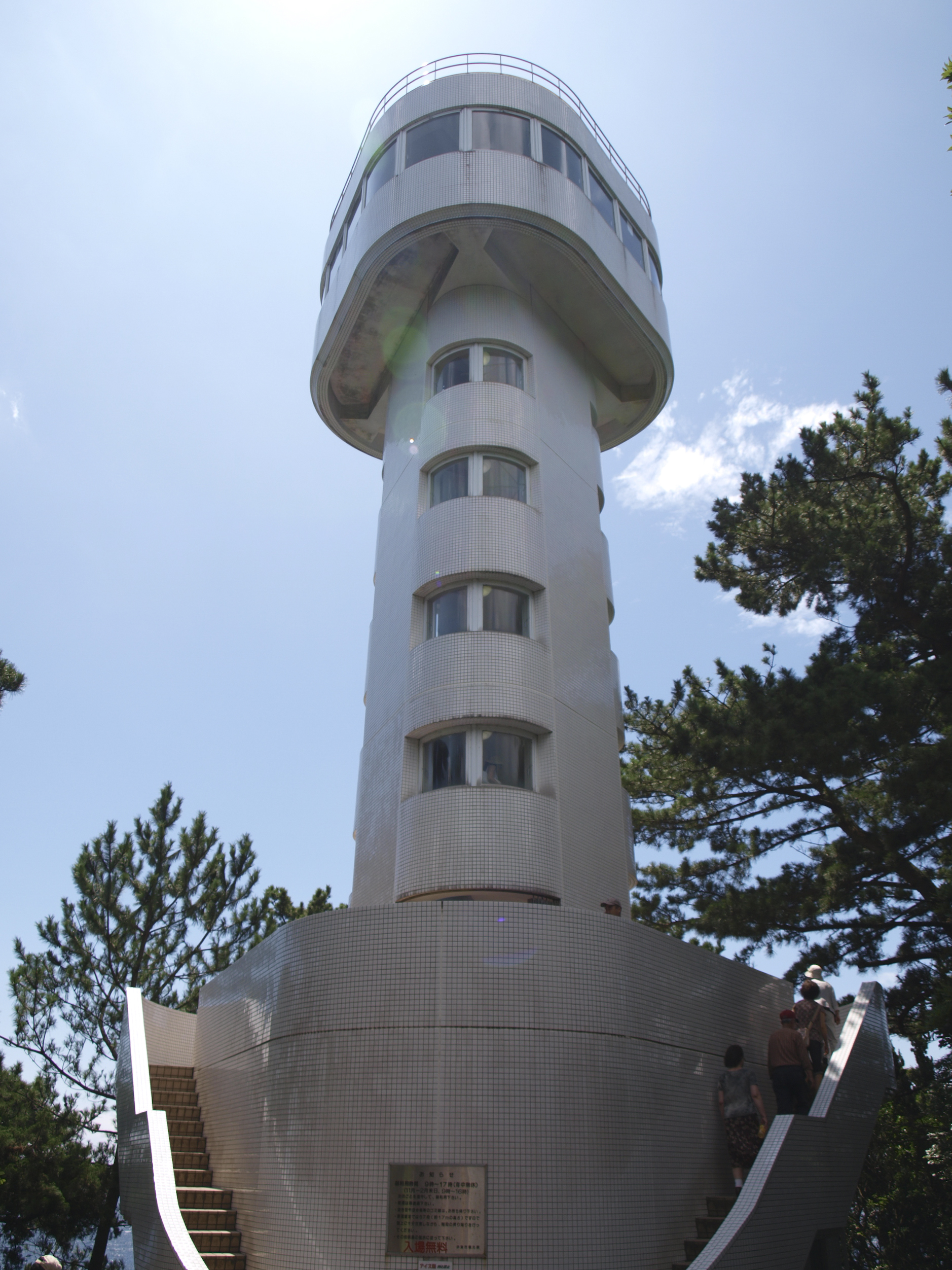 White Kadowakisaki Lighthouse on Jōgasaki Coast, built in 1995. Photo by Tomo, July 26, 2009. Licensed under CC BY 2.0.
Kadowakisaki Lighthouse stands as a distinctive white beacon on the dramatic Jogasaki Coast, a rugged volcanic shoreline formed approximately 4,000 years ago by a massive eruption from nearby Mount Omuro. 🔗 Originally constructed in March 1960 and renovated in April 1995 as a "design lighthouse" with public observation facilities, this 24.9-meter structure provides one of the most accessible panoramic viewing experiences on the eastern Izu Peninsula. 🔗
The lighthouse serves dual purposes: functioning as an active navigational aid with a single flashing white light visible for 18 nautical miles 🔗, while simultaneously operating as a popular tourist attraction within the Izu Peninsula UNESCO Global Geopark. 🔗
Geological & Cultural Significance
The geopark designation, awarded in 2018, recognizes the area's exceptional volcanic geology, including distinctive columnar joints—rock formations shaped like columns that form when lava cools and contracts—visible throughout the coastline. 🔗
Located adjacent to the iconic Kadowaki Suspension Bridge (48 meters long, 23 meters high, completed in 1968), the lighthouse anchors the northern end of the nearly 10-kilometer Jogasaki Coast hiking trail. 🔗 From its dual observation decks—positioned at 17 meters (indoor) and 4 meters (outdoor)—visitors can observe the complex geological topography created by the surface structure and columnar joints of ancient lava flows, while scanning the horizon for views of the Seven Islands of Izu (Izu Shichito) and the peaks of the Amagi mountain range. 🔗
Visiting Information
Access:
- From Jogasaki-Kaigan Station: 25-minute bus ride or 36-minute walk 🔗
- From Izu Kogen Station: Bus bound for Kaiyo Koen, get off at Izu Kaiyo Koen (10 minutes, ¥300 one way, buses every 2 hours) 🔗
- By Car: Municipal parking lot ¥500 for entire day, 3-minute walk from parking to lighthouse 🔗
Bus Pass Options:
- Izu Kogen and Jogasaki 1-Day Pass: ¥1,250 for unlimited bus use 🔗
- Ito 2-Day Pass: ¥1,800 for unlimited bus use in central Ito and around Izu Kogen and Jogasaki Coast 🔗
Hours: Open until 5:00 PM normally; until 4:00 PM during winter months (November likely falls under winter schedule) 🔗
Admission: Free entry to lighthouse and both observation decks 🔗
Facilities: Small souvenir shop, snack vendor with ice cream, restrooms, kiosk 🔗 🔗
The Experience
The primary attraction is ascending the lighthouse's spiral staircase (approximately 100 stairs, no elevator) to reach the dual observation decks—the higher indoor deck at 17 meters and the outdoor deck at 4 meters elevation. 🔗 From these vantage points, visitors can observe:
Island Views: On clear days, panoramic views extend to the Seven Islands of Izu (Izu Shichito)—specifically the inhabited islands of Oshima (most prominently visible), Toshima, Niijima, Kozushima, Miyakejima, Mikurajima, and Hachijojima—created by undersea volcanoes millions of years ago. 🔗 🔗
Mountain Views: The peaks of the Amagi mountain range are visible inland from the observation decks. 🔗
Geological Features: The coastline displays distinctive columnar joints—vertical rock formations created when lava cools and contracts—along with marks where new hot lava flowed onto and broke apart patches of older solidified lava, demonstrating the dynamic volcanic processes that shaped this UNESCO Global Geopark site. 🔗
Adjacent Suspension Bridge: The Kadowaki Suspension Bridge spans 48 meters at a height of 23 meters above the rocky coast, offering dramatic clifftop perspectives and a thrilling experience of the rugged volcanic landscape. 🔗
Hiking Trail Access: The lighthouse serves as a starting point for the nearly 10-kilometer "Picnical Course" hiking trail along the Jogasaki Coast, featuring continuous ocean views, volcanic rock formations, and access to multiple coastal viewpoints. 🔗
Practical Visiting Tips
November 8-9 Seasonal Considerations:
- Temperature and Weather: Mildly cool and breezy with temperatures ranging from 13-18°C (55-64°F) during the day, dropping to 7-12°C (45-54°F) in morning and evening. Weather generally stable and dry. 🔗
- Autumn Foliage: Early November marks the beginning of the autumn foliage season, with mid-November to early December representing peak colors. 🔗
- Visibility Conditions: Clear autumn skies in November offer some of the year's best visibility for viewing the Seven Islands of Izu and Mount Amagi. 🔗
- Operating Hours: The 4:00 PM winter closing time likely applies to early November visits, requiring afternoon arrival well before closing. 🔗
- Crowd Levels: November generally sees moderate tourism levels. Weekday visits offer the most solitary experience. 🔗
Best Photo Spots:
- The suspension bridge provides dramatic angles of the lighthouse against the volcanic coastline
- Observation decks offer 360-degree panoramic views of islands, mountains, and geological formations
- Coastal trail viewpoints along the hiking path capture the lighthouse in its broader landscape context 🔗
Physical Considerations:
- No elevator access—visitors must climb and descend approximately 100 stairs via spiral staircase 🔗
- The upper parking area and surrounding paths are wheelchair accessible, though the lighthouse observation decks are not 🔗
- Rocky terrain surrounds the lighthouse; wear sturdy walking shoes with good traction 🔗
- Keep close supervision of small children due to clifftop edges and rocky uneven surfaces 🔗
Local Etiquette:
- The lighthouse remains an active navigational aid; do not interfere with equipment or restricted areas
- Respect posted photography restrictions near operational maritime equipment
- Stay on designated paths to protect the UNESCO Global Geopark's geological features
- Dispose of all trash in designated receptacles
Weather and Seasonal Preparation:
- Coastal winds can be significantly stronger than inland areas; secure hats and loose items
- Check weather forecasts before visiting, as visibility of the Seven Islands depends on clear conditions 🔗
- November weather can change quickly; bring layered clothing to adjust to temperature fluctuations 🔗
- Rain can make stairs and rocky surfaces slippery; exercise caution in wet conditions
Nearby Attractions:
- Kadowaki Suspension Bridge: 48-meter-long suspension bridge offering dramatic clifftop views 🔗
- Jogasaki Coast Hiking Trail: Nearly 10-kilometer coastal path with continuous ocean vistas 🔗
- Mount Omuro: The dormant volcano whose 4,000-year-old eruption created the Jogasaki Coast lava flows 🔗
Location: View on Google Maps
Source: attractions/izu-peninsula/kadowaki-lighthouse.md