
About
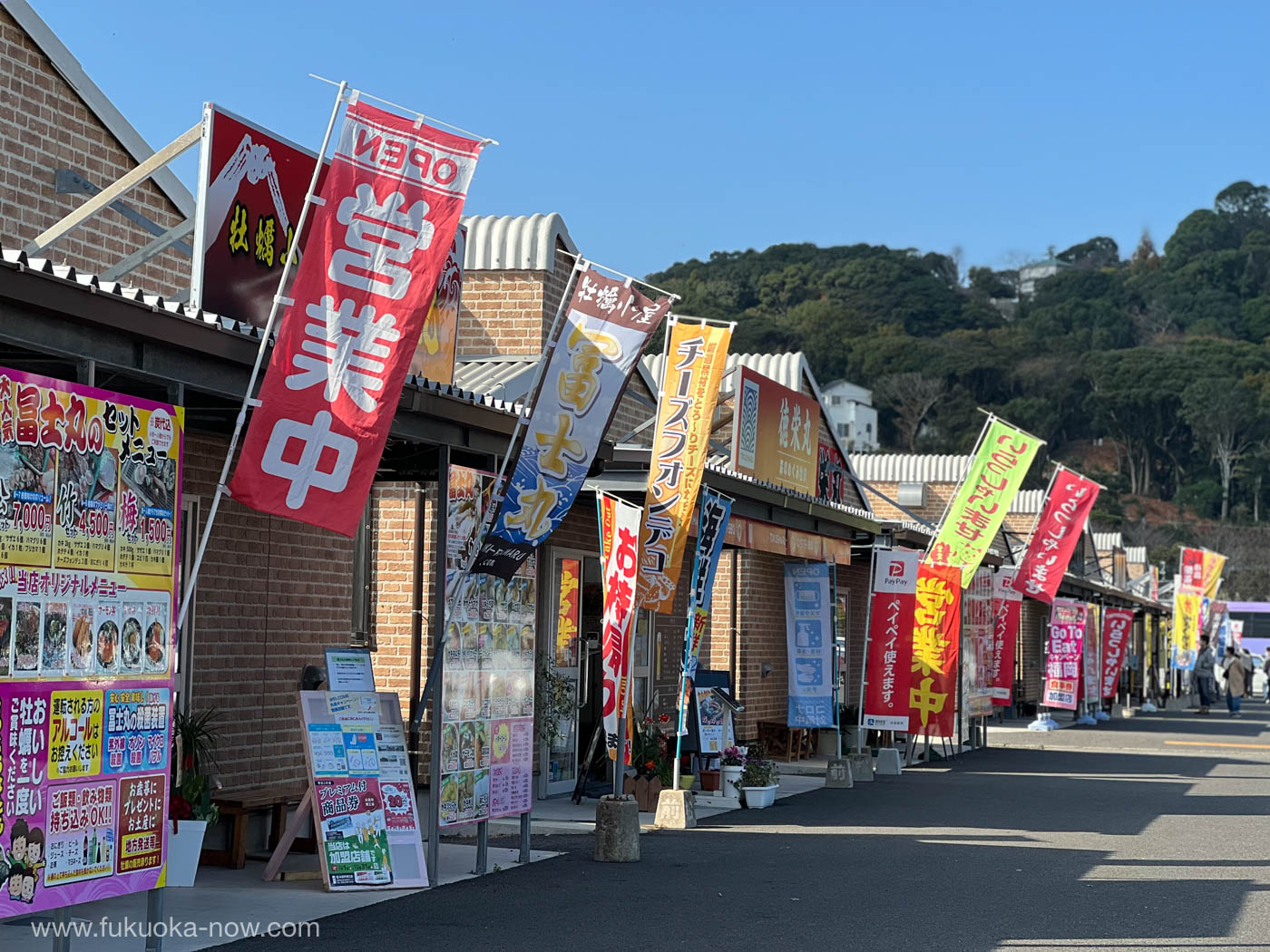 Row of oyster huts at Kishi Fishing Port, the largest kakigoya concentration in Itoshima. Source: Itoshima Now
Kishi Fishing Port (岐志漁港) hosts the largest concentration of oyster huts (kakigoya) in Itoshima with 11 distinct establishments. The port faces Hikitsu Bay on the Genkai Sea, one of the world's richest fishing grounds, and has such ancient significance that it was mentioned in the Man'yōshū, Japan's oldest poetry anthology. 🔗
All 11 oyster huts were completely renovated in 2019, transforming from vinyl house-style structures into permanent store-type facilities, each accommodating approximately 100 people. The huts are arranged in a row on shared grounds, creating a vibrant seasonal dining village. 🔗
Cultural & Religious Significance
The Kakigoya Tradition
The kakigoya tradition emerged from oyster farmers seeking to sell their harvest directly to the public. What began as simple direct-sale points evolved when fishermen started offering charcoal grills for customers to cook their purchases, creating the hamayaki (beach grilling) experience. This rustic, hands-on dining proved immensely popular, transforming simple shacks into bustling seasonal culinary destinations. [🔗](Gemini cultural research)
The kakigoya embody the principle of chisan-chisho (地産地消) - "local production for local consumption" - fostering regional economic self-sufficiency and pride. They represent the satoumi (里海) concept: the symbiotic relationship between coastal communities and the sea, where human activity and the marine environment are mutually beneficial. [🔗](Gemini cultural research)
Most importantly, kakigoya exemplify shun (旬), the Japanese principle of celebrating ingredients at the peak of their season. Operating only during winter months when oysters are at their absolute best, kakigoya perfectly embody this fundamental aspect of Japanese food culture. [🔗](Gemini cultural research)
Oyster Farming in the Genkai Sea
The Genkai Sea's position near mountains means nutrient-rich river water flows from forests into the sea, creating ideal conditions for oyster farming. Scallop shells covered with oyster larvae are hung on floating racks for six months to a year. When ready, oysters are landed, polished, and sterilized with ultraviolet light and ozone before being shipped to the huts. This "sea-to-table" model ensures unparalleled freshness - oysters are often harvested from the bay just meters from where they're cooked. 🔗
Visiting Information
Operating Season: October 2024 - late March/April 2025 (varies by hut)
Hours: Generally 10:00 AM - 5:00 PM (varies by hut; some close when oysters sell out) 🔗
Access from Fukae Area: 15-20 minutes drive along coastal roads
Pricing:
- Oysters: ¥1,200 per kg (approximately 12-14 oysters)
- Table charge/Grill fee: ¥300 per person
- Charcoal: ¥300 per grill
- "A set" packages: ~¥2,000 for 1kg oysters + 2 scallops + dried squid + rice 🔗
Reservations: Strongly recommended, especially on weekends. Call ahead or be prepared for wait times. 🔗
Facilities:
- Free parking at huts
- Indoor seating with charcoal/gas grills at each table
- Free provision of: cotton gloves, tongs, oyster shucking knives, jackets/windbreakers
- Restroom facilities 🔗
The Eleven Kakigoya at Kishi
- Mirukugaki Toyohisa-maru
- Noburin
- Ebisu-maru
- Tokuei-maru
- Nakamiya-maru
- Daiei-maru
- Daikoku-maru
- Kouei-maru
- Nisshin-maru
- Fuji-maru
- Kyokusei 🔗
The Experience
The Hamayaki (Beach Grilling) Process
- Don provided protective gloves and jacket
- Place oysters flat-side down on the charcoal/gas grill
- Wait approximately 1 minute, then flip to flat-side up
- Cook for several more minutes (total 5-10 minutes)
- Listen for oysters "spitting" or "popping" - they're ready when they pop open
- Use provided shucking knife to pry shells fully open
- Exercise caution - oysters can spray hot seawater
- Move cooked oysters to grill edge to keep warm 🔗
Atmosphere and Setting
The kakigoya create a lively, communal dining environment filled with smoke, the sound of sizzling seafood, and the occasional "pop" of oysters opening. The casual, interactive nature makes it equally welcoming for groups, couples, and solo travelers. Staff are friendly and helpful, using demonstrations to guide the cooking process. 🔗
Behind the row of oyster huts, visitors can take a scenic walk around Kishi Port, watching fishermen at work on their boats - a fascinating glimpse into the working fishing community that sustains this tradition. 🔗
Practical Visiting Tips
Cultural Etiquette and Customs
Dress Code:
- Wear casual, washable clothes you don't mind getting smoky or stained
- Avoid nice clothing - smoke and ash pervasive, oysters can spray
- Use provided jackets/windbreakers for protection
- Closed-toe shoes recommended for safety 🔗
BYO (Bring Your Own) Culture:
- Most huts allow and encourage bringing your own toppings and condiments
- Popular additions: butter, cheese, lemon, mayonnaise, various sauces
- Many huts allow BYO drinks (some may charge small corkage fee)
- CRITICAL: Never bring or grill food items not purchased from the hut [🔗](Gemini cultural research)
Dining Customs:
- Say "itadakimasu" before eating (expression of gratitude)
- When squeezing lemon, cover with hand to prevent juice spraying
- Be mindful of 1.5-hour seating limits during busy periods
- Follow staff grilling instructions
- Embrace the messy, hands-on nature of the experience [🔗](Gemini cultural research)
Best Practices
Choosing a Hut:
- Popular recommendation: Choose the busiest hut for best atmosphere
- Each hut has unique specialties and character
- Toyohisa-maru, Noburin, and Ebisu-maru frequently mentioned in reviews 🔗
Ordering Strategy:
- Start with 1kg oysters per person, order more if desired
- Try variety: scallops, turban shells (sazae), squid
- Order rice or onigiri to balance rich seafood
- Pace yourself - grilling takes time 🔗
Safety and Comfort
Grilling Safety:
- Always use provided gloves when handling hot shells
- Be alert when oysters pop open - hot liquid can spray
- Keep children supervised around grills
- Stay hydrated - charcoal grills generate significant heat 🔗
Food Safety:
- Ensure oysters are fully cooked (meat turns white and opaque)
- All oysters undergo UV and ozone sterilization before sale
- Don't eat oysters that don't open during cooking 🔗
November Visit Highlights
Perfect Timing: Early November is peak kakigoya season with oysters at optimal size and sweetness
Weather: Cool but not cold - ideal for outdoor charcoal grilling with provided jackets
Crowds: Moderate on weekdays, busier on weekends (November 2 is Saturday) - book ahead
Photography:
- Morning light excellent for port atmosphere shots
- Dramatic indoor shots with smoke and charcoal ambiance
- Port walk behind huts offers scenic maritime photography 🔗
Location: Kishi Fishing Port, Itoshima
Source: attractions/itoshima/kakigoya-kishi.md