
About
 Thousands of red daruma dolls at Katsuoji Temple - a unique sight representing fulfilled wishes and victory over personal challenges. Photo by EllieRH, CC BY-SA 4.0, via Wikimedia Commons
Katsuō-ji (勝尾寺) stands as one of Osaka's most enchanting temples, nestled in the forested mountains of Minoh at 255 meters elevation. Founded in 727 CE when brothers Zenchū and Zensan established a hermitage in this tranquil mountain setting, the temple's history intertwines with Japan's most powerful ruling families. 🔗
The temple earned its distinctive name "Katsuō-ji" (Temple of Victory) in 880 CE when Emperor Seiwa recovered from illness after the head priest's prayers. Originally named "Shōō-ji" (勝王寺, meaning "Defeating the King"), the name was deemed inappropriate and changed to Katsuō-ji. However, this "victory" holds profound meaning - it represents not defeating others, but overcoming oneself, making it a temple of personal triumph and self-improvement. 🔗
Your visit period (November 4-7, 2025) coincides with early autumn foliage season, with peak colors expected from mid-November to early December. Weekend illuminations begin in early November through December 1st. 🔗
Cultural & Religious Significance
Throughout its 1,300-year history, Katsuoji has been visited by conquerors and leaders from the Minamoto, Ashikaga, Toyotomi, and Tokugawa clans seeking "winner's luck." In 1269, Emperor Go-Saga appointed it an official place of prayer for the Imperial family, and in 1423, it became a prayer temple for the shōgun's family. 🔗
The temple's most distinctive feature emerged about 100 years ago when it began selling daruma dolls. Today, thousands of red daruma dolls carpet the temple grounds - scattered on rooftops, perched on railings, lined along pathways, and piled at viewing spots. These dolls represent fulfilled wishes returned to the temple by grateful visitors, creating one of Japan's most unique and photogenic temple landscapes. 🔗
The temple's precincts with intact boundary markers were designated a National Historic Site of Japan in 1966. Eight stone monuments from 1247 are recognized as the oldest examples in Japan. The temple also houses National Important Cultural Properties including a wooden statue of standing Yakushi Nyorai with attendants and a Lotus Sutra inscribed on paper. 🔗
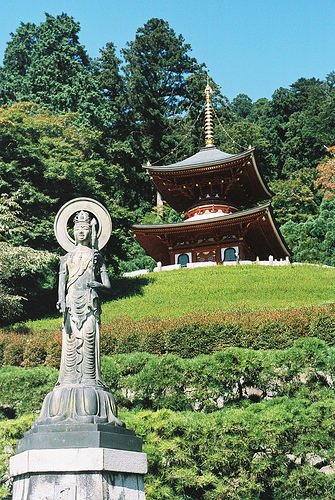
Spanning approximately 264,000 square meters (26 hectares), the sprawling grounds feature elevation changes, a serene central lake, a vermilion pagoda, multiple temple halls, and dozens of Japanese maple trees that transform the mountainside into a blazing tapestry of orange, red, and yellow each autumn. 🔗
Visiting Information
Getting There
From Osaka/Namba Area (Recommended Route):
- Take Osaka Metro Midosuji Line to Senri-Chuo Station (final stop) - approximately 35 minutes from Namba
- From Senri-Chuo Station, take Hankyu Bus #29 to Katsuoji Temple (approximately 30-minute ride)
- Total journey time: approximately 1 hour from central Osaka
- Bus fare: ¥800 one-way for adults (IC cards accepted: Suica/ICOCA) 🔗
Alternative Route via Minoh-Kayano Station:
- Take Osaka Metro Midosuji Line to Ishibashi Handai-mae Station
- Transfer to Hankyu Minoo Line to Minoh-Kayano Station (final stop)
- From Minoh-Kayano Station Bus Stop #8, take Bus #30 to Katsuoji Temple (20-25 minute ride)
- Bus fare: ¥800 one-way for adults 🔗
Important Bus Information:
- Buses run approximately once per hour on weekdays, every 10-30 minutes on weekends/holidays during peak season
- During autumn foliage season, buses become extremely crowded
- Arrive 15-20 minutes early to secure a seat, or risk waiting for the next bus
- Last bus from temple: 4:18 PM on weekdays, 4:48 PM on weekends
- During November, go directly to starting station (Senri-Chuo) to board early and avoid standing-room-only conditions 🔗
Taxi Option:
- From Minoh-Kayano Station: approximately ¥3,400, 20 minutes
- Useful for return journey if buses are crowded 🔗
By Car:
- Parking available on-site
- Warning: During peak autumn weekends, expect massive traffic jams and parking lot to fill completely 🔗
Operating Hours & Admission
Hours:
- Weekdays: 8:00 AM - 5:00 PM
- Saturdays: 8:00 AM - 6:00 PM
- Sundays/Holidays: 8:00 AM - 5:00 PM
- Autumn Illumination (early November - December 1): Extended hours until 8:30 PM daily (last entry 8:00 PM) on weekends and holidays 🔗
Admission:
- High school and older: ¥500
- Elementary/Junior High: ¥400
- Preschoolers (ages 2-6): ¥100
- Under age 2: Free 🔗
Best time to visit:
- For autumn foliage: Mid-November to early December (peak colors)
- For illuminations: Weekends and holidays in November (early November through December 1)
- For fewer crowds: First bus of the day (8:00 AM arrival), weekdays
- Afternoon advantage: Visit after noon when the central lake develops a mystical fog, creating a "fairyland" atmosphere 🔗
Current status: Open and operational. Autumn illumination 2024 ran through December 1 with extended evening hours. 2025 schedule expected to follow similar pattern with weekend/holiday illuminations starting in early November. 🔗
The Trail Experience
The Daruma Doll Experience
The temple's most captivating feature is the sea of thousands of red daruma dolls scattered throughout the grounds. These "Kachi-Daruma" (winning daruma) represent personal victories and fulfilled wishes. Visitors discover them perched in unexpected places - on building roofs, along pathways, beside waterfalls, surrounding the pagoda, and piled at scenic viewpoints. Each doll tells a story of someone who overcame a personal challenge. 🔗
Participating in the Daruma Ritual: Purchase a Kachi-Daruma (prices range from ¥500 to ¥70,000 depending on size):
- Write your immediate goal on the back and life goal on the bottom
- Light incense sticks at the incense burner and focus prayers on your goal
- Bathe the daruma in the incense smoke, which embodies your transcended prayers
- Make a vow of complete commitment, then paint the daruma's right eye black
- When you achieve your goal, return to paint the left eye (or the temple will do this ceremonially for you)
- Dedicate your fulfilled daruma to the temple on the special dedication shelf 🔗
Temple Buildings and Grounds
- Main Hall (Hondo): Houses the principal deity, Senjū Jūichimen Kannon Bosatsu (Thousand-Armed Eleven-Faced Kannon)
- Vermilion Pagoda: A striking focal point surrounded by maple trees and daruma dolls 🔗
- Benzaiten Shrine: Dedicated to the goddess of music and arts, located near the central lake
- 88 Stone Statues: Representing the Shikoku pilgrimage temples, creating a mini-pilgrimage experience
- Central Lake: Creates misty, atmospheric views especially in the afternoon
- Walking Path: A kilometer-long route through the grounds with elevation changes offering varied perspectives 🔗
Additional Activities
Daruma-Mikuji Fortune-Telling: The temple offers unique fortune slips based on the ancient Chinese Yi Jing divination system with 64 hexagram patterns. Unlike typical fortune-telling focused on luck, these provide personal guidance for overcoming challenges. Purchase a daruma with a fortune, scan the QR code for multilingual translations. 🔗
Temple Stamp Experience: Collect stamps from six stations throughout the grounds as you explore, creating a commemorative record of your visit. 🔗
Practical Visiting Tips
November 2025 Visit Considerations
Your visit dates (November 4-7) fall in the early autumn season:
- Early November marks the beginning of the foliage season at Katsuoji
- Peak colors typically occur from mid-November to early December
- Early November visits offer the advantage of seeing the transformation beginning with mixed green and colored leaves
- Less crowded than peak mid-November weekends while still offering beautiful scenery 🔗
CRITICAL ILLUMINATION TIMING: Your November 4-7, 2025 dates (Tuesday-Friday) fall OUTSIDE the expected autumn illumination period. 🔗 Based on historical patterns, the 2024 illumination ran November 9 - December 1 on Saturdays, Sundays, and holidays only. 🔗 If 2025 follows the same pattern, illuminations will likely begin November 8-9, 2025 (the first weekend) and run weekends/holidays through early December. Your visit dates will have normal daytime hours only (8:00 AM - 5:00 PM weekdays).
What IS Available November 4-7:
- Beautiful daytime autumn foliage viewing (early foliage period)
- Regular admission (¥500 adults)
- Full daruma doll tradition experience
- Fewer crowds than illumination weekends
- Temple open 8:00 AM - 5:00 PM (weekdays)
Alternative Options:
- Visit November 4-7 for excellent daytime experience, then return November 8-9 weekend for illumination
- Adjust schedule to visit weekend of November 8-9 if illumination experience is essential
- Accept daytime-only visit and enjoy reduced crowds during early foliage period
Illumination Event Details (for future reference): When illuminations operate, they feature sunset until 20:30 (last admission 20:00) with special shuttle bus service included in ¥3,000 admission (adults) or ¥2,500 (elementary and younger). 🔗 The event transforms the temple with illuminated "maple tunnel" approach, Benten Pond with fountains and mist effects, upward-directed lighting on the two-story pagoda, and thousands of illuminated daruma dolls creating a mystical nighttime atmosphere. 🔗
Weather Considerations: While Osaka city remains warm in early November, the mountain temperature drops significantly. Expect temperatures to be 5-10°C cooler than central Osaka. Bring layers, scarves, and warm clothing for comfort, especially if staying for evening illumination. 🔗
Lighting for Photography:
- Afternoon visits benefit from softer light and mystical lake fog
- Evening illumination creates dramatic lighting on daruma dolls, maple trees, and temple structures
- The interplay of light on autumn leaves, temple architecture, and pond reflections creates stunning photo opportunities 🔗
Crowd Management Strategy
November weekends see significant crowds as Katsuoji ranks among Osaka's most popular autumn viewing spots. For your visit:
- Take the first bus of the day (arriving around 8:00 AM) for the most peaceful experience
- If visiting on a weekend (November 5-6), expect "epic crowds" especially during peak daytime hours
- Consider staying into evening for illumination - crowds tend to be manageable as many day-trippers depart
- Weekday visits (November 4 or 7) offer notably fewer visitors 🔗
Best Photo Spots
- Approach path lined with maple tree archways
- Daruma dolls surrounding the vermilion pagoda
- Central lake with temple reflections (especially atmospheric with afternoon fog)
- Unexpected daruma placements on rooftops and railings throughout grounds
- Evening illumination highlighting the contrast between red daruma and colored foliage 🔗
Cultural Etiquette
Temple Etiquette:
- Dress respectfully: No strict dress code, but appropriate clothing shows respect at this place of worship
- Photography: Generally permitted throughout temple grounds; avoid photographing inside building interiors
- Behavior: Maintain calm, respectful demeanor throughout the sacred space
- Incense ritual: Wave hand to extinguish flame, never blow it out
- Walking: Use the sides of pathways, not the center (considered the path of deities)
- Inside buildings: Remove shoes, wear socks, remove hats 🔗
Cultural Preparation
Understanding the daruma symbolism enriches the experience:
- Daruma represents Bodhidharma, legendary founder of Zen Buddhism
- The weighted base symbolizes resilience - "fall seven times, stand up eight"
- Eyebrows shaped like cranes, facial hair like turtle shells - symbols of longevity
- The tradition emphasizes personal perseverance and self-commitment, not simply wishing for luck
- Returning fulfilled daruma to the temple completes a cycle of gratitude 🔗
Practical Logistics
- Footwear: Wear comfortable walking shoes for kilometer-long paths with stairs and elevation changes
- Bring: Handkerchief for drying hands after purification ritual, extra layers for mountain weather
- Facilities: Restrooms and rest areas available on grounds
- Accessibility: Some areas involve stairs; check with temple about accessible routes
- Combine with: Can be paired with Minoh Falls (nearby) for full-day excursion, though transportation requires planning
- Time allocation: Allow minimum 1.5 hours, ideally 2-3 hours to explore without rushing 🔗
Important Notes
Seasonal Timing Alert: Your November 4-7 visit represents early autumn season. While beautiful, peak foliage colors typically occur from mid-November to early December. If autumn colors are the primary draw, consider that some trees may still be green or just beginning to turn during your visit period. However, this timing offers advantages: fewer crowds than peak season and potential to experience the first weekend illuminations. 🔗
Transportation Planning Critical: Limited bus frequency (once per hour on weekdays) requires careful schedule planning. Missing a bus means significant wait time. Check current bus schedules close to your visit date, as autumn season sometimes adds extra runs but this varies by year. 🔗
Illumination Confirmation: While autumn illumination traditionally runs from early November, specific 2025 dates will be announced by the temple closer to the season. Verify illumination schedule before making evening visit plans. Check temple's official website or contact directly: +81 72-721-7010. 🔗
Physical Requirements: The temple grounds involve walking approximately one kilometer with elevation changes, stairs, and potentially slippery paths after rain. While not strenuous for most visitors, factor this into planning, especially if traveling with elderly family members or those with mobility limitations. 🔗
Worth the Journey: Despite access challenges, Katsuoji consistently receives high visitor praise. Multiple reviewers call it "one of my favorite temples in Japan" and "absolutely stunning," with the temple ranked among Japan's top ten according to a 2023 Jalan survey. The unique daruma landscape combined with natural beauty creates an experience unavailable elsewhere. 🔗
Location: View on Google Maps
Source: attractions/osaka/katsuoji-temple.md