
About
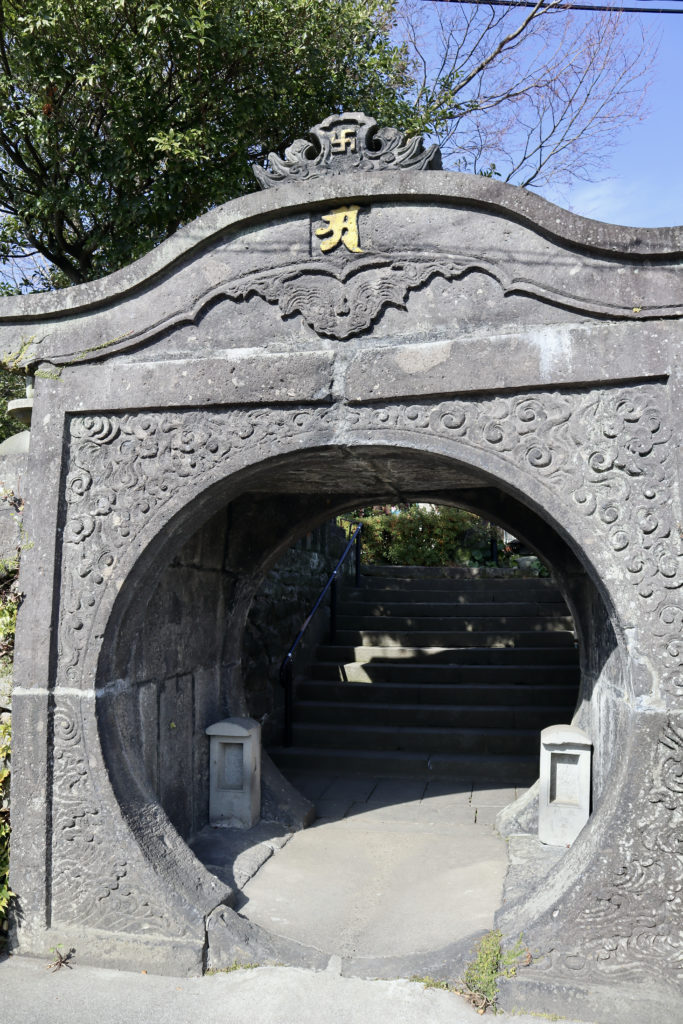 The rare stone San-mon gate at Kiyomizu Temple, Kumamoto, featuring curved patterns representing clouds (upper) and waves (lower). Source: Untapped Kumamoto
Kiyomizu Temple (正式名称: 長谷寺 Chokoku-ji, commonly known as 清水寺 Kiyomizu or 清水観音 Kiyomizu Kannon) is a Tendai Buddhist temple located at the foot of Hanaoka Mountain behind Kumamoto Station. The temple has a poignant historical connection to Kyoto - it was established when provincial governors (kokushi) who served in Higo Province grew homesick for their native Kyoto and decided to recreate elements of their hometown. They modeled the local Hanaoka Mountain (formerly called Gion-yama) after Kyoto's famous Higashiyama district and invited Kiyomizu-dera to establish a branch temple here. 🔗 🔗
The temple operates as a branch of Jingo-ji under the Tendai Buddhist sect, and is dedicated to the Thousand-Armed Kannon (千手観音 Senju Kannon), representing Buddhist compassion and salvation. In the late 19th century, when the local priest retired, the nearby Hase Temple (established in the 8th century) was merged with Kiyomizu Temple, creating the temple's dual identity that persists today. 🔗
The temple grounds contain a culturally significant stone pagoda (宝篋印塔 hokyointo) dedicated to Gocho, a prominent Higo Buddhist monk who devoted most of his life to saving all beings and constructed over 2,000 stone pagodas throughout the region. 🔗
Cultural & Religious Significance
Historical Connection to Kyoto
Kiyomizu Temple embodies the cultural ties between Kumamoto and Kyoto during the provincial governance period. The temple's establishment represents the deep homesickness (郷愁 kyoshu) experienced by Kyoto-born officials serving in distant provinces. By recreating elements of their beloved Higashiyama district and inviting a branch temple of the famous Kiyomizu-dera, these officials created a spiritual connection to their homeland while serving far from home. 🔗
The Rare Stone San-mon Gate
The temple's most distinctive feature is its stone entrance gate (San-mon), which is exceptionally rare in Japanese temple architecture. The gate's surface features intricate curved patterns - the upper portion illustrates clouds while the bottom half depicts waves. According to Buddhist symbolism, crossing through this gate represents entering Buddha's body, making it a spiritually significant threshold. 🔗
Gocho's Stone Pagoda Legacy
The hokyointo pagoda dedicated to the monk Gocho represents an important aspect of Kumamoto's Buddhist heritage. Gocho devoted his life to the salvation of all beings, constructing over 2,000 stone pagodas throughout the Higo region. This particular pagoda stands as a testament to his lifetime of compassionate service and the enduring tradition of stone monument construction in Kumamoto Buddhism. 🔗
Visiting Information
Access
From Kumamoto Station:
- 7-minute walk from Gionbashi Station on the local train line 🔗
- Approximately 3 km from Kumamoto Station, near the railway viaduct 🔗
From Hotel Nikko Kumamoto:
- Approximately 3.5 km distance
- 15-minute taxi ride
- Local train to Gionbashi Station, then 7-minute walk
Parking: Available for 3 vehicles 🔗
Contact: 096-352-2897 🔗
Practical Details
- Hours: Not publicly specified - temple grounds appear accessible during daylight hours
- Admission: Free
- Best time to visit: Morning hours for peaceful atmosphere; late November for potential autumn colors on Hanaoka Mountain
- Typical duration: 30-45 minutes for temple exploration; 1.5-2 hours if combined with nearby Kitaoka Shrine and Hanaoka Mountain hike
- Current status: Open and operational with no reported restrictions
The Temple Experience
Stone San-mon Gate
Begin your visit by approaching the rare stone entrance gate (San-mon). Take time to observe the intricate curved patterns on its surface - the upper portion represents clouds, while the lower section depicts waves. This unusual stone construction makes it a distinctive architectural feature in Japanese temple architecture. As you pass through, contemplate the Buddhist symbolism of entering Buddha's body, crossing the threshold from the mundane world into sacred space. 🔗
Eighteen Rakan Statues
The temple grounds feature a collection of 18 Rakan statues - disciples of Buddha who achieved enlightenment and became high priests. These statues represent different aspects of Buddhist teachings and are positioned throughout the temple grounds. Visitors can observe the individual characteristics and expressions of each Rakan, which traditionally symbolize various states of spiritual attainment. 🔗
Mizu-kake Fudo Myoo Ritual
Participate in the traditional Water-Pouring Fudo Myoo ritual by pouring water from a lotus-shaped basin onto the protective deity statue while making wishes for protection from misfortune. Fudo Myoo is one of the five Wisdom Kings in Japanese Buddhism and is particularly associated with protection and the removal of obstacles. This interactive religious element allows visitors to engage directly with Buddhist practices. 🔗
Train Photography Spot
An unexpected attraction is the temple's excellent vantage point for photographing the Kyushu Shinkansen. The temple thoughtfully provides posted timetables so photography enthusiasts can time their shots to capture the bullet trains passing by against the temple backdrop. This unique combination of traditional architecture and modern transportation creates distinctive photographic opportunities. 🔗
Meeting Sakura-chan
Visitors may have the pleasure of meeting Sakura-chan, the elegant resident temple cat. This friendly feline has become a beloved feature of visits to the temple. 🔗
Practical Visiting Tips
Cultural Etiquette
- Bow slightly when passing through the San-mon gate to show respect for the spiritual threshold
- Participate in the Mizu-kake ritual by gently pouring water over Fudo Myoo statue while silently making your wish
- Photography is generally permitted, but be respectful when photographing Buddhist statues and avoid disturbing any worship activities
- Temple cat etiquette: Allow Sakura-chan to approach you rather than pursuing the cat; respect the animal's space
November Visit Considerations
November 1 Considerations:
- Early November is generally pleasant weather in Kumamoto with temperatures ranging 12-20°C (54-68°F)
- Autumn colors may be beginning to develop on Hanaoka Mountain, though peak foliage typically occurs mid-to-late November
- Morning visits offer the best lighting for photography of the stone gate and peaceful atmosphere for ritual participation
- The temple is located in a quieter residential area, so crowds are minimal compared to major tourist sites
Best Photo Spots
- Stone San-mon Gate: Photograph from the approach stairs to capture the full gate with its cloud and wave patterns
- Rakan Statues: Individual close-ups showcase the unique expressions and characteristics of each disciple
- Shinkansen trains: Check the posted timetable and position yourself with the temple in the foreground
- Mizu-kake Fudo Myoo: The lotus-shaped water basin creates an interesting compositional element
Photography Conditions:
- Stone San-mon gate photographs well in soft morning light
- Shinkansen photography requires checking the posted timetable for optimal timing
- The 18 Rakan statues are positioned for easy photography throughout the grounds
Nearby Attractions
- Kitaoka Shrine (北岡神社): 5-minute walk - Over 1,000-year-old shrine with significant historical importance, visible from Kiyomizu Temple 🔗 🔗
- Hanaoka Mountain (花岡山): 15-minute walk - 133m mountain with panoramic views of Kumamoto City and Buddhist Stupa (Shariden) built for world peace 🔗 🔗
- Myokai-ji Temple Ruins: Nearby location of Hosokawa Family mausoleum 🔗
- Kumamoto Station: 3 km - Major transportation hub with shopping and dining facilities
Integration with Other Locations
Kiyomizu Temple integrates excellently into a half-day exploration circuit around Kumamoto Station's north side:
Suggested Route:
- Morning: Kiyomizu Temple (30-45 min) → Participate in Mizu-kake ritual, explore Rakan statues
- Mid-morning: Kitaoka Shrine (20-30 min) → Ancient shrine with over 1,000 years of history
- Late morning: Hanaoka Mountain hike (1 hour) → Summit views and Buddhist Stupa
- Lunch: Return to Kumamoto Station area for dining options
This circuit offers a comprehensive spiritual and cultural experience showcasing Kumamoto's Buddhist heritage while providing excellent city views from Hanaoka Mountain.
Important Notes
- No public restroom information available - plan accordingly or use facilities at nearby Kumamoto Station
- Limited English information on-site - temple is authentic and less commercialized than major tourist attractions
- Contact temple directly (096-352-2897) for specific questions about visiting hours, special ceremonies, or seasonal events
- Respectful clothing recommended - avoid overly casual attire (no tank tops, very short shorts) as this is an active place of worship
- Temple operates under traditional schedule - daylight hours are safest assumption for visiting without prior contact
- No admission fee makes this an excellent budget-friendly cultural experience
- Free parking for 3 vehicles (arrive early if driving)
Location: View on Google Maps
Source: attractions/kumamoto/kiyomizu-temple.md