
About
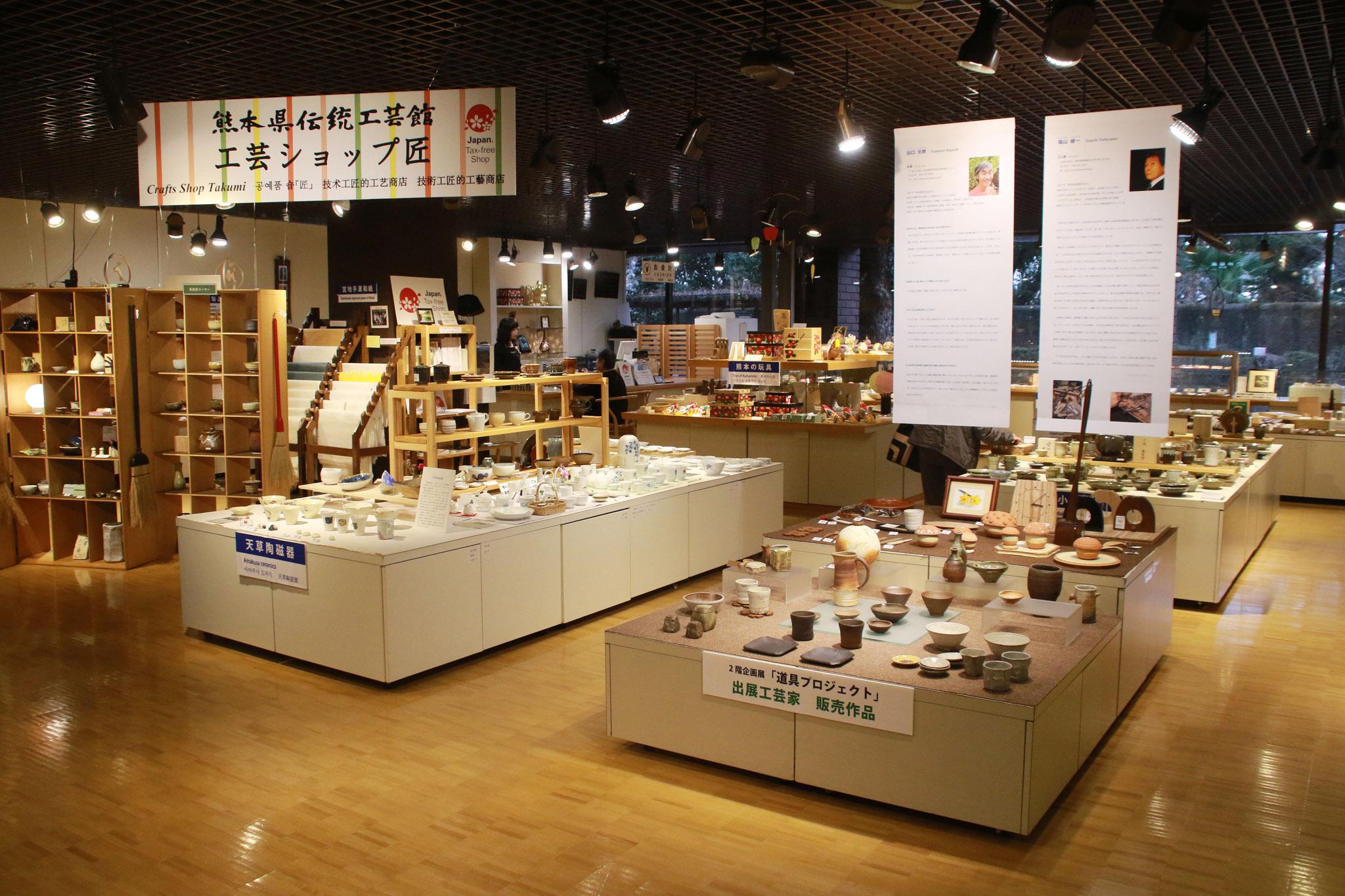 Interior gallery showcasing traditional crafts of Kumamoto Prefecture - Source: Kumamoto City Official Guide
The Kumamoto Prefectural Traditional Crafts Center (熊本県伝統工芸館, Kumamoto Kougeikan) is a three-story facility designed by architect Kiyonori Kikutake that has served as the premier showcase for Kumamoto's traditional crafts since 1982. The center displays 90 items designated as "Traditional Crafts of Kumamoto," with particular emphasis on Higo inlay (Higo zogan) and Yamaga lanterns. 🔗
The facility serves as both a museum and a promotional venue for living traditions, housing exhibitions, craft workshops, and a retail shop selling authentic Kumamoto crafts. The center's collection encompasses the full spectrum of the region's artisan heritage, from samurai-era metalwork to contemporary craft adaptations.
The center occupies a prominent location near Kumamoto Castle (0.3 miles, approximately 5-7 minutes walk), reflecting the deep connection between the region's samurai heritage and its traditional craft culture. 🔗
Cultural & Historical Significance
Higo Inlay (Higo Zogan) - The Samurai's Art
Higo inlay represents one of Japan's most distinguished metalworking traditions, with origins tracing back over 400 years to the early Edo period. The craft began when gunsmith Hayashi Matashichi, who served the Higo feudal lord, mastered nunome inlay techniques in Kyoto and began applying intricate gold and silver patterns to gun barrels and sword guards. 🔗
The technique involves five meticulous steps: engraving, inlaying, rusting, polishing, and finishing. Craftsmen create fine crosshatched textures on iron surfaces using gravers or cold chisels, then carefully lay gold or silver wire into these channels. The iron is then rust-proofed and blackened with a tea solution, creating a dramatic contrast between the lustrous precious metals and the deep black base. This contrast gives Higo inlay pieces "the feel of elegance and dignity." 🔗
When the Meiji government banned sword-wearing in 1876, the craft faced extinction. Innovative craftsmen adapted by creating accessories, tea utensils, and decorative items, ensuring the survival of these traditional techniques. Today, roughly 15 Higo inlay craftsmen continue the tradition in Kumamoto, producing cufflinks, tie pins, pendants, pens, and decorative objects. The craft received national recognition when then-Prime Minister Abe Shinzo presented fountain pens decorated with Higo inlay to fellow world leaders at the 2016 G7 Summit. 🔗
Yamaga Lanterns (Yamaga Toro) - The Pinnacle of Paper Craftsmanship
Yamaga lanterns represent what many consider "the pinnacle of washi craftsmanship," earning official designation as Japanese Traditional Crafts in 2013. These extraordinary lanterns are constructed entirely from washi (traditional Japanese paper) and small amounts of glue, without any wood or metal supports, achieving seamless curves and joints through paper engineering alone. 🔗
The legendary origin traces to Emperor Keiko, the twelfth emperor of Japan, who became lost in heavy fog while traveling up the Kikuchi River. Villagers from Yamaga guided him to safety with torches. Since then, annual torch offerings evolved during the Muromachi period (1336-1573) into the golden paper lanterns that characterize the tradition today. 🔗
The craft flourished in Yamaga due to the area's cultivation of paper mulberry plants, whose inner bark is essential for washi production. Creating these intricate lanterns requires approximately ten years of apprenticeship to master the high-level techniques. Craftsmen fashion elaborate architectural forms—shrines, residences, castles—using only paper engineering, demonstrating extraordinary skill and precision. 🔗
The Yamaga Lantern Festival, held every August, features the spectacular Thousand-Lantern Dance (千人灯籠踊り), where a thousand women dance through the streets with golden lanterns balanced on their heads—a breathtaking display of this 600-year-old tradition. 🔗
Additional Traditional Crafts
The center showcases the full diversity of Kumamoto's artisan heritage: 🔗
- Kawashiri blades - Traditional Japanese knives and cutlery
- Higo spinning tops - Traditional folk toys
- Wood and bamboo crafts - Baskets, utensils, and decorative items
- Ceramics and pottery - Regional pottery traditions
- Indigo-dyed textiles - Traditional dyeing techniques
- Silk products - Textile crafts
- Glassware - Contemporary glass art
- Tatami mats - Traditional flooring materials
Visiting Information (When Reopened Spring 2026)
Normal Operating Hours
- 9:00 AM - 5:00 PM (last entry 4:30 PM)
- Closed: Mondays (or following workday if Monday is a holiday)
- Closed: December 28 - January 4 🔗
Normal Admission Fees
- Adults: ¥210
- University students: ¥130
- High school students and under: Free 🔗
Getting There
From JR Kumamoto Station:
- Take the Kumamoto City Tram (Kumamoto Shiden) to Kumamoto Castle/City Hall (Kumamoto-jo/Shiyakusho-mae) station
- 7-minute walk from the tram stop
- Travel time: Approximately 15-20 minutes total 🔗
Via Shiromegurin Castle Loop Bus:
- The center is a designated stop on the Shiromegurin tourist loop bus
- Bus runs every 30 minutes between 9:00 AM - 5:00 PM
- Fare: ¥130 adults, ¥70 children (school age) 🔗
Walking Distance:
- 0.3 miles (approximately 5-7 minutes walk) from Kumamoto Castle
- Located on the north side of Kumamoto Castle in the Ninomaru area
- Within easy walking distance of other castle-area attractions 🔗
Facilities:
- Free parking: 20 spaces
- Wheelchair accessible with barrier-free elevator
- Disabled restroom (2nd floor)
- Ground floor craft shop (normally)
- Second floor exhibition gallery (normally) 🔗
Contact Information:
- Phone: +81-(0)96-324-4930
- Email: info@kumamoto-kougeikan.jp
- Official Website: https://kumamoto-kougeikan.jp/en/
The Experience (When Reopened)
Exhibition Galleries (Post-Renovation)
The center's exhibition spaces showcase approximately 90 designated traditional crafts from across Kumamoto Prefecture, organized thematically to demonstrate the evolution and diversity of regional artisan traditions. 🔗
Expected Main Gallery Features:
- Comprehensive Higo inlay collection displaying the evolution from samurai-era sword guards to contemporary jewelry
- Yamaga lantern exhibition showcasing the extraordinary paper engineering techniques
- Rotating displays of regional ceramics, textiles, and woodwork
- Live craft demonstrations (typically available during operating hours)
- Interactive displays explaining traditional techniques 🔗
Workshop Experiences (Pre-Renovation)
Previous visitor reports indicate that craft-making classes were offered at the center, with workshops visible to gallery visitors. The renovated facility is expected to continue or expand these offerings. 🔗
Alternative Options During Renovation
Temporary Craft Shop Takumi
During Renovation (through Spring 2026): The museum's retail shop has relocated temporarily: 🔗
- Location: Tsutaya Bookstore Kumamoto Sannenzaka (蔦屋書店 熊本三年坂)
- Also at: Carino Shimotori, 1-2 Ansei-machi, Chuo-ku, Kumamoto City (1st floor)
- Opened: October 1, 2024
- Purpose: Maintain access to authentic Kumamoto crafts during renovation, reach downtown shoppers
- Available: Full selection of Higo inlay items, Yamaga lanterns, ceramics, textiles, and other traditional crafts for purchase
This temporary downtown location provides an opportunity to view and purchase authentic Kumamoto crafts even while the main facility undergoes renovation.
Kumamoto City Handicrafts Promotion Center (Currently Operating)
Located at 1-3-58 Kawashiri, Minami-ku, this facility continues to offer hands-on experiences: 🔗
- Daily craft demonstrations and workshops: 10:00 AM - 4:00 PM
- Workshops available: Higo inlay, bamboo crafting, woodworking, Higo spinning tops, leather dyeing
- Material costs: ¥770-800 per workshop
- Duration: 1-3 hours depending on craft
- Advance booking recommended for morning or afternoon sessions
- Hours: 9:00 AM - 9:00 PM (demonstrations/workshops 10:00 AM - 4:00 PM)
- Closed: Mondays (or following workday if Monday is a holiday), December 28 - January 4
Mitsusuke Studio (Higo Inlay Workshops)
For authentic Higo inlay experiences, Mitsusuke offers damascening workshops at their studio: 🔗
- Short introductory lecture with master craftsman Yuji Osumi on Higo zogan history
- Hands-on carving experience under expert guidance
- Finished ornaments completed by masters and mailed to participants within weeks
- Advance booking required
Yamaga Lantern Workshops
In Yamaga city (approximately 1 hour from Kumamoto city): 🔗
- Create miniature giboshu (decorative lantern symbols) under craftsman guidance
- Duration: 1-2 hours
- Cost: ¥3,000 including all materials
- Reservations generally required, walk-in participation available some days
Practical Visiting Tips
For November 1, 2025 Visit
FACILITY STATUS: CLOSED
- The center will remain closed throughout November 2025
- Renovation completion scheduled for spring 2026 (March-May 2026)
- No access to main exhibition galleries or permanent location 🔗
Alternative Options:
-
Temporary Craft Shop Takumi
- Visit the downtown temporary location at Carino Shimotori
- Purchase authentic crafts and view selected exhibition pieces
- More accessible location in central shopping district
-
Kumamoto City Handicrafts Promotion Center
- Fully operational facility offering similar craft exhibitions
- Hands-on workshop experiences available
- Live craft demonstrations daily
- Located in Kawashiri area (southern Kumamoto)
-
Plan Return Visit
- Consider returning to Kumamoto after spring 2026 reopening
- Renovated facility expected to offer enhanced exhibitions and experiences
- Check official website closer to spring 2026 for reopening announcements
Craft Appreciation and Cultural Etiquette
Understanding Craft Pricing: Visitors should note that authentic traditional crafts represent significant investment in both materials and artisan time. Higo inlay pieces, for example, require years of training to create and involve precious metals. Previous visitors noted the shop "was a bit too commercial, with a greater emphasis on sales than art promotion" but acknowledged that "priciness aside, the items sold in souvenirs store were beyond beautiful!" 🔗
Craft Purchasing Considerations:
- Prices reflect authentic craftsmanship and traditional techniques passed down through generations
- Many items available for both spot sales and special orders
- Purchasing supports the continuation of endangered craft traditions
- Items make meaningful souvenirs with deep cultural significance 🔗
Photography:
- Gallery photography typically permitted for personal use (confirm current policies upon reopening)
- Flash photography may be restricted to protect delicate items
- Workshop areas may have photography restrictions during demonstrations
Workshop Participation Tips
- Book workshops in advance, especially during peak tourist seasons
- Allocate 1-3 hours depending on craft complexity
- Wear comfortable clothing that can tolerate adhesives or dyes
- Follow craftsman instructions carefully—many techniques require precision
- Be patient—traditional crafts take time and practice to master 🔗
Money-Saving Strategies
Free Admission Categories (When Reopened):
- High school students and under enter free
- University students receive discounted admission (¥130) 🔗
Transportation Savings:
- Walking from Kumamoto Castle area saves tram/bus fare
- Shiromegurin day pass offers unlimited castle-area loop bus access if visiting multiple attractions
Alternative Craft Experiences:
- Kumamoto City Handicrafts Promotion Center offers similar exhibitions with workshop options
- Temporary shop location provides access to crafts without admission fee
Combining Attractions
Kumamoto Castle Area Circuit: Within walking distance (5-10 minutes): 🔗
- Kumamoto Castle (0.3 miles)
- Sakuranobaba Josaien
- Kumamoto Prefectural Museum of Art
- Kato Shrine
Recommended Route:
- Morning: Kumamoto Castle visit
- Mid-morning: Traditional Crafts Center (when reopened)
- Lunch: Sakuranobaba Josaien food shops
- Afternoon: Castle museum or art museum
Time Allocation:
- Traditional Crafts Center visit: 45-90 minutes (exhibition viewing only)
- With workshop participation: Add 1-3 hours
- Total castle area exploration: Half day to full day
Nearby Attractions
Within Kumamoto Castle Area:
- Kumamoto Castle - Major reconstruction ongoing following 2016 earthquake damage, spectacular fortress architecture
- Sakuranobaba Josaien - Castle town recreation with restaurants, shops, and historical exhibits
- Kumamoto Prefectural Museum of Art - Contemporary art and regional cultural collections
- Kato Shrine - Dedicated to Kato Kiyomasa, the castle's original builder 🔗
Central Kumamoto Shopping Districts:
- Kamitori Arcade - Covered shopping street with mix of traditional and modern stores
- Shimotori Shopping Arcade - Major shopping district with 170+ shops
- Carino Shimotori - Location of temporary Takumi craft shop 🔗
Traditional Craft Destinations:
- Yamaga City - Home of Yamaga lantern tradition, approximately 1 hour north of Kumamoto
- Yamaga Lantern Folk Art Museum - Comprehensive lantern collection and workshops
- Kumamoto City Handicrafts Promotion Center - Alternative venue for craft exhibitions and workshops 🔗
Integration with Other Locations
Kumamoto City Itinerary Integration:
The Traditional Crafts Center (when reopened) serves as an ideal introduction to Kumamoto's cultural heritage before visiting the craft production areas. Understanding Higo inlay and Yamaga lantern traditions at the center provides context for potential day trips to Yamaga city or visits to active craft workshops.
Day Trip to Yamaga:
- 1 hour by bus from Kumamoto city
- Visit lantern workshops and museum
- Participate in lantern-making experiences
- Combine with onsen (hot spring) bathing—Yamaga is a historic onsen town 🔗
Cultural Learning Progression:
- Orientation: Traditional Crafts Center overview (when reopened)
- Hands-on: Workshop at Handicrafts Promotion Center or Mitsusuke Studio
- Source Visit: Day trip to Yamaga for lantern traditions
- Purchase: Authentic crafts from temporary or permanent shop locations
Thematic Connections:
- Samurai heritage: Connects Higo inlay tradition with Kumamoto Castle's feudal history
- Regional identity: Demonstrates how geography (paper mulberry, metalworking resources) shaped craft traditions
- Cultural continuity: Shows adaptation of traditional techniques to contemporary applications 🔗
Important Notes
Earthquake Recovery Context
Kumamoto experienced significant earthquakes in April 2016, affecting many cultural facilities including Kumamoto Castle. The Traditional Crafts Center sustained damage requiring eventual comprehensive renovation. The current major renovation project (2024-2026) represents both earthquake recovery and facility modernization. This context demonstrates Kumamoto's commitment to preserving and promoting traditional crafts despite natural disaster challenges. 🔗
Post-Renovation Expectations
When the center reopens in spring 2026, visitors can expect:
- Enhanced exhibition spaces with modern climate control and lighting
- Potentially expanded workshop facilities
- Improved accessibility features
- Updated interpretive materials and visitor information
- Continued focus on Higo inlay and Yamaga lantern traditions
Monitoring Reopening:
- Check official website: https://kumamoto-kougeikan.jp/en/
- Follow social media: Instagram @kumamotoptcc
- Contact directly: +81-(0)96-324-4930 or info@kumamoto-kougeikan.jp
Cultural Significance for International Visitors
The Traditional Crafts Center provides international visitors with essential context for understanding Kumamoto's cultural identity beyond its famous castle. The Higo inlay tradition directly connects to samurai culture and the Hosokawa clan's patronage of the arts. Yamaga lanterns represent centuries of religious devotion and community celebration. Understanding these traditions deepens appreciation for the craftsmanship visible throughout Kumamoto and across Kyushu. 🔗
Even during the renovation closure, seeking out the temporary shop locations or visiting alternative craft venues ensures that the cultural learning experience remains accessible to visitors interested in Kumamoto's artisan heritage.
Location: View on Google Maps
Source: attractions/kumamoto/kumamoto-prefectural-traditional-crafts-center.md