
About
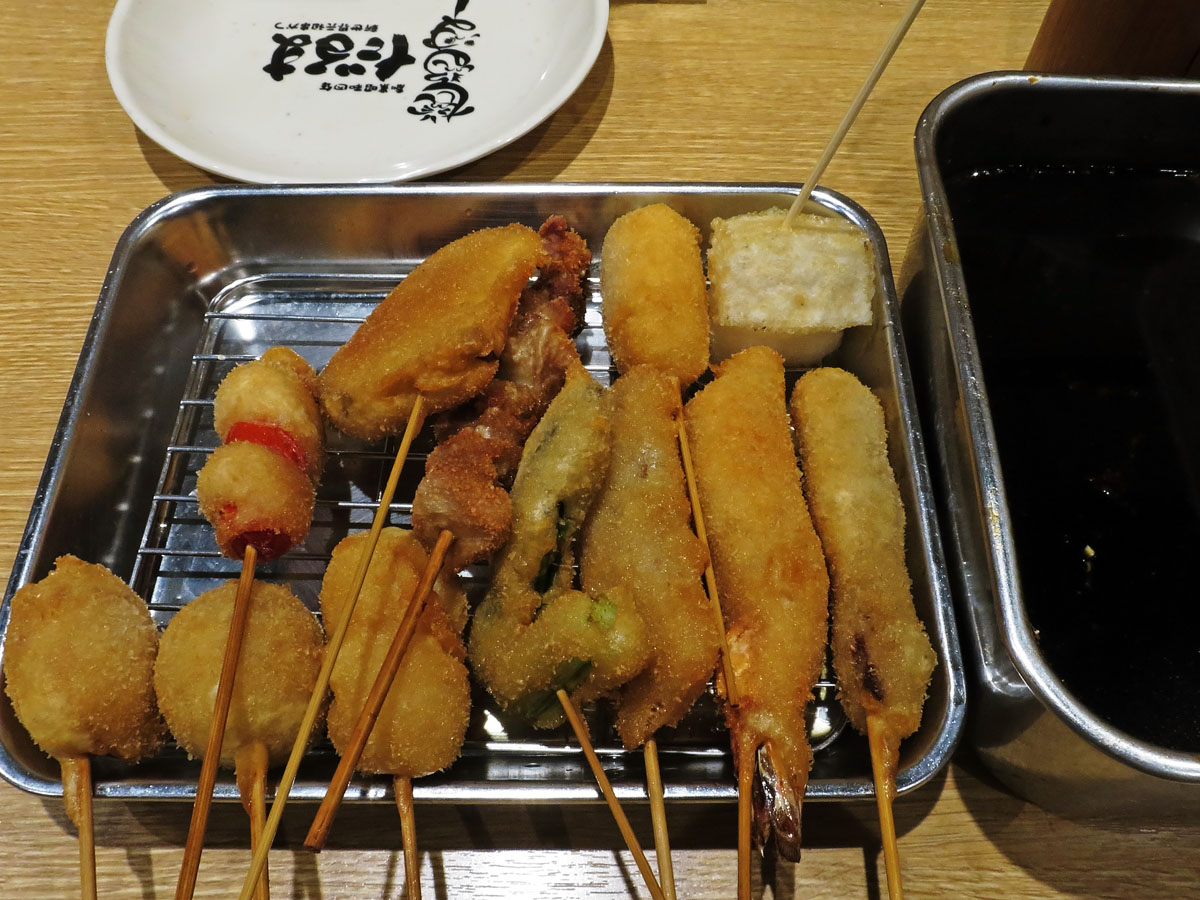 Golden kushikatsu skewers with dipping sauce and cabbage at a traditional Shinsekai restaurant. Photo from Wikimedia Commons
Kushikatsu dining in Shinsekai represents one of Osaka's most iconic and culturally significant culinary experiences. This traditional deep-fried skewer cuisine, born in the working-class Shinsekai district around 1929, embodies Osaka's famous "kuidaore" (eat until you drop) philosophy. 🔗
The experience is inseparable from the retro atmosphere of Shinsekai, a neighborhood designed in 1912 with inspiration from New York's Coney Island and Paris, centered around the iconic Tsutenkaku Tower. 🔗
Cultural & Religious Significance
Historical Origins
Kushikatsu emerged in the Shinsekai district around 1929 as a fast, cheap, and filling meal for laborers and blue-collar workers. 🔗 An owner of a small Shinsekai food bar is said to be the pioneer cook, and her menu became immensely popular among the district's working-class population. 🔗
The concept was elegantly simple: skewer meat and vegetables, coat them in batter and panko breadcrumbs, and deep-fry them for a hearty, satisfying dish. The dish's affordability and unpretentious nature cemented its status as "B-grade gourmet" (B級グルメ) - delicious, down-to-earth, and inexpensive popular food that has evolved into beloved soul food representing the casual and friendly character of Osaka. 🔗
The Legendary "No Double-Dipping" Rule
The most famous aspect of kushikatsu culture is the "二度漬け禁止" (nidozuke kinshi) - no double-dipping rule. This isn't merely a quirky tradition; it's a cornerstone of kushikatsu etiquette rooted in hygiene and respect for fellow diners. 🔗
Kushikatsu restaurants traditionally feature large, communal stainless-steel containers of dipping sauce shared by all customers at a counter. Dipping a skewer you've already bitten into back into the shared sauce is considered unhygienic and a major breach of manners. The rule is a social contract that allows everyone to enjoy the communal sauce without concern, reflecting broader Japanese cultural emphasis on consideration for others and cleanliness. 🔗
The ingenious solution: complimentary raw cabbage leaves provided at every counter. You use a piece of cabbage as a makeshift spoon to scoop sauce from the container and drizzle it onto your skewer for additional sauce. The cabbage also serves as a palate cleanser between greasy skewers. 🔗
Traditional Preparation and Ingredients
Preparation focuses on creating a light, crispy texture. Ingredients are cut into bite-sized pieces and placed on bamboo skewers (kushi), then dipped in thin batter, coated in fine panko breadcrumbs, and deep-fried in hot vegetable oil until golden brown and crispy. 🔗
Popular ingredients include:
- Meats: Beef, pork loin, chicken, sausage, meatballs
- Seafood: Prawns, scallops, octopus, various fish
- Vegetables: Onion, eggplant, shiitake mushrooms, asparagus, lotus root, bell peppers
- Specialty items: Quail eggs, cheese (camembert), mochi (rice cakes), beni shoga (pickled ginger)
- Dessert: Some places offer deep-fried bananas or ice cream
Restaurants typically offer 40-70 varieties with seasonal specialties. 🔗
Visiting Information
Getting to Shinsekai
Station Access:
- Dobutsuen-mae Station (Osaka Metro Midosuji and Sakaisuji Lines) - 5-minute walk 🔗
- Shin-Imamiya Station (JR Osaka Loop Line and Nankai Main Line) - 7-minute walk 🔗
- Ebisucho Station (Sakaisuji Subway Line) - Short walk
From Major Hubs:
- From Namba: 10-minute subway ride to Dobutsuen-mae Station
- From Osaka Station: JR Loop Line to Shin-Imamiya Station (20 minutes)
- From Hotel Universal Port: JR Yumesaki Line to Nishikujo, transfer to JR Loop Line to Shin-Imamiya (approximately 30 minutes) 🔗
District Navigation
The Shinsekai district is compact and easily walkable, centered around Tsutenkaku Tower. Most kushikatsu restaurants line the streets, particularly along Janjan Yokocho alley, within 5 minutes' walk of each other. 🔗
The Kushikatsu Experience
Typical Dining Flow
- Seating: Guided to counter (for standing bars) or table at larger restaurants
- Ordering: Server takes drink order and first order of skewers
- Sauce and Cabbage: Communal sauce pot on counter with complimentary fresh cabbage
- Eating: Dip each skewer once, eat, and place used skewer in designated discard pot
- Re-ordering: Continue ordering skewers and drinks until satisfied
- Payment: Bill calculated based on number of skewers in discard pot 🔗
Standing Bar vs. Sit-Down Experience
- Tachinomi (Standing Bar): Most traditional experience at small counters where locals stop after work. Casual, social atmosphere focused on speed and value
- Sit-Down Restaurants: Larger establishments offering tables for groups and families 🔗
Ordering Strategy for First-Timers
Start with 5-10 skewers, ordering more as you go. Recommended progression:
- Begin with lighter vegetables (onion, asparagus, eggplant) or simple items (quail egg)
- Progress to seafood (shrimp, scallops)
- Move to meats (beef, pork, chicken)
- Try specialty items (cheese, mochi, pickled ginger)
Most popular: pork, shrimp, quail egg, lotus root, asparagus, beef, and cheese. 🔗
Notable Restaurants in Shinsekai
1. Kushikatsu Daruma Shinsekai Main Store - View on Google Maps
Founded 1929 | Originator of Osaka Specialty Kushikatsu
- Location: 2-3-9 Ebisuhigashi, Naniwa Ward (5-minute walk from Dobutsuen-mae Station exit 1)
- Seating: Only 12 counter seats
- Menu: Approximately 40 types of kushikatsu
- Prices: Starting from ¥100-143 per skewer; set menus ¥1,450-¥1,850
- Features: Famous special sauce perfected over 90+ years, all-you-can-eat cabbage 🔗
2. Yaekatsu - Operating in Shinsekai for over 70 years (since 1949)
- Location: 3-4-13 Ebisuhigashi, Naniwa Ward (in Jan Jan Arcade)
- Hours: 10:30 AM - 8:30 PM (closed one weekday)
- Phone: 06-6643-6332
- Price Range: Around ¥2,000 per person
- Note: Very popular with locals and tourists 🔗
3. Tengu - Consistently ranked as good as or better than Daruma
- Location: 3-4-12 Ebisuhigashi, Naniwa Ward (within Janjan Yokocho)
- Hours: 10:30-21:00 (closed Mondays)
- Phone: 06-6641-3577
- Seating: 37 counter seats only
- Features: Crispy, light batter with balanced sweet-and-sour original sauce 🔗
4. Ohsho Club - Revival of 70-year-old chess club with unique shogi-themed decor
- Location: 3-4-9 Ebisuhigashi, Naniwa Ward (Janjan Yokocho)
- Hours: Weekdays 16:00-23:00, Weekends/holidays 11:30-22:00
- Closed: Tuesdays and third Wednesday of each month
- Features: Light texture kushikatsu, shogi pieces and board tables 🔗
Practical Visiting Tips
Seasonal Considerations for November
Weather Advantages:
- Mild, comfortable temperatures around 18°C (64°F) ideal for walking 🔗
- November is off-peak tourist season, resulting in smaller crowds 🔗
- Cool weather makes hot, crispy kushikatsu especially comforting 🔗
Timing Recommendations:
- Early dinner (5:00-6:00 PM): Beat the evening rush
- Late lunch (2:00-3:00 PM): Avoid peak lunch crowds
- Late evening (8:30-9:00 PM): After dinner rush
November Atmospheric Benefits: Shinsekai's neon lights and retro atmosphere shine beautifully in early November darkness (sunset around 5:00 PM). Less crowded than peak tourist seasons while maintaining vibrant local atmosphere.
Dietary Accommodations
Vegetarian Options: Many restaurants offer extensive vegetable selections: asparagus, shiitake mushrooms, pumpkin, eggplant, onion, lotus root, bell peppers. Daruma even serves seitan (wheat meat). 🔗
Important Note: All kushikatsu is fried in the same oil, so vegetarian items share oil with meat and seafood.
Allergy Considerations: Most batters contain egg and milk, though some restaurants offer egg- and milk-free batter. 🔗
Essential Etiquette
- Never double-dip: The cardinal rule
- Use the cabbage: Free cabbage serves as palate cleanser and sauce scoop
- Discard skewers properly: Place used skewers in designated container
- Order in batches: Order 5-10 at a time and continue ordering
- Pace yourself: Encourages variety over speed 🔗
Money-Saving Tips
- Budget-Friendly: Most skewers ¥100-300, satisfying meal ¥2,000-3,000 per person 🔗
- Lunch Sets: Some restaurants offer better-value lunch sets
- Standing Bars: Tachinomi spots often have slightly lower prices
Crowd Avoidance Strategies
- Weekday advantage: Visit Monday-Thursday for smallest crowds
- Off-peak dining times: 2:00-4:00 PM or right at opening (10:30-11:00 AM)
- November timing: Off-peak season means fewer tourists 🔗
- Queue strategy: If Daruma has long line, try Tengu, Yaekatsu, or Ohsho Club nearby
Cultural Preparation
- Cash preferred: Many traditional restaurants are cash-only
- Limited English: Minimal English menus; pointing works well
- Counter seating intimacy: Embrace the communal experience
- Embrace imperfection: Part of the charm is the unpretentious atmosphere
Nearby Attractions
Tsutenkaku Tower
The 103-meter icon of Shinsekai with observation deck. Admission ¥1,200. Visit before or after kushikatsu dining for panoramic Osaka views and the famous Billiken statue. 3-minute walk from most restaurants. 🔗
Janjan Yokocho (Jan Jan Alley)
Narrow covered arcade within Shinsekai lined with kushikatsu restaurants, retro game parlors, and nostalgic shops. Preserves Showa-era atmosphere. 🔗
Tennoji Park and Zoo
15-minute walk from Shinsekai. Osaka's largest park with Tennoji Zoo featuring diverse wildlife.
Abeno Harukas
Japan's tallest building (300m) in nearby Tennoji district. Observation deck, shopping, dining. 10-minute walk from Shinsekai.
Integration with Other Locations
Dotonbori Connection (3 km / 15 minutes): Both showcase Osaka's food culture with different atmospheres. Dotonbori is modern, neon-lit entertainment; Shinsekai preserves retro, working-class character. Easy to combine - Dotonbori for okonomiyaki/takoyaki earlier, Shinsekai for kushikatsu dinner.
Universal Studios Japan Connection: From Hotel Universal Port accommodation, Shinsekai makes an excellent evening destination after theme park day. Direct JR connection (30 minutes) allows easy return to hotel.
Namba/Shinsaibashi Shopping Connection: Combine afternoon shopping in Namba/Shinsaibashi with early evening kushikatsu in Shinsekai (10-minute subway ride).
Important Notes
Safety Considerations: Shinsekai has gentrified significantly in recent years. 🔗 Exercise normal urban caution, particularly late at night. Main tourist areas around Tsutenkaku and Janjan Yokocho are well-populated and safe.
Restaurant Hours: Many kushikatsu restaurants open from lunch (10:30-11:00 AM) and close relatively early (8:30-9:00 PM), especially on weeknights. Plan accordingly.
Reservation Reality: Most traditional kushikatsu restaurants don't accept reservations - first-come, first-served. Be prepared to wait during peak times.
Cash Requirements: Traditional restaurants often operate cash-only. ATMs available at nearby convenience stores throughout Shinsekai.
Location: Shinsekai district, Naniwa Ward - View on Google Maps
Source: attractions/osaka/kushikatsu-shinsekai.md