
About
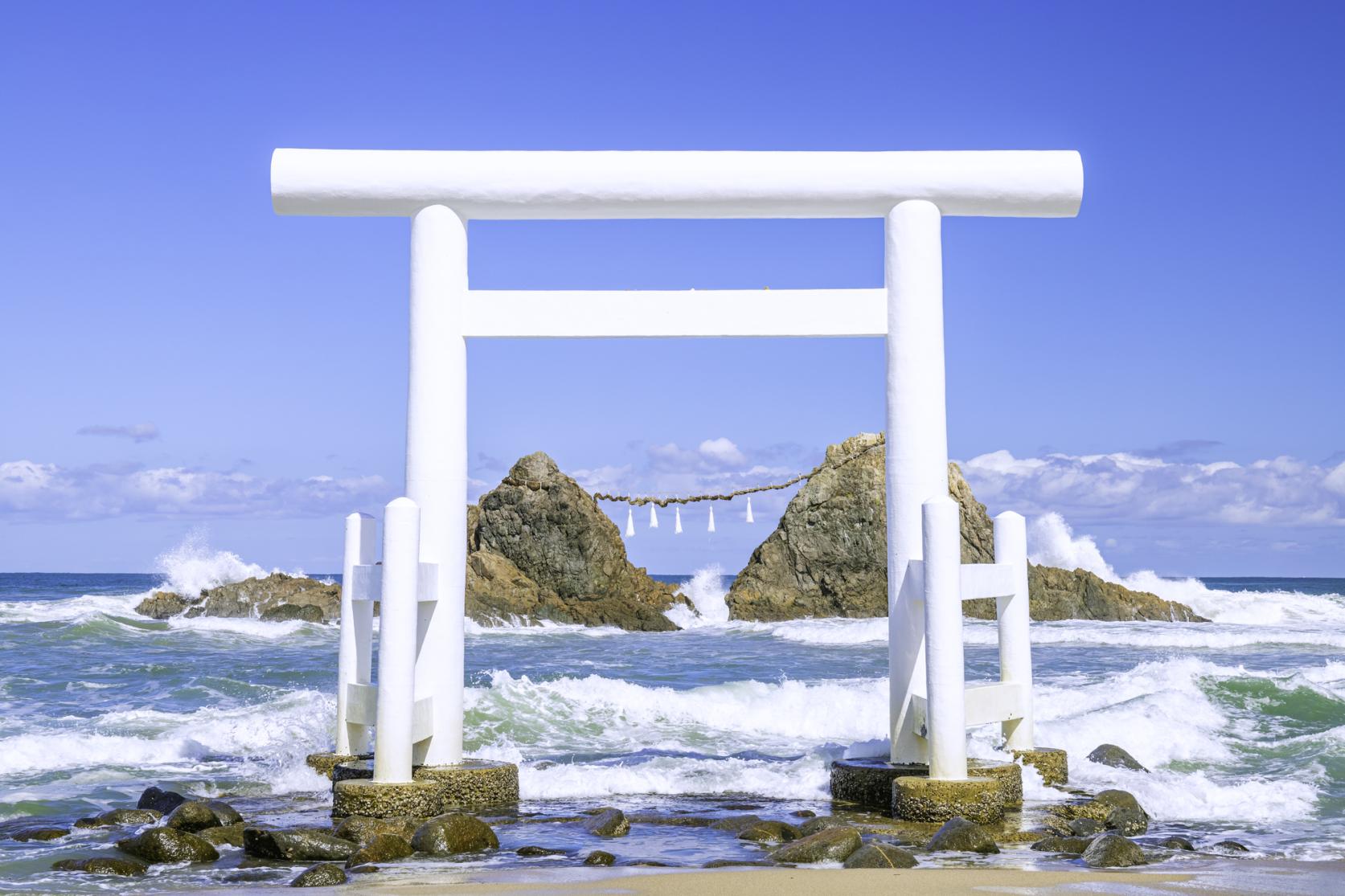 The iconic white torii gate framing the Meoto Iwa (Wedded Rocks) connected by shimenawa rope at Sakurai Futamigaura Beach - Source: Visit Fukuoka Official Tourism Guide
Meoto Iwa at Sakurai Futamigaura represents one of Japan's most spiritually significant coastal landmarks, featuring two sacred rocks standing approximately 150 meters offshore in the Genkai Sea. The larger 11.8-meter "husband" rock (Otoko-iwa) and smaller 11.2-meter "wife" rock (Onna-iwa) are connected by a massive shimenawa (sacred straw rope) weighing nearly one ton and measuring 30 meters in length. This sacred site serves as the Uranomiya (seaside shrine) of Sakurai Shrine, enshrining the primordial Shinto deities Izanagi-no-Mikoto and Izanami-no-Mikoto, whose mythological union gave birth to the Japanese islands. 🔗
Cultural & Religious Significance
The site holds profound cultural importance as a symbol of marital harmony and is believed to bring good fortune in matchmaking relationships. Unlike the famous Meoto Iwa in Ise, Mie Prefecture (known as "Futamigaura of the Rising Sun"), this location is celebrated as "Futamigaura of the Setting Sun," offering spectacular sunset views where the sun often aligns perfectly between the two rocks. 🔗
The shimenawa rope connecting the rocks carries special symbolic weight in Shinto tradition, representing the sacred boundary between the divine and mundane worlds. These sacred twisted ropes mark spaces where kami (deities) reside, keeping impurity away from divine presence. 🔗 The rope's mythological origins trace to the deity Futo-tama who used a magical rope to draw a line preventing the sun goddess Amaterasu from returning to darkness, establishing shimenawa's role as sacred boundary markers. 🔗
The Meoto Iwa shimenawa specifically symbolizes the eternal marital bond between Izanagi and Izanami, the creator deities. The pure white torii gate standing on the beach, erected in 1968, creates a divine frame for the rocks and becomes partially submerged during high tide, enhancing the mystical atmosphere. Each late April to early May (April 27, 2025) during spring tide, the annual Sakurai Futamigaura Shimenawa Festival brings 50-80 community members in traditional happi coats who craft the new rope using endangered wara-zaiku (straw craft) techniques from 8:00-12:00 AM, then walk across the exposed seabed at low tide to climb the rocks and install the sacred rope from 13:00-15:30. 🔗 This living tradition preserves ancient rope-making craftsmanship where rice straw is twisted clockwise and entwined counterclockwise to create self-tensioning structure, representing clouds (the line between heaven and earth) with attached shide (white zigzag paper streamers) symbolizing thunder indicating the kami's descent from heaven. 🔗
November Visit Context: During early November, the shimenawa will be approximately 6 months into its annual cycle (from late April/May replacement), maintaining excellent structural integrity and full decorative elements including fresh shide (white zigzag paper) streamers. 🔗 The ceremony is free to attend for visitors interested in witnessing this cultural heritage preservation in action. 🔗
Visiting Information
Access from Fukuoka City: 40-minute drive via Prefectural Route 54 (Sunset Road) or by Showa Bus West Coast Liner to "Futamigaura Meoto-iwa-mae" (1 hour 10 minutes). From JR Kyudai-Gakkentoshi Station: Take Showa Bus Nishi-no-Ura Line to "Futamigaura" (30 minutes, approximately ¥800, once hourly). From Itoshima Retreat House: 5-minute drive to Sakurai Futamigaura Beach. 🔗
Operating Details: Open 24 hours with free parking directly opposite the torii gate (parking lot locks at night). Current operational status: Fully accessible with multiple stylish cafes and restaurants nearby. November weather: Pleasant autumn temperatures with highs around 19.5°C (67°F) and lows around 11.2°C (52°F), with sunset timing at approximately 5:10-5:26 PM JST providing optimal viewing conditions. 🔗
The Experience
The primary experience centers around witnessing the sacred rocks and their spiritual significance, with the massive shimenawa rope creating a powerful visual symbol of unity and sacred connection. During November visits, the autumn golden hour provides exceptional photography conditions, with the sun setting into the Genkai Sea creating a breathtaking alignment between the rocks. The white torii gate offers multiple viewing angles and becomes particularly striking during high tide when its base is submerged, creating contrast between the white gate, blue sea, and sky for iconic photographic opportunities. 🔗
The site transforms throughout the day, offering different atmospheric experiences from peaceful morning reflection to dramatic sunset viewing. Visitors can explore the nearby beach area and enjoy the coastal scenery while appreciating the spiritual significance of this sacred Shinto location.
Practical Visiting Tips
Photography Strategy: Position directly in front of the torii gate for classic framing, explore various angles along the beach for different perspectives, visit during high tide when the torii gate base is submerged, and time visits for golden hour (4:30-5:30 PM in November) and blue hour for the most dramatic lighting conditions. Photograph the torii gate from the sides or at angles rather than standing directly in the center pathway reserved for deities. 🔗 Avoid photographing people during prayer or worship. 🔗
Cultural Etiquette - Sacred Space Protocols: This is an active sacred Shinto site requiring respectful behavior. Bow once before passing under the torii gate, walking on the left or right side of the pathway (never the center, which is reserved for kami). 🔗 Upon departure, turn around to face the shrine and perform a final bow as an offering of gratitude. 🔗 The massive shimenawa connecting the rocks marks the sacred boundary between the divine realm and the mundane world—never touch or attempt to cross these consecrated ropes. 🔗 This coastal shimenawa connects maritime spiritual traditions with Shinto cosmology, marking the natural rock formations as dwelling places for the creator deities. 🔗
Coastal Shrine Considerations: As a sacred coastal site, the entire area around the marked rocks is considered spiritually significant. Tide conditions affect access and viewing—plan visits accordingly. 🔗 Observe quietly while others pray and recognize the rope's symbolic representation of divine marriage and unity. Keep conversations quiet to maintain the peaceful atmosphere. 🔗
Weather Preparation: Dress in layers for November temperature variations (11-19°C), bring windproof jacket for coastal breezes, wear waterproof footwear for beach walking, and arrive 30 minutes before sunset for optimal positioning. 🔗
Location: View on Google Maps
Source: attractions/itoshima/meoto-iwa-wedded-rocks.md