
About
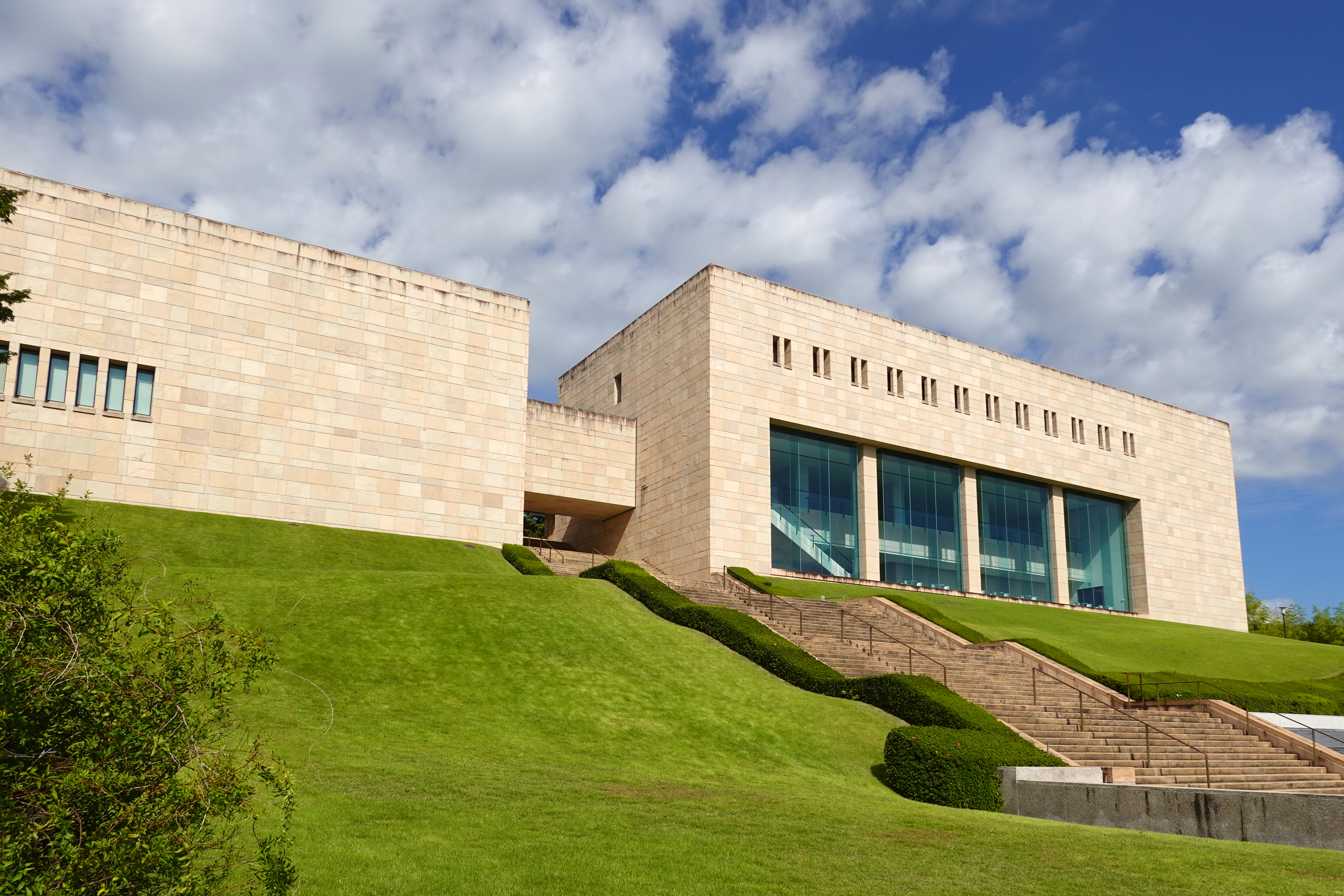 The MOA Museum of Art's impressive hillside location overlooking Sagami Bay in Atami. Photo: Wikimedia Commons
The MOA Museum of Art stands as one of Japan's most architecturally distinctive and culturally significant art institutions, perched 250 meters above sea level on a hillside overlooking Sagami Bay in Atami. Founded in 1982 by Mokichi Okada (1882-1955), philosopher, artist, and founder of the Church of World Messianity, the museum embodies Okada's belief that art possesses transformative power to elevate the human spirit and create a harmonious society. 🔗
The museum's journey begins at the entrance, located 60 meters below the main building, where visitors embark on a remarkable 200-meter ascent through seven escalators. This underground passage, installed to preserve the mountain's scenic beauty, features continuously changing multicolored lighting that creates a transitional experience between the outside world and the art sanctuary above. The centerpiece of this journey is the circular hall, which presents Japan's largest kaleidoscopic projection mapping created by artists Mitsuru Yoda and Yuriko Yoda. 🔗
The museum underwent a comprehensive renovation in 2017 under the direction of renowned contemporary artist Hiroshi Sugimoto and architect Tomoyuki Sakakida. Their design philosophy emphasizes natural light and traditional Japanese materials, including Yakusugi cedar and black plaster, creating a serene and contemplative atmosphere that honors centuries-old building techniques while incorporating modern architectural principles. 🔗
Collection & Cultural Significance
The collection spans 3,500 artworks focusing on Japanese and East Asian art, including three designated National Treasures. The crown jewel is Ogata Kōrin's "Red and White Plum Blossoms" (Kōhaku Baizu Byōbu), a pair of two-panel folding screens created circa 1712-1716, considered one of the most celebrated works in Japanese art history. This masterpiece depicts a stylized flowing river with a white plum tree on one panel and a red plum tree on the other, demonstrating Kōrin's originality through asymmetrical composition and exquisite curved waterways. The museum displays these screens for one month annually in late winter, coinciding with plum blossom season. 🔗
The other National Treasures include Nonomura Ninsei's "Tea-leaf Jar with a design of wisteria," a masterpiece of Kyoto ware ceramics, and "Tekagami Kanboku-jō," a calligraphy album featuring excerpts from the Heian and Kamakura periods. The museum also houses 67 Important Cultural Properties and 46 Important Art Objects. 🔗
Beyond the main galleries, the museum houses the Golden Tea Room, a faithful reconstruction of the 16th-century gold-leaf-covered tearoom originally created for warlord Toyotomi Hideyoshi in 1586 for tea ceremonies with the emperor in Kyoto. The museum also features a fully functional Noh theater where traditional performances are held regularly, including special programs during spring and autumn seasons. 🔗
The museum grounds encompass a vast Japanese garden spanning 230,000 square meters, featuring a plum orchard, azalea hill, traditional teahouses, and bamboo forests. The garden is designed for year-round appreciation, with November being particularly spectacular due to vibrant autumn colors. From the main lobby and Moore Square, visitors enjoy breathtaking panoramic views of Atami, Sagami Bay, Izu Oshima, and Hatsushima islands. 🔗
Visiting Information
Hours: 9:30 AM - 4:30 PM (last admission 4:00 PM) Closed: Thursdays (except national holidays), exhibition change periods, December 26-30 Admission: Adults ¥2,000, High school/college students ¥1,400, Children through junior high free, Online discounts available, Persons with disability certificates free (plus up to 2 companions) Access: From Atami Station, bus from Platform 8 to MOA Museum (7 minutes, ¥200), or taxi (5 minutes, ¥800-¥1,000). Free parking available. 🔗
November Visit Considerations:
- Peak autumn foliage in the Japanese garden (mid-November to early December)
- "Continuum of Rinpa Design" exhibition (October 24 - December 14, 2025)
- Special cultural events November 15-19: "Kōgei Dining 2025" and "Bando Tamasaburo Special Buyo Stage"
- Relatively uncrowded exhibition rooms allowing calm appreciation
- Lower sun angle creates excellent lighting for photography
- Mild temperatures (17-18°C) ideal for garden exploration 🔗
The Museum Experience
Escalator Journey: Begin with the remarkable 200-meter ascent through seven underground escalators with continuously changing multicolored lighting. The highlight is the domed circular hall showcasing Japan's largest kaleidoscopic projection mapping—a mesmerizing Instagram-worthy display. 🔗
Main Exhibition Galleries: Spacious, thoughtfully arranged exhibition rooms showcase rotating displays from the permanent collection. The November visit period features the "Continuum of Rinpa Design" exhibition, exploring decorative painting traditions. 🔗
The Golden Tea Room: A faithful reconstruction of the 16th-century gold-leaf-covered tearoom originally created for Toyotomi Hideyoshi. The gleaming gold surfaces create a unique atmosphere that contrasts with traditional rustic tea room aesthetics. 🔗
Noh Theater (Atamiza): A complete traditional Noh theater where regular performances showcase this UNESCO Intangible Cultural Heritage art form. Special programs are scheduled for spring and autumn. 🔗
Tea Garden and Teahouses: The expansive Japanese garden features multiple traditional teahouses including Teahouse Ippaku-an, where visitors can enjoy authentic matcha and Japanese sweets. During November, the garden displays spectacular autumn foliage, with vibrant reds and golds framing garden pathways. The plum orchard, azalea hill, and bamboo forests offer peaceful walking routes. 🔗
Panoramic Ocean Views: The main lobby and Moore Square provide breathtaking views of Atami city, Sagami Bay, and the islands of Izu Oshima and Hatsushima. The museum's 250-meter elevation creates unobstructed vistas that are particularly stunning during clear weather. 🔗
Moore Square: An outdoor sculpture area featuring works by British sculptor Henry Moore, set against the backdrop of ocean views, merging Western modern art with Japanese landscape aesthetics. 🔗
Practical Visiting Tips
Optimal Viewing Route (2-3 hours):
- Escalator entrance experience with kaleidoscope hall (15 minutes)
- Main lobby panoramic views (5-10 minutes)
- Main exhibition galleries (60-90 minutes)
- Golden Tea Room (15 minutes)
- Noh theater viewing (10 minutes)
- Tea garden stroll with autumn foliage (30-45 minutes)
- Moore Square and outdoor sculpture viewing (15 minutes)
- Museum restaurant or café (optional, 45-60 minutes) 🔗
Best Photo Spots:
- Circular hall kaleidoscope projection (Instagram favorite)
- Main lobby panoramic ocean views toward Sagami Bay and islands
- Moore Square with Henry Moore sculptures and ocean backdrop
- Tea garden autumn foliage pathways
- Bamboo forest atmospheric shots
- Golden Tea Room gold-leaf details (if photography permitted)
- Escalator tunnel with changing colored lights 🔗
Photography Guidelines: Photography is permitted in galleries for personal use without flash. Prohibited items include flash photography, tripods, monopods, and selfie sticks. Special loaned exhibits may have additional photography restrictions, clearly marked in exhibition spaces. 🔗
Crowd Avoidance: Visit on weekdays rather than weekends when possible. Arrive at opening time (9:30 AM) for the quietest experience. Exhibition rooms maintain calm atmosphere even during regular hours. 🔗
Money-Saving Options:
- Purchase tickets online for discounted rates
- Present tickets from nearby attractions (such as Atami Plum Garden) for admission discounts
- Free admission for children through junior high school makes this family-friendly
- Free parking saves transportation costs for those with rental cars 🔗
Museum Etiquette:
- Maintain quiet voices throughout gallery spaces
- Do not touch artworks, display cases, or protective barriers
- Eating and drinking permitted only in designated restaurant and café areas
- Remove backpacks or wear them front-facing in crowded galleries
- Mobile phones should be silenced
- Follow all staff instructions regarding special exhibitions and restricted areas 🔗
What to Wear:
- Smart casual attire appropriate for an art museum setting
- Comfortable walking shoes with good support (avoid high heels due to extensive walking)
- Layers for temperature variations between indoor and outdoor spaces
- November: Light jacket for outdoor garden areas, considering temperatures of 17-18°C
Facilities and Amenities:
Dining Options:
- La Pâtisserie du musée par Toshi Yoroizuka: Patisserie by renowned pâtissier featuring authentic desserts and lunch sets. Tableware specially produced in limited quantities by Living National Treasure Kazumi Murose. 🔗
- Hana-no-Chaya: Japanese restaurant offering traditional cuisine with seasonal ingredients and ocean views
- The Café: Handmade chiffon cakes and 100% natural soft-serve ice cream with views of Sagami Bay
- Teahouse Ippaku-an: Authentic tea ceremony experience with matcha and traditional Japanese sweets
- Soba restaurant Nijo-shinmachi Sobanobou: Traditional soba noodles prepared fresh 🔗
Gift Shop: Sells original MOA merchandise, works by Living National Treasures and traditional craft artists, and specially designed tableware including the cups and saucers used in the museum café. 🔗
Accessibility:
- Facilities equipped with slopes and accessible toilets for wheelchair users
- Important limitation: Wheelchairs cannot access the Tea Garden or escalator passage
- Wheelchair users should arrive at the 3rd floor entrance (alternative entrance)
- Persons with disabilities receive free admission plus concessions for up to two accompanying persons (disability certificate must be presented)
- Seven escalators connect entrance to main building, presenting challenges for those unable to use escalators 🔗
Integration with Atami Hot Springs: Atami is one of Japan's most famous hot spring resort towns. A museum visit integrates beautifully with onsen experiences, with many hotels and ryokan in Atami offering hot spring baths with ocean views. Consider planning a museum visit in the morning or early afternoon, followed by an onsen experience in the evening. 🔗
Nearby Attractions (all within 15-20 minutes by bus):
- Atami City Center: Historic hot spring resort town with Sun Beach, shopping streets, and onsen facilities
- Atami Plum Garden (Atami Baien): Japan's earliest-blooming plum grove with over 470 trees and 60 varieties
- Kinomiya Shrine: Ancient shrine with 2,000-year-old camphor tree (National Natural Monument)
- Atami Ropeway: Scenic cable car with panoramic views of Mount Fuji (on clear days)
- Akao Herb & Rose Garden: Hillside gardens with seasonal flowers overlooking the ocean 🔗
Important Notes:
Escalator Limitations: The museum's signature escalator entrance experience is inaccessible to wheelchair users and those with strollers. Alternative 3rd floor entrance access is available but requires advance arrangement. Contact the museum before visiting to coordinate appropriate access arrangements. 🔗
National Treasure Display Schedule: The museum's most famous work, Ogata Kōrin's "Red and White Plum Blossoms," is only displayed for one month annually in late winter (typically February). Visitors during November will not see this specific National Treasure, though other Important Cultural Properties and significant works from the collection will be on display. 🔗
Exhibition Changes: The museum closes between exhibitions for installation periods. Verify the museum is open by checking the official website, particularly around exhibition transition periods. The November 8-9 visit falls safely within the "Continuum of Rinpa Design" exhibition period (October 24 - December 14, 2025). 🔗
Weather-Dependent Experience: The museum's famous panoramic ocean views are weather-dependent. Foggy or rainy conditions may obscure views of Sagami Bay and the islands. However, the art collection and interior architecture remain compelling regardless of weather conditions. 🔗
Location: View on Google Maps
Source: attractions/izu-peninsula/moa-museum-of-art.md