
About
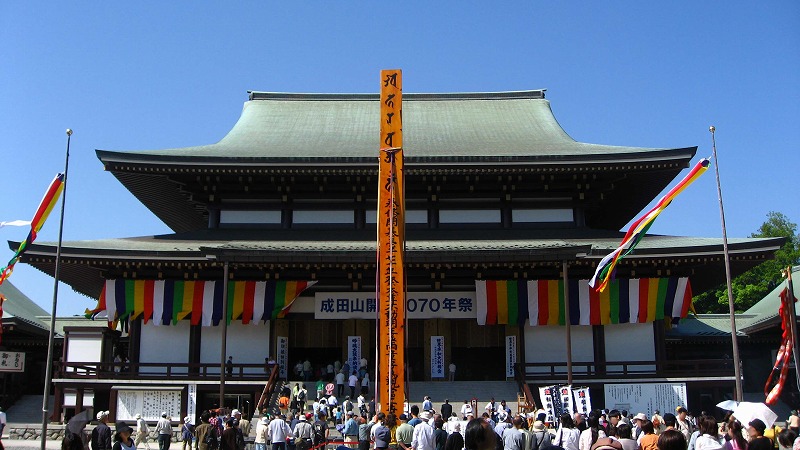 The Great Main Hall (Daihondo) of Naritasan Shinshoji Temple, housing the sacred statue of Fudo Myo-o carved by Kobo Daishi. Photo by Hoku-sou-san, May 2008. Licensed under Creative Commons Attribution-ShareAlike 3.0 Unported via Wikimedia Commons.
Naritasan Shinshoji Temple (成田山新勝寺) is a large and highly popular Shingon Buddhist temple complex in Narita City, Chiba Prefecture, founded in 940 CE by Kanchō Daisōjō, a disciple of Kōbō Daishi (Kukai), the founder of Shingon Buddhism. The temple was established to commemorate the victory of forces dispatched from the Heian capital to suppress the revolt of the powerful Kantō region samurai, Taira no Masakado. 🔗
The temple is dedicated to Acala (Fudō Myō-ō or "Immovable Wisdom King"), one of the Five Wisdom Kings who protect Buddhism. 🔗 The temple's most sacred object is a statue of Fudo Myo-o believed to have been carved by Kobo Daishi himself, making this statue exceptionally sacred due to its direct lineage to the founder of Shingon Buddhism. 🔗
According to legend, after successfully quelling the civil war, the Fudo Myo-o statue lived up to its name and became "immovable," refusing to be carried back to Kyoto, so Naritasan Shinshoji was established to house it. 🔗
Attracting over 10 million annual visitors, Naritasan is second only to Meiji Shrine for New Year's visits and represents one of the most significant Buddhist pilgrimage sites in the Kanto region. 🔗
Cultural & Religious Significance
Fudo Myo-o: The Compassionate Warrior Deity
Fudo Myo-o (不動明王, Acala, "The Immovable One") is a wrathful yet compassionate deity particularly precious to Kobo Daishi, who credited Fudo Myo-o with saving his life during a storm at sea in 806. 🔗 As a wrathful manifestation of the Cosmic Buddha Dainichi Nyorai, Fudo Myo-o serves as a Dharmapāla (protector of Buddhist teachings) embodying the fierce compassion needed to destroy spiritual obstacles. 🔗
The iconography carries profound meaning: The sword held in his right hand cuts through hesitation and ignorance, symbolizing Buddhist enlightenment's wisdom. The rope (kensaku) in his left hand binds the three Buddhist poisons—greed, hatred, and ignorance—that cause suffering. He is portrayed surrounded by flames that consume evil and worldly defilements, sitting on a flat rock symbolizing the unshakeable peace and bliss bestowed to devotees. 🔗 🔗
His vow is to battle evil with a powerful mind of compassion and work for the protection of true happiness. 🔗
The 1,080-Year Continuous Goma Fire Ritual
The Goma Fire Ritual (護摩行, goma-gyo) represents one of the most sacred and continuous religious practices in Japanese Buddhism, with origins tracing back over 3,000 years to Vedic India's homa ceremonies where fire was used as a medium to communicate with deities. 🔗 🔗 At Naritasan Shinshoji Temple, this esoteric Buddhist ceremony has been performed daily without interruption since the temple's founding in 940 CE, creating an unbroken thousand-year tradition of spiritual practice. 🔗
The ritual is central to Shingon Buddhism, Japan's esoteric Buddhist tradition established by Kobo Daishi (Kukai) in the 9th century. The Goma ceremony symbolizes the burning away of worldly desires and obstacles through the purifying wisdom of fire. 🔗
Ritual Structure & Symbolism:
During the ceremony, trained Shingon monks perform a structured sequence: They arrange gomagi (wooden tablets) and offerings in the sacred hearth, invoke Buddhist deities through chanting and mudras (hand gestures), kindle the sacred fire representing the wisdom of the Buddha, and add various offerings including grains, rice, seeds, spices, and wood pellets to create a fragrant atmosphere. 🔗 Throughout the ritual, monks chant sutras while rhythmically beating taiko drums and ringing bells, creating an immersive spiritual environment. 🔗
The wooden sticks or tablets (gomagi) used as fuel represent human desires, afflictions, and obstacles. 🔗 As they burn, they symbolize the transformation and release of these negative elements. Participants write their personal prayers, wishes, and what they want to ward off on these tablets—such as prayers for departed souls, good health, or success in work and study. 🔗
The fire used in the ritual is especially significant as it originated from a Goma prayer that ended war in the Kanto region over 1,000 years ago during the Heian period, and Naritasan's monks have kept these same flames burning with daily Goma prayers ever since. 🔗
The constant beating of taiko drums and rhythmic chanting, together with the visual drama of leaping flames, create a multisensory experience that can induce a trance-like state and have a profound effect on participants. 🔗 The fragrant smoke from various offerings adds to the enchanting, sacred atmosphere.
Visitor Participation:
Visitors can move beyond observation to active participation. At the temple's reception area, visitors can write their personal prayers or wishes on wooden tablets (gomagi) before the ceremony in any language, making the ritual accessible to international visitors. 🔗 🔗 Under the guidance of temple monks, participants may cast their gomagi directly into the sacred fire, creating a personal connection to the ritual's transformative power. 🔗
Visitors may also observe the ohikaji practice, where participants have personal belongings like bags or wallets passed over the sacred flames by temple priests to imbue them with Fudo Myo-o's protective power. This represents a living connection to Heian-period Buddhism and one of the longest-running continuous religious practices in Japan. 🔗
Anyone can join the ceremony regardless of religious background—whether a practicing Buddhist, a visitor interested in Japanese culture, or a traveler seeking a meaningful experience. 🔗 Many visitors report feeling a profound spiritual connection during the ceremony, with the ritual's intensity—watching prayers literally transform into smoke and ash—creating a deeply moving experience regardless of one's religious beliefs.
Kabuki Connection
The temple has strong connections to Japanese performing arts, as Ichikawa Danjūrō I (1660–1704), one of the most influential actors of the golden age of kabuki, was instrumental in promoting and enriching Narita-san. As a lead temple in the Chisan branch of New Shingon Buddhism, Naritasan is one of the best-known temples in the Kantō region and a major center of Fudoson belief. 🔗
Visiting Information
Access from Tokyo
From Shibuya/Central Tokyo:
- Take train to Ueno Station (Ginza Line, ~25 minutes)
- Transfer to Keisei Main Line at Keisei-Ueno Station
- Take Keisei Main Line to Keisei Narita Station
- Local train: 780 yen, 1 hour 35 minutes
- Keisei Skyliner (limited express): ~2,500 yen, 45 minutes 🔗
From Tokyo Station:
- JR Airport Rapid Narita (Yokosuka/Sobu Line): 1,320 yen, 70 minutes direct to JR Narita Station 🔗
From Narita Airport:
- Keisei Line: 7 minutes to Keisei Narita Station
- JR Line: 9 minutes to JR Narita Station 🔗
From Train Stations to Temple:
- 15-20 minute walk from either JR Narita or Keisei Narita Station along the historic Narita Omotesando shopping street (~800 meters) 🔗
Operating Hours & Admission
Hours:
- Temple grounds: Open 24 hours 🔗
- Main buildings: Open until 15:30 (3:30 PM) 🔗
- Goma Fire Ritual reception: 8:00 AM - 4:00 PM 🔗
- Elevator access (for accessibility): 5:00-17:00 🔗
Admission: Free entry to temple grounds and buildings. No admission fee required. 🔗
Goma Fire Ritual Schedule: Free observation, no reservation required. Ceremonies held at two-hour intervals:
- Weekdays: Five ceremonies (9:00 AM, 11:00 AM, 1:00 PM, 3:00 PM, plus additional times)
- Weekends/Holidays: Eight ceremonies throughout the day 🔗
Accessibility: The temple complex is wheelchair accessible with elevators operational from 5:00-17:00. Multiple accessible toilets available at the temple, visitor center, and train stations. 🔗
The Experience
Important Cultural Properties
The temple complex features five structures designated as National Important Cultural Properties:
Kōmyō-dō (Light Hall, 1701): The oldest structure at Naritasan, showcasing mid-Edo period architecture with intricate wood carvings and sculptures. 🔗
Three-Story Pagoda (1712): Standing 25 meters (82 feet) high, this magnificent pagoda enshrines the Five Wisdom Buddhas inside and is adorned with carvings of the Sixteen Arhats and mystical creatures like dragons and qilin by master carpenters of the Edo period. 🔗
Niōmon Main Gate (1830): The impressive entrance gate guarded by Niō warrior statues, traditional protectors of Buddhist temples. 🔗
Shaka-dō (Shakyamuni Hall, 1858): Once the temple's Main Hall, this structure is built using sturdy zelkova wood with elaborate carvings and enshrines Shakyamuni Buddha. 🔗
Gaku-dō (Votive Tablet Hall, 1861): Houses traditional wooden prayer tablets (ema) where visitors write their wishes. 🔗
Modern Structures
Great Main Hall (Daihondo): The temple's spiritual center, housing the sacred statue of Fudo Myo-o carved by Kobo Daishi. This is where the Goma Fire Rituals are performed. 🔗
Great Peace Pagoda (Heiwa Daito): Standing 58 meters tall, this impressive modern structure represents the teachings of Shingon Esoteric Buddhism. Inside, it houses statues of Fudō Myō-ō and the Four Great Myō-ō, features the "Shōwa Great Mandala" and a Tibetan sand mandala, and offers an observation deck (Kongōden) on the top floor. 🔗
Naritasan Park
Behind the main temple lies a vast and beautiful park spanning over 165,000 square meters (16.5 hectares), incorporating both traditional Japanese and European garden elements. 🔗 The park features:
- Ryuchi Pond with scenic walking paths
- Great Peace Pagoda views
- Naritasan Museum of Calligraphy
- Waterfalls and classic Japanese garden elements 🔗
During November, approximately 250 vibrant maple and ginkgo trees display brilliant shades of red, orange, and gold, reflected beautifully in the ponds. 🔗 One visitor described "a special spot in the valley which feels like you're in a secret forest with beautiful fall colors." The park offers peaceful retreats even when the main temple is crowded.
Narita Omotesando Street
The approximately 800-meter approach from Narita Station to the temple is a lively, well-preserved historic street that has prospered as a temple town since the Edo era. 🔗 Over 150 restaurants, shops, and traditional crafts stores line the street, many family-owned for generations. 🔗
Traditional Unagi (Eel) Restaurants: Narita is famous for unagi raised in nearby Inbanuma Lake. Notable establishments include:
- Kawatoyo (川豊): Historic restaurant serving freshly grilled eel since 1910. The signature dish is unaju (eel over rice in a lacquered box), expertly grilled over charcoal and seasoned with sweet-savory tare sauce. No reservations; expect wait times during peak hours. 🔗
Street Food Specialties:
- Unagi Pan at Shimoda Koseido Pan Chaya: Soft, fluffy bread filled with locally sourced grilled eel and fragrant sansho pepper 🔗
- Obanyaki at Kintoki Amataro-yaki: Japanese pancakes filled with fresh bean paste, served for nearly 70 years 🔗
- Roasted chestnuts and traditional sweets
Practical Visiting Tips
Best Time to Visit
Season: Mid-November is peak autumn foliage season (November 15-30) with the annual Colored Leaves Festival featuring free concerts and tea ceremonies on weekends. 🔗
Time of Day: Early morning (8:00-9:00 AM) to avoid crowds, especially on weekends. 🔗
Recommended Timing: Plan to arrive early (8:00-9:00 AM) to experience the 9:00 AM Goma Fire Ritual with smaller crowds, then explore the temple complex and park during the morning when lighting is best for autumn foliage photography. Save Omotesando Street exploration and lunch for midday.
Cultural Etiquette & Respectful Behavior
Purification Procedures (Temizuya/Chozuya):
Before entering the main hall, visitors must purify themselves at the chozuya (water purification basin) near the entrance, symbolizing cleansing both body and spirit. 🔗 The proper purification sequence uses a single dipperful of water for the entire process: 🔗
- Take the hishaku dipper in your right hand and scoop water from the basin
- Pour a small amount over your left hand
- Switch the dipper to your left hand and pour water over your right hand
- Take the ladle again with your right hand, pour a bit of water in the palm of your left hand and rinse your mouth
- Cover your mouth with your left hand, spit the water discreetly on the stones under the basin
- Rinse your left hand with a bit of water
- Slowly raise the ladle to an upright position to let the water rinse over the handle
- Return the ladle to its place
Perform this cleansing ritual gracefully and slowly, as it represents an abbreviated version of misogi, the full-body purification rite still practiced by devotees. 🔗
Prayer Methods at Buddhist Temples:
Buddhist temples follow different protocols than Shinto shrines. After completing purification, the proper prayer sequence is: 🔗
- If there is an incense burner, light incense, extinguish the flame by waving your hand (never blow it out), and place it in the burner
- Bathe in the incense smoke as a way to purify your body
- Approach the offering box and make a small coin donation (5-yen coins are most common as "go-en" sounds like "good fortune")
- Ring the temple gong if present
- Press your hands together in front of your chest (gassho position) and pray quietly
- Complete with one bow
Critical difference from shrines: There is no clapping at Buddhist temples. Clapping hands is a shrine practice and must be avoided at temples. Prayer is conducted quietly without speaking words aloud. 🔗
During Goma Fire Ritual Observation:
The Goma ceremony welcomes visitors of all backgrounds for free observation with no reservation required. Ceremonies are held every two hours from 9:00 AM until 3:00 PM daily, lasting approximately 30 minutes. 🔗
Participation protocols: Before the ceremony, visitors can write their desires on wooden tablets (gomagi) at the temple's reception area. These tablets are incorporated into the ritual as priests burn them in the sacred fire. 🔗 During the ceremony, visitors may also lend their amulets, bags, and other possessions to the priests who hold them over the smoke for purification (ohikaji practice). 🔗
Photography restrictions: Photography is strictly prohibited during the Goma Fire Ritual ceremony itself. Visitors are not allowed to take any pictures of the ceremony to preserve the sacred nature of the ritual and respect the spiritual practice of worshippers and monks. 🔗
Proper behavior: Maintain silence and stillness during the ritual observation. Avoid disrupting the ceremony through movement or conversation. The ritual is a serious spiritual practice for worshippers and monks, even as it welcomes observers of all backgrounds.
Peace Tower specific rules: When visiting sacred areas like the Peace Tower, enter at the right, proceed counter-clockwise around the room, and quietly press your hands together and bow in front of Fudo Myo-o to show respect. 🔗
General Temple Photography:
- Photography permitted throughout temple grounds outside of rituals
- The Three-Story Pagoda is highlighted as a top spot for photos
- Respect any posted photography restrictions in specific buildings
- Flash photography discouraged as it can damage delicate artworks
Clothing Appropriateness:
There is no strict dress code at Japanese temples, but modest attire leaning toward smart-casual shows proper respect. 🔗 The general guideline is clothing that covers shoulders and knees, avoiding anything too revealing or casual. 🔗
Appropriate attire: Knee-length shorts, skirts, and dresses are acceptable. Jeans and t-shirts are fine for casual temple visits. Layered clothing for November weather (cardigans, light jackets, sweaters) is both practical and culturally appropriate. 🔗
What to avoid: Very short shorts, tank tops, short skirts, low-cut tops (Japanese culture values modesty regarding cleavage), and leather or fur items, even on bags, especially at temples. 🔗
Footwear note: You'll need to remove shoes when entering temple buildings, so always wear clean socks. People often remove hats when bowing as a sign of respect. 🔗
Donation and Offering Protocols:
Offering Box Donations: Small coin donations are customary when approaching prayer areas. The most common offering is a 5-yen coin (go-en), as the word sounds like "good fortune" in Japanese. Place coins gently in the offering box - avoid throwing them forcefully. 🔗
Wooden Prayer Tablets (Gomagi): For the Goma Fire Ritual, purchase wooden prayer tablets (gomagi) at the temple's reception area before the ceremony. Write your wishes on these tablets, which priests will burn in the sacred fire as symbolic purification. This is viewed as both a spiritual practice and a donation supporting the temple. 🔗
Omamori (Amulets): Omamori protective amulets cost 300-1,500 yen and are viewed as donations to the temple. Never open omamori, as doing so releases the protective blessing inside. Carry them on your person or tie them to bags or purses. 🔗 🔗 Replace omamori annually; return old amulets to the same temple with some monetary offering (osaisen) showing appreciation. All temples have designated collection areas for old amulets. 🔗
Ema (Prayer Boards): Ema wooden prayer plaques cost 500-1,000 yen. You don't need to write in Japanese - sincere wishes written from the heart are understood regardless of language. While no strict rules exist, it's preferable to write your full name, address, and birthday so the deity knows whose wish it is. After writing your wish, hang the ema board at the designated display area on temple grounds as your offering. 🔗 🔗 🔗
Photography Spots
- Three-Story Pagoda with autumn foliage frame
- Great Peace Pagoda reflected in park ponds
- Secret forest valley spot in Naritasan Park (described by visitors as magical during autumn) 🔗
- Omotesando Street approach with traditional architecture
- Main Hall exterior (interior photography prohibited during rituals)
Money-Saving Tips
- Free Entry: No admission fees for temple grounds or buildings 🔗
- Free Tours: Available daily from 10:00 AM - 3:00 PM 🔗
- Free Festival Events: Concerts and tea ceremonies during Colored Leaves Festival (weekends, November 15-30)
- JR Pass Eligible: Tokyo to Narita via JR Airport Rapid Narita if you have a JR Pass 🔗
Local Insider Tips
Go Beyond the Main Hall: Don't stop at the Daihondo—the Great Pagoda of Peace at the back and Naritasan Park are where true seasonal beauty and peaceful atmosphere lie.
Try the Local Specialty: Even if not having a full meal, watch chefs skillfully prepare eel at Omotesando storefronts. Roasted chestnuts are another popular seasonal treat during November.
Check the Ritual Schedule: Upon arrival, verify Goma Fire Ritual times to plan your visit accordingly. Witnessing this ceremony is a highlight of any visit.
Escape the Crowds: While the main temple path can be very busy, the outer trails of Naritasan Park offer quiet, contemplative walks and the best photo opportunities for autumn leaves without crowds.
Incense Ritual: Purchase a bundle of incense, light it, and place it in the large bronze burner near the main hall. Wafting some of the smoke towards yourself is believed to have healing properties.
Temple Fairs: Special temple fairs occur on the 1st, 15th, and 28th of each month. 🔗
November Visit Specifics
Seasonal Highlights:
- Peak Autumn Foliage: Mid-November is the peak viewing period, with the 26th Colored Leaves Festival running November 15-30, 2025 🔗
- Festival Activities: Free concerts (koto and shakuhachi) and open-air tea ceremonies held on Saturdays, Sundays, and holidays during the festival period
- Traffic Regulation: Special traffic control around Naritasan on Saturdays, Sundays, and holidays during the festival
Weather: November weather is generally cool and crisp, ideal for temple exploration and park walking. The temple is bustling with visitors enjoying the autumn colors, creating a festive atmosphere, particularly on weekends.
Crowd Management: "Walking from the train station through the heavy crowds heading to this place was challenging" during early November, recommending early morning visits for a more relaxed experience. 🔗 The park areas typically have "plenty of space" even when the temple is crowded.
Important Notes
Ritual Photography Prohibition: While temple grounds allow photography, recording inside the main hall during Goma Fire Rituals is strictly prohibited out of respect for the sacred ceremony.
Building Hours vs. Grounds: Temple buildings close at 15:30 (3:30 PM), though grounds remain open 24 hours. Plan to arrive by early afternoon at the latest to fully experience the buildings and witness a Goma ritual.
Continuous Spiritual Practice: The Goma Fire Ritual has been performed every single day for over 1,080 years without interruption, making this one of the longest-running continuous religious practices in Japan—a living connection to Heian-period Buddhism. 🔗
Location: View on Google Maps
Source: attractions/chiba/naritasan-shinshoji-temple.md