
About
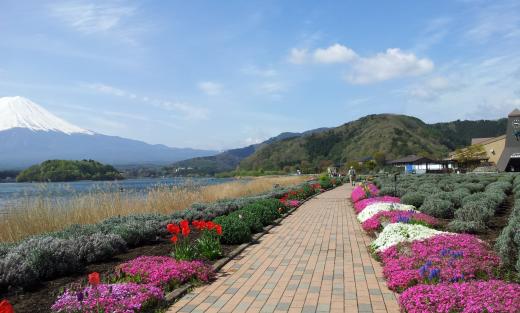 Stunning view of Oishi Park's Flower Street with Mount Fuji and Lake Kawaguchiko, showcasing the park's premier location for photography and seasonal flower displays
Oishi Park (大石公園) stands as one of Japan's most photographed locations, situated on the northern shore of Lake Kawaguchi with unobstructed panoramic views of Mount Fuji. The park's name derives from a large sacred stone (about 8 meters high) enshrined at the nearby Oishi Shrine, which has been an object of worship for centuries. 🔗
The park gained prominence as part of Japan's tourism development around Mount Fuji in the early 20th century, transforming from agricultural land into a carefully designed scenic destination. Its cultural significance extends beyond mere tourism - Mount Fuji, visible across Lake Kawaguchi, is one of Japan's "Three Holy Mountains" and a UNESCO World Heritage Site, making this viewing location spiritually and culturally meaningful. 🔗
The park's centerpiece is the "Hana Kaido" (Flower Street), a promenade featuring over 90 varieties of seasonal flowers that bloom throughout the year. From late April through October, visitors experience a constantly changing floral display that has become synonymous with iconic Mount Fuji photography. 🔗
Cultural & Religious Significance
Oishi Park holds deep cultural significance as a sacred viewing ground for Mount Fuji, Japan's most revered mountain. The nearby Oishi Shrine has served as a worship site for centuries, with the large sacred stone representing the spiritual connection between earth and the divine mountain. 🔗
The park serves as the main venue for the famous Kawaguchiko Herb Festival during lavender season (late June to mid-July), representing the modern continuation of seasonal flower appreciation (hanami) traditions that celebrate nature's cyclical beauty. This location embodies the Japanese aesthetic principle of mono no aware - the bittersweet awareness of the impermanence of all things, perfectly captured in the seasonal transformation of flowers against the eternal presence of Mount Fuji. 🔗
Visiting Information
Operating Hours: Park open 24 hours; Natural Living Center shop 9:00 AM–5:45 PM (Winter: October–February until 5:15 PM); Cafe 9:30 AM–4:45 PM (Winter: October–February until 4:15 PM) 🔗
Access: Take the Fuji Five Lakes Round Bus (Red Line) to "Kawaguchiko Shizen Seikatsu-kan" bus stop. Journey time approximately 30 minutes from Kawaguchiko Station. Large free parking lot available with easy highway access. 🔗
Current Status: Open year-round with live camera monitoring system for real-time Mount Fuji visibility. Fully operational with no restrictions as of 2025.
The Experience
October Kochia Display (Primary Attraction for Visit Period): The park's autumn transformation centers on the spectacular kochia (summer cypress) fields. From mid to late October, these round, bush-like plants turn brilliant red, creating one of Japan's most photographed autumn scenes. The deep red kochia against Mount Fuji's snow-capped peak provides an iconic contrast that attracts photographers worldwide. 🔗
Flower Street Promenade: The carefully designed walkway features seasonal plantings including celosia and sages in October, extending the floral display beyond the famous kochia. The promenade offers multiple viewing angles and photo opportunities with Mount Fuji as the constant backdrop. 🔗
Kawaguchiko Natural Living Center: Located within the park, this facility offers jam-making workshops using local fruits, a two-story cafe restaurant, and specialty shops featuring regional products. The second-floor "Kitchen Fujiyama View" provides elevated dining with panoramic Mount Fuji views. 🔗
October 2025 Seasonal Highlights: Peak kochia season with brilliant red coloration (mid to late October optimal timing). Clear autumn weather typically provides excellent Mount Fuji visibility. Comfortable temperatures averaging 18°C perfect for extended outdoor photography.
Practical Visiting Tips
Photography Strategy: Golden hour lighting (6:30-7:30 AM and 4:30-5:30 PM) provides optimal conditions. Live camera system allows real-time visibility checking before visiting. Clear morning conditions generally offer best Mount Fuji visibility. Multiple elevated viewing platforms accommodate various photography angles. 🔗
Best Photo Spots: Eastern end of Flower Street for classic kochia-Mount Fuji composition. Natural Living Center's second floor for elevated perspective. Multiple points along the lakshore promenade for varied compositions. Early morning positioning for golden light on Mount Fuji's peak.
Crowd Avoidance: Visit before 9 AM or after 4 PM to avoid tour bus crowds. Weekday visits significantly less crowded than weekends. Consider nearby Nagasaki Park as alternative with fewer visitors but similar views.
Cultural Etiquette: Stay on designated paths to protect flower displays. No picking or touching flowers. Carry trash home (limited public disposal facilities). Maintain quiet, respectful atmosphere for other visitors. Professional photography equipment may have restrictions.
Weather Preparation: October falls within autumn rain season, so waterproof gear recommended. However, clear days provide exceptional visibility and comfortable touring conditions. 🔗
Mount Fuji Visibility: Visibility heavily dependent on weather conditions. Check live camera feeds before visiting. Autumn generally provides clearer conditions than summer, but cloud cover can obscure views entirely. October 23-24 visit timing is optimal for kochia peak coloration.
Location: View on Google Maps
Source: attractions/fujikawaguchiko/oishi-park.md