About
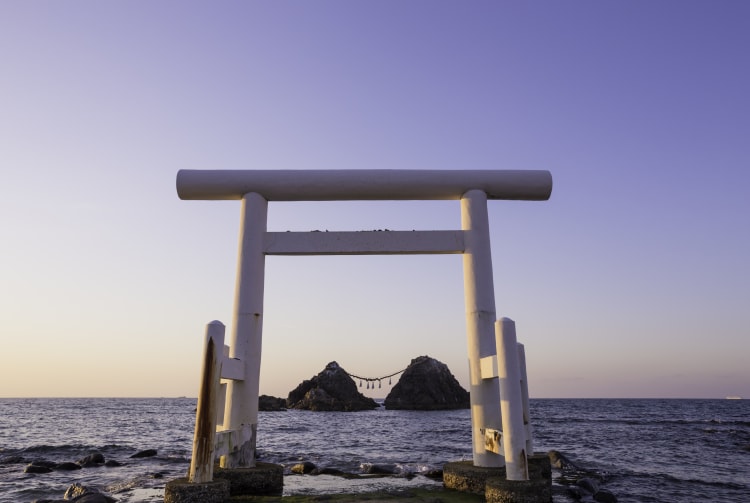 The iconic white torii gate standing in the sea with the sacred Meoto Iwa (wedded rocks) connected by shimenawa rope in the background - Japan National Tourism Organization
Sakurai Futamigaura stands as one of Japan's most spiritually significant and photographically stunning coastal landmarks. Located in the northern part of Itoshima City within Genkai Quasi-National Park, this sacred site combines natural beauty with profound Shinto religious meaning. The location is distinguished by its pure white torii gate standing in the sea and two rocky outcrops called Meoto Iwa (夫婦岩), or "Wedded Rocks," positioned approximately 150 meters offshore. 🔗
Unlike the famous Futamigaura in Ise (Mie Prefecture) known for sunrise views, Sakurai Futamigaura is celebrated as "Sunset Futamigaura" for its spectacular evening views over the Genkai Sea. The site has earned recognition on Japan's "Top 100 Beaches" and "Top 100 Sunset Views" lists, making it one of Fukuoka's most photographed and spiritually significant destinations. 🔗
Cultural & Religious Significance
The site belongs to Sakurai Shrine, a designated Fukuoka Prefecture cultural property revered as a sacred place dedicated to Izanagi and Izanami, the deities from Japanese creation mythology. The larger rock (11.8m high) represents the male deity/husband, while the smaller rock (11.2m high) represents the female deity/wife. These sacred rocks are bound together by a massive shimenawa rope - a 30-meter long, 50cm diameter sacred rope weighing approximately one ton that symbolizes the divine union and spiritual connection between the creation deities. 🔗
Each year between late April and early May, community members conduct a sacred ceremony to replace the massive rope during spring tide. This ton-weight rope replacement requires over 50 participants and represents renewal of sacred bonds between the deities. The wedding rock symbolism makes it a popular destination for couples and those seeking marital harmony blessings. 🔗
Visiting Information
Access from Itoshima Retreat House: Approximately 15-20 minutes drive via local Itoshima roads
From Fukuoka City Center:
- Direct Express Bus: West Coast Liner from Hakata Bus Terminal or Tenjin 4-chome bus stop
- Cost: ¥1,150 per person, Duration: Approximately 1 hour 11 minutes
- Frequency: Every 30 minutes in morning, then hourly service
- Alternative: JR Chikuhi Line to Kyūdai-Gakkentoshi Station + local bus 5B-2 (50 minutes total) 🔗
Practical Details:
- Hours: Open 24/7 (public beach access with no entry restrictions)
- Admission: Free
- Parking: 47 car spaces available; ¥300 for 60 minutes or some free options for cafe customers
- Current Status: Open and accessible year-round 🔗
The Experience
Primary Experiences:
- Photography at White Torii Gate: The pure white torii creates stunning contrast against blue sea and sky. During high tide, the gate's base is submerged, creating ethereal floating effect
- Meoto Iwa Viewing: Observe the sacred wedded rocks bound by the massive shimenawa rope, symbolizing eternal marital harmony and divine union
- Sunset Viewing: Experience one of Japan's top sunset viewing spots, particularly magical during "blue hour" when sky transforms into spectrum of deep blues
- Beach Stroll: Walk along the sandy beach area with rocky shoreline and scenic green hills backdrop 🔗
October/November Seasonal Features:
- Golden Autumn Light: Sunsets bathe the area in particularly warm golden light during autumn months
- Comfortable Weather: Mild temperatures ideal for extended outdoor photography and beach walks
- Reduced Crowds: Quieter atmosphere compared to summer months, perfect for contemplative visits
- Clear Visibility: Often excellent atmospheric conditions for photography and distant sea views
Practical Visiting Tips
Photography Excellence:
- Prime Photo Spots: Position between torii gate and rocks for classic composition; various angles along beach offer different perspectives
- Equipment: Wide-angle lens recommended for capturing full scene; tripod useful for blue hour shots
- Lighting: Golden hour (hour before sunset) and blue hour (30 minutes after sunset) provide optimal conditions
- Tide Considerations: High tide creates dramatic gate-floating effect; low tide allows closer approach to gate base 🔗
Cultural Etiquette and Respect:
- Sacred Site Behavior: Maintain respectful demeanor; avoid loud conversations or disruptive behavior
- Photography Ethics: While photography is encouraged, remember this is an active spiritual site requiring reverent approach
- Shimenawa Significance: Do not attempt to touch or climb the sacred rope or rocks
- Torii Gate Respect: Understand you're entering sacred space when passing through or near the gate
Practical Preparation:
- Transportation Planning: Confirm bus schedule return times (limited hourly service)
- Food/Supplies: Bring snacks and water as nearby facilities have limited hours
- Weather Protection: Coastal location can be windy; bring layers for comfort
- Cash: Parking requires payment; some facilities may not accept cards
Location: View on Google Maps
Source: attractions/fukuoka/sakurai-futamigaura.md