
About
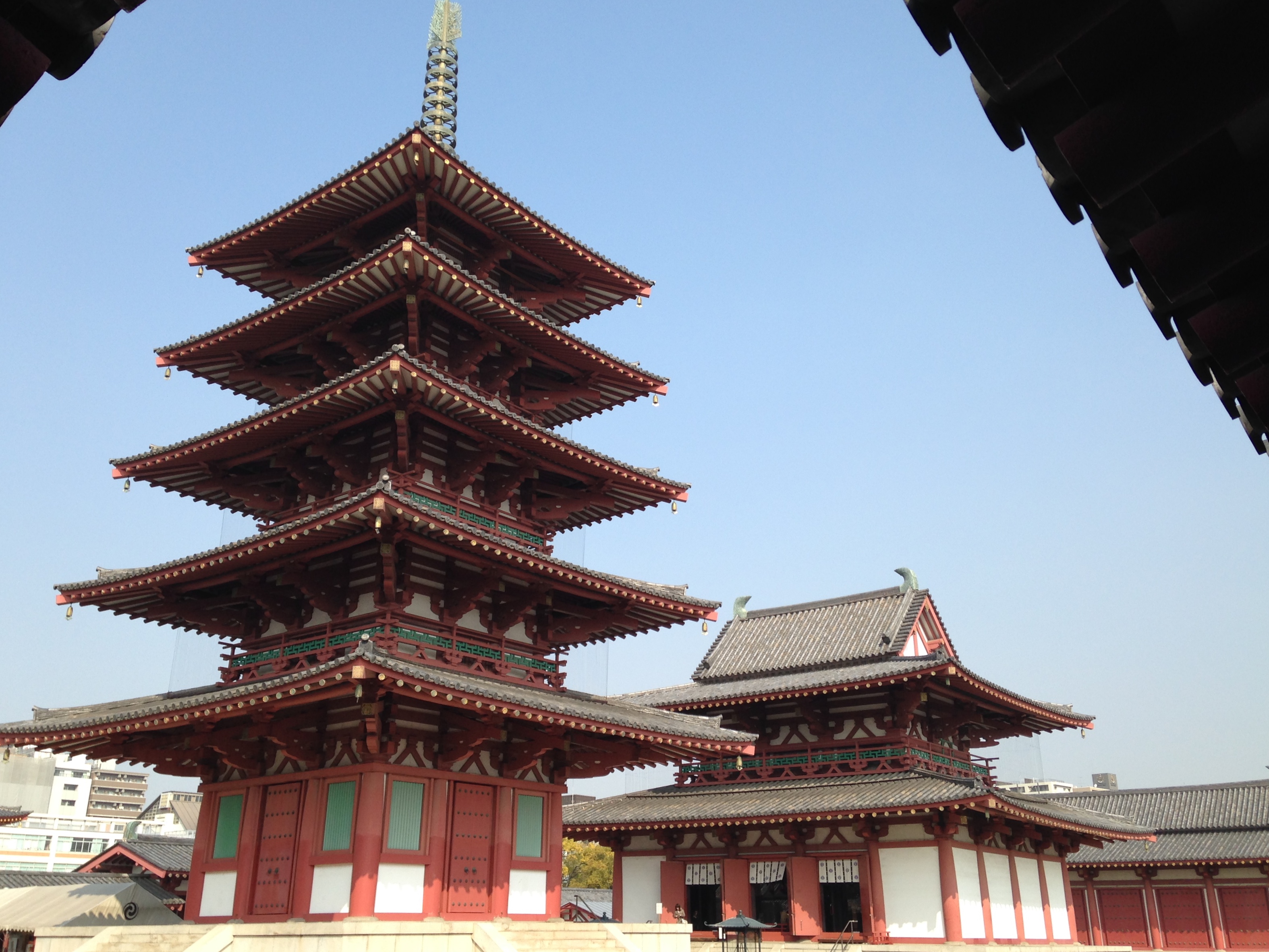 The main hall (Kondo) and five-story pagoda (Gojunoto) at Shitennoji Temple. Photo: Wikimedia Commons, CC BY-SA 3.0
Shitennoji Temple stands as one of Japan's most historically significant Buddhist sites, founded in 593 CE by Prince Shotoku (574-622 CE), a semi-legendary regent who served under Empress Suiko. 🔗 The temple's establishment marked a pivotal moment in Japanese history, representing the first officially state-built Buddhist temple in the country and granting Buddhism the status of state religion. 🔗
Prince Shotoku was an ardent supporter of Buddhism who played a pivotal role in spreading the religion throughout Japan at a time when the country was primarily following Shinto beliefs. 🔗 The temple's founding came after Prince Shotoku's military victory against the powerful Mononobe clan - during battle, the Prince sculpted statues of the Four Guardian Kings and vowed to build a temple dedicated to them if they answered his prayer for victory. 🔗
The temple's name derives from the Four Heavenly Kings (Shitenno) of Buddhism who are enshrined there: Jikokuten of the East, Zochoten of the South, Komokuten of the West, and Tamonten of the North. 🔗 Beyond its religious significance, Shitennoji originally included four welfare institutions (Shika-in) centered on the complex: a Kyoden-in (Institution of Religion and Education), a Hiden-in (welfare Institution), a Ryobyo-in (hospital), and a Seiyaku-in (pharmacy) to provide essential care to the people of Japan. 🔗
Cultural & Religious Significance
The temple buildings have been damaged and reconstructed eight times throughout history due to fires, natural disasters, and war, yet each reconstruction has faithfully replicated the original 6th-century design. 🔗 The current structures, last rebuilt in 1963, preserve the distinctive "Shitennoji style" architectural layout that became a model for later Buddhist temple designs throughout Japan. 🔗
The temple's architectural layout reflects ancient Asuka period (593-710) temple design, featuring a five-story pagoda, a main hall called "Kondo", a lecture hall called "Kodo", and a gate flanked by corridors that form a distinctive rectangular plan. 🔗 This layout became known as the "Shitennoji style" and influenced Buddhist temple architecture across Japan.
A particularly unique feature is the stone torii gate at the main entrance, dating from 1294 and recognized as the oldest stone torii gate of its kind in Japan. 🔗 Standing 8.5 meters (28 feet) tall, this Important Cultural Property exemplifies the syncretic fusion of Shintoism and Buddhism in Japanese religious practice. 🔗
Visiting Information
Hours:
- October through March (including November): 8:30 AM - 4:00 PM
- Extended hours on the 21st of each month: 8:00 AM - 4:30 PM 🔗
Admission:
- Outer temple grounds: FREE
- Inner Precinct (Chushin Garan): 500 yen (adults), 300 yen (high school students)
- Treasure House: 500 yen (adults), 300 yen (high school students)
- Gokurakujodo Garden: 300 yen (adults), 200 yen (elementary/middle/high school students) 🔗
Access:
- Shitennoji-mae-Yuhigaoka Station (Osaka Metro Tanimachi Line): 4-5 minute walk from Exit 4 🔗
- Tennoji Station (JR Osaka Loop Line): 10-12 minute walk north from Exit 17 🔗
Best Visiting Times:
- Early mornings (8:30-10:00 AM) offer soft light, fewer crowds, and serene atmosphere ideal for photography 🔗
- November specifically features stunning autumn foliage with purple maples throughout the gardens 🔗
- Late afternoons provide warm, golden hour glow particularly beautiful on the pagoda 🔗
The Experience
Five-Story Pagoda (Gojunoto): The 39.2-meter tall pagoda is Shitennoji's most iconic structure and offers a unique opportunity - visitors can enter and climb to the top. 🔗 Reconstructed in 1957, each floor houses Buddhist relics and memorial tablets honoring ancestors. 🔗 The interior is relatively narrow, and visitors must wear slippers at the entrance. Photography is not permitted inside the pagoda or from the windows at the top. 🔗
Main Hall (Kondo): Adjacent to the pagoda, the Main Hall enshrines a statue of Kannon Bodhisattva (the Buddhist deity of compassion) as its principal image, representing Prince Shotoku. 🔗 The hall features murals narrating events from the life of the historic Buddha, created in 1959 by painter Gakuryo Nakamura (1890-1969) using an Indian artistic style. 🔗
Gokurakujodo Garden (Garden of Paradise): This beautiful stroll garden was designed based on descriptions of the Western Paradise of the Amida Buddha. 🔗 The garden features ponds, rock waterfalls, cherry blossoms, stone lanterns, and streams, creating a tranquil zen oasis. 🔗 Notable features include the Sanzon Seki - three rocks protruding from the water in the largest pond, with the largest rock representing Amida and the two smaller ones his attendants. 🔗 The garden is particularly beautiful in November with purple maple autumn colors and is also known for its abundance of basking turtles. 🔗
Treasure House: The Treasure House displays paintings, scriptures, and sacred temple artifacts in periodic themed exhibitions. 🔗 Many artifacts are registered as National Treasures and Important Cultural Properties, offering insight into the temple's 1,400+ year history. 🔗 Note that the treasure house has long closures between exhibitions - verify exhibition schedule before planning a visit.
Stone Torii Gate (Important Cultural Property): At 8.5 meters (28 feet) tall, this stone torii gate built in 1294 is the oldest of its kind in Japan and designated as an Important Cultural Property. 🔗 The original wooden torii burned in 1294 and was replaced by this stone version ordered by the emperor. 🔗 Its presence at a Buddhist temple rather than a Shinto shrine demonstrates the syncretic fusion of Japan's two major religions.
Practical Visiting Tips
November Seasonal Considerations:
- Autumn Foliage Peak: November features stunning fall colors, with purple maples throughout the temple grounds and garden providing vibrant photographic opportunities. 🔗
- Weather: November temperatures in Osaka range from 10-18°C (50-64°F). Bring layers and comfortable walking shoes for outdoor exploration.
- Crowds: Generally not crowded, creating a peaceful atmosphere for contemplation. 🔗 Early morning visits offer the most tranquil experience.
Special November Events:
- Shitennoji Wasso Festival (November 2, 2025): This major cultural festival recreates ancient Japanese and East Asian international exchange with a grand procession featuring approximately 1,000 participants in historically accurate ancient costumes. 🔗
- Monthly Flea Market (21st-22nd): The biggest flea marketplace in all of Kansai, featuring around 300 stalls selling secondhand clothes, antiques, handicrafts, old kimonos, wooden sculptures, and porcelain. 🔗
Best Photo Spots:
- The inner courtyard view showing both the five-story pagoda and Main Hall (Kondo) together - this is the iconic Shitennoji composition 🔗
- The 1294 stone torii gate with temple buildings in background
- Gokurakujodo Garden's Sanzon Seki rocks and pond with purple maple reflections in November
- Stone lanterns throughout the garden with autumn foliage
Cultural Etiquette:
- Respectful Demeanor: This is an active place of worship - speak softly and avoid loud conversations that might disturb the tranquility 🔗
- Dress Code: Dress modestly with clothing covering shoulders and knees, showing respect in a temple setting 🔗
- Footwear: Remove shoes when entering the Main Hall if required - follow posted signs 🔗
- Slippers Required: Must wear provided slippers when climbing the pagoda
- Photography Respect: Be considerate of others seeking reflection while taking photos - never photograph people praying without permission
- No Photography Inside: Strictly observe the no-photography rule inside the pagoda and any posted restrictions in other buildings
What to Bring:
- Comfortable walking shoes for exploring the extensive temple grounds
- Camera for capturing autumn foliage and architecture (exterior only)
- Light jacket or layers for November temperatures (10-18°C / 50-64°F)
- Cash for admission fees (300-500 yen per area) - many temple sites do not accept credit cards
- Water bottle for hydration during exploration
Nearby Attractions:
- Tennoji Park (5-minute walk): Large urban park featuring a zoological garden and art museum 🔗
- Shinsekai District (15-minute walk west): Uniquely Osakan dining and entertainment district with retro atmosphere, famous for kushikatsu restaurants 🔗
- Abeno Harukas (10-minute walk): At 300 meters, formerly Japan's tallest skyscraper with top-floor observatory 🔗
Location: View on Google Maps
Source: attractions/osaka/shitennoji-temple.md