
About
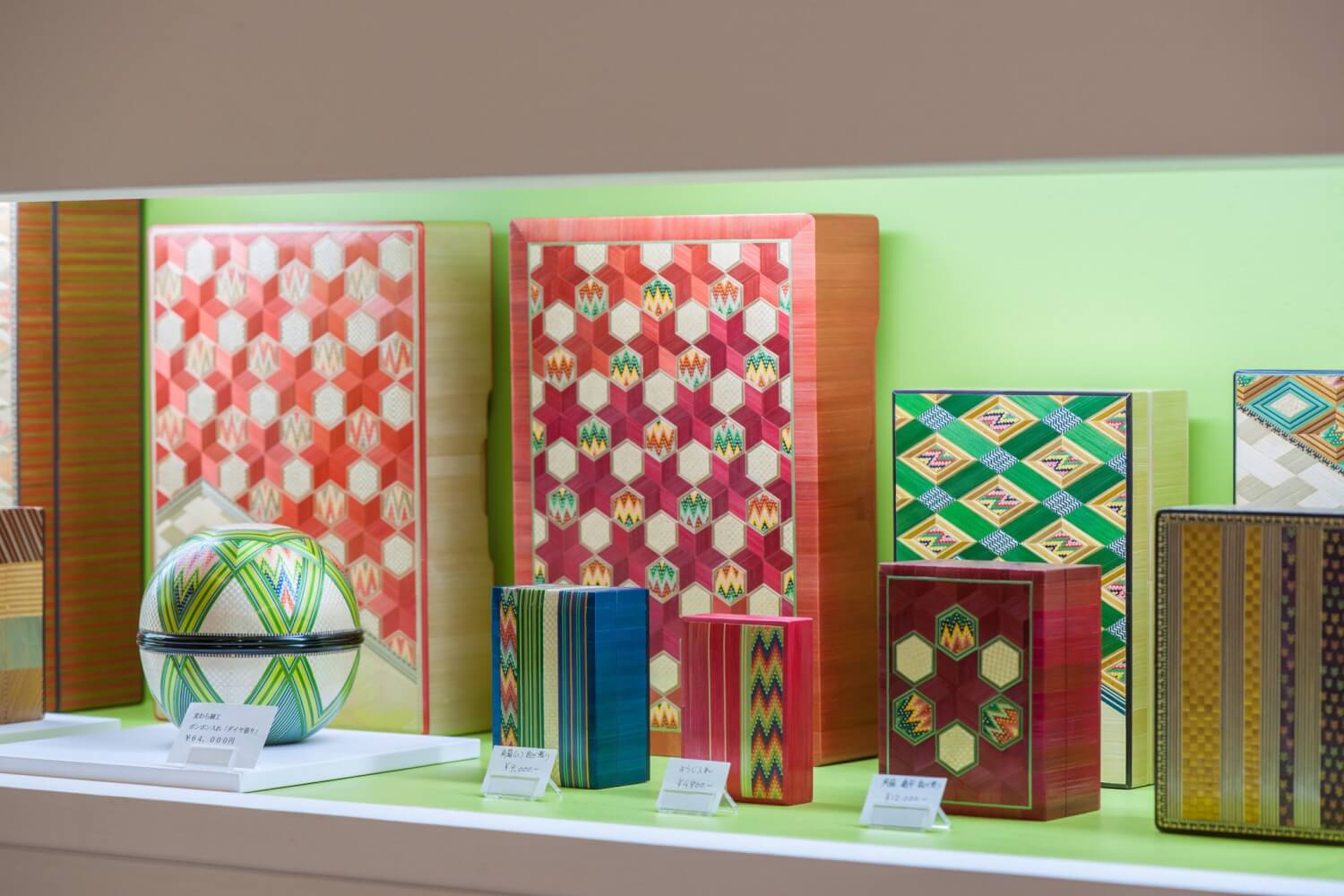 Caption: Traditional mugiwara zaiku straw craft displays showing intricate geometric patterns and vibrant colors
The Straw Craft Museum (麦わら細工館) is housed within a traditional white-walled dozo storehouse along the river in Kinosaki Onsen. This small but significant museum serves as the preservation center for mugiwara zaiku, a unique traditional handicraft that exists nowhere else in Japan. The craft originated around 1720 AD when a craftsman named Hanhichi from Tottori Prefecture came to Kinosaki Onsen to recover from illness. To pay for his lodging, he began creating and selling bamboo flutes and spinning tops decorated with colored barley straw. 🔗
The museum houses over 240 pieces spanning three centuries, from Edo period antiques to contemporary masterworks by the four remaining master craftsmen. The collection demonstrates the evolution and refinement of this extraordinary art form, which involves dyeing wheat straw in vibrant colors, cutting it into precise geometric patterns, and applying it to wooden surfaces in intricate marquetry-like designs.
Cultural & Religious Significance
The craft achieved international recognition when pieces were included in the Siebold Collection brought back to Europe in the late Edo period. The museum has earned designation as a Traditional Craft of Hyogo Prefecture and an Intangible Cultural Asset of Toyooka City, representing the sole surviving center for this ancient art form. The craftsmanship demonstrates extraordinary precision, with some pieces requiring over eight hours of work for small sections, emphasizing the quality-over-quantity philosophy of this art form. 🔗
This represents one of Japan's most geographically specific traditional crafts - visitors are witnessing an art form that cannot be experienced anywhere else in the world. The four remaining master craftsmen represent an unbroken lineage dating back 300 years, embodying the concept of "takumi" (craftsmanship) and "mono no aware" (awareness of impermanence) reflected in the delicate nature of straw art.
Visiting Information
- Hours: 10:00 AM - 4:00 PM (last entry 3:30 PM)
- Closed: Wednesdays (Thursday if Wednesday is national holiday), New Year period
- Admission: Adults ¥300, Middle/High school ¥200, Elementary and under free
- Workshop fees: ¥500-¥3,500 depending on craft complexity
- Phone: 0796-32-0515
- Access: 5-minute walk from Kinosaki Onsen Station through the onsen district, 2-minute walk from Yuraku accommodation
- Language Support: Comprehensive English materials and video, basic craft instruction guides available in English 🔗
The Experience
The two-floor museum experience begins with a multilingual video (English subtitles available) explaining the 300-year history and intricate production process. The ground floor displays contemporary works by current master craftsmen, including seasonal pieces like cherry blossom motifs in spring and autumn leaf patterns. The second floor houses the historic collection featuring Edo, Meiji, Taisho, and early Showa period pieces, showcasing the evolution of techniques and designs.
The hands-on workshop area offers multiple craft experiences: simple items like postcards and bookmarks (¥500-¥800), intermediate pieces such as fans and small plates (¥1,500-¥2,000), and complex wooden boxes (¥3,500) that can take 1-2 hours to complete. English instruction guides are provided, and basic Japanese phrases are sufficient for communication with staff. 🔗
Practical Visiting Tips
Autumn (October 28-30) Considerations: Comfortable temperatures averaging 10.7°C with beautiful fall foliage providing scenic backdrop. Special autumn lighting in the museum enhances the natural straw colors. Indoor workshop activities provide perfect respite from cool autumn air. Enhanced photo opportunities with autumn colors along the riverside approach to the museum. 🔗
Workshop Strategy: Reserve morning slots (10:00-11:00 AM) for optimal instructor availability and unhurried experience before onsen visits. Allow extra time for workshop activities - the meditative process shouldn't be rushed. All created pieces can be taken immediately; no shipping required.
Cultural Preparation: Research basic Japanese craft terminology: "mugiwara" (wheat straw), "zaiku" (craft work), "shokunin" (artisan). Handle materials with obvious care and respect. Ask permission before photographing instructor's demonstration techniques.
Photography Tips: Natural morning light through storehouse windows highlights straw textures beautifully. Capture detail shots of geometric patterns showing precision cutting techniques. Exterior shots with traditional architecture and riverside willows provide cultural context.
Accessibility: Historic storehouse has narrow stairs to second floor; ground floor fully accessible with wheelchair access through main entrance.
Location: View on Google Maps
Source: attractions/kinosaki/straw-craft-museum.md