
About
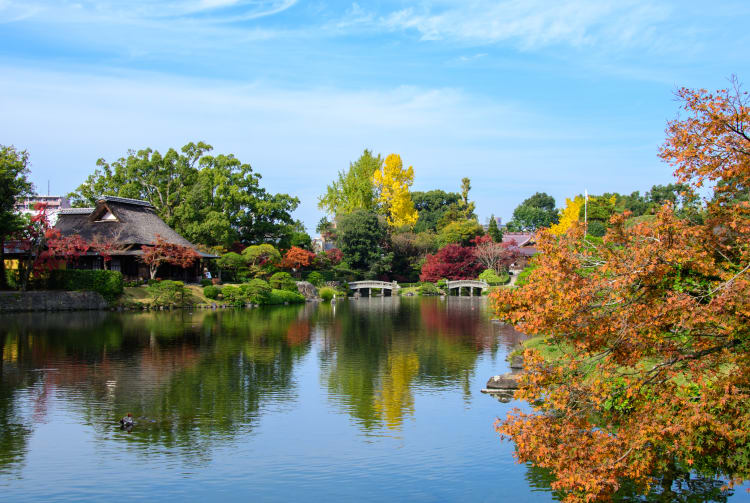 View of Suizenji Garden showing the central pond, Mount Fuji replica, and traditional landscaping. Source: Japan National Tourism Organization
Suizenji Jojuen Garden is a masterpiece of 17th-century Japanese landscape design that recreates the 53 post stations of the historic Tokaido Road in miniature form. Construction began in 1636 when Hosokawa Tadatoshi, the first daimyo of Kumamoto Domain, selected this site for its exceptional spring-fed pond fed by Mount Aso's pure waters, which were prized for producing the highest quality green tea. 🔗 🔗
The garden originally served as a chashitsu (tea ceremony structure) on the grounds of the Zen temple of Suizen-ji. Over approximately 80 years, the Hosokawa family transformed it into an elaborate strolling garden, with completion achieved under the third feudal lord, Hosokawa Tsunatoshi, who gave it the name "Seishu-en" inspired by classical Chinese poetry. 🔗 🔗
The garden exemplifies the tsukiyama style of Japanese garden design, featuring an artificial hill carefully sculpted to evoke Mount Fuji's perfect conical shape. The surrounding landscape meticulously recreates landmarks along the Tokaido—the famous road that connected Edo (Tokyo) with Kyoto during the feudal era—including miniature representations of Lake Biwa and other notable stations. This innovative design allowed feudal lords to symbolically journey from Edo to Kyoto without leaving Kumamoto. 🔗 🔗
The garden covers approximately 73,000 square meters and centers on a spring-fed pond filled with clear groundwater from Mount Aso. The pond is home to large, brightly colored koi fish and, famously, two white turtles that are said to bring good luck to those who spot them. 🔗 🔗
Cultural & Historical Significance
Within the garden grounds stands Izumi Shrine, erected in 1878 by former retainers of Kumamoto Domain following the Satsuma Rebellion. The shrine is dedicated to the spirits of the Hosokawa clan who ruled the region for over 400 years, from the mid-17th to late-19th century. 🔗 🔗
The Kokindenju-no-Ma teahouse, relocated from Kyoto's Imperial Palace during the Taisho Period (1912), represents the garden's deep connection to tea ceremony culture. Prince Hachijonomiya received the Kokindenju (secret teachings of classical poetry) from Hosokawa Yusai in this historic structure. Yusai, rumored to be an illegitimate son of the Emperor, was a celebrated scholar and samurai who inducted the Emperor's younger brother into the classical arts of ancient poetry. 🔗 🔗
The garden sustained damage during the 2016 Kumamoto earthquake, with the shrine's stone torii gates collapsing or developing cracks. The main torii was reconstructed in wood, symbolizing both a desire to rebuild and preserving the memory of the earthquake, while the pond's spring water that had been drained was successfully restored. 🔗 🔗
Visiting Information
Hours: 8:30 AM – 5:00 PM daily (last entry 4:30 PM), open year-round 🔗 🔗
Admission:
- Adults and high school students: ¥400
- Junior high and elementary school students: ¥200
- 10% discount for groups of 30 or more
- Upon presentation of disability certificate: Adults ¥200, Children ¥100 🔗 🔗
Access:
By Tram (Most Popular): Take either the A line or B line tram from JR Kumamoto Station to "Suizenji Koen" stop (30 minutes, ¥180 one way). The garden entrance is approximately a 4-minute walk from the tram stop. 🔗 🔗
By Train: Take the JR Hohi Main Line from Kumamoto Station to Shin-Suizenji Station (third station, ¥240 one way). The garden is approximately a 10-minute walk from the station. 🔗 🔗
By Walking: From central Kumamoto, the garden can be reached in less than an hour on foot. 🔗
Money-Saving Tip: Purchase a City Tram One-Day Pass (¥500 adults/¥250 children) at the tourist information center in JR Kumamoto Station for discounts at Kumamoto Castle, Wakuwakuza Kumamoto Castle Museum, and Suizenji Jojuen Garden. 🔗
Current Status: Fully operational and open to visitors. Garden has been restored following 2016 earthquake damage, with torii gates reconstructed and pond spring water fully restored. 🔗 🔗
The Garden Experience
Circular Walking Path: Follow the promenade-style walking path clockwise around the central pond to experience the miniature Tokaido journey. The path features perfectly raked gravel, decorative bridges, and carefully positioned viewpoints for appreciating the garden's landscape elements. Walking the complete circuit takes approximately 30-40 minutes at a leisurely pace. 🔗 🔗
Mount Fuji Replica: The garden's main tsukiyama (artificial hill) on the far side of the lake presents a strikingly symmetrical representation of Mount Fuji. This central landscape feature exemplifies the tsukiyama technique of reproducing famous landmarks in miniature. 🔗 🔗
Izumi Shrine: Visit the shrine dedicated to Hosokawa Tadatoshi and the successive Kumamoto lords who developed and maintained the garden. The shrine features reconstructed wooden torii gates that commemorate the 2016 earthquake recovery. 🔗 🔗
Kokindenju-no-Ma Teahouse: Experience traditional Japanese tea culture in this historic thatched-roof structure relocated from Kyoto's Imperial Palace. Open 9:00 AM – 5:00 PM. Matcha green tea with traditional Japanese sweets costs ¥650 inside the tatami room or ¥550 on western chairs outside. Coffee with sweets available for ¥800. The traditional sweet Kase-ita, passed down from the Hosokawa Clan, is particularly noteworthy. 🔗 🔗
Wildlife Watching: Look for the two white turtles on the garden grounds—spotting them is said to bring good luck. The pond is also home to large, brightly colored koi carp that can be fed. 🔗 🔗
Seasonal Features in November: Autumn foliage transforms the garden with vibrant maple colors. Chrysanthemums bloom in late November, and sasanqua flowers appear from November through December, creating beautiful seasonal displays perfect for photography. 🔗 🔗
Practical Visiting Tips
November Weather: November weather in Kumamoto is moderately chilly and breezy, with temperatures ranging from 47-62°F (8-17°C). The cool, pleasant weather is perfect for strolling and enjoying the maple leaves. Layer clothing—long-sleeved shirts, sweaters, and trousers work well. Bring a light jacket or trench coat. Comfortable walking shoes (sneakers or boots) are essential for the gravel paths. 🔗 🔗
Best Timing: Early morning visits (around 8:30 AM opening) offer the most peaceful experience with potential to have the garden mostly to yourself on weekdays. Avoid April 22-24 (Spring Festival) and October 18-20 (Autumn Festival) if seeking solitude. 🔗 🔗
Photography Spots:
- Mount Fuji replica from the opposite side of the pond
- Traditional teahouse with pond reflection
- Arched bridges and islands in the pond
- Autumn foliage surrounding the pathways
- Koi feeding scenes with multiple wildlife species 🔗
Cultural Etiquette:
- Walk on the sides of the approach paths, as the center is considered "the path of the gods"
- Be considerate of other visitors seeking peaceful contemplation
- Remove shoes before entering the teahouse
- Avoid loud conversations in the garden spaces
- Respect shrine areas and ceremonies at Izumi Shrine 🔗 🔗
Facilities:
- Coin lockers at front ticket office
- Restrooms near both main entrances
- Souvenir shops at entrance areas
- Teahouse service available 9:00 AM – 5:00 PM
- Guided tours available for extra fee 🔗 🔗
Important Note: The garden is not barrier-free or wheelchair accessible. Traditional Japanese garden features including gravel paths, uneven terrain, steps, and bridges present challenges for mobility-limited visitors. Contact the garden directly in advance to inquire about available accommodations. 🔗
Nearby Attractions: Lake Ezu (5 minutes by bike, fed by same underground springs), Kumamoto Castle (20-minute tram ride). Combined with nearby Lake Ezu, the Suizenji area offers a tranquil escape from urban Kumamoto while remaining conveniently accessible. 🔗
Location: View on Google Maps
Source: attractions/kumamoto/suizenji-jojuen-garden.md