About
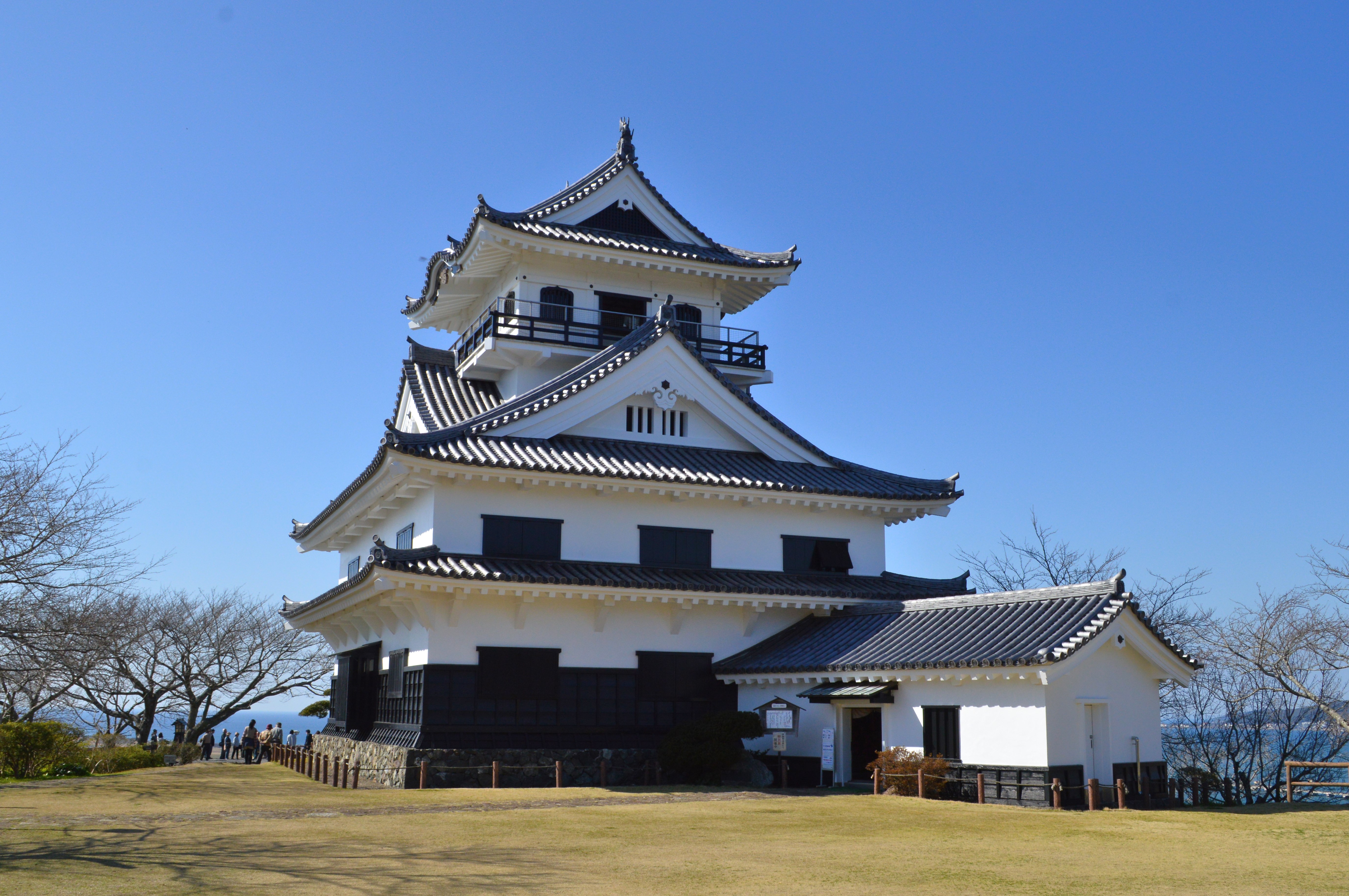 Tateyama Castle (Hakkenden Museum) reconstruction atop Shiroyama Park, modeled after Inuyama Castle. Image from Wikimedia Commons
 Okinoshima Island connected to mainland by 200-meter sandbar, featuring the world's northernmost coral reefs. Image from Wikimedia Commons
Tateyama Castle (Hakkenden Museum) and Okinoshima Island represent the cultural and natural highlights of southern Boso Peninsula in Chiba Prefecture. The castle, perched atop Shiroyama Park's 66-meter hilltop, offers panoramic views of Tokyo Bay and Mount Fuji, while Okinoshima Island hosts the world's northernmost coral reef ecosystem. Located approximately 2 hours from Tokyo by train or highway bus, this southern coastal destination combines historical reconstruction, literary heritage, marine biodiversity, and coastal beauty for a comprehensive day trip experience.
November 9-18, 2025 offers excellent conditions for this day trip: comfortable temperatures (highs 15-19°C), optimal visibility for Mount Fuji views, pleasant sea conditions with water temperatures around 19-22°C, fewer crowds compared to peak summer season, and beautiful autumn colors in Shiroyama Park. 🔗
Cultural & Historical Significance
Tateyama Castle Historical Context
Tateyama Castle occupies a strategically significant position at the entrance to Tokyo Bay (formerly Edo Bay), serving as the final stronghold of the powerful Satomi clan during the Sengoku period. Built in 1580 by Satomi Yoshiyori, the castle represented the culmination of the clan's dominance over the Boso Peninsula. 🔗
The original castle met its end in 1614 under the Tokugawa Shogunate's "One Country, One Castle" policy, a strategic consolidation measure designed to limit regional military strength after the Satomi clan fell from favor. For nearly 370 years, only ruins remained atop the hill. 🔗
The current castle structure, completed in 1982, represents a deliberate choice to boost local tourism and preserve cultural heritage. With no surviving architectural plans or illustrations of the original donjon, designers modeled the reconstruction after Inuyama Castle, a National Treasure of Japan. This concrete reconstruction serves as the Hakkenden Museum. 🔗
The Hakkenden Museum & Literary Heritage
The castle's interior functions entirely as the Hakkenden Museum, dedicated to Nansō Satomi Hakkenden (The Legend of the Eight Dog Warriors), an epic 106-volume fantasy novel written by Kyokutei Bakin over 28 years (1814-1842) in the late Edo period. This masterwork represents one of the longest novels ever written and holds immense cultural significance as a cornerstone of local identity and folklore. 🔗
The novel romanticizes the Satomi clan's history through the adventures of eight samurai warriors, each with "dog" (犬) in their surname and guided by mystical crystal beads, who unite to restore the clan's fortunes. The story's setting on the Boso Peninsula has inspired countless kabuki plays, films, anime, and manga adaptations spanning generations. 🔗
Museum exhibits bring this literary world to life through intricate woodblock prints (ukiyo-e) depicting heroes and key scenes, dolls from famous TV adaptations, various books and comics, and comprehensive displays tracing the story's influence through theatre, television, and other media from the Edo period through to modern times. 🔗
Tokyo Bay Panoramic Views
From the castle's observation deck, visitors enjoy sweeping 360-degree panoramas encompassing Tokyo Bay's entire southern expanse, the Miura Peninsula across the bay, and on clear days, the iconic silhouette of Mount Fuji in the distance. 🔗 Japanese guidebooks count this as one of the country's "100 Best" Fuji views. 🔗
The Diamond Fuji phenomenon occurs in May, when the sun sinks directly into the center of Mount Fuji's peak, creating a spectacular natural event. Local residents possess an intuitive understanding of where sun and mountain will meet in any season. 🔗
Okinoshima Island: Ecological Marvel
Okinoshima Island represents one of Japan's most remarkable ecological phenomena: the world's northernmost natural coral reef habitat. This small, uninhabited island (approximately 1km circumference) connected to the mainland by a 200-meter sandbar hosts over 52 coral species at depths of only 5 meters—an extraordinary occurrence at this latitude (34.98°N). 🔗
The sandbar connecting island to mainland first emerged during the 1923 Great Kanto Earthquake's upheavals and eventually became a permanent geological feature, making the island accessible by foot during all tidal conditions. 🔗
The Kuroshio Current's Vital Role
The coral ecosystem's existence depends entirely on the Kuroshio Current, a powerful warm ocean current flowing northward from tropical waters. This current bathes the Boso Peninsula coast in nutrient-rich water with stable temperatures sufficient to support coral growth, while transporting coral larvae from more southerly reefs to establish and replenish colonies at Okinoshima. 🔗
University of Tokyo professor Nina Yasuda and her research team monitor Tateyama's growing coral communities, examining how climate change affects these unique temperate coastal ecosystems. 🔗
Marine Biodiversity
The waters around Okinoshima demonstrate remarkable biodiversity for a temperate zone. Tabulate corals like Acropora hyacinthus and Acropora solitaryensis dominate the reef-building species, while the broader ecosystem supports nearly 1,800 shellfish species, numerous fish species including colorful tropical varieties, and serves as important feeding grounds for green turtles and vital breeding sites for seabirds including the endangered Japanese murrelet. 🔗
Visiting Information
Access from Tokyo/Shibuya
Train (Recommended for Day Trips):
- No regular direct trains; transfer required (usually at Soga Station)
- Route: JR Keiyo Line Rapid (Tokyo to Soga, 43 min) → JR Uchibo Line Rapid (Soga to Kimitsu, 39 min) → JR Uchibo Line Local (Kimitsu to Tateyama, 55 min)
- Total journey: approximately 2 hours 30 minutes
- Cost: 2,310 yen one way
- Coverage: Included in Japan Rail Pass and Tokyo Wide Pass 🔗
Alternative Train Service:
- Limited express "Sazanami" operates Tokyo Station to Tateyama during busy periods
- Limited express "Shinjuku Sazanami" runs from Shinjuku on weekends and peak seasons 🔗
Highway Bus:
- Departs Tokyo Station (Yaesu side) once or twice per hour
- Journey time: approximately 2 hours
- Cost: around 2,600 yen one way 🔗
Local Transportation in Tateyama
To Tateyama Castle (Shiroyama Park):
- Distance from station: 2 kilometers south
- Bus: City Circular Bus or JR Bus/Nitto Bus bound for JMSDF Tateyama Air Base
- Stop: "Shiroyama Koen-mae" (In front of Shiroyama Park)
- Walk from bus stop: approximately 5 minutes 🔗
- Special Shuttle Service: Free shuttle operates weekends and holidays (10:00 AM - 3:00 PM), wrapped in "Nansō Satomi Hakkenden" design and driven by a ninja 🔗
- Electric-assisted rental bicycles: ¥700 for 2 hours or ¥2,000 per day (available both sides of Tateyama Station) 🔗
To Okinoshima Island:
- Local bus or taxi from Tateyama Station to Okinoshima Park area
- Island connected to mainland by permanent sandbar (walkable year-round)
- Free roadside parking along Tateyama Air Base perimeter road
- July-August conservation contribution (voluntary): about ¥500 per person or ¥1,000 per group/car 🔗
Tateyama Castle (Hakkenden Museum)
Operating Hours:
- 9:00 AM - 4:45 PM (last entry 4:30 PM)
- Closed: Mondays (or following day if Monday is a holiday)
- Closed: December 29 - January 3 🔗
Admission:
- General: ¥400 (¥500 during special exhibitions)
- Elementary through high school students: ¥200
- Combined ticket: Admission at Hakkenden Museum provides free entry to Tateyama City Municipal Museum (and vice versa) 🔗
Important Restrictions:
- Photography of ALL exhibits inside the castle tower is PROHIBITED
- Exterior photography and views from observation deck permitted 🔗
- No elevator in castle keep
- Exhibit explanations almost exclusively in Japanese 🔗
Okinoshima Island
Operating Hours:
- Island accessible 24/7 year-round via permanent sandbar
- Snorkeling recommended during daylight hours for safety and visibility
- Best visiting: Morning to early afternoon for optimal light and marine viewing
Admission:
- Island access: FREE
- Optional conservation contribution during summer peak (July-August): ¥500 per person or ¥1,000 per group/car 🔗
Facilities:
- Free roadside parking along air base perimeter
- Limited facilities on island itself
- Guided snorkeling tours available from local diving shops year-round 🔗
Best Time to Visit:
- Water clarity: Year-round, enhanced by Kuroshio Current
- Snorkeling season: Spring through late autumn (recommended)
- Summer (July-August): Warmest water, busiest crowds
- Autumn/November: Cooler water (19-22°C), fewer crowds, wetsuit recommended for extended snorkeling 🔗
What to See and Do
Tateyama Castle & Shiroyama Park
Castle Museum Exploration: Enter the reconstructed castle to discover comprehensive Hakkenden exhibits spanning multiple floors. Woodblock prints reveal artistic interpretations throughout the Edo period, while dolls from TV adaptations bring characters to life. Video presentations, books, and manga displays trace the story's influence from traditional theatre through modern media. Plan 30-45 minutes for museum exploration. 🔗
Observation Deck Views: Ascend to the castle's top floor for spectacular 360-degree panoramas. To the west, Tokyo Bay stretches toward the Miura Peninsula, with Mount Fuji rising beyond on clear days. November's clear autumn air provides some of the year's best visibility for these views. 🔗
Special Experience: On Sundays and national holidays, visitors can try on authentic samurai armor, creating memorable photos and connecting with warrior heritage. 🔗
Shiroyama Park Exploration: Walking paths wind through hillsides lined with azalea, camellia, ume (plum), and cherry blossom trees. The approach takes about 20 minutes walking uphill through beautiful scenery that transforms with seasons—ginkgo gold in autumn. 🔗
Japanese Garden & Tea House: Near the summit, a traditional Japanese garden provides tranquil space for contemplation. The tea house offers seasonal refreshments. 🔗
Peacock Aviary: Visitors can approach peacocks closely and observe these magnificent birds. Popular with families and photographers. 🔗
Park Cafe: At the park's base, a cozy cafe serves curry rice and desserts next to a grassy field. 🔗
Recommended Visit Duration: 2-3 hours total for castle museum, observation deck, and park exploration.
Okinoshima Island Marine Experience
Sandbar Crossing: Walk the 200-meter sandbar connecting mainland to island, experiencing the unique geological feature created by the 1923 earthquake. The sandbar measures 30-80 meters wide, providing stable access year-round. 🔗
Snorkeling the Coral Reefs: Wade into crystal-clear waters to discover the world's northernmost coral habitat at shallow depths of 5 meters. Tabulate corals spread across the seabed, surrounded by colorful tropical fish. The exceptional water clarity allows observation of marine life at your feet without diving equipment. Local diving shops offer guided snorkeling tours year-round. 🔗
Rocky Shore Exploration: Explore the island's rocky shores and tide pools, discovering shellfish diversity (nearly 1,800 species recorded). The 1-kilometer circumference makes a complete island circuit feasible. 🔗
Beach Activities: Two beaches flank the sandbar, offering swimming and sunbathing opportunities. November water temperatures (19-22°C) remain pleasant for wading and beach walking, though serious swimming requires wetsuit for comfort. 🔗
Okinoshima Shrine: The small shrine on the island provides cultural context and photo opportunities. 🔗
Seabird Observation: The island serves as vital breeding habitat for seabirds including the endangered Japanese murrelet. November provides opportunities to observe these species during morning hours. 🔗
Recommended Visit Duration: 2-3 hours for comprehensive island exploration and snorkeling; 1 hour for casual beach walking and shrine visit.
Practical Visiting Tips
November 2025 Seasonal Considerations
Weather Conditions: November brings pleasant autumn weather with average daily high temperatures decreasing from 19°C (67°F) to 15°C (59°F). Clear days predominate—ideal for Mount Fuji viewing and outdoor activities. 🔗
Marine Conditions: Sea water temperatures in November average 21°C (71°F), ranging from 19°C to 23°C. These temperatures remain pleasant for wading and beach activities, though extended snorkeling becomes more comfortable with 3mm wetsuit. 🔗
Crowd Levels: November represents low season compared to summer peak, resulting in significantly fewer visitors at both attractions. Expect minimal queues at castle, uncrowded park paths, and plenty of space on Okinoshima beaches.
Visibility & Photography: November's clear autumn air provides excellent visibility for Mount Fuji views—often superior to summer when humidity reduces long-distance clarity. Underwater visibility at Okinoshima remains consistently excellent year-round due to the Kuroshio Current.
Park Foliage: Shiroyama Park's ginkgo trees display brilliant gold autumn colors in November, complementing walking paths and creating beautiful photo opportunities. 🔗
Day Trip Strategy
Optimal Timing:
- Depart Tokyo early (8:00-9:00 AM train) to maximize day trip time
- Visit Tateyama Castle first (opens 9:00 AM) for morning light and Fuji visibility
- Late morning/lunch: Explore Shiroyama Park and enjoy park cafe
- Afternoon (1:00-4:00 PM): Okinoshima Island for optimal light and water conditions
- Depart Tateyama (5:00-6:00 PM) for evening return to Tokyo
Combined Visit Feasibility: Both attractions require separate transportation:
- Castle: 2km south of station (bus or walk)
- Okinoshima: Several kilometers from station (bus or taxi)
- Allow 30-45 minutes between attractions for transit
- Taxi option provides flexibility for efficient day trip management
Cultural Etiquette
Tateyama Castle:
- Respect photography prohibition inside museum (strictly enforced)
- Maintain quiet atmosphere in exhibition spaces
- Remove shoes if entering tea house or traditional spaces
Okinoshima Island:
- DO NOT touch or stand on coral (living organisms, extremely fragile)
- NO collecting of shells, rocks, or marine life (removal illegal)
- Use reef-safe sunscreen only (standard sunscreen chemicals harm coral)
- Leave no trace: Pack out all trash
- Stay on designated paths to protect vegetation
- Observe seabirds from distance (breeding habitat protection) 🔗
Money-Saving Options
Transportation:
- Japan Rail Pass or Tokyo Wide Pass covers train to Tateyama (2,310 yen value each way)
- Free weekend shuttle to castle eliminates bus fare
- Walking between station and castle (2km) saves bus costs
- Electric bike rental (¥700/2 hours) provides economical flexibility
Admission:
- Castle admission (¥400) includes entry to both Hakkenden Museum and Tateyama City Municipal Museum
- Okinoshima Island access completely free
- November visit avoids summer conservation contribution (¥500-1,000)
Food:
- Park cafe offers affordable curry and desserts
- Convenience stores near Tateyama Station provide lunch supplies
- Beach picnic at Okinoshima eliminates restaurant costs
Weather & Seasonal Preparation
November Clothing:
- Layered clothing for temperature variation (15-19°C)
- Light jacket or windbreaker for coastal wind exposure
- Comfortable walking shoes for Shiroyama Park hills
- Sun protection (hat, sunscreen) for clear autumn days
Marine Activity Preparation:
- 3mm wetsuit for extended snorkeling (rent from local shops)
- Rashguard or swim shirt minimum for casual water entry
- Water shoes for rocky shore exploration
- Quick-dry clothing and towel
- Waterproof bag for electronics
Photography Equipment:
- Wide-angle lens for castle observation deck panoramas
- Telephoto lens for Mount Fuji detail shots
- Waterproof camera or action camera for Okinoshima underwater
- Microfiber cloth for salt spray on lenses
Safety Information
General Safety:
- Check weather forecast before day trip
- Maintain awareness of closing times
- Castle has no elevator (stair climbing required)
Marine Safety:
- Never snorkel alone; use buddy system or join guided tour
- Stay within comfortable depth range (reefs at 5m depth)
- Be aware of boat traffic in bay area
- Exit water if feeling cold (hypothermia risk even at 19-22°C)
- First aid kit recommended for rocky shore exploration
Local Cuisine: Namerou & Sanga-yaki
Tateyama's signature dish: Namerou consists of minced fresh fish (sardine, horse mackerel, or other local catch), shiso herbs, miso flavoring, sticky soybean paste, and shallots. The name derives from "nameru" (to lick), as the dish is so satisfying diners lick their plates clean. Originated as fishermen's meal at sea. 🔗
Variations to try:
- Namerou: Original minced fish version
- Sanga-yaki: Roasted namerou (grilled preparation)
- Su-namerou: Namerou mixed with vinegar
- Soncha: Rice bowl with namerou topped with green tea 🔗
Where to find: Sushi restaurants throughout Tateyama offer namerou alongside traditional sushi. Daitokuya in nearby Minamiboso: 150-year-old restaurant specializing in namerou. 🔗
Nearby Attractions
Mount Nokogiri (Nokogiriyama): A 330-meter mountain on the western Boso Peninsula coast (about 30 minutes north by train). Features Nihonji Temple with 31-meter tall Daibutsu, famous "Jigoku Nozoki" (Hell Lookout) cliff viewpoint, and 1,500 Buddha carvings. Accessible via Nokogiriyama Ropeway (¥1,200 round trip). Plan 2-3 hours. 🔗
Location (Tateyama Castle): View on Google Maps
Location (Okinoshima Island): View on Google Maps
Source: attractions/chiba/tateyama-castle-southern-boso.md