
About
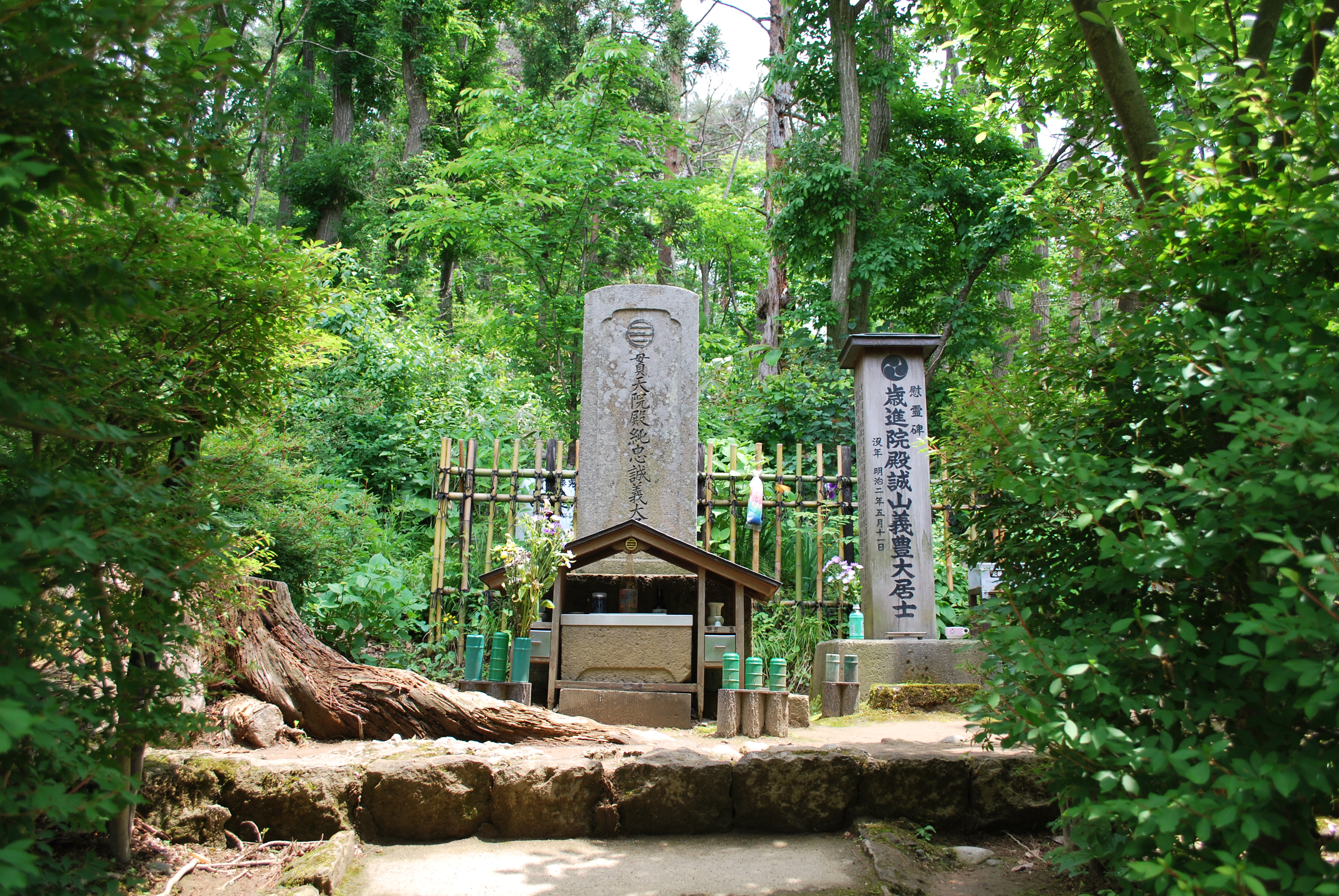 Kondo Isami's grave at Tenneiji Temple in Aizuwakamatsu, surrounded by forest on the mountainside. Photo: Rikita/Wikimedia Commons (CC BY-SA)
Tenneiji Temple (天寧寺, Banshō-zan Tenneiji) is a Soto Zen Buddhist temple with deep historical significance spanning nearly 600 years. Founded in 1447 by the feudal lord Ashina Morinobu, the temple served as the ancestral temple of the powerful Ashina clan who ruled the Aizu region throughout the Muromachi period. 🔗
At its peak, the temple maintained "1,000 cloud-water monks" and enjoyed prosperity as the family temple of the Governors of Aizu. However, the temple's fortunes declined dramatically following the 1589 Battle of Suriagehara, when the Ashina clan was defeated by the legendary Date Masamune. The structure was temporarily destroyed, with only foundation stones remaining from that catastrophic battle. 🔗
Cultural & Religious Significance
Kondo Isami and the Shinsengumi Connection
Today, Tenneiji Temple has found renewed significance as a pilgrimage site for those interested in Japan's late Edo period and the tragic end of the samurai era. The temple is most famous for housing the grave of Kondo Isami (1834-1868), the legendary commander of the Shinsengumi—a special police force that fiercely defended the Tokugawa shogunate during the turbulent Bakumatsu period. 🔗
After Kondo's execution at Itabashi in April 1868, his devoted second-in-command, Hijikata Toshizo, is said to have brought a lock of Kondo's hair to Aizuwakamatsu—a domain that remained fiercely loyal to the shogunate. Hijikata arranged for the hair to be buried at Tenneiji Temple and erected a grave in his commander's honor, securing a Buddhist name from Lord Matsudaira Katamori himself. 🔗
This act of loyalty and remembrance has transformed the temple into an important memorial site. In 2020, the Aizuwakamatsu Lions Club erected a memorial stone for Hijikata Toshizo beside Kondo's grave as part of their 60th anniversary commemoration. 🔗
The temple's location on a mountainside east of Aizuwakamatsu's city center provides a serene atmosphere and, according to tradition, allows Kondo's spirit to watch over the castle town he and his men fought to defend. 🔗
Ashina Clan Heritage
The temple's founding by Ashina Morinobu in 1447 established it as the spiritual center for one of the region's most powerful feudal families. The Ashina clan ruled Aizu throughout the Muromachi period, and Tenneiji served as their family temple for generations until their defeat in 1589. Following the Ashina clan's transfer in 1602, the temple gradually lost its former power and influence. 🔗
Visiting Information
Getting There
From Aizuwakamatsu Station:
- Take the "Haikara-san" or "Akabee" loop bus to the "Yakoro-ga-mae" (奴郎ヶ前) bus stop
- From the bus stop, walk approximately 15 minutes uphill to the temple 🔗
- The temple is located on the mountainside heading east from the city center toward Aizu Higashiyama Onsen 🔗
By Car:
- Approximately 20 minutes from the Bandai-Kawatoh IC on the Ban-etsu Expressway
- Parking available for approximately 10 vehicles
- The temple is situated on the route between Tsuruga Castle and Aizu Higashiyama Onsen 🔗
Walking Considerations:
- The temple sits on a hillside, requiring a fairly steep uphill approach
- Comfortable, sturdy walking shoes are strongly recommended
- The path to Kondo Isami's grave requires an additional 5-10 minute walk through natural wooded surroundings beyond the main temple buildings
- Paths may be slippery, especially after rain or during autumn leaf fall 🔗
Practical Details
Hours: Open freely to the public, 9:00 AM - 5:00 PM 🔗
Admission: Free 🔗
Best Time to Visit:
- For October visitors: Late October to early November offers spectacular autumn foliage with maple and other deciduous trees displaying vibrant colors throughout the mountainside setting 🔗
- Early morning or late afternoon provides the most peaceful atmosphere and best lighting for photography
- April 25th features an annual memorial service commemorating Kondo Isami's death anniversary 🔗
Contact:
- Temple Phone: 0242-26-3906
- When calling, allow the phone to ring longer than usual ("長めにコールしてください") 🔗
The Temple Experience
Main Temple Grounds
The temple's mountainside setting provides a peaceful atmosphere away from urban activity. The Soto Zen temple buildings reflect traditional Japanese Buddhist architecture, surrounded by natural forest that creates a contemplative environment perfect for quiet reflection.
Kondo Isami's Grave
The temple's primary attraction lies in its cemetery at the rear of the grounds. After walking 5-10 minutes along a path through wild nature and wooded terrain, visitors reach the grave of Kondo Isami, marked by a traditional stone monument. 🔗
The grave site offers a tangible connection to the final days of the samurai era and the tragic end of the Shinsengumi's fierce loyalty to the Tokugawa shogunate. Adjacent to Kondo's grave stands the memorial stone for Hijikata Toshizo, erected in 2020, symbolizing the eternal bond between commander and vice-commander. 🔗
The setting allows visitors to contemplate the profound loyalty and ultimate sacrifice that defined these historical figures.
Boshin War Memorials
The temple grounds also feature monuments to those who fell during the Boshin War (1868-1869), when Aizuwakamatsu became a major battlefield in the conflict between imperial and shogunate forces. These memorials provide context for understanding the temple's role in this pivotal period of Japanese history.
Natural Setting
The forested mountainside location offers scenic views, especially during autumn when the surrounding deciduous trees display brilliant colors. The walk through natural surroundings to reach the grave enhances the contemplative experience and provides a sense of pilgrimage.
Practical Visiting Tips
October Seasonal Considerations
Weather and Conditions:
- Temperature: Comfortable range of 18-28°C, ideal for outdoor walking and temple visits 🔗
- Rainfall: October is the driest month with approximately 11.5 rainy days 🔗
- Foliage Season: Late October offers peak autumn colors with maple, beech, and larch trees creating spectacular displays throughout the mountainside setting 🔗
Photography:
- Autumn foliage provides exceptional photographic opportunities along the path and surrounding the grave site
- Afternoon light filtering through colored leaves creates atmospheric conditions
- Wide shots showing the temple's mountainside setting with fall colors
Timing:
- As a less-touristed site, expect peaceful conditions even during peak foliage season
- Combine with visits to nearby Aizu Higashiyama Onsen or Tsuruga Castle
- Consider visiting in the afternoon after touring Tsuruga Castle
Essential Preparations
- Footwear: Sturdy, comfortable walking shoes with good traction are essential for the uphill approach and potentially slippery forest paths
- Physical Readiness: The steep hillside location and additional walk to the grave require moderate fitness
- Weather Gear: Bring layers for October conditions and potentially a light rain jacket
Best Photo Spots
- The grave site with surrounding autumn forest provides the most atmospheric shots
- The path through the woods leading to the grave captures the pilgrimage atmosphere
- Wide shots showing the temple's mountainside setting with fall colors
- Memorial stones for both Kondo and Hijikata together
Cultural Etiquette
At the Temple Gate: Perform a slight bow before entering; avoid walking in the center of the path (reserved for deities) 🔗
At the Grave:
- Maintain respectful silence and contemplative behavior
- This is a memorial site, not merely a tourist attraction
- Photography generally permitted, but photograph respectfully
- Avoid flash photography at grave sites
Purification: Use the water basin (chozuya) if present—rinse left hand, right hand, then cup water in left hand to rinse mouth 🔗
Prayer Etiquette: At the main hall, bow twice, press palms together for silent prayer, then bow once—unlike Shinto shrines, do not clap hands 🔗
Historical Context Enhancement
- Research the Shinsengumi and Boshin War history before visiting to fully appreciate the site's significance
- Understanding Hijikata Toshizo's journey after the Battle of Aizu adds emotional resonance to the visit
- Consider the temple's dual significance: as an Ashina clan temple and a Shinsengumi memorial
Integration with Aizuwakamatsu
Nearby Attractions
- Tsuruga Castle - The iconic symbol of Aizu samurai culture and Boshin War history (15-20 minutes by bus)
- Aizu Higashiyama Onsen - Traditional hot spring district located just beyond the temple (5-10 minutes by car)
- Aizu Sazaedo - Unique double-helix pagoda and Important Cultural Property (nearby in Higashiyama area)
- Aizu Shinsengumi Memorial Hall - Museum dedicated to the Shinsengumi's history in Aizu (city center)
- Mount Iimori and Byakkotai Monument - Memorial to the young samurai who committed suicide during the Boshin War (northern area)
Shinsengumi Historical Trail
Tenneiji Temple forms part of a comprehensive Shinsengumi historical journey in Aizuwakamatsu. After Kondo Isami's execution and the Battle of Aizu, Hijikata Toshizo stayed at the Saitoya inn in Wakamatsu and recuperated at Higashiyama Onsen before choosing this mountaintop location for his commander's memorial. 🔗
The temple connects thematically with the Aizu Shinsengumi Memorial Hall and other Boshin War sites throughout the city.
Boshin War Historical Context
Combined with Tsuruga Castle (site of the month-long siege), Mount Iimori (Byakkotai tragedy), and Aizu Bukeyashiki (samurai residence museum), Tenneiji Temple completes the narrative of Aizu's tragic role in the Boshin War and the domain's unwavering loyalty to the shogunate.
Autumn Foliage Route
The temple's mountainside location makes it an excellent addition to an autumn foliage tour that could include Tsuruga Castle Park (late October to mid-November peak), the journey along the Higashiyama area, and potentially day trips to Goshikinuma Ponds (mid-October to early November peak). 🔗
Important Notes
Zazen Meditation Clarification: While initial discovery research suggested zazen experiences, investigation reveals Tenneiji Temple does not currently offer public zazen meditation sessions. The temple functions primarily as a historical memorial site. However, other temples in Aizuwakamatsu do offer Zen meditation experiences:
- Aizu Hanko Nisshinkan (historical domain school) offers 15-minute zazen sessions as part of cultural programs
- Kenfukuji Temple holds zazen meetings every Wednesday morning from 6:00-7:00 AM
Primary Audience: This temple is particularly meaningful for:
- Shinsengumi enthusiasts and Japanese history buffs - The grave of Kondo Isami represents one of only a few memorial sites for the legendary Shinsengumi commander
- Those interested in the Boshin War and Meiji Restoration period - The site provides tangible connection to this pivotal historical moment
- Seekers of quiet, contemplative experiences - The peaceful mountainside setting offers respite from busier tourist attractions
Visitor Expectations: This is a memorial site requiring moderate physical effort to reach, not a grand temple complex with extensive facilities. Visitors should approach with appropriate historical context and respect for its significance as both a Buddhist temple and a grave site. The experience is contemplative and historically meaningful rather than visually spectacular, though the autumn forest setting adds natural beauty.
Physical Requirements: The steep hillside location and additional forest walk to the grave site require reasonable mobility and fitness. Not recommended for those with significant walking limitations or concerns about uneven, potentially slippery terrain.
Location: View on Google Maps
Source: attractions/aizuwakamatsu/tenneiji-temple.md