
About
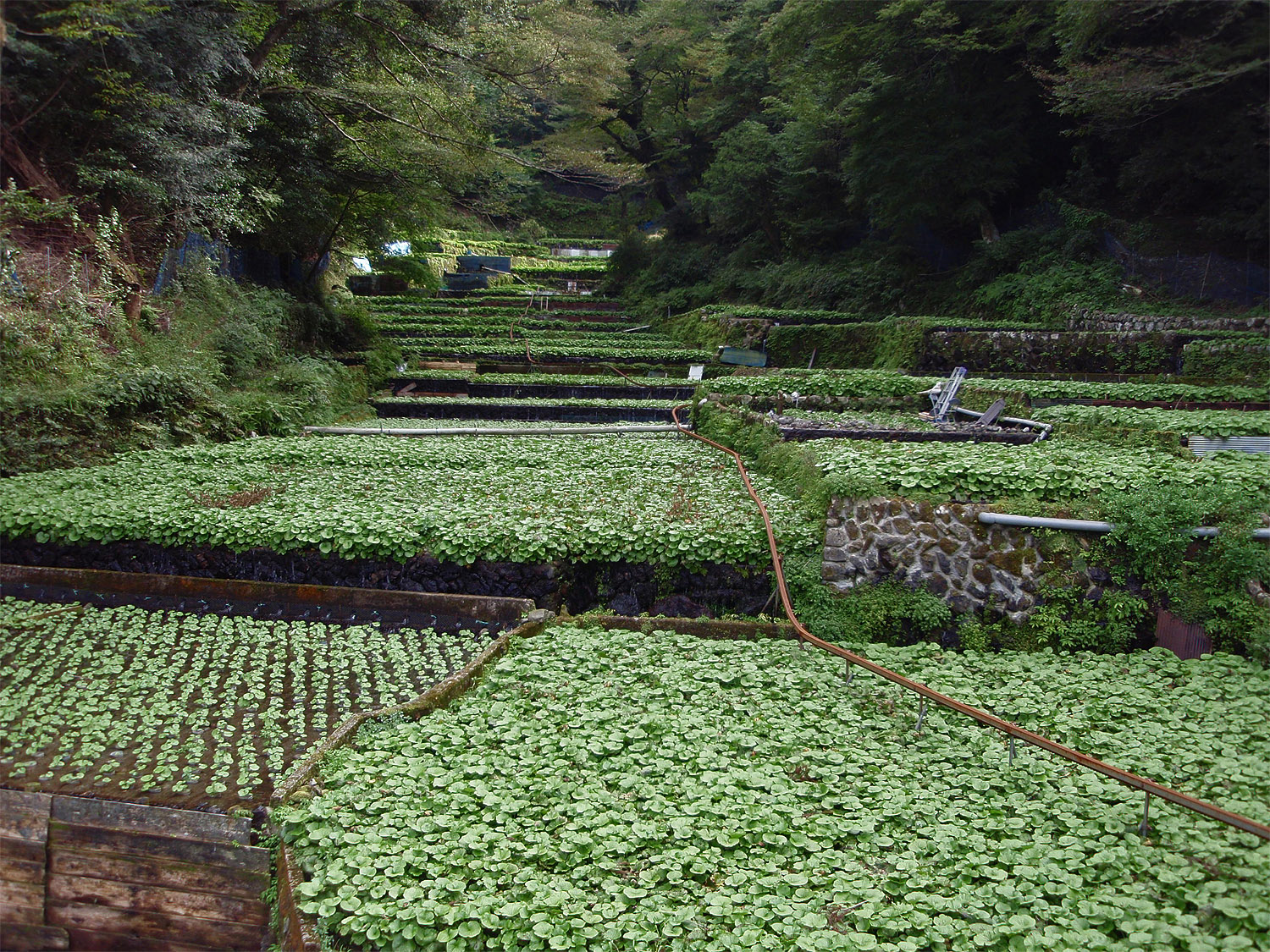 Terraced wasabi fields at Ikadaba, showcasing the traditional tatamiishi cultivation method. Source: Wikimedia Commons (Public Domain)
Wasabi farm visits in the Amagi Mountains represent a unique opportunity to experience a 400-year-old agricultural tradition that achieved World Agricultural Heritage status in 2018. The Izu Peninsula in Shizuoka Prefecture is the birthplace of wasabi cultivation and holds the distinction of being the largest water wasabi cultivation area in the world. 🔗 The region's wasabi cultivation was designated as a Globally Important Agricultural Heritage System (GIAHS) by the Food and Agriculture Organization of the United Nations in 2018, recognizing its agricultural traditions and cultural significance. 🔗
Wasabi cultivation in the Shizuoka region is believed to have begun during the Keicho era (1596-1615) in the Aoi district of Shizuoka City. 🔗 The tradition expanded to the Izu area in 1744 when Kanshiro Itagaki, guardian of Mt. Amagi, passed on harvesting methods from the Utougi area. 🔗
Cultural & Agricultural Significance
The Revolutionary Tatamiishi Method
Around 1892, a stonemason in Nakaizu developed the revolutionary "Tatamiishi Style" cultivation method. 🔗 This technique involves creating terraced fields with large rocks in the bottom layer and rocks of gradually reducing sizes in the upper layers, finishing with sand at the top. 🔗 By filtering water through multiple stone layers, this method supplies nutrients and oxygen to wasabi roots while preventing disease, enabling the production of high-quality wasabi. 🔗
A flow of copious spring water through the fields filters out impurities, keeps water temperature stable, and supplies the nutrients and oxygen wasabi needs to grow. 🔗 The footboard area of the staircase-shaped fields is filled with sand and pebbles where seedlings are planted at a depth of one to two centimeters. 🔗
World Agricultural Heritage Recognition
The Nakaizu and Amagi-Yugashima districts of Izu City account for over 60% of the area cultivated with wasabi in the prefecture. 🔗 The region benefits from abundant spring water flowing from Mt. Amagi, which maintains stable water temperatures and provides ideal conditions for wasabi cultivation. 🔗
Cultivation Timeline
Wasabi seedlings are planted in the fields and take 1 to 1.5 years for initial growth. Complete maturity requires about 2 years for the rhizomes to grow to 4-6 inches in length. 🔗 By adjusting planting times, year-round harvesting is possible, meaning cultivation work is continuous throughout the year. 🔗
Key Visitor Locations
1. Ikadaba Wasabi Fields
Location: Ikadaba, Izu, Shizuoka 410-2516, Japan Hours: Open 24/7 year-round (no gates) Admission: Free Contact: +81 558-83-2636 Parking: Available onsite (may incur small fee, typically ~¥500); limited to 10 minutes to be courteous to working farmers 🔗
The Ikadaba Wasabi Field is one of ten terrace fields selected to represent Shizuoka Prefecture, featuring approximately 15 hectares of beautiful terraced landscape (large enough to fit three Tokyo Domes). 🔗 The fields cover 14.7 hectares and comprise around 1,500 individual paddies. At an elevation of 350 meters above sea level, the area is recognized as a UNESCO Global Geopark. 🔗
Access: Via a very narrow and winding mountain road. By public transportation: Take the Izu Hakone Railway to Izukyu-Shimoda Station, then transfer to a local bus heading to Ikadaba (approximately 30 minutes), followed by a 5-minute walk from the Ikadaba bus stop.
Visitor Experience: This is a working farm where visitors can observe traditional wasabi cultivation from designated viewing areas. Visitors are strictly forbidden to enter the paddies, both because it would damage the plants and because the steep terraced drops are potentially dangerous. 🔗 The bridge provides the most effective and safest viewing point. Since this is private property, visitors must observe all rules.
2. Izu Wasabi Visitor Center
Location: 116-1 Harabo, Izu City, Shizuoka Prefecture Contact: 0558-92-0100 Hours: 10:00-16:00 Closed: Wednesdays Admission: Free
This wasabi information center opened in Izu City in April 2024, developed to disseminate information about Izu wasabi and promote interaction with the local community. 🔗
Access: About 20 minutes by bus from Shuzenji Station to "Himenoyushimo" - get off at "Nakaharado Iriguchi" bus stop. Located just 5 minutes away by car from Wasabi no Omiya.
Visitor Experience:
- History of wasabi cultivation displays
- VR images of wasabi fields for immersive experience
- Wasabi tasting experience comparing fresh Izu wasabi with tubed wasabi
- Interactive quizzes about wasabi (receive a wasabi sticker for completing)
- Experience the aroma, color, and refreshing spiciness of raw wasabi 🔗
3. Wasabi no Omiya
Location: 1242 Jizodo, Izu 410-2515 Shizuoka Prefecture Hours: 9:00 AM - 4:00 PM (January-November) Closed: Wednesdays; December (when snow comes to the mountains)
Located in the small town of Jizodo, approximately 25 minutes' drive from Shuzenji Station. 🔗
The firm cultivates award-winning wasabi and offers hands-on experiences:
Wasabi-zuke Making Experience:
- Create tart-tasting wasabi-pickle paste
- Fee: ¥1,620 (tax included)
- Minimum 2 people required
- Advance reservations required 🔗
Farm Tours: Tour the wasabi fields and experience harvesting wasabi 🔗
Shop Products: Various wasabi-themed goods including wasabi miso, wasabi seaweed, wasabi salt, and their specialty wasabi ice cream served with a dollop of freshly ground wasabi 🔗
Visiting Information
Authentic Wasabi Tasting
Fresh wasabi offers a complex taste profile with subtle sweetness, mild heat, and lingering umami notes that differ dramatically from processed wasabi paste. 🔗 The authentic experience brings a refined flavor that enhances food without overwhelming it.
Proper Tasting Technique:
- With genuine fresh wasabi, it's crucial not to mix it in liquid because the flavor vanishes within about 30 seconds 🔗
- Apply wasabi directly to fish or food with chopsticks rather than mixing with soy sauce 🔗
- Use sparingly - a little goes a long way, and too much overwhelms delicate flavors 🔗
- Freshly grated wasabi should have 2-3 minutes to oxidize for best flavor 🔗
November Season Considerations
Optimal Harvest Period: November falls within the favorable cool-weather harvest window (late autumn through early spring) when wasabi quality and pungency are at their peak. 🔗 Wasabi is especially spicy in winter, making late autumn particularly ideal for experiencing premium quality wasabi. 🔗
Seasonal Scenery: During the autumn season, the foliage in the Amagi Mountains transforms into a breathtaking palette of colors. Visitors describe the scenery as "wonderful with the autumn leaves." 🔗 The area is particularly beautiful during autumn leaf season, providing a stunning backdrop to the green wasabi terraces.
Weather Conditions: November weather in the Izu Peninsula is generally mild but can be cool in the mountains. The mountain roads may be narrow and winding, requiring careful driving. 🔗
Availability: Fresh wasabi roots are available year-round, with November being particularly favorable for quality. 🔗 The Wasabi no Omiya holds cooking classes year-round except in December, so November visits can include hands-on experiences. 🔗
Photography Recommendations
Best Times: Visit in the morning for the best light for photography and a quieter experience. 🔗
Best Viewpoints: At Ikadaba, drive uphill past the first viewing area to the second bridge for better views - the wasabi will be in the shadow of trees, providing better contrast. 🔗 Sticking to the bridge is the most effective and safest way to view the wasabi fields. 🔗
Photography Etiquette: Do not enter the wasabi fields just to take photos. 🔗 The working farms depend on pristine conditions, and unauthorized entry can damage crops and contaminate growing areas.
Practical Visiting Tips
Cultural Etiquette at Wasabi Farms
Respect Working Farms: Ikadaba and other wasabi farms remain largely untouched by tourism because farmers fear contamination and damage to their very fragile crops. 🔗 Visitors must show absolute respect for these concerns.
Stay on Designated Paths: Never enter the paddies or cultivation areas. The steep terraced drops are potentially dangerous, and entering damages the plants. 🔗
Observe Parking Limits: At Ikadaba, parking is limited to ten minutes to be courteous to working farmers. 🔗 This is not a standard tourist attraction - treat it as a working agricultural site.
Shopping for Fresh Wasabi
Where to Buy:
- Izu Wasabi Visitor Center offers information about purchasing facilities nearby 🔗
- Wasabi no Omiya shop sells various wasabi products including wasabi miso, wasabi seaweed, wasabi salt, and fresh wasabi 🔗
- Local wasabi farms may sell directly to visitors
Storage: Keep fresh wasabi rhizomes in an unsealed plastic bag in the refrigerator where they can last two weeks and beyond. Fresh wasabi stays fresh up to 30 days in the fridge with careful handling. 🔗
Why Fresh is Better: Fresh wasabi is superior because nothing else is added to detract from its authentic flavor, while wasabi pastes and powders are mostly made up of horseradish, mustard powders, colorings, and flavorings. 🔗
Visit Duration and Timing
Ikadaba Wasabi Fields: 15-30 minutes (short stop due to parking limitations) Izu Wasabi Visitor Center: 30-60 minutes for exhibits and tasting Wasabi no Omiya Experience: 1.5-2 hours for hands-on workshops
Recommended Sequence: Start with the Izu Wasabi Visitor Center for educational context, visit Ikadaba Wasabi Fields for scenic photography, then experience hands-on activities at Wasabi no Omiya if time permits.
Driving and Navigation
The mountain roads to wasabi farms are very narrow and winding. 🔗 Exercise caution, especially if unfamiliar with narrow Japanese mountain roads. The scenic views make the drive worthwhile, but allow extra time for careful navigation.
Reservation Requirements
- Wasabi no Omiya workshops require advance reservations (minimum 2 people) 🔗
- Call ahead to confirm availability and seasonal schedules
- The new Izu Wasabi Visitor Center (opened April 2024) may have limited English information available
Accessibility Considerations
The narrow mountain roads and steep terrain make these locations challenging for visitors with mobility limitations. The Izu Wasabi Visitor Center (newer facility) likely has better accessibility than the mountain field locations, but confirm in advance if accessibility is a concern.
Nearby Attractions
- Shuzenji Onsen: Historic hot spring town, approximately 25 minutes from Wasabi no Omiya 🔗
- Banjo Falls: Natural waterfall located about 0.6 miles from Wasabi no Omiya 🔗
- Amagi Mountain Range: Hiking and nature exploration throughout the UNESCO Global Geopark
- Kano River: Scenic river that flows around Mount Amagi where many wasabi farms are located 🔗
The wasabi farms are centrally located in the Izu Peninsula, making them an excellent addition to various Izu itineraries:
- Shuzenji Area: Natural pairing with the historic onsen town
- Coastal Route: En route between eastern and western coastal attractions
- Mountain Exploration: Part of broader Amagi Mountain experiences
- Cultural Heritage Trail: Combines with other traditional crafts and agricultural heritage sites in Izu
Location: View on Google Maps
Source: attractions/izu-peninsula/wasabi-farm-visits-amagi.md