
About
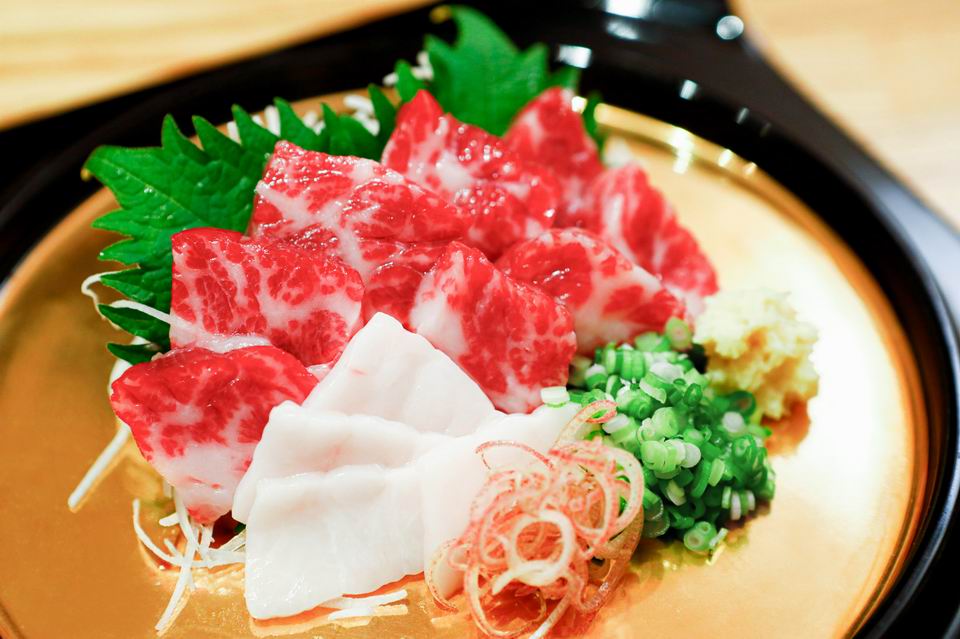 Traditional Kumamoto basashi (horse meat sashimi) served with grated ginger, garlic, and sweet soy sauce - a regional specialty dating back 400 years. Source: Ministry of Agriculture, Forestry and Fisheries of Japan
Yakiniku Aji Hitokire (焼肉 味ひときれ) stands out among Kumamoto's yakiniku establishments for its master butcher's exceptional eye for quality, sourcing only the finest Akaushi (Kumamoto's legendary red wagyu) and kuroge (black) wagyu, along with exceptionally rare cuts of horse meat including never-frozen harami (diaphragm) and liver sashimi. 🔗
The restaurant embodies Kumamoto's dual culinary heritage: its thousand-year-old tradition of raising Japanese Brown cattle (Akaushi) on the volcanic grasslands of Aso, and its 400-year-old basashi culture initiated by feudal lord Kiyomasa Kato, who discovered the deliciousness of horse meat during his Korean military campaigns. 🔗 🔗
Cultural & Culinary Significance
Kumamoto's Akaushi Legacy:
Kumamoto's Akaushi (赤牛, meaning "red cattle") represents one of Japan's four precious wagyu breeds, certified as traditional meat-breed wagyu in 1944. Unlike the heavily marbled black wagyu, Akaushi breeding focused on adaptability to Aso's volcanic grasslands rather than fat content, resulting in leaner beef with exceptionally rich umami from high free amino acid content and mild sweetness from glycogen. 🔗 🔗
This breed has maintained the Aso grasslands through a thousand-year cycle of burning, grazing, and harvesting - a system recognized as a Globally Important Agricultural Heritage Site. Kumamoto produces approximately 70% of Japan's Akaushi cattle, making this the definitive region to experience this rare wagyu variety. 🔗 🔗
Kumamoto's Basashi Tradition:
Kumamoto leads Japan as the nation's largest horse meat producer, accounting for 40% of domestic production. Basashi (馬刺し, horse sashimi) - also called sakura niku ("cherry meat") for its distinctive pink color - became embedded in Kumamoto culture following lord Kiyomasa Kato's discovery of its delicious taste during his 16th-century Korean campaigns. 🔗 🔗
The practice expanded significantly in the 1950s post-war period when horses began being raised specifically for consumption in the Aso region. Beyond its cultural significance, horse meat offers exceptional nutritional benefits: high protein, low fat, and rich in iron, calcium, and zinc. 🔗 🔗
Visiting Information
Operating Hours:
- Monday-Sunday: 5:30 PM - 11:00 PM (including holidays)
- Closed: No fixed closing days 🔗
Reservations:
- Highly recommended, especially for dinner service
- Reservation phone: 050-5589-9384
- Main phone: 096-354-0551
- Single diners must call directly (cannot book online for one person)
- Official website: ajihitokire.com 🔗
Admission & Pricing:
- Average budget: ¥6,000-7,999 per person
- Premium courses and rare cuts command higher prices
- CASH ONLY - credit cards and electronic payments NOT accepted 🔗
Current Status:
- Open and operating normally as of research date
- Rating: 3.54/5.0 on Tabelog (99 reviews, 461+ photos) 🔗
- Established: April 16, 2015
- Smoking permitted throughout the restaurant
Accessibility:
- From Kumamoto Station: Take tram bound for Kenguncho (15 minutes, ¥180)
- Nearest stop: Karashimacho Station (4-minute walk) 🔗
- Location: Shinshigai covered arcade (235-meter shopping area established 1903) 🔗
- No parking available - use public transportation 🔗
The Dining Experience
Seating Arrangements:
The restaurant offers 44 seats across multiple styles: counter seating (ideal for solo diners/couples), table seating (small groups), traditional tatami rooms, and sunken kotatsu seating (authentic Japanese experience). Private rooms accommodate parties of 4+. Note: seating selection not available - restaurant assigns based on availability. 🔗
The Master Butcher's Selection:
What distinguishes Aji Hitokire is the owner's exceptional expertise as a meat wholesaler, selecting only cuts meeting the highest standards. The philosophy centers on confidence in quality - meat is cut thick like steak specifically to pair with wine, creating remarkably juicy and tender results. 🔗
Menu Highlights:
-
Akaushi Wagyu Specialties:
- Supreme Assorted Platter (最上盛り) - Top-selling item featuring finest meat of the day (serves 2)
- Rare tongue cuts prepared as shabu-shabu (¥3,000 for Akagyu tongue shabu)
- Thick-cut steaks showcasing Akaushi's signature lean-yet-tender profile
- Various cuts highlighting umami-rich, mildly sweet characteristics 🔗
-
Horse Meat Specialties (Basashi):
- Never-frozen harami (diaphragm) sashimi - exceptionally rare cut
- Liver sashimi (rare in modern Japan due to strict regulations)
- Various cuts: lean red meat, marbled mane (tataki mane), fatty belly (futaego)
- Each cut offers distinct textures and flavors 🔗
-
Preparation Recommendations:
- Enjoy meat with salt, wasabi, or original light sauce to appreciate natural flavors
- Avoid heavy saucing that masks exceptional quality 🔗
Yakiniku Grilling Process:
At yakiniku restaurants, you grill your own meat at the table. Follow proper etiquette: 🔗 🔗
- Use separate tongs for raw meat; chopsticks for eating
- Wait for grill to heat thoroughly before cooking
- Share grill space - allow all dining companions to place meat simultaneously
- Grill order: Start with unseasoned lean cuts, progress to fattier or seasoned meats
- Cooking times: Lean meat cooks quickly (remain more rare); fattier cuts need longer cooking
- Dip cooked meat lightly in sauce and enjoy immediately
Basashi Service:
Horse meat sashimi arrives pre-sliced, served with thinly sliced onions, grated ginger, fresh garlic, and sweet soy sauce for dipping. Different cuts offer distinct experiences - lean thigh meat provides pure flavor, marbled loin adds richness, while rare cuts like mane fat and futaego (belly) deliver unique textures. 🔗 🔗
Practical Visiting Tips
Yakiniku Dining Protocols:
- Pace yourself - yakiniku is meant for leisurely enjoyment with conversation
- Don't rush through courses; the experience centers on social dining
- Share the grill fairly among all dining companions
- Never use the same tongs for raw meat and cooked meat
- Don't leave meat unattended on the grill - it cooks quickly 🔗
Basashi Consumption:
- Raw horse meat is completely safe when properly handled (Kumamoto has centuries of expertise)
- Don't be intimidated - texture is tender, flavor mild and slightly sweet
- The pink color is natural, giving rise to the poetic name "sakura niku" (cherry meat)
- Ginger and garlic accompaniments aid digestion and complement natural flavors 🔗
Ordering Recommendations:
- For First-Timers: Start with Supreme Assorted Platter to sample the day's finest cuts
- Must-Try Items:
- Akaushi tongue shabu-shabu (unique preparation highlighting rare wagyu)
- Never-frozen horse harami (extremely rare offering)
- Liver sashimi if available (increasingly uncommon in Japan)
- Ordering Strategy: Begin with lighter basashi appetizers, progress to grilled Akaushi, finish with richer cuts
- Portion Planning: Average ¥6,000-7,999 per person allows substantial dining; consider sharing multiple dishes
Language & Communication:
- English menu availability not confirmed
- Restaurant staff may have limited English (typical for local establishments)
- Google Translate or translation apps recommended
- Visual menu on Tabelog (461+ photos) helps with pre-visit research 🔗
Payment & Practical Notes:
- CASH ONLY - No credit cards or electronic payments accepted
- Bring sufficient yen for dinner plus tram fare
- Nearest ATMs likely in Sunroad Shinshigai shopping arcade
- No parking available - use public transportation 🔗
November Considerations:
- November represents peak harvest season - restaurants showcase finest ingredients 🔗
- Comfortable autumn weather (crisp days, cool nights) ideal for dining
- Indoor dining with grills may warm the space
- Shinshigai comes alive in evening as entertainment hub
- No specific photography restrictions (461+ photos on Tabelog indicate photography welcomed) 🔗
Nearby Attractions:
- Sunroad Shinshigai Arcade - 235-meter covered shopping area established 1903 🔗
- Kamitori Shopping Arcade - Adjacent covered arcade
- Entertainment venues - Numerous bars, karaoke, cinemas within walking distance
- Kumamoto Castle - Major historical landmark within easy walking distance 🔗
Location: View on Google Maps
Source: attractions/kumamoto/yakiniku-aji-hitokire.md