
About
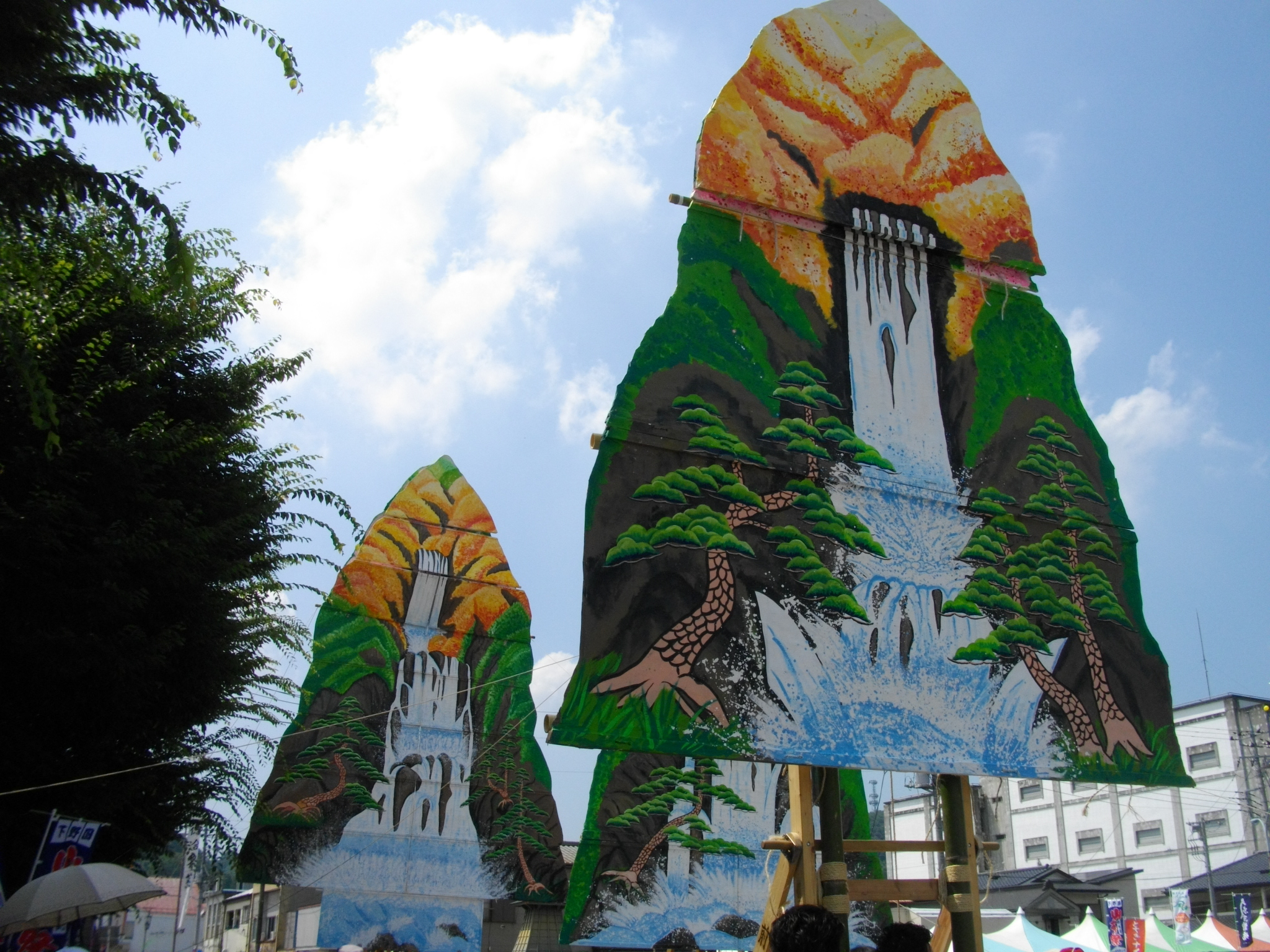 The Yamaage Festival showcasing the elaborate harikayama paper mountain backdrops and outdoor kabuki stage. Photo by Abasaa, July 2014. Public domain via Wikimedia Commons.
The Yamaage Festival is a 460-year-old UNESCO Intangible Cultural Heritage celebration featuring open-air kabuki performances with massive harikayama (paper mountain) backdrops made from local washi paper. 🔗 The festival transforms the historic castle town of Nasukarasuyama into outdoor theater stages for three days each July, creating one of Japan's most unique cultural experiences where traditional performing arts merge with spectacular paper craftsmanship. 🔗
The festival originated in 1560 when Lord Suketane Nasu, ruler of Karasuyama Castle, enshrined Susano-no-mikoto (also known as Gozutenno) at Yagumo Shrine to ward off an epidemic plague threatening his domain. In Shintoism, this deity was believed to possess potent healing powers. The kabuki drama performed as a dedication evolved into the magnificent Yamaage Festival celebrated today. 🔗
The festival's name derives from "yama" (mountain) and "age" (to raise), referring to the spectacular harikayama - wooden frames made of bamboo braided in mesh patterns with multiple layers of Karasuyama washi paper pasted on top, painted with mountain and waterfall landscapes. These structures reach up to 10 meters in height and create stage backdrops of ascending size for the outdoor kabuki performances. 🔗
Cultural & Religious Significance
UNESCO Recognition & Global Heritage Context
The Yamaage Festival was inscribed on UNESCO's Representative List of the Intangible Cultural Heritage of Humanity on December 1, 2016, at the 11th Session of the Intergovernmental Committee held in Addis Ababa, Ethiopia. 🔗 It was designated as part of the collective inscription "Yama, Hoko, Yatai, float festivals in Japan," encompassing 33 representative festivals across 18 Japanese prefectures. 🔗
UNESCO Criteria Met: The designation falls under the cultural domain of "Social practices, rituals and festive events" and connects to multiple Sustainable Development Goals: SDG 4 (Quality Education), SDG 5 (Gender Equality), and SDG 16 (Peace, Justice and Strong Institutions). 🔗 UNESCO specifically recognized these festivals as community-centered traditions where men, women, young, and elderly share responsibility for every step from float design and construction to musical accompaniment and event coordination. 🔗
What Makes It UNESCO-Worthy: The recognition acknowledges the festival's exceptional preservation of intergenerational knowledge transfer, traditional Harikayama paper craft showcasing 1,200-year-old papermaking techniques, living cultural tradition maintaining kabuki's original outdoor performance style from early 1600s, and community-centered practice with structured progression pathways ensuring continuity of traditional skills. 🔗 Participants advance through guidance from senior bearers, preventing knowledge loss that might occur with individual or family-based transmission.
Historical Origins (1560) & Epidemic Context
The festival originated in 1560 (Eiroku 3) during a devastating epidemic threatening Lord Nasu Suketane's domain at Karasuyama Castle. 🔗 To combat the plague, Suketane deified Susano-no-mikoto (Gozutenno), the brother of sun goddess Amaterasu, believed in Shintoism to possess potent healing powers for health amelioration. 🔗
Lord Suketane enshrined Gozutenno at Yakumo Shrine to pray for epidemic prevention, good harvest, and peace. 🔗 This religious foundation reflects syncretic beliefs of the Gion cult arising after Buddhism's introduction, where Susanoo became conflated with deities of pestilence and disease. Known as the god of storms, seas, and protector against epidemics, he is associated with purifying lands and driving away plagues. 🔗
Evolution from Ritual to Celebration: The original "Yama-age" ritual saw parishioners of Yakumo Shrine build a Yama float to welcome the deity's visit and perform entertainment to comfort the deity. 🔗 The Kabuki drama performed as dedication gradually transmuted into the elaborate Yamaage Festival celebrated today, maintaining religious roots while evolving into massive community celebration. 🔗
460-Year Tradition & Historical Continuity
The festival boasts unbroken tradition spanning 460+ years since 1560 establishment. 🔗 This remarkable continuity demonstrates community dedication through periods of significant social and political change: Edo period, Meiji Restoration, World War II, and modernization. The festival achieved national recognition as Important Intangible Folk Cultural Property of Japan before receiving international UNESCO designation in 2016. 🔗
Modern Adaptation: While religious foundation remains constant, the festival's structure evolved to accommodate modern participation patterns. Current format features performances over three days (Friday-Sunday around fourth Saturday of July), allowing broader community and visitor participation. 🔗 The six-neighborhood rotation ensures traditional knowledge and skills are distributed throughout the entire community, preventing knowledge loss. 🔗
Harikayama Craft Integration & Traditional Construction
"Harikayama" translates literally to "pasted mountain" - spectacular stage backdrops constructed specifically for each year's festival and destroyed after the event concludes. 🔗 These temporary theatrical set pieces represent centuries-old Japanese craftsmanship: wooden frames with bamboo braided in mesh patterns, over which multiple layers of Karasuyama's specialty washi paper are pasted using flour paste. 🔗
Landscapes and natural scenes are painstakingly painted on top, creating elaborate theatrical backdrops reaching up to 10 meters in height. 🔗 Each festival features three mountain backdrops of ascending size crafted and painted before the festival. 🔗 The construction materials—local Karasuyama washi paper, bamboo, and wood—are transformed through purely manual techniques passed down through generations.
Integration with Kabuki Performances: The Harikayama backdrops are integral theatrical elements that "rise (age)" during each performance, hence "Yama-age" (mountain raising). 🔗 Young performers coordinate movements to lift these massive structures behind the stage, creating visually striking moments punctuating kabuki narratives. 🔗 Stages and set pieces are transported by hand and cart to multiple performance locations throughout the day, requiring breakdown and reassembly several times during the festival. 🔗
Craftsmen and Skill Preservation: Kabuki stages and backdrops are created entirely by Nasukarasuyama residents, demonstrating community ownership of traditional craft knowledge. 🔗 Construction involves specialists in multiple traditional crafts: washi papermaking, bamboo weaving, carpentry, and scenic painting. Many "waka-shu" (young townspeople) support the festival, moving briskly in perfectly synchronized movements essential to stage-setting spectacle. 🔗 The six-neighborhood rotation ensures construction skills are practiced regularly and passed to new generations.
Open-Air Kabuki Uniqueness & Historical Authenticity
The Yamaage Festival kabuki differs fundamentally from traditional theater kabuki in scale, setting, mobility, and community performance. The festival features "the largest outdoor Kabuki stage in Japan" - a 100-meter-deep by 20-meter-wide temporary stage constructed annually in city streets. 🔗 The outdoor stage moves throughout town with backdrops broken down and reassembled several times daily at different performance locations. 🔗
Historical Authenticity: Interestingly, the Yamaage Festival's outdoor format preserves kabuki's original performance style. Kabuki tradition developed in early 1600s as regional, low-budget plays for outdoor stages before evolving into elaborate theater productions. 🔗 The Yamaage Festival represents a living link to kabuki's populist origins, demonstrating how the art form appeared before professionalization and institutionalization.
Community Performance: Local villagers perform kabuki plays rather than hereditary professional actors, making the Yamaage Festival a participatory cultural tradition rather than spectator art form. 🔗 Female dancers in gorgeous kimonos perform alongside Tokiwazu shamisen musicians, with performances conducted entirely by city locals. 🔗
Performance Elements: The festival rotates through eight traditional kabuki pieces including narratives about historical figures like Taira no Masakado, supernatural encounters (ogre women, fox spirits), and romantic tales. 🔗 Specific performances include "Masakado" featuring a giant toad, "Modoribashi" with an ogress, and "Hebihimesama" based on local folklore. 🔗 Performances include dance, Tokiwazu shamisen accompaniment, traditional singing, with coordination directed by Kigashira (conductor) using wooden clappers. 🔗
Cultural Significance & Preservation
The Yamaage Festival serves as cornerstone of Nasukarasuyama's cultural identity, uniting residents around shared heritage spanning 460 years. The six-neighborhood rotation ensures every sector takes direct responsibility for festival success, fostering civic pride and intergenerational collaboration. 🔗 The festival functions beyond entertainment - it represents annual affirmation of community values, traditional skills, and collective memory.
Intergenerational Knowledge Transfer: The festival demonstrates structured intergenerational transfer through progressive participation pathways. Young people learn musical performance, advance through float steering and security roles, and eventually assume festival management responsibilities, with senior bearers providing guidance throughout. 🔗 The 3 PM performance slot often features children, providing younger community members with early performance experience and cultural education. 🔗
Institutional Support: The Yamaage Center museum provides year-round educational experiences featuring humanoid robot guide Kansuke Jiisan (Grandpa Kansuke), full-scale festival stalls, and one-fifth-scale stage replica. 🔗 The museum hosts 8-minute festival recreations, introducing traditional elements to audiences without direct family connections to festival practices, expanding cultural appreciation and potential future participants. 🔗
International Recognition Impact: The 2016 UNESCO designation elevated Nasukarasuyama's profile significantly, transforming the festival from regional celebration to internationally recognized cultural treasure. Special festival trains now operate from Tokyo's Shinjuku Station, making the event accessible to metropolitan audiences. 🔗 The designation validates the community's 460-year commitment to preserving cultural heritage and provides external support for continuation efforts. Tourism revenue generated by UNESCO recognition funds maintenance of traditional skills and infrastructure, creating economic incentives for younger generations. However, the festival's free-to-watch policy (with optional 500-yen reserved seating) demonstrates commitment to accessibility and community primacy over commercialization. 🔗
Visiting Information
Festival Dates & Schedule
2025 Festival Dates: July 25-27 (Friday-Sunday) 🔗
Performance Schedule:
- Friday, July 25: 9:30 AM, 12:30 PM, 2:30 PM, 5:30 PM, 7:30 PM, 9:00 PM 🔗
- Saturday, July 26: 10:00 AM, 1:00 PM, 4:30 PM, 7:00 PM (reserved seating), 9:30 PM
- Sunday, July 27: 10:00 AM (reserved seating), 1:00 PM, 7:30 PM, 9:00 PM
Special Performances: 7:00 PM Saturday (July 26) and 10:00 AM Sunday (July 27) feature reserved premium seating. 🔗
Admission & Ticketing
General Viewing: Free for all performances from standing areas 🔗
Reserved Box Seats: ¥1,000 per person
- Purchased day-of approximately 1 hour before performances
- Sales location: Near Yamaage Kaikan
- Provides guaranteed seating and better viewing angles 🔗
Premium Seating: ¥10,000 per person (advance reservation required)
- Must book in advance: 0287-83-1115 (weekdays 9:00 AM-5:00 PM)
- Includes festival merchandise, backstage access, local specialty gifts, and photo opportunities with performers
- Available only for 7:00 PM Saturday and 10:00 AM Sunday performances 🔗
Transportation
From Tokyo (approximately 2 hours 10-40 minutes):
- Tokyo/Ueno Station → Utsunomiya Station (JR Tohoku Shinkansen, 50 minutes, ~¥4,500) 🔗
- Utsunomiya Station → Karasuyama Station (JR Karasuyama Line, 51 minutes, ¥500-800) 🔗
Festival Transportation:
- All performance locations within walking distance of JR Karasuyama Station in Kajimachi District 🔗
- Pick up festival program at station listing all performance times and locations
- By Car: 2 hours 50 minutes from Tokyo, but limited parking (first 1,000 vehicles) - train travel strongly recommended 🔗
Temporary Parking: Multiple lots operate 9:30 AM-10:00 PM accommodating approximately 1,230 vehicles total. Shuttle buses run between Karasuyama Elementary School and Tochigi Bank (10-minute intervals, 10:00 AM-10:00 PM) on July 26-27 only. 🔗
Operating Hours
Festival Hours: 9:00 AM - 9:30 PM with performances throughout the day 🔗
Best Viewing Times:
- Morning and afternoon performances for comfortable temperatures
- Evening performances feature dramatic lighting but extreme July heat/humidity (30-35°C/86-95°F) 🔗
Recommended Duration: Full day to experience multiple performances and witness stage construction. Individual performances approximately 45-60 minutes. 🔗
Current Status: Confirmed for July 25-27, 2025 with full operations and advance ticket sales available. 🔗
The Festival Experience
Kabuki Performances
Local villagers perform traditional kabuki plays featuring dance and Tokiwazu shamisen (string instruments of the Joururi style) against the spectacular harikayama backdrops. The productions emphasize dramatic storytelling with impressive scenic design unavailable in traditional theater settings. 🔗 The outdoor format creates an intimate connection between performers and audience, allowing viewers to appreciate both the artistry and the community dedication behind each performance.
Stage Construction Spectacle
Arrive 45-60 minutes before each performance to watch approximately 150 townspeople assemble the massive 100-meter-deep outdoor stage. This behind-the-scenes process is considered "half of the fun" - witnessing the perfectly coordinated teamwork of young men lifting and positioning the 10-meter-tall harikayama mountain backdrops. 🔗 🔗 The construction choreography itself represents a form of performance art, showcasing the community's collective skill and organization.
Mikoshi Procession
On the morning of the second day (Saturday), witness the mikoshi (portable shrine) of Yagumo Shrine carried through the city during a reenactment of Togyo (parade for transferring enshrined spirits). The mikoshi departs at 6:30 PM from Yamaage Kaikan. 🔗 Important cultural rule: Viewing the mikoshi from above (second floors, etc.) is prohibited by local tradition. 🔗
Karasu-Tengu Blessing
Encounter the Karasu-Tengu (the local interpretation of Tengu, a mischievous deity) during ceremonies. Local tradition holds that if the Karasu-Tengu rubs you with his long sword, you will spend the following year in good health. 🔗 This interactive element allows visitors to directly participate in the festival's blessing traditions.
Behind-the-Stage Viewing
Walk behind the stage to view the massive washi paper mountain backdrops up close - a unique perspective unavailable from audience seating areas. The three ascending-size mountains create an impressive 100-meter stage depth with intricate mountain and waterfall paintings. 🔗 This backstage access provides rare insight into the scale and craftsmanship of the harikayama structures.
Practical Visiting Tips
Weather Preparation
July Climate: Mid-July through late July brings very hot and humid conditions with daily highs frequently reaching 30-35°C (86-95°F) or more. 🔗
Essential Items to Bring:
- Hydration: Water bottles - vending machines and convenience stores exist in Nasukarasuyama but may not be near performance stages 🔗
- Sun protection: Hat, sunglasses, high-SPF sunscreen, sun umbrella 🔗
- Rain protection: Small folding umbrella (July can bring heavy rainfall) 🔗
- Comfortable footwear: Performances rotate across multiple locations requiring extensive walking throughout the town 🔗
- Cash: Festival stalls don't accept credit cards; needed for tickets, snacks, and souvenirs 🔗
- Lightweight, breathable clothing: Cotton, linen, or quick-dry fabrics 🔗
Viewing Strategies
Arrive Early: Get to performance locations 45-60 minutes before showtime to:
- Watch stage construction process
- Purchase reserved seating tickets (if desired)
- Explore behind-the-stage areas
- Secure optimal viewing positions 🔗
Elevated Positions: Select high spots overlooking the crowd and stage for comprehensive views. However, remember that viewing the mikoshi from above is culturally prohibited. 🔗
Performance Selection: The festival program (available at Karasuyama Station) lists all performance times and locations. Select shows based on preferred arrival time and temperature tolerance rather than specific kabuki content, as performances rotate among the six participating neighborhoods. 🔗
Photography Conditions
Festival photography is permitted, but observe traditional theater etiquette during performances. Arrive early to secure elevated viewing spots with overhead perspectives of both the stage and crowd. Start with wide shots showcasing the crowd and overall ambiance, then capture close-ups of performers' faces, harikayama details, and unique festival elements. 🔗
The behind-the-stage area offers exceptional photo opportunities of the 10-meter harikayama structures not visible from audience seating. 🔗
Cultural Etiquette
During Performances:
- No photography, cellphone use, talking, eating, or drinking during kabuki performances (observe traditional theater etiquette) 🔗
- Enjoy Japanese bento boxes during intermissions for authentic cultural immersion
- Don't view the mikoshi portable shrine from elevated positions (second floors, balconies)
General Festival Behavior:
- Dress modestly and avoid taking up excessive space in crowded areas
- Dispose of trash properly
- Learn basic Japanese phrases: "Arigatou gozaimasu" (thank you), "Sumimasen" (excuse me) 🔗
- Show genuine interest in local traditions - residents appreciate respectful visitors
Money-Saving Options
Free Admission: All performances are free to view from standing areas. Reserved box seats (¥1,000) are optional for guaranteed seating and better views. 🔗
Accommodation Strategy: Limited Western-style hotels exist in Nasukarasuyama. Book accommodation in nearby Utsunomiya city and take the JR Karasuyama Line for the festival - saves lodging costs while providing more hotel options. 🔗
Transportation: Use local/express trains from Tokyo (¥1,230) instead of Shinkansen (¥4,500) to save ¥3,270, though it adds 30 minutes travel time. 🔗
Crowd Management
Multiple Performances: With 6 shows on Friday, 5 on Saturday, and 4 on Sunday, disperse viewing across different performances to avoid peak crowds at popular evening shows. 🔗
Off-Peak Times: Morning and early afternoon performances (9:30 AM, 10:00 AM, 12:30 PM, 1:00 PM) typically have smaller crowds than evening performances, with more comfortable temperatures. 🔗
Reserved Seating: Purchase ¥1,000 box seats approximately 1 hour before performances near Yamaage Kaikan to guarantee seating and avoid standing-room crowding. Tickets available day-of on first-come basis. 🔗
Important Considerations
Accommodation Booking: Partner hotels in nearby areas offer lodging packages with transportation service. Book early as festival dates attract limited regional accommodation capacity. Contact Yamaage Festival office: 0287-83-1115 (weekdays 9:00 AM-5:00 PM). 🔗
Premium Seating Reservations: ¥10,000 premium seats must be reserved in advance (phone only, no online booking). These provide special access and gifts but sell out quickly. 🔗
Physical Stamina: The festival involves extensive walking between multiple performance locations throughout the day across central Nasukarasuyama. Ensure comfortable footwear and physical readiness for a full day of movement. 🔗
Cultural Sensitivity: This is an active religious festival with 460 years of sacred tradition, not merely a tourist attraction. Observe all cultural protocols, especially regarding the mikoshi viewing restrictions and performance etiquette. 🔗
Limited English: This is an authentic local festival with limited English signage or translation services. Consider bringing translation apps or learning basic festival-related Japanese phrases. 🔗
Official Festival Website: http://yamaage.3g-kizuna.jp/ (Japanese language, contains downloadable festival flyers, photo contest information, and restaurant operating hours) 🔗
Nearby Festival Attractions
Yamaage Kaikan (Festival Information Center)
- Location: 2-5-26 Kanai, Nasukarasuyama 🔗
- Features: Year-round museum dedicated to the Yamaage Festival, exhibiting festival floats with 8-minute festival recreation. Bicycle rentals available. 🔗
- Contact: 0287-84-1977
Karasuyama Washi Kaikan (Washi Paper Museum)
- Traditional papermaking demonstrations and hands-on workshops showcasing the 1,200-year-old Karasuyama washi tradition used to create harikayama. 🔗
Yagumo Shrine
- Location: 1-16-1 Chuou, Nasukarasuyama 🔗
- Spiritual center: Original 1560 enshrinement of Susano-no-mikoto that initiated the festival tradition. Mikoshi departure point during festival.
Shimazaki Sake Brewery
- Award-winning local sake brewery offering tastings and tours. 🔗
Regional Integration
Nikko Connection (90 minutes north): The Yamaage Festival can be combined with Nikko's UNESCO World Heritage temples and shrines for a comprehensive Tochigi Prefecture cultural experience. Both locations are accessible via Utsunomiya Station as a transit hub. 🔗
Utsunomiya Stopover: Consider exploring Utsunomiya (famous for gyoza dumplings) during the train transfer, or stay overnight in this larger city with extensive accommodation options rather than in Nasukarasuyama. 🔗
Tokyo Day Trip Integration: The 2-hour access from Tokyo makes this an ideal day trip for late-July visitors seeking authentic local festivals away from tourist crowds. The festival occurs Friday-Sunday, allowing weekend travel without weekday work conflicts. 🔗
Location: View on Google Maps
Source: attractions/nasukarasuyama/yamaage-festival.md