
About
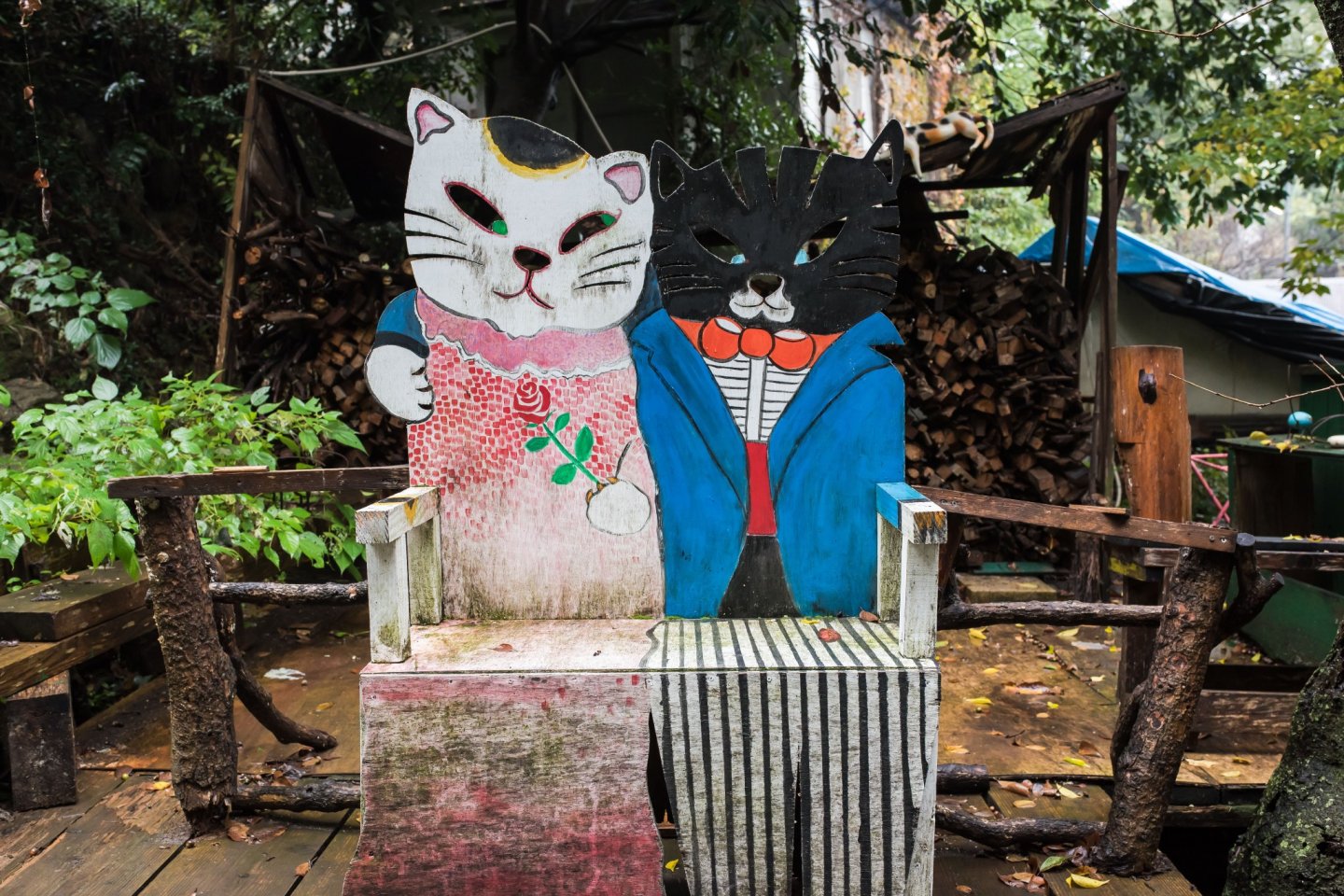 Cat Alley (Neko no Hosomichi) in Onomichi - a narrow 200-meter art path featuring 108+ hand-painted stone cats by artist Shunji Sonoyama. Source: Japan Travel
Cat Alley, officially known as Neko no Hosomichi (猫の細道, literally "Cat's Narrow Path"), is a 200-meter hillside walkway stretching from Ushitora Shrine through the Nagae district to Senkoji Temple. What began as an organic feature of Onomichi's hillside geography—narrow lanes populated by stray cats—transformed in 1997-1998 into a deliberate art installation when French-born artist Shunji Sonoyama initiated the "Ihatov" revitalization project. 🔗
The centerpiece of Sonoyama's project is the Fukuishi-neko (福石猫, "lucky stone cats")—smooth, rounded stones collected from the sea, salt-treated over 7-8 months, then hand-painted with unique cat faces and blessed by a priest at Ushitora Shrine. Sonoyama originally placed 108 of these stones throughout the alley in 1998, though the project has since expanded to over a thousand stones scattered across Onomichi. Each stone cat has a distinct expression and personality, hidden on fences, in trees, on roofs, tucked into shop corners, and peeking from gardens. 🔗
Cultural & Historical Significance
The number 108 holds profound Buddhist significance: it represents the 108 bonnō (煩悩, earthly desires and defilements) such as greed, anger, and ignorance that cause human suffering in Buddhist doctrine. Overcoming these 108 temptations leads to enlightenment (Nirvana). This number is most famously represented in Japan's New Year's Eve tradition of Joya no Kane, where temple bells ring 108 times to cleanse the past year's sins. Sonoyama's choice transforms the hunt for stone cats into a modern, playful pilgrimage—each cat found symbolically represents overcoming an earthly desire.
Beyond the art installations, real stray cats inhabit the alley, managed through Onomichi's Community Cat Program which implements spaying/neutering and health management. The cats lounge in sunny spots, peer from shrubbery, and guard doorways, adding living charm to the painted stone collection. Signs discourage feeding the cats to maintain their natural behavior and health. 🔗
The path winds through a residential area lined with traditional homes renovated into quirky art galleries, garden cafes, and sake bars. Key stops include the Manekineko Museum (招き猫美術館), housed in a renovated Taisho-era building, displaying approximately 3,000 maneki-neko (beckoning cats) collected by Sonoyama, plus a Fukuishi-neko corner featuring the artist's painted stones. 🔗
Cat Alley is not merely a tourist attraction—it's a successful urban revitalization project that formalized Onomichi's existing identity as a "cat city." For decades before Sonoyama's intervention, visitors undertaking the famous Onomichi Temple Walk encountered these free-roaming cats as unofficial guardians of hillside temples. The art installation celebrated this organic feature and provided a focal point for the city's cat culture, becoming central to Onomichi's modern tourism identity.
Visiting Information
Access: From Shimanami Kaido/Onomichi IC: 15-20 minutes by car to parking areas. Cat Alley itself has NO direct parking—use pay parking options below.
Parking Options for Car Travelers:
- Senkoji Park Parking (Summit) - 70 cars, approximately ¥600. Best if planning to visit Senkoji Temple first, then walk down through Cat Alley. 🔗
- Onomichi City Hall Parking - 87 cars, paid parking, requires 15-minute walk to Senkoji Ropeway base station. 🔗
- Paid Parking Lots near JR Onomichi Station - Multiple pay parking options, approximately ¥600 for typical visit duration
Walking Directions from Parking:
- From City Hall or station parking: 15-minute walk north to Senkoji Ropeway base station
- At ropeway entrance, turn LEFT (do not take ropeway)
- Follow path uphill—this is the entrance to Cat Alley
- Path winds 200 meters uphill through residential area to Senkoji Temple summit
- Alternative: Park at summit lot and walk DOWN through Cat Alley (easier descent)
Estimated Travel Time from Route: 15-20 minutes drive from Shimanami Kaido Onomichi IC to parking, plus 15-30 minutes total detour
Hours:
- Cat Alley itself: Public pathway, accessible 24/7, though daytime visits strongly recommended
- Shops/Cafes along alley: Typically open from 11:00 AM onwards
- Manekineko Museum: 11:00 AM - 5:00 PM weekdays (Saturdays, Sundays, and holidays 10:00 AM - 5:00 PM), closed Wednesdays 🔗
Route Context: Distance from main route: 15-30 minutes from Shimanami Kaido/Onomichi Port
Seasonal Considerations: November 3 Culture Day - National holiday combined with Betcha Festival final day. Expect elevated crowds. Visit early morning (before 11:00 AM) or late afternoon (after 3:00 PM) to avoid peak crowds. 🔗
The Cat Alley Experience
The Fukuishi-neko Hunt:
The primary activity is searching for the 108+ hand-painted stone cats hidden throughout the 200-meter path. Each cat has unique expressions and personality—some whimsical, some serene, some mischievous. Finding a Fukuishi-neko and gently stroking its head three times is believed to bring good fortune. The stones appear in unexpected places: perched on fence posts, nestled in tree branches, peeking from rooftop corners, tucked beside shop doorways, and hidden in garden greenery. The hunt requires careful observation and creates a sense of discovery and playful engagement. 🔗
Real Cat Encounters:
Beyond the painted stones, the alley hosts a population of real stray cats managed through Onomichi's Community Cat Program. These cats lounge in sunny spots, peer from shrubbery, guard doorways, and interact with visitors. However, cat sightings are NOT guaranteed—the cats are free-roaming strays with their own schedules and preferences. Do not chase, corner, or force interaction. Let cats initiate contact. Do NOT feed the cats—signs throughout the alley discourage feeding to maintain the cats' natural behavior and health managed by local residents and volunteers. 🔗
Manekineko Museum (招き猫美術館):
Located along the path in a renovated Taisho-era traditional house, this museum displays approximately 3,000 maneki-neko (beckoning cats) collected by artist Shunji Sonoyama. The collection includes vintage examples, regional variations, and contemporary interpretations of Japan's famous lucky cat figurines. A special Fukuishi-neko corner showcases Sonoyama's original painted stone cats. Entry fee: ¥300. Worth 20-30 minutes for maneki-neko enthusiasts. 🔗
Quirky Cafes, Galleries & Shops:
The alley winds through renovated traditional buildings housing art galleries, garden cafes, and sake bars—all part of Sonoyama's "Ihatov" revitalization concept. Most shops open after 11:00 AM. These establishments blend retro Showa-era aesthetics with contemporary art and local crafts. Perfect for short breaks, purchasing cat-themed souvenirs, or enjoying views over Onomichi's rooftops. 🔗
Architecture & Atmosphere:
Beyond the cats, the alley showcases traditional Japanese residential architecture—narrow wooden houses with tile roofs, stone retaining walls, steep staircases, and layered rooflines cascading down the hillside. The path itself is atmospheric: narrow lanes barely wide enough for one person, steep inclines, stone steps, overhanging foliage, and occasional glimpses of the Seto Inland Sea through gaps between buildings. This captures the essence of old Onomichi port town character. 🔗
Practical Visiting Tips
Driving Considerations:
Best Photo Spots:
- Stone cats in context: Frame Fukuishi-neko stones with traditional architecture backgrounds—roof tiles, wooden fences, paper lanterns
- Alley perspectives: Shoot down the narrow pathway showing depth, layers of buildings, and steep inclines
- Real cat portraits: If cats are present and approachable, photograph them in natural poses—do NOT use flash
- Rooftop views: Higher sections of the path offer glimpses over Onomichi's layered rooflines toward the Seto Inland Sea
- Shop fronts & details: Quirky cafe signs, hanging plants, traditional doorways, and architectural details
Photography Etiquette:
- No flash photography—startles cats and harmful to their sensitive eyes
- Respect privacy: avoid pointing cameras directly into private homes, gardens, or at residents without permission
- Be patient for natural moments rather than forcing interactions or poses
- Do NOT use toys, food, or loud noises to lure cats for photos
Route Integration: Cat Alley works best as a morning stop after completing the Shimanami Kaido bridge crossing or a late afternoon cultural break before continuing to evening destination. The lighthearted, quirky nature provides contrast to more formal temple visits or natural scenic stops along the route. Consider pairing with Senkoji Temple/Observatory for a comprehensive Onomichi hillside experience (1.5-2 hours combined).
Crowd Avoidance Strategies:
- Early morning (7:00-10:00 AM): Quietest time, shops closed but path accessible, best cat activity, excellent lighting
- Late afternoon (3:00-5:00 PM): Post-lunch crowd thins, beautiful light, shops still open
- Avoid midday (11:00 AM-2:00 PM): Peak visitor hours, especially on holidays
- Walk against the flow: most visitors start from the bottom (ropeway base) and walk up; starting from Senkoji Park parking and walking down creates easier descent and counter-flow movement
Money-Saving Options:
- Cat Alley itself is FREE—no entrance fee for the public pathway
- Skip the Senkoji Ropeway (¥500 round-trip) by walking both directions
- Window-shop galleries and cafes rather than purchasing—the atmosphere is free to enjoy
- Manekineko Museum (¥300) is the only paid attraction and optional depending on interest
- Parking costs (¥600 typical) are unavoidable for car travelers but reasonable
Visitor Etiquette & Cultural Sensitivity:
- Quiet behavior: Cat Alley winds through an active residential area—keep voices low, avoid loud conversations or disruptive behavior
- Respect private property: Do not enter gardens, touch fences, or trespass on private land to photograph cats or stones
- Stay on the path: The narrow lanes are the designated walking route—don't wander off into residential areas
- Do NOT feed cats: Managed population with health oversight—outside food disrupts their diet and health
- Do NOT chase or corner cats: Let cats initiate contact; forcing interaction is stressful and disrespectful
- Support local businesses: If stopping at cafes or shops, make purchases to support the community maintaining the alley
Essential Practical Preparations:
- Footwear: Comfortable, sturdy walking shoes with good grip—path is steep, uneven, includes many stone steps and inclines. Avoid sandals, heels, or smooth-soled shoes
- Weather preparation: November mornings can be cool—bring light jacket or sweater. Path can be slippery after rain—check weather and postpone if wet
- Physical considerations: Significant elevation gain, over 100 steps, uneven terrain—not suitable for wheelchairs, strollers, or those with mobility limitations
- Hydration: No vending machines along the path—carry water, especially for November 3 crowds
- Time buffer: On national holidays like Culture Day, add extra time for parking, walking, and navigating crowds
Budget Considerations: Free alley access, ¥300 museum optional, ¥600 parking typical cost
Location: View on Google Maps
Source: attractions/beppu-to-osaka-ferry-route/cat-alley.md