
About
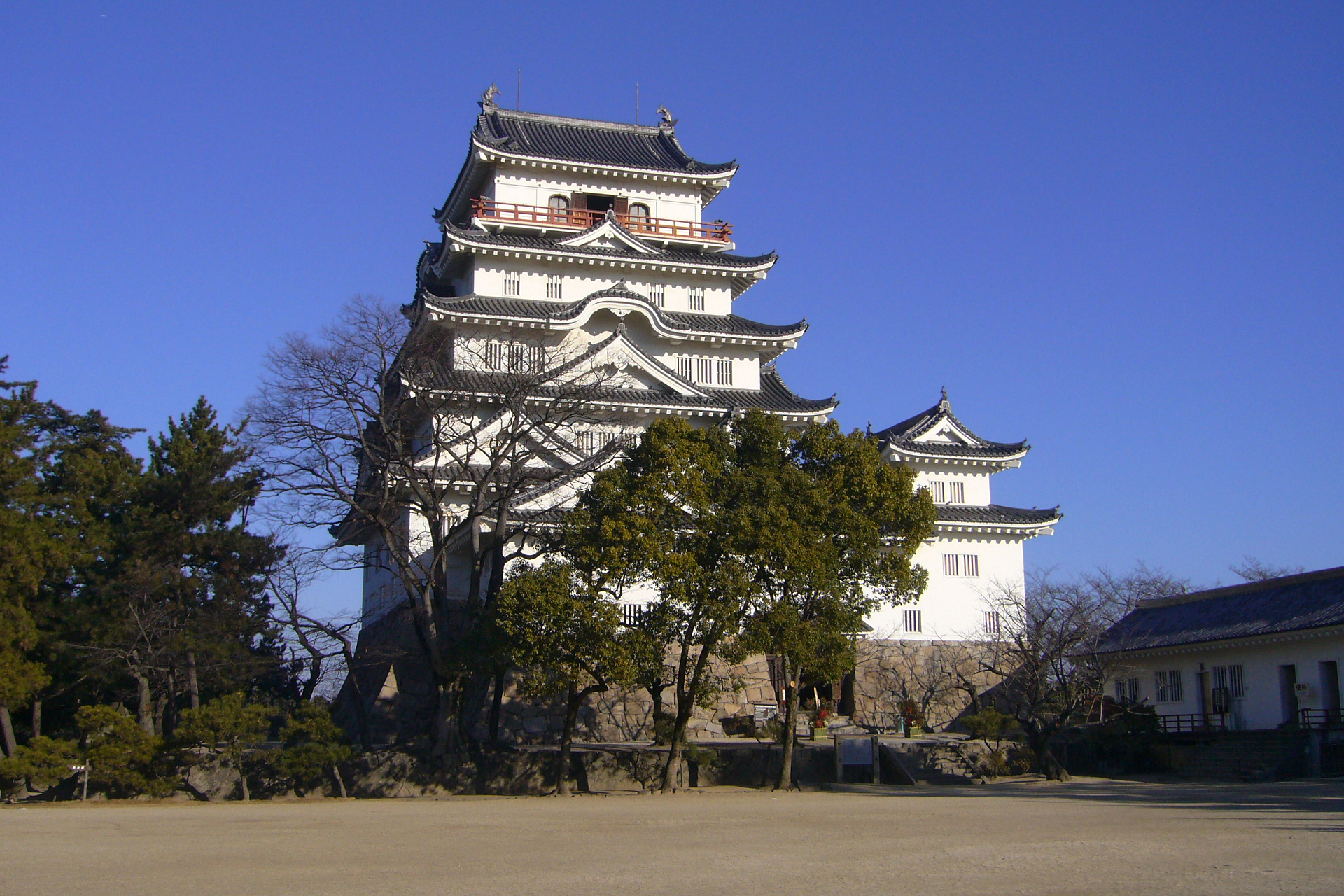 Fukuyama Castle's distinctive white main keep, reconstructed in 1966 and renovated in 2022 to restore its unique iron-plated north side
Fukuyama Castle stands as a remarkable testament to early Edo period military architecture and strategic positioning. Construction began in 1619 by Mizuno Katsunari, a cousin of Shogun Tokugawa Ieyasu, and was completed in 1622. 🔗 As one of the last new castles built in the early Edo Period, it served as a critical base to protect western Japan and represented a significant exception to the shogunate's "one domain - one castle" rule. 🔗
The castle's strategic importance cannot be overstated—Mizuno Katsunari was the first of the Tokugawa hereditary vassels (fudai daimyo) to be stationed in the Chugoku region, positioned strategically between the non-hereditary vassals (tozama daimyo) in Hiroshima and Okayama. 🔗 The castle was intentionally built large to both impress and intimidate the tozama daimyo, establishing Tokugawa authority in the region.
What makes Fukuyama Castle architecturally unique is its iron plating—it is the only castle in Japan with protective iron plates on one side. 🔗 The iron plating was added to the north side, the most vulnerable approach with no moat protection, to defend against bullets and bombs. 🔗 When viewed from the northwest, the striking contrast of three white sides and one black iron-plated side creates a visually distinctive appearance.
Cultural & Historical Significance
The castle prospered throughout the Edo period under several ruling families. In 1710, Lord Abe Masakuni was awarded Fukuyama Domain, and the Abe clan ruled until the Meiji Restoration of 1868. 🔗 The domain flourished economically, issuing its own hansatsu currency and encouraging the production and distribution of Bingo tatami mats. 🔗 The Abe clan produced the famous late Edo period Roju (Prime Minister) Abe Masahiro, giving Fukuyama Domain significant political influence.
At the end of World War II in 1945, the castle tower and many buildings were destroyed in air raids. However, two structures survived: the Fushimi Yagura turret and Sujigane-Gomon gate, both designated National Important Cultural Properties in 1950. 🔗 The main keep was rebuilt in 1966, and the grounds were designated a National Historic Site in 1964. 🔗
The Fushimi Yagura holds particular historical significance—it was relocated from Fushimi Castle in Kyoto by the second Tokugawa Shogun Hidetada upon Fukuyama Castle's construction. 🔗 This three-tiered, three-story white-walled turret evokes the spirit of the Momoyama Period and is the only existing building in Japan where relocation from Fushimi Castle has been proven by both literature and physical inscriptions.
Visiting Information
Access: Fukuyama Castle enjoys one of the most convenient locations of any castle in Japan—it sits directly adjacent to JR Fukuyama Station, literally across the street from the north exit. 🔗 Walking time is just 5 minutes from the station. Fukuyama Station is served by the Sanyo Shinkansen, with direct connections to Shin-Osaka (1 hour, ¥7,500). 🔗
For driving visitors, Castle No. 1 and Castle No. 2 parking lots are available with free parking based on spending (1 hour free for up to ¥1,000, up to 5 hours free for spending over ¥5,001 per person). 🔗 The castle is positioned on the Sanyo route between Hiroshima and Osaka, approximately 4 hours from Osaka via Sanyo Expressway.
Hours: 9:00 AM - 5:00 PM (last entry 4:30 PM)
Admission: ¥500 (¥200 when no special exhibition)
Closed: Mondays (or following day if Monday is a national holiday), December 28-31
Current Status: Fully operational following 2022 major renovation; pre-booking system allows up to 40 people per 30-minute slot, bookable 50 days in advance. 🔗
November 3 Culture Day Context: As a national holiday celebrating Japanese culture, the castle will be open (even if it falls on Monday per their holiday closure policy). While specific Culture Day events were not confirmed, many museums offer free or discounted admission and special cultural programming on this holiday.
The Experience
Main Keep Museum (6 Floors):
The renovated castle museum features state-of-the-art exhibits spanning castle and domain history:
- Interactive Experiences: Horse riding simulator allowing visitors to feel like a samurai on the battlefield; replica matchlock gun for experiencing ancient warrior skills—both included at no additional cost 🔗
- Visual Theater: Large three-sided theater utilizing castle walls for immersive historical presentations 🔗
- Historical Artifacts: Samurai armor, weapons, and documents related to the Mizuno and Abe families
- 360-Degree Observation: Top floor panoramic viewing deck provides sweeping views of Fukuyama city
National Important Cultural Properties:
- Fushimi Yagura Turret: Three-tiered white structure relocated from Fushimi Castle in Kyoto, the only proven Fushimi Castle relocation in Japan
- Sujigane-Gomon (Iron-reinforced Great Gate): Original Edo period gate surviving WWII destruction
Unique Architectural Feature:
The iron-plated north side creates a dramatic black-and-white contrast, recently restored in 2022 renovation. View from northwest for the most striking visual effect.
Castle Park Grounds:
Multiple layers of well-preserved stone walls, reconstructed Inui Yagura turret, and original Bell Tower. Don't miss the small garden behind the castle for incredible views. 🔗
Practical Visiting Tips
Driving Considerations: Station-adjacent location means minimal detour from Sanyo route. Parking lots convenient for short stops. Castle visible from road—easy to locate. The 15-30 minute quick visit is feasible (exterior and observation deck only) or allow 60-90 minutes for full museum experience.
Route Integration: Ideal cultural stop between Shimanami Kaido experience and final approach to Osaka. Breaking point between longer route segments. Interactive exhibits provide engaging respite from driving.
Photography Strategies:
- Best viewpoints: Shinkansen platforms at Fukuyama Station for unique elevated perspective; northwest angle to capture black-and-white contrast of iron plating
- Top floor balcony: 360-degree panoramic views of Fukuyama
- Important restriction: No photography allowed inside the keep until reaching the top floor
- Lighting: Mid-morning to early afternoon offers best lighting conditions
Budget Considerations:
- Standard admission ¥500; some periods offer ¥200 entry without special exhibitions
- Free parking with qualifying purchases at nearby venues
- Culture Day may feature free or reduced admission (confirm with castle directly)
Cultural Etiquette:
- Elevators available for accessibility throughout castle
- Photography restrictions inside museum floors—respect signage
- Interactive exhibits (horse riding, matchlock gun simulators) may have queue times during busy periods
- Castle park grounds remain accessible even when museum is closed
Location: View on Google Maps
Source: attractions/beppu-to-osaka-ferry-route/fukuyama-castle.md