
About
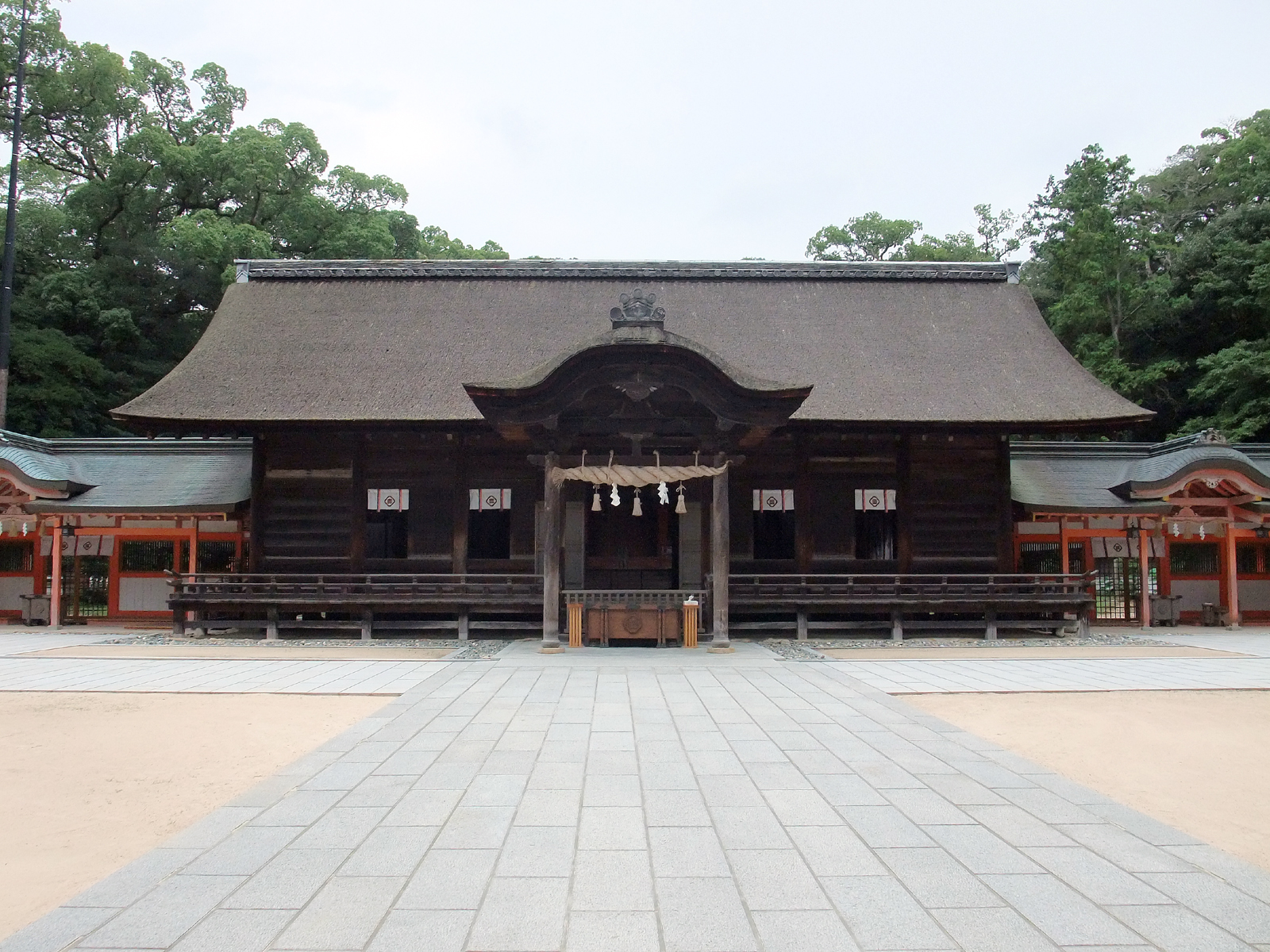 The Haiden (worship hall) of Oyamazumi Shrine, an Important Cultural Property built in the early 17th century. Source: Wikimedia Commons
Oyamazumi Shrine (大山祇神社, Ōyamazumi-jinja) is located on Omishima Island in the Seto Inland Sea, administratively part of Imabari City, Ehime Prefecture. The shrine serves as the head shrine of over 10,000 Yamazumi and Mishima shrines across Japan and holds the distinction of being Ehime's oldest shrine. 🔗
Oyamazumi Shrine enshrines Ōyamatsumi-no-Kami, a powerful deity in Shinto mythology who governs mountains, seas, and warfare - the elder brother of the sun goddess Amaterasu. According to the Izumi-no-kuni fudoki, the first shrine was established in Settsu Province and relocated to Iyo Province (present-day Ehime) by Emperor Suiko in 594 AD. The shrine was moved to its current location in 701, with construction completed in 716 and a dedication ceremony held in 719, giving it over 1,400 years of documented history. 🔗
The shrine's significance grew exponentially with the rise of the samurai class. Its strategic location on Omishima Island in the Seto Inland Sea made it a crucial spiritual center for both naval clans who controlled the surrounding waters and land-based warriors of western Japan. Warriors would pray to Oyamatsumi-no-Kami for victory before battle and, upon returning victorious, donate their armor and weapons as votive offerings of gratitude. This centuries-old practice transformed the shrine into Japan's ultimate repository of samurai military equipment. 🔗
The shrine is set within a serene grove of ancient camphor trees (kusunoki), with the most famous being the "Ochi-no-Miko no O-Kusu," estimated to be 2,600 years old - predating the shrine's founding by over a millennium. The entire grove of approximately 200 camphor trees, with 38 designated as national natural monuments, creates an atmosphere of timeless sanctity that visitors describe as a "power spot." 🔗 🔗
Cultural & Historical Significance
The Samurai Armor Collection
The shrine's most remarkable feature: it houses 80% of all samurai armor and weaponry designated as National Treasures or Important Cultural Properties in Japan. The collection includes 8 National Treasures and 682 Important Cultural Properties, making it the most extensive samurai military equipment repository in the country. 🔗 🔗
Notable Artifacts:
- Armor of Minamoto no Yoritomo: National Treasure armor from the founder and first shogun of the Kamakura Shogunate
- Armor of Minamoto no Yoshitsune: National Treasure belonging to Yoritomo's younger brother, the brilliant and tragic military commander
- Armor of Tsuruhime (Princess Tsuru): A rare diminutive set believed to have belonged to the 16th-century warrior-maiden who defended Omishima from invasion
- National Treasure Mirror: Dedicated by Emperor Saimei
- Odachi/Nodachi: Long sword weighing 5kg, so large it requires two hands to wield
- Extensive collections of swords, spears, and naginata dating back to the 10th century 🔗
Unlike modern museums with sparse displays, the treasure halls present an overwhelming volume of artifacts - rows upon rows of armor stands and racks of weapons. Travelers consistently report feeling in the presence of history itself, knowing these were actual items used in famous battles by legendary warriors. 🔗
The Ancient Camphor Tree Grove
At the heart of the shrine grounds stands the sacred 2,600-year-old camphor tree, "Ochi no Mikoto-Ote no Kusunoki," said to have been planted by Ochi no Mikoto, a descendant of Oyamazumi no Okami. The grove contains approximately 200 massive camphor trees, with two particularly ancient specimens (one 3,000 years old, another 2,600 years). The venerable trees are wrapped with shimenawa (sacred ropes) and worshiped, as evidenced by the many coins left around their bases. The 38 oldest trees are designated as a national natural monument as the oldest group of camphor trees in Japan. 🔗 🔗
Walking among these ancient giants creates a palpable atmosphere of sanctity and timelessness - visitors frequently describe the grove as a "power spot" in Shintoism, where the immense age and size of the trees suggest they are dwellings of spirits or deities themselves.
Visiting Information
Access from Shimanami Kaido: Oyamazumi Shrine is located in Miyaura on the west side of Omishima Island, approximately 4 km west of the Omishima Interchange on the Nishiseto Expressway (Shimanami Kaido). The shrine requires a 15-minute drive from the Omishima IC. 🔗
Route Access:
- From Onomichi direction: Drive through Mukaishima → Innoshima → Ikuchijima, then cross the iconic Tatara Bridge (890-meter cable-stayed bridge) to reach Omishima
- Tatara Shimanami Park near the bridge serves as a major rest area before continuing to the shrine
- Total expressway toll for full Shimanami Kaido: approximately ¥5,000 one-way 🔗
Parking: Available on-site at the shrine
Operating Hours:
- Shrine grounds: Sunrise to 5:00 PM
- Treasure Museum (Homotsukan): 8:30 AM to 5:00 PM 🔗
Admission:
- Shrine grounds: Free entry
- Treasure Museum complex: ¥1,000 for adults, ¥800 for high school students, ¥400 for children
- Museum admission includes National Treasure House, Shiyoden Hall, and Maritime Museum 🔗
Route Context: Located approximately midway through the Shimanami Kaido, the shrine is a 4km/15-minute detour west from the Omishima IC. From Matsuyama area, reaching Omishima requires approximately 1-1.5 hours of driving. 🔗
The Experience
The Sacred Shrine Grounds
The shrine complex features several Important Cultural Property buildings, including the Haiden (worship hall) built in the early 17th century and the Honden (main hall). The martial aspect of the shrine is immediately evident at the main gate, where guardians appear as standing figures dressed in armor rather than typical shrine guardians. The grand two-storied main gate was rebuilt in 2010 based on an old map from the Muromachi period. 🔗
The Ancient Camphor Tree Grove
Walking among the 200 massive camphor trees creates a palpable atmosphere of sanctity and timelessness. The sacred 2,600-year-old specimen and its 3,000-year-old companion are wrapped with shimenawa (sacred ropes) and worshiped, with many coins left around their bases. The 38 oldest trees designated as national natural monuments create a "power spot" atmosphere where visitors feel the presence of spirits or deities in these ancient giants. 🔗 🔗
The Treasure Museum Complex (Homotsukan)
The museum complex houses 80% of all samurai armor and weaponry designated as National Treasures or Important Cultural Properties in Japan, including 8 National Treasures and 682 Important Cultural Properties. 🔗
The treasure halls present an overwhelming volume of artifacts - rows upon rows of armor stands and racks of weapons. Visitors consistently report feeling in the presence of history itself, knowing these were actual items used in famous battles by legendary warriors, including armor from Minamoto no Yoritomo and Yoshitsune, and the rare diminutive armor believed to have belonged to warrior-maiden Tsuruhime.
Important Note: Photography is strictly prohibited inside all treasure museum buildings. 🔗
Maritime Museum
The Omishima Maritime Museum features the Hayamamaru, the boat used by Emperor Showa to collect samples for his marine biology research, along with specimens of flora and fauna from the Seto Inland Sea. This section highlights the shrine's connection to maritime culture and the deity's role as a god of the sea. 🔗
Practical Visiting Tips
November 3, 2025 Considerations (Culture Day)
Seasonal Considerations:
- Weather: Ehime Prefecture in early November offers pleasant autumn conditions with average temperatures from 10°C (50°F) at night to 18°C (64°F) during the day 🔗
- Autumn Atmosphere: While the shrine is known for its evergreen camphor trees, the surrounding island displays autumn foliage colors. The camphor grove maintains its green canopy year-round. 🔗
- Crowds: Culture Day (November 3) is a national holiday; expect moderately higher visitor numbers than typical weekdays
Special Cultural Events:
- Culture Day celebrates arts and culture across Japan; while Oyamazumi Shrine's main festival occurs in May, the holiday atmosphere may enhance the cultural experience 🔗
- Shichi-Go-San: Around mid-November (traditionally November 15), families with children aged 3, 5, and 7 visit shrines - you may encounter children in beautiful traditional kimonos
Photography Conditions:
- Outdoor Photography: The ancient camphor grove offers excellent photo opportunities with softer autumn light. Massive trees wrapped in shimenawa create dramatic compositions
- Museum Photography: Strictly prohibited inside all treasure halls
- Lighting: November daylight hours are shorter (sunset around 5:00 PM); arrive by mid-morning for optimal lighting
Visitor Strategy
Recommended Sequence:
- Begin at main gate to appreciate armored guardians and rebuilt Muromachi-style architecture
- Walk through camphor grove first while energy is fresh - spiritual atmosphere best experienced mindfully
- Visit treasure museum complex; allocate at least 45-60 minutes as collection is far larger than anticipated
- Return to grove for final reflection before departing
Cultural Preparation:
- Standard shrine etiquette: bow at torii gates, purify hands and mouth at temizuya (water basin)
- Ancient camphor trees are objects of worship - maintain respectful silence near most sacred specimens
- Leave small coin offerings at tree bases if you wish to pay respects (observe locals' practices)
Practical Tips:
- Wear comfortable walking shoes for gravel paths and potentially damp conditions
- Bring layers - grove can be cool in shade while open areas are warmer
- The ¥1,000 museum admission is universally praised as excellent value
- Consider discount ticket booklet if visiting other Omishima art museums 🔗
Money-Saving Options
The combined ticket for shrine museum and Maritime Museum at ¥1,000 is already a bundled price. Multi-museum tickets available if exploring other island attractions.
Weather and Seasonal Preparation
Early November weather is generally stable but bring:
- Light jacket or layers for temperature fluctuations
- Compact umbrella or rain jacket for potential showers
- Sun protection for midday
- Water bottle and small snacks
Location: View on Google Maps
Source: attractions/beppu-to-osaka-ferry-route/oyamazumi-shrine.md