About
 Ozu Castle's authentically reconstructed wooden keep overlooking the Hijikawa River. Photo: Wikimedia Commons/Carpkazu
Ozu City, often called the "Little Kyoto of Iyo," is a historic castle town in Ehime Prefecture, Shikoku, approximately 25km inland from Yawatahama Port. The city flourished during the Edo Period (1603-1868) as a center of commerce along the Hijikawa River, with wealth generated from paper, silk, and vegetable wax trade. Today, Ozu stands as one of Japan's best-preserved castle towns, featuring authentically reconstructed wooden castle architecture and a designated National Important Cultural Property villa. 🔗
Ozu serves as the perfect cultural gateway to Shikoku for travelers arriving from the Yawatahama ferry. While Yawatahama is the physical entry point from Kyushu, Ozu provides the first immersive experience of Shikoku's feudal history and traditional atmosphere, setting the tone for exploring the island known for its pilgrimage routes, castles, and rural charm.
Cultural & Historical Significance
Ozu emerged as a strategic castle town during the feudal era, with its first defensive structures dating back to the early 14th century. The town's prosperity was built on the Hijikawa River, which served as the primary transportation route for regional products including paper, silk, and vegetable wax (a key component for candles during the Edo Period). This wealth is reflected in the sophisticated architecture of samurai residences, merchant houses, and temples that have been preserved throughout the historic district. 🔗
Ozu Castle: Authentic Wooden Reconstruction
Ozu Castle stands as one of the most significant castle reconstructions in modern Japan. Unlike the vast majority of 20th-century castle rebuilds that used steel-reinforced concrete, Ozu Castle's main keep was authentically reconstructed in 2004 using traditional wooden construction methods. The original keep was demolished in 1888 due to deterioration, but after a decade-long community effort costing 1.6 billion JPY, it was rebuilt based on old photographs, maps, and a discovered model depicting the original structure. 🔗
Specialist architects and craftsmen recreated the structure using timber, bamboo, plaster, tile, and mud, employing traditional joinery techniques without modern materials. This makes Ozu Castle one of the few places in Japan where visitors can experience a castle keep as it would have been during the Edo Period. Four turrets (Koran, Daidokoro, Owata, and Minami Sumi) were designated as Important Cultural Properties in 1957 and survived from the original castle complex.
Garyu Sanso Villa: Architectural Masterpiece
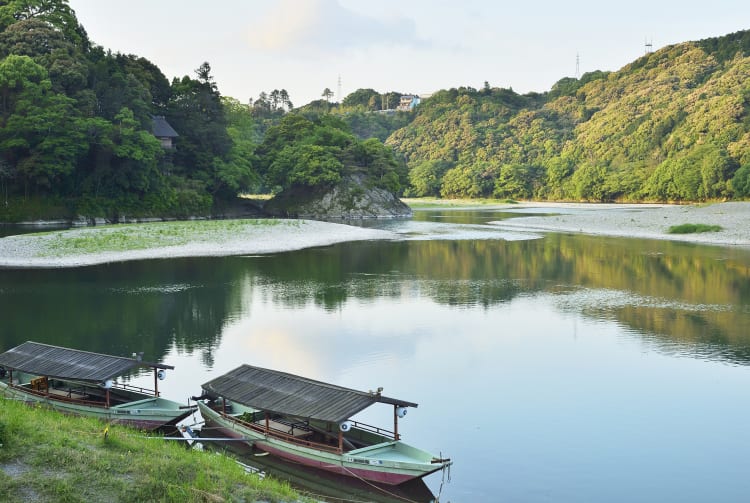 Garyu Sanso villa's sukiya-style architecture overlooking the Hijikawa River. Photo: JNTO
Garyu Sanso is a National Important Cultural Property and one of Japan's finest examples of sukiya-zukuri architecture. Built between the Meiji and Taisho eras (around 1907) by a wealthy local merchant, the villa took ten years to design based on references from famous imperial villas in Kyoto such as Katsura Rikyu and Shugakuin Rikyu, and four years with 9,000 artisans to construct. 🔗
The name "Garyu" means "reclining dragon," as the hill it's built on is said to resemble one. The villa features two main buildings: Garyu-in (the main thatched-roof house) and Furo-an Pavilion, which slightly overhangs the Hiji River on stilts. Each room showcases exceptional craftsmanship with intricately carved transoms, elegantly made lattices, unevenly sized tatami mats, and aesthetically pleasing alcoves. The custom-designed moon-shaped window and use of different woods and bamboo demonstrate the pinnacle of Japanese aesthetic principles and wabi-sabi philosophy. Garyu Sanso has received one star from the Michelin Green Guide Japan. 🔗
Visiting Information
Operating Hours:
- Ozu Castle: 9:00 AM - 5:00 PM daily (last admission 4:30 PM)
- Garyu Sanso: 9:00 AM - 4:30 PM 🔗
Admission Fees:
- Ozu Castle: ¥550 (adults), ¥220 (children)
- Garyu Sanso: ¥550 (adults), ¥220 (children)
- Combo ticket (Castle + Villa): ¥880 (adults), ¥330 (children) 🔗
Access from Yawatahama Ferry:
- Distance: 13.5 km via Route 56
- Drive Time: 12-15 minutes
- Parking: Free at Ozu Machi no Eki Asamoya (Tourist Information Center) or Ozu City Hall (weekends/holidays) 🔗
Route Context: First cultural stop in Ehime Prefecture after disembarking the ferry, providing an excellent introduction to Shikoku's feudal history and traditional architecture. Short 15-minute drive makes this an ideal first stop without significant time commitment.
Seasonal Considerations (November 3):
- Early autumn foliage beginning to appear (peak later in November)
- Culture Day national holiday - expect moderate crowds at cultural sites
- Pleasant weather for walking through castle town
- Parking may be crowded; City Hall parking available as weekend/holiday alternative 🔗
The Experience
Ozu Castle Exploration:
Climb through the four-story wooden keep, experiencing authentic Edo-period construction methods. The interior showcases traditional joinery techniques and materials, providing insights into historical castle-building craftsmanship. The top floor offers panoramic views over Ozu city, the Hijikawa River, and surrounding mountains. View the four original turrets designated as Important Cultural Properties, which represent authentic feudal-era construction. 🔗
Garyu Sanso Villa Experience:
Explore the thatched-roof main building (Garyu-in) with its exquisite sukiya-style architecture. Each room features unique craftsmanship including intricately carved transoms, custom-designed details, and perfectly framed views of the river and gardens. Visit the iconic Furo-an Pavilion built on stilts over the Hijikawa River, which utilizes a living tree as one of its pillars. Wander through meticulously designed gardens that integrate seamlessly with the natural landscape and the Hijikawa River. 🔗
Old Town Exploration:
Walk through Ohanahan Street in the traditional merchant district with beautifully preserved wooden homes featuring lattice windows and earthen walls. Visit the Ozu Redbrick Hall (former Meiji-era bank) showcasing Japanese-Western architectural fusion. The compact castle town is easily explored on foot with stone-paved alleys and authentic historical atmosphere. 🔗
Practical Visiting Tips
Driving Considerations:
- Free parking at central locations (Asamoya or City Hall)
- Castle and villa within 5-10 minute walk from parking
- Minimize vehicle use on residential roads to respect living community
- Compact town easily explored on foot 🔗
Route Integration: Perfect timing as first cultural stop after ferry - 15-minute drive allows morning arrival, 2.5-3.5 hour visit including castle, villa, and lunch, then afternoon departure toward Matsuyama (40km, 50 minutes northeast on Route 56). Provides cultural transition from Kyushu volcanic/onsen landscape to Shikoku feudal heritage.
Cultural Etiquette:
- Remove shoes when entering castle keep and villa buildings
- No photography inside Garyu Sanso main villa (gardens permitted)
- Maintain quiet voices for contemplative appreciation
- Respect living community in historic residential areas 🔗
Budget Considerations:
- Purchase combo ticket (¥880) for best value vs separate admissions (¥1,100)
- Free parking eliminates additional costs
- Budget 2-3 hours visit time plus lunch in castle town
- Local specialties: Imotaki (taro hot pot), tai meshi (sea bream rice), ayu (sweetfish) 🔗
Photography:
- Best locations: Castle keep from grounds; castle views from top floor; villa gardens with river backdrop; Furo-an Pavilion; stone-paved alleys
- Morning light excellent for Garyu Sanso (east-facing over river)
- Afternoon light good for Ozu Castle
- Early autumn colors in gardens (peak later in November) 🔗
Location: View on Google Maps
Source: attractions/beppu-to-osaka-ferry-route/ozu-city.md