
Route Overview
Primary Route: Route 19 through Kiso Valley (Nakasendo corridor) with optional Route 158 alpine extension Alternative Scenic Routes: Alpine corridor via Route 158 through Kamikochi region Estimated Drive Time: 4-8 hours depending on stops and route choices
This scenic route offers a journey through Japan's cultural and natural heritage, following the historic Nakasendo highway through the Kiso Valley's preserved post towns or taking the alpine corridor through the Northern Japanese Alps region. The route represents a transition from the Fuji Five Lakes area into the deep mountain valleys and traditional craft territories of central Japan.
On-Route Stops (No Detour)
Narai-juku
[Research File: research/attractions/fujikawaguchiko-to-takayama-scenic-route/narai-juku.md]
- Type: Historic post town
- Location: Route 19, Kiso Valley
- Facilities: Parking (free at south end), shops, restaurants, museums
- Visit Duration: 1-2 hours
- Accessibility: Direct access from Route 19
Route Significance: Best-preserved post town on the Nakasendo, nicknamed "Narai of a Thousand Houses"
Driving Visitor Experience: Excellent parking facilities, walkable historic district, traditional soba restaurants and lacquerware shops
Route Integration: Essential stop for understanding Kiso Valley's post town heritage
Sources: 🔗
Tsumago
[Research File: research/attractions/fujikawaguchiko-to-takayama-scenic-route/tsumago.md]
- Type: Historic post town
- Location: Route 19, Kiso Valley
- Facilities: Parking, tourist information, restaurants
- Visit Duration: 1-2 hours
- Accessibility: Short drive from Route 19
Route Significance: Car-free historic district showcasing Edo-period architecture
Driving Visitor Experience: Parking outside town center, pedestrian-only historic street
Route Integration: Pairs well with Magome for complete post town experience
Sources: 🔗
Magome
[Research File: research/attractions/fujikawaguchiko-to-takayama-scenic-route/magome.md]
- Type: Historic post town
- Location: Route 19, Kiso Valley
- Facilities: Parking, shops, restaurants
- Visit Duration: 1-2 hours
- Accessibility: Direct access from Route 19
Route Significance: Hillside post town with literary heritage
Driving Visitor Experience: Multiple parking areas, sloped historic street, mountain views
Route Integration: Southern gateway to Kiso Valley post town corridor
Sources: 🔗
Kiso Fukushima
[Research File: research/attractions/fujikawaguchiko-to-takayama-scenic-route/kiso-fukushima.md]
- Type: Historic checkpoint town
- Location: Route 19, Kiso Valley
- Facilities: Parking, restaurants, shops, services
- Visit Duration: 1-2 hours
- Accessibility: Direct access from Route 19
Route Significance: Former Edo-period checkpoint controlling access to Kiso Valley
Driving Visitor Experience: Practical services, historic district, mountain town atmosphere
Route Integration: Central Kiso Valley location, good lunch stop
Sources: 🔗
Kiso Valley Scenic Corridor
[Research File: research/attractions/fujikawaguchiko-to-takayama-scenic-route/kiso-valley-scenic-corridor.md]
- Type: Scenic drive
- Location: Route 19 through Kiso Valley
- Facilities: Multiple roadside stations and rest areas
- Visit Duration: Ongoing throughout route
- Accessibility: Main route
Route Significance: Traditional highway corridor with mountain scenery
Driving Visitor Experience: Winding mountain road, valley views, forest canopy
Route Integration: Core scenic component connecting post towns
Sources: 🔗
Route 19 Service Areas and Rest Stops
[Research File: research/attractions/fujikawaguchiko-to-takayama-scenic-route/route-19-service-areas.md]
- Type: Rest facilities
- Location: Along Route 19
- Facilities: Restrooms, parking, vending machines, some with shops
- Visit Duration: 15-20 minutes per stop
- Accessibility: Direct route access
Route Significance: Practical rest points with local products
Driving Visitor Experience: Clean facilities, mountain product shops, scenic parking areas
Route Integration: Strategic rest breaks during mountain driving
Sources: Local route information
Michi-no-Eki Fuketsu no Sato
[Research File: research/attractions/fujikawaguchiko-to-takayama-scenic-route/michi-no-eki-fuketsu-no-sato.md]
- Type: Roadside station with wind cave heritage
- Location: Route 158, 30 minutes from Matsumoto IC
- Facilities: Parking (32 cars, 10 buses), restaurant, wind cave tours, shop
- Visit Duration: 30-90 minutes (depending on wind cave tour)
- Accessibility: Direct route access, no detour
Route Significance: Gateway to Kamikochi, traditional food preservation culture through wind caves used for over 300 years
Driving Visitor Experience: Free parking, public restrooms (24-hour), wind cave tours (¥small fee), Soba no Hana restaurant (¥780-¥980), traditional Inekoki-na pickles and wind cave-aged products
Route Integration: Ideal cultural and rest stop before or after Kamikochi detour, last major facility before Sawando parking, represents transition into Northern Alps cultural territory
Hirayu Onsen Village
[Research File: research/attractions/fujikawaguchiko-to-takayama-scenic-route/hirayu-onsen-village.md]
- Type: Historic onsen village
- Location: Route 158, 35 minutes from Takayama
- Facilities: Free foot baths, parking (100 cars), bus terminal, restaurants
- Visit Duration: 20-90 minutes (foot bath to full onsen)
- Accessibility: Direct route access, no detour
Route Significance: Historic traveler rest stop discovered in 1560s, gateway to Kamikochi and Northern Alps
Driving Visitor Experience: Free public foot baths (ashiyu) at Alps Kaido Hirayu terminal (9 AM-5 PM), clean facilities, Hida beef skewers and onsen eggs, mountain views while soaking feet
Route Integration: Final major rest stop before Takayama (35 min), pairs well with Kamikochi access, represents historic traveler rest station continuing same function today
Alps Kaido Hirayu
[Research File: research/attractions/fujikawaguchiko-to-takayama-scenic-route/alps-kaido-hirayu.md]
Short Detour Stops (15-30 minutes)
Torii Pass Trail
[Research File: research/attractions/fujikawaguchiko-to-takayama-scenic-route/torii-pass-trail.md]
- Detour Time: 15-30 minutes to access Yabuhara or Narai stations
- Type: Historic Nakasendo hiking trail
- Cost: Free
- Hours: Daylight hours recommended
- Parking: Free at Yabuhara Station or Narai Station
- Visit Duration: 1-3.5 hours (partial to full trail)
Route Context: Highest point on historic Nakasendo Trail (1,197m), connecting Yabuhara and Narai post towns through Edo-period stone pathways and dense forest
Driving Visitor Experience: Full trail is 8.5 km taking 3-3.5 hours; partial hike option (1-1.5 hours round trip) from Yabuhara to Maruyama Park and Ontake Shrine provides authentic experience without full commitment; features ancient stone paths, cultural monuments, and spectacular October autumn foliage
Route Integration: Excellent experiential complement to driving route - provides on-foot experience of historic Nakasendo highway; creates active outdoor break during multi-day driving journey; pairs with post town visits for comprehensive Nakasendo heritage experience
Major Detour Stops (30+ minutes)
Kamikochi Alpine Valley
[Research File: research/attractions/fujikawaguchiko-to-takayama-scenic-route/kamikochi-alpine-valley.md]
Shinhotaka Ropeway
[Research File: research/attractions/fujikawaguchiko-to-takayama-scenic-route/shinhotaka-ropeway.md]
Shosenkyo Gorge
[Research File: research/attractions/fujikawaguchiko-to-takayama-scenic-route/shosenkyo-gorge.md]
Narai-juku Detailed Exploration
[Research File: research/attractions/fujikawaguchiko-to-takayama-scenic-route/narai-juku-detailed-exploration.md]
Magome-Tsumago Walking Trail
[Research File: research/attractions/fujikawaguchiko-to-takayama-scenic-route/magome-tsumago-walking-trail.md]
Post Town Dining Experiences
[Research File: research/attractions/fujikawaguchiko-to-takayama-scenic-route/post-town-dining-experiences.md]
Hida Folk Village (Hida no Sato)
[Research File: research/attractions/fujikawaguchiko-to-takayama-scenic-route/hida-no-sato.md]
Hida Folk Craft Experiences
[Research File: research/attractions/fujikawaguchiko-to-takayama-scenic-route/hida-folk-craft-experiences.md]
Craft Experience Centers
[Research File: research/attractions/fujikawaguchiko-to-takayama-scenic-route/craft-experience-centers.md]
Shirakaba Lake
[Research File: research/attractions/fujikawaguchiko-to-takayama-scenic-route/shirakaba-lake.md]
Kaida Kogen Highland
[Research File: research/attractions/fujikawaguchiko-to-takayama-scenic-route/kaida-kogen-highland.md]
Azusa River Valley
[Research File: research/attractions/fujikawaguchiko-to-takayama-scenic-route/azusa-river-valley.md]
Hirayu Folk Museum
[Research File: research/attractions/fujikawaguchiko-to-takayama-scenic-route/hirayu-folk-museum.md]
Hirayu Pass
[Research File: research/attractions/fujikawaguchiko-to-takayama-scenic-route/hirayu-pass.md]
Anbo Pass
[Research File: research/attractions/fujikawaguchiko-to-takayama-scenic-route/anbo-pass.md]
Northern Alps Bridge
[Research File: research/attractions/fujikawaguchiko-to-takayama-scenic-route/northern-alps-bridge.md]
Korobokkuru Hutte
[Research File: research/attractions/fujikawaguchiko-to-takayama-scenic-route/korobokkuru-hutte.md]
Fukuji Onsen
[Research File: research/attractions/fujikawaguchiko-to-takayama-scenic-route/fukuji-onsen.md]
Route-Specific Considerations
Seasonal Factors (October 24, 2025)
Autumn Foliage Peak: Late October represents peak autumn color season throughout the Kiso Valley and alpine corridor. Expect vibrant displays of red, orange, and yellow foliage at elevations between 800-1,200 meters. Post towns, mountain passes, and roadside stations offer exceptional viewing opportunities. 🔗
Mountain Harvest Season: October showcases peak harvest season for mountain products including matsutake mushrooms (if weather favorable), wild mushrooms, mountain vegetables, apples, and grapes. Roadside stations and restaurant menus feature seasonal specialties. Traditional food preparation visible at michi-no-eki facilities. 🔗
Weather Conditions: Late October temperatures range from 5-15°C in mountains to 9-19°C in Takayama. Morning frost possible at highest elevations. Shorter daylight hours with sunset around 5:00 PM. Clear autumn days offer exceptional visibility of Northern Alps peaks. Mountain weather can change rapidly - layers recommended. 🔗
Traffic and Timing
Best Departure Time: Start early (7:00-8:00 AM) to maximize daylight for stops and photography. Morning light excellent for valley views and foliage.
Traffic Patterns: Route 19 through Kiso Valley experiences moderate traffic during autumn foliage season. Weekdays (Friday Oct 24) lighter than weekends. Post town parking areas can fill during midday (11:30 AM - 1:30 PM) when tour buses arrive.
Realistic Travel Time: With cultural stops at 2-3 post towns plus rest breaks, expect 6-8 hours total travel time. Prioritize stops based on interests rather than attempting all locations.
Cultural Route Context
Spiritual Corridor: Fuji to Northern Alps
This route traverses a powerful spiritual corridor connecting Mount Fuji to the Northern Alps through shared traditions of Sangaku Shinko (山岳信仰, mountain worship). While not a single defined pilgrimage path, the journey passes through a sacred landscape linking three major holy peaks: Mount Fuji (3,776m), Mount Ontake (3,067m), and Mount Tateyama in the Northern Alps. 🔗
Sacred Mountain Philosophy: Mountains in Japanese spirituality are believed to be where gods reside or descend (Iwakura), meeting points of heaven and Earth. Fuji Five Lakes served as the spiritual gateway through Sengen shrines dedicated to Princess Konohanasakuya, while Kamikochi (literally "place where the god descended") represents the sacred entrance to the Northern Alps. The Nakasendo highway served pilgrims traveling between these sacred zones. 🔗
Mount Ontake - The Spiritual Bridge: Visible from parts of the Kiso Valley, Mount Ontake stands as the geographical and spiritual connection between Fuji and the Northern Alps. Known as "The Mountain of Souls," it has drawn pilgrims for over a thousand years through the Ontake-kō pilgrim groups, with over 20,000 stone monuments (reijinhi) guiding deceased souls back to the mountain. 🔗
October Spiritual Significance: October represents a time of spiritual transition as mountain gods (yama no kami) descend to become rice paddy gods (ta no kami) for winter. The month features harvest thanksgiving festivals (Aki Matsuri), with Takayama's autumn festival occurring October 9-10. Autumn foliage viewing (momiji-gari) is itself a spiritual practice reflecting on nature's impermanence. 🔗
Cultural Transition: Fuji Five Lakes to Alpine Foothills
The journey represents a profound cultural shift across multiple dimensions, moving from Yamanashi Prefecture's tourist-oriented lake region to Nagano Prefecture's isolated mountain communities:
Geographic Identity Evolution:
-
Fuji Five Lakes (Yamanashi): Volcanic lakeland at 1,000m elevation shaped by Mount Fuji pilgrimage culture, fruit agriculture, and modern tourism. Prefecture identity draws from warlord Takeda Shingen's philosophy: "swift as wind, still as forest, devastating as fire, steadfast as mountain" (fūrin kazan). 🔗
-
Alpine Foothills (Nagano): Known as "the rooftop of Japan," 93% forested with elevation reaching 3,000m. Deepest landlocked culture in Japan, where extreme isolation created valley-by-valley distinct identities. Locals say "there's a different culture in every valley." 🔗
Observable Cultural Changes:
- Architecture: Fukusuke-style thatched roofs viewing Fuji → Steep mountain farmhouses designed for 2+ meters of snow → Hinoki cypress post town machiya with eel's bed design
- Food Culture: Houtou wheat noodles (Fuji region mountain survival cuisine) → Shinshu soba buckwheat (Kiso Valley origin of soba tradition) → Preserved foods (sunki fermented turnips, mountain vegetables) reflecting sea salt scarcity
- Economic Heritage: Fruit cultivation and pilgrimage tourism → Nakasendo merchant trail culture → Timber craftsmanship and lacquerware traditions
Linguistic Transitions: The route crosses one of Japan's most significant linguistic transition zones, from Yamanashi-ben (Kōshū dialect) through Shinshu-ben (Nagano/Kiso dialect) to Hida-ben (Takayama dialect). These dialects represent the Tōkai-Tōsan transitional family between Eastern and Western Japanese. Mountain passes historically served as natural dialect boundaries preserving regional speech patterns. Notable features include Yamanashi's "kopitto" (thoroughly), Nagano's "-zura" presumptive suffix, and Hida's warm "~yasa" sentence endings and unique vocabulary like "kowai" meaning "tired" rather than "scary." 🔗 🔗
Craftsman Territory Transition: Kiso to Hida
The journey from Kiso Valley into the Hida Mountains represents a profound cultural transition between two of Japan's most celebrated craftsman territories, crossing cultural boundaries defined by distinct artisan heritage spanning over 1,300 years.
Kiso Valley Cultural Identity: The region's identity centers on its role as the central corridor of the Nakasendo Highway during the Edo period, with 11 post towns developing as vital service hubs. Cultural character emerged from serving travelers and producing crafts for local use and trade. The valley is renowned for Kiso lacquerware (Kiso Shikki)—a 400+ year tradition emphasizing functional durability and natural wood grain beauty through the distinctive Kiso Shunkei technique (translucent lacquer revealing hinoki grain). The region is also known for premium Kiso hinoki cypress, one of the "Five Sacred Trees of Kiso" protected during the Edo period under harsh "one tree, one head" laws equating unauthorized logging with capital punishment. 🔗 🔗
Hida Region Craftsman Heritage: The Hida region possesses a distinct cultural identity shaped by the legendary Hida no Takumi (Master Craftsmen of Hida) tradition beginning in the Nara Period (710-784 AD). For 600 years, the government required Hida to send 100 skilled carpenters annually to the ancient capital in place of taxation, resulting in 40,000-50,000 craftsmen building Japan's most famous temples and shrines including Todai-ji Temple, Yakushiji Temple, and Horyu-ji. This created a cultural identity rooted in being recognized as Japan's finest carpenters, with legendary skills in kumiki joinery (interlocking joints requiring no nails) and architectural techniques passed down through 1,300+ years. The Ichii Ittō Bori (yew wood carving) tradition emerged in the late Edo period, designated as a National Traditional Craft in 1975, celebrating natural wood beauty through unpainted carvings showing chisel marks and grain variations. 🔗 🔗
Observable Transition Markers: The craftsman territory transition manifests through architectural scale evolution (Hida machiya feature bigger beams and columns due to rich forests and skilled carpenters, with buildings proudly "over 100 years old"), shift from lacquerware shops to woodcarving galleries, change from functional durability emphasis to structural virtuosity celebration, and evolution from post town commercial culture to carpentry legacy pride. Travelers can observe this through shop signage evolution, architectural detail changes (prominent beam display, adzed textures, visible joinery), craft product focus shifts, and cultural markers like Ichii Ittō Bori shops and references to Hida no Takumi heritage. 🔗 🔗
Craftsman Community Engagement: Active artisan communities thrive along the route. Kiso-Hirasawa maintains 400-year lacquerware workshops where visitors can meet master craftsmen and experience painting techniques. Takayama's Sanmachi district features living craft workshops, centuries-old sake breweries, and Ichii Ittō Bori galleries where craftsmen work visibly. The Hida Takayama Craft Experience Center and Takumikan Craft Museum (built 1989 by local carpenters using traditional techniques without nails) offer hands-on experiences demonstrating living craft traditions. 🔗 🔗
Post Town Machiya Architecture - Edo Merchant House Design
Architectural Fundamentals: Post town machiya (merchant townhouses) exemplify Edo-period vernacular architecture shaped by economic pressures, sumptuary laws, and mountain climate. The most distinctive characteristic is the unagi no nedoko ("eel's bed") layout—extremely narrow street frontage (5.4-6 meters wide) with deep interior (20 meters deep), creating buildings five to six times deeper than wide. This unusual proportion arose from Edo-period taxation based on street-facing storefront size; merchants minimized taxes through smallest possible frontages while maximizing interior space for living quarters, workshops, and storage. 🔗
Functional spatial organization integrated commercial and domestic life: street-facing shop space (mise no ma) with sliding shutters, unfloored earthen service corridor (doma/tori-niwa) running front to back containing kitchen and providing ventilation, raised wooden floor living quarters (zashiki) adjacent to doma, small interior courtyard gardens (tsubo-niwa) bringing light and air into deep interiors, and thick-walled fireproof storehouses (kura) at rear protecting valuables from fire. 🔗
Facade Design & Cultural Markers: Street facades featured koshi (wooden lattice work) with styles indicating business type (silk shops, rice sellers, geisha houses, liquor stores each had distinctive patterns), creating "fluid passage between outside and inside" allowing occupants to see out while remaining unseen. Noren fabric curtains served as advertising and room dividers. Inuyarai curved bamboo barriers at building bases protected walls from weather and animals while concealing modern utilities today. 🔗 🔗
Construction Excellence: Machiya construction exemplifies sophisticated kumiki joinery without nails—creating strong wooden joints through geometric precision alone using tsugite (splicing joints) and shikuchi (connecting joints). This system provides earthquake resistance through controlled flexibility; joints allow movement during seismic events, dissipating energy through friction. Buildings flex rather than break, returning to original position after shaking. The soseki foundation technique places pillars atop unattached stones, allowing stones and pillars to disperse force by shifting during earthquakes—a philosophy of "not fighting and resisting, but rather unifying and coexisting with the forces of nature." Buildings constructed before 1950 using traditional methods qualify as official "machiya" designation. 🔗
Kiso Valley Regional Adaptations: The Kiso Valley's cold winters, heavy snowfall, and dramatic seasons drove climate-specific features: use of premium Kiso hinoki cypress (slow-growing at high elevations creating dense, rot-resistant wood used in Japan's most prestigious buildings), sloped roofs for snow shedding traditionally covered with wooden shingles held by stones, projecting eaves and second floor overhangs protecting walls while regulating seasonal sunlight, and window protection systems against deep snow accumulation. 🔗
Observable Features by Town: Narai-juku ("Narai of a Thousand Houses") features distinctive dashi-hari zukuri (projecting second floors creating covered walkways), senbon koshi (thousand-line lattice with fine closely-spaced slats), and over 1 kilometer of preserved streetscape. Tsumago-juku, pioneer of Japan's preservation movement, achieved comprehensive environmental preservation with all power lines hidden, vehicle traffic banned during daytime, and 34% of buildings being authentic Edo-period structures. Magome-juku's dramatic hillside location required extensive ishibatate stone foundations, terracing, and working water wheels, creating unique sloped streetscape with dark wood and white plaster contrast. 🔗 🔗
Living Heritage & Preservation: Tsumago's 1968-1971 community-led preservation movement pioneered the revolutionary "Do not sell, do not rent, do not destroy" charter, becoming Japan's first Important Preservation District for Groups of Traditional Buildings in 1976 and providing a model for heritage preservation nationwide. The "living heritage" philosophy maintains towns as active communities where residents live in and operate businesses from preserved structures rather than creating sterile museum districts. This approach has proven economically sustainable, with heritage preservation generating tourism revenue supporting continued conservation efforts. 🔗 🔗
Respectful Engagement for October 24 Visitors: Travelers should recognize machiya as private homes and active businesses, never entering unless clearly marked as public museums or shops. Photography etiquette requires asking permission ("Sumimasen, shashin ii desu ka?") before photographing identifiable people, respecting refusals, and avoiding interior photos of private homes. October's excellent autumn light conditions (morning 7-9 AM for soft light, late afternoon for golden hour) provide ideal photography timing with autumn foliage contrasting beautifully with dark wooden facades. Supporting preservation through local purchases, accommodations, and respectful visitor behavior maintains the economic sustainability of living heritage. 🔗
Gassho-zukuri Approaching Hida - Steep-Roof Mountain Architecture
Architectural Evolution: As you journey from the Kiso Valley toward Takayama, a dramatic architectural transition occurs from post town machiya to the distinctive Gassho-zukuri (合掌造り) farmhouses of the Hida region. The name means "constructed like hands in prayer," referring to A-frame farmhouses with steep thatched roofs (up to 60° angles) resembling hands pressed together in Buddhist prayer. This architectural style represents profound adaptation to the region's heavy snowfall and mountain isolation, with roofs approximately 36 inches thick constructed using only locally-harvested straw and wood, designed to easily shed snow accumulation. 🔗 🔗
Construction Techniques & Climate Adaptation: Traditional Gassho-zukuri employed no nails or metal materials, with strong cedar beams bound together with rope through the "yui" system of collective village labor. All houses face north or south to minimize wind damage and maximize sun exposure, warming homes in winter and cooling them in summer. The massive roof thickness provides exceptional insulation during cold Shirakawa-go winters while the steep A-frame slope allows snow to slide off easily. Roofs require re-thatching every 30-40 years but buildings last for centuries, with the upper floors' spacious attics historically used to raise silkworms and store farming equipment. 🔗 🔗
Sericulture Heritage: During the Edo period (1603-1868), families in Shirakawa and surrounding villages began raising silkworms, building steeply pitched gabled roofs with long thick logs to secure the large attic area needed for silk production. The multi-level design with excellent light and ventilation in the attic created ideal conditions for growing silkworms, with lower levels serving as family living quarters while the large attic area was divided into multiple levels, effectively expanding storage and allowing large quantities of silkworms to be produced. Mulberry trees were cultivated to feed the insect larvae, which could be raised even through winter thanks to thick insulation protecting them from cold temperatures. 🔗
UNESCO World Heritage Significance: The Historic Villages of Shirakawa-go and Gokayama were inscribed on the UNESCO World Heritage list in December 1995 under criteria (iv) and (v), recognizing them as outstanding examples of traditional human settlements perfectly adapted to their environment and social/economic circumstances. Despite economic upheavals, these villages preserve both the spiritual and material evidence of their long history, maintaining social structures manifested through their architectural layouts. The villages comprise 59 Gassho-style farmhouses, mostly constructed between the end of the Edo period and the end of the Meiji period. 🔗 🔗
Viewing Opportunities Along Route: The most accessible introduction to Gassho-zukuri architecture for travelers arriving in Takayama is Hida Folk Village (Hida no Sato), an open-air museum exhibiting over 30 traditional houses from the Hida region relocated in 1971. Four buildings are listed as National Important Cultural Properties, and experts demonstrate local crafts like weaving and wood carving. Located a 30-minute walk or 10-minute bus ride from Takayama Station, it offers a less crowded alternative to Shirakawa-go while providing authentic experience of traditional Hida architecture. For those taking extended detours, Shirakawa-go (Ogimachi Village) offers the most famous and largest Gassho-zukuri village, with observation decks providing panoramic views of thatched-roof houses encircled by rural countryside. 🔗 🔗
Seasonal Context for October 24 Visit: Late October represents an ideal time to experience Gassho-zukuri architecture with autumn colors, as Shirakawa-go approaches peak foliage (best viewing early November) and Gokayama sits in the middle of its foliage season (mid-October to mid-November). The combination of traditional thatched-roof architecture with autumn foliage creates exceptional photographic opportunities, particularly from observation decks. Autumn evenings can be quite chilly in the mountain areas, making this the transition period before winter weather sets in. 🔗 🔗
Route Integration: The journey from Fujikawaguchiko to Takayama via the Nakasendo-Alps scenic route offers a unique opportunity to experience Japan's architectural evolution: Tokyo/Fuji region modern and traditional urban architecture → Kiso Valley post town machiya representing Edo-period commercial centers → Transition zone with gradual shift from lowland to mountain architecture → Hida region Gassho-zukuri representing mountain agricultural communities. This progression reflects fundamental differences in climate, economy, and social organization across Japan's diverse landscapes, with Gassho-zukuri architecture serving as the cultural culmination representing Japan's mountain heritage.
Hida no Takumi Carpentry Heritage - 1,300+ Years Tradition
Historical Foundation: Hida no Takumi (飛騨の匠, "Masters of Hida") represents one of Japan's most prestigious carpentry traditions, spanning over 1,300 years from the Nara Period to present day. In 757, the Yōrō Code formalized a unique arrangement allowing Hida Province to pay taxes with craftsmen's labor instead of rice—the only province with this special clause. Approximately 100 carpenters and woodworkers from Hida were sent to the capital each year in five-person units (four experts for repairs and planning, one apprentice), receiving 2 shō of rice daily and 1 shō of salt monthly in exchange for their services. 🔗 🔗
Building Sacred Architecture: Over the 500 years the system was in place, 40,000 workers were sent from Hida to the capital. These proficient craftsmen supported construction of shrines and temples such as world heritage sites Yakushi-ji Temple and Todai-ji Temple, as well as the building of capital cities Kyoto and Nara. Records indicate more than 2,600,000 people helped construct Tōdai-ji's Great Buddha and its Hall, with Hida carpenters playing crucial supervisory roles. Mention of Hida woodworkers appears in many literary works, including the Man'yōshū (oldest collection of Japanese poetry from 8th century) and Konjaku monogatari (collection of Buddhist tales from 12th century). 🔗 🔗
Kumiki Joinery Techniques: Dating back 1,300 years, Hida craftsmen developed highly-skilled kumiki joinery using the specific qualities of various wood types to create timber structures that slot perfectly into place, requiring no nails or reinforcement. There are over 200 types of kumiki techniques, including tsugite (connecting wood vertically) and shiguchi (connecting wood at right angles or diagonally). Traditional craftsmen work to tolerances of 0.1-0.2mm using hand tools barely changed in centuries—tighter than most factories achieve today. In 2020, UNESCO designated traditional Japanese architectural craftsmanship used in kumiki as Intangible Cultural Heritage. 🔗 🔗
Natural Resources & Regional Identity: Hida Takayama is strongly associated with woodworking in Japan, surrounded by densely forested mountains providing 90 varieties of wood used by Hida carpenters. The diverse tree species and high-quality timber nurtured a woodworking culture for 1,300 years in the Hida region. The beautifully preserved architecture in Takayama's historic city center dates back to the Edo period, built using the same techniques and tools that thrive today. The Sanmachi, Oshinmachi, and Shimoni-no-machi districts are designated as "Preservation Districts for Groups of Traditional Buildings," with structures like the Kusakabe Folk Museum (built 1879, first old merchant's house designated as National Important Cultural Treasure) featuring splendid beam work and beautiful open spaces with large earthen floors. 🔗 🔗
Contemporary Innovation: Hida Sangyo, founded in 1920, has frequent collaborations with world-renowned designers including Enzo Mari, Sori Yanagi, Kenya Hara (Art Director of MUJI), architect Kengo Kuma, and Torafu Architects. The company adapted Austrian wood compression technology to harden tender cedar wood through hydration, heating, bending, and pressure application. In 2007, the HIDA brand received the Craftsmanship Award at the International Contemporary Furniture Fair in New York. Hida Sangyo established the Hida Shokunin Gakusha (Hida Artisan School) in 2014 to foster the next generation of woodworkers and preserve Takayama's cultural legacy, with students waking at 5am to prepare tools before afternoon woodworking study. 🔗 🔗
Visitor Experiences: The Hands-On Town Interaction Center in Hida Takayama offers opportunities to observe and participate in traditional crafts like Ichii Ittou Carving, Sarubobo dolls, and Uto Shakushi crafting, with many activities available without reservation (¥700-1,800). Hida Folk Village features wood carving demonstrations (10am-3pm) showing local specialists carving sculptures from ichii (yew) trees, alongside traditional weaving, dyeing, and pottery demonstrations. Takumikan Craft Museum in nearby Hida-Furukawa was built in 1989 by local carpenters using local lumber and traditional carpentry techniques without nails—a meta-demonstration of the craft itself. The museum displays wooden joints, wooden puzzles, and features a hands-on corner where visitors can try assembling the famous Chidori-goshi ("Double Dovetail Joint"). 🔗 🔗 🔗
Route Cultural Transition: The journey from Kiso Valley to Hida represents a cultural transition between two of Japan's most important woodworking regions. The Kiso Valley has been known for high-quality wood production with forest covering approximately 90 percent of its land area, producing top-quality hinoki cypress prized by emperors and lasting for centuries. As you travel from the Nakasendo post towns into the Hida region, you're moving from the territory of cypress merchants and post-town craftsmen into the heartland of Japan's most legendary carpenters—the only region whose woodworking skills were so valued they replaced tax obligations to the emperor. 🔗
Preservation Practices - Living Heritage in Modern Context
Living Heritage Philosophy: Japan's approach to heritage preservation represents preservation as participation rather than protection. Rural heritage is approached as a living process shaped by people who carry traditions forward, not static museum displays frozen in time. This philosophy recognizes that traditional communities must remain authentic, functioning places where residents live and work, not theme parks for tourists. The 2018 amendment to the Act on Protection of Cultural Properties shifted focus from mere preservation of cultural heritage to revitalization of small towns, reflecting a pragmatic approach balancing preservation with community sustainability and economic viability. By experiencing these towns and buildings preserved from another era, visitors help local communities maintain their beloved towns and unique ways of life well into the future. 🔗
Preservation Districts System: In 1975, through an amendment to the Law for the Protection of Cultural Properties, Japan introduced a comprehensive system of "Preservation Districts for Groups of Traditional Buildings" to protect historic cities, towns, and villages. The system operates in two tiers: municipalities can designate "Preservation Districts" and develop plans based on municipal preservation ordinances, while those of national significance are classified as "Important Preservation Districts" by the national government. Districts are designated based on showing excellent design as a whole, preserving the old state of affairs well, or showing remarkable regional characteristics. This represents a philosophical shift from protecting individual historic buildings to preserving entire historic streetscapes and districts as integrated cultural landscapes. 🔗
Kiso Valley Preservation Models: Tsumago achieved pioneering status when in 1968 locals decided to restore old houses to their former glory, with 20 Edo-period buildings fully renovated by 1971. In 1976, the Japanese government declared Tsumago as a nationally-designated architectural preservation site—the first such designation in Japan. The town created a 1971 charter stating that no place in Tsumago should be "sold, hired out, or destroyed." Tsumago enforces strict preservation laws requiring buildings to maintain original appearance and character, with cars prohibited on the main street during daytime and phone lines and power cables kept concealed. Narai-juku, designated as an Important Preservation District in 1978, features a long narrow street lined with traditional wooden buildings with thatched roofs, many over 200 years old, with preservation emphasizing continuous maintenance—houses kept well-maintained with repairs and renovations throughout decades. 🔗 🔗
Traditional Architecture Preservation Techniques: In 2020, UNESCO inscribed "Traditional skills, techniques and knowledge for the conservation and transmission of wooden architecture in Japan" on its Intangible Cultural Heritage list, recognizing that Japan's preservation approach encompasses not just buildings but the entire ecosystem of knowledge required to maintain them. The world's oldest surviving wooden structure is Horyu-ji temple (early 7th century). Seventeen UNESCO-recognized skills include Sakan plastering, harvesting of Japanese cypress bark, lacquer painting of traditional structures, production of tatami mats, and traditional joinery techniques using no nails. Traditional preservation includes Ishibadate Traditional Construction and joinery without nails, with walls made from bamboo, clay, and straw that endure for centuries. Major temples undergo systematic renovations with roof renovations every 40-50 years using techniques like hiwadabuki (Japanese cypress bark thatching). 🔗 🔗
Gassho-Zukuri Community Preservation: Gassho-zukuri farmhouses face unique preservation challenges with roofs lasting only 30 years and extremely expensive maintenance (reportedly over 10 million yen just for one side of the roof). The traditional "yui" system of joint work for re-thatching involved 100-200 people before becoming a world heritage site, with preparation beginning at least three years prior to work. The procedure involves estimating thatch needed and workers required based on roof area, setting a date and asking villagers for help, cutting and storing enough thatch from common "thatch field," and dividing roles among those who collect, carry, sort thatch, and prepare ropes and tools. The National Trust and volunteers from across the country now gather to work together on re-thatching roofs. From 1965 onwards, Ogimachi settlement community residents organized a preservation movement, setting out three basic rules in 1971: not to sell, rent out or destroy resources within the community. These preservation activities led to national designation as an important traditional architectural preservation area in 1976 and UNESCO World Heritage registration in 1995. 🔗 🔗
Visitor Etiquette & Responsible Tourism: Travelers should recognize that many people visitors see in preserved post towns are actual residents, respecting their privacy, limiting noise, carrying trash, and engaging in good travel etiquette. Visitors must recognize the difference between designated tourist zones and residential areas—while main streets may be designed for visitors, side streets and residential areas require the same respect as any private neighborhood. Photography etiquette requires always asking permission before photographing residents, respecting "no photography" signs particularly in residential areas, and being mindful of intrusive photography that disrupts daily life. Responsible tourism practices that support preservation include shopping locally (purchasing traditional crafts directly from artisans), dining locally (supporting family-run restaurants and traditional inns), hiring local guides who can explain preservation efforts, respecting restrictions about vehicle access and photography, learning before visiting to understand cultural significance, and visiting off-peak when possible to reduce pressure on communities. 🔗 🔗
Nakasendo Highway History & Post Town Hospitality Culture
Historical Foundation: The Nakasendo (中山道, "Central Mountain Route") was one of five major highways connecting Edo (Tokyo) with Kyoto during the Edo Period (1603-1868), spanning approximately 534 kilometers through the mountainous interior of Honshu. Officially completed in 1694, it served as a critical artery for political control, economic exchange, and cultural development. 🔗
The route's name directly reflects its "road through mountains" character, distinguishing it from the coastal Tokaido route. While the Tokaido was shorter and more heavily trafficked, the Nakasendo offered more reliable year-round passage by avoiding major unbridged rivers that frequently delayed coastal travel. It was favored by those seeking privacy and considered the safer passage for royal processions. 🔗
The 69 Post Towns System (Shukuba): The Nakasendo featured 69 official post towns strategically positioned along the route, with twelve located in the Kiso Valley. These government-mandated stations provided standardized services essential to the highway's operation: honjin and waki-honjin (luxurious inns) for daimyo and officials, hatago (simpler inns) for common travelers, stables and porters for transportation, and security checkpoints. 🔗
Post towns developed every few kilometers to serve travelers making arduous mountain journeys on foot. The spacing reflects the physical limits of Edo-period travel through rugged terrain. By the middle of the Edo period, as many as a thousand commoners might travel the road daily, including merchants, farmers, craftsmen, and religious pilgrims—one of the largest traveler groups. 🔗
Omotenashi Philosophy in Post Towns: The economic foundation was the sankin-kotai (alternate attendance) system, requiring feudal lords to alternate between their domains and Edo annually with large retinues. This created constant demand for high-end services and stimulated development of post town economies centered on serving travelers. The system's financial burden on daimyo (commonly 70-80% of annual expenditures) was politically strategic but economically transformative for post town communities. 🔗
This necessity evolved into omotenashi (おもてなし)—the Japanese philosophy of selfless hospitality. The term fuses "omote" (public face) and "nashi" (nothing), meaning sincere, transparent hospitality without pretense or hidden agendas. Post towns refined this practice over centuries, guided by ichigo ichie ("one time, one meeting")—treating each encounter as a unique moment that will never come again. 🔗
Traditional inns that have hosted travelers for hundreds of years continue today. Matsushiroya Ryokan in Tsumago has remained virtually unchanged for over 200 years, while Hanaya in Kiso Fukushima has welcomed guests with heartfelt hospitality for over 300 years. 🔗
Kiso Valley's Special Significance: The Kiso Valley section (Kiso-ji) represents the most celebrated and best-preserved part of the entire Nakasendo. Geographic isolation meant that when railway planners chose the easier Tokaido route for the main trunk line in 1886, the Kiso Valley's post towns were largely bypassed by modern development, preserving them from the transformative impact of industrialization. 🔗
The valley was renowned for its dense forests of prized timber, particularly the "Five Sacred Trees of Kiso" (hinoki cypress, sawara cypress, umbrella-pine, nezuko, and asuhi). During the Edo period, cutting these protected trees was punishable by decapitation ("a head for a tree"). This strict forestry regulation protected the forests while creating a distinctive cultural landscape where timber resources supported fine woodworking and lacquerware traditions. 🔗
Kiso hinoki grows slowly under challenging climate and topography, resulting in narrow ring width and exceptional quality. The timber has been used for Ise Shrine and is believed to possess spiritual power and purity, making it preferred for Shinto shrines and Buddhist temples. 🔗
Pioneering Preservation Movement (1960s-1970s): In 1968, Tsumago's residents launched Japan's first community-led preservation movement, recognizing their historical townscape as their most valuable asset. The 1971 Residents' Charter established three core principles - "Do not sell, do not rent, do not destroy" - placing long-term cultural integrity above individual profit. 🔗
This grassroots movement led to Tsumago being designated in 1976 as Japan's first "Important Preservation District for Groups of Traditional Buildings," creating a new category of protection and providing a powerful model for historic preservation nationwide. The movement demonstrated that preservation could be a viable path to rural revitalization through cultural tourism. 🔗
Living Heritage Philosophy: The Kiso Valley's approach emphasizes "living heritage" where historic houses are still inhabited and people run businesses from within preserved structures. This ensures towns retain authentic community life rather than becoming sterile museum districts. The preservation is meticulous - power lines buried underground, cars banned from main streets during daytime, traditional building materials and techniques used in restoration. 🔗
Architectural Heritage: Post town machiya (merchant houses) feature distinctive "eel's bed" design - narrow street frontage with deep interiors, minimizing Edo-period street frontage taxes. Key elements include wooden lattices (kōshi) whose styles once indicated shop type, doma (unfloored earthen service spaces), and interior gardens improving circulation and light. Honjin (primary official inns) displayed family crests of visiting lords and featured elaborate gates, gardens, and 20+ room layouts. 🔗
Traditional Crafts & Cultural Transmission: Kiso Valley maintains 400-year-old lacquerware traditions (Kiso-shikki) designated as Important Tangible Folk Cultural Properties. Master artisans continue traditional techniques while the valley faces the challenge of declining workshops and the need to transmit skills to new generations. Visitor experiences, where tourists can try their hand at crafts, help raise awareness and provide income for artisans. 🔗
The wooden lacquerware craft symbolizes the reciprocal relationship between forest and community - the forest provides its trees while the community provides protection and sustainable management. 🔗
Mountain Worship & Spiritual Sites Along the Route
Kamikochi Sacred Valley Significance: Kamikochi represents one of Japan's most spiritually significant mountain landscapes, historically revered as "Kami-gōchi" ("within the divine enclosure"). While not itself a UNESCO World Heritage Site, Kamikochi shares cultural landscape principles with Japan's mountain worship traditions that parallel the values recognized in Mount Fuji's UNESCO designation. The valley embodies the deep connection between Japanese spiritual traditions and natural landscapes, protected as both a National Special Place of Scenic Beauty and Special Natural Monument since 1952. 🔗
The sacred significance centers on Hotaka Shrine Okumiya at Myojin Pond, enshrining Hotakaminomikoto who regards Kamikochi as sacred area. The Myojin Pond Boat Festival (October 8) gives thanks for mountain safety, occurring just two weeks before October 24 visits, leaving the valley resonant with spiritual atmosphere. The ceremony honors both mountain deities and the Azumi Clan's seafaring origins—a unique fusion of maritime and mountain beliefs defining the region's spiritual identity. 🔗
For travelers, Kamikochi offers rare access to living mountain worship traditions, where spiritual practices remain actively integrated into the landscape. The autumn season (peak: mid-October) transforms the valley into what many consider its most beautiful state, with autumn foliage representing nature's transience (mono no aware) and encouraging spiritual contemplation. 🔗
Post Town Buddhist Infrastructure: Buddhist temples served as integral infrastructure supporting Nakasendo travelers, providing spiritual refuge, lodging, information, and protective blessings throughout the challenging mountain journey. Kozenji Temple in Kiso Fukushima, one of the three great temples of the Kiso Valley (established 1434), features Asia's largest dry rock garden representing the sea of clouds that often covers the valley. The temple's prominence reflected Kiso-Fukushima's status as both post town and security checkpoint. (Hours: 8:30 AM - 4:30 PM, ¥500 adults) 🔗
Narai-juku's Five Temples were strategically located on the mountain side of the main street, providing both spiritual services and practical support for travelers preparing to cross the challenging Torii Pass. Chosenji Temple features a magnificent dragon ceiling painting (20m long, 3.5m wide) creating unique acoustic effects—when visitors clap beneath the dragon's eyes, distinctive echoing sounds resonate. The "Singing Dragon" ceiling viewing is free when visiting the main hall. 🔗
Nihyaku Jizo (200 Jizo statues) at Narai-juku's northern end represents one of the route's most powerful spiritual sites. These statues, displaced by railroad and road construction, were collected and enshrined together in a cedar grove. Each displays unique facial expressions and represents different eras, with many commemorating travelers who died during their Nakasendo journey. The site provides contemplative atmosphere ideal for reflection on the route's historical dangers and the Buddhist protection extended to travelers. 🔗
Roadside Jizo and Dosojin Network: Along the Nakasendo, approximately 200 Jizo statues and numerous Dosojin boundary deities create a "spiritual geography" transforming the travel route into sacred landscape. Jizo Bosatsu (guardian of travelers and children) statues appear at mountain passes, crossroads, and isolated sections where protection was most welcome, while Dosojin (Shinto boundary deities) mark village entrances, mountain passes, and territorial boundaries. 🔗
For Edo-period travelers, encountering these stone guardians provided profound relief and spiritual comfort—tangible reassurance that divine protection was present, geographic confirmation of the correct path, and spiritual checkpoints in the journey through sacred landscape. The statues remain active worship sites with fresh offerings of red bibs, hats, food, and flowers placed by local communities, demonstrating continuous spiritual tradition connecting past and present. 🔗
Observation Opportunities for Modern Travelers: Post town entrances and exits (Magome, Tsumago, Narai-juku) feature small stone statues marking traditional boundaries. Mountain pass areas (Torii Pass region, Routes 19 and 361) display shrines and protective deities at landscape transition points. Temple grounds in post towns feature Jizo statues adorned with many red bibs, while Shinto shrines at community edges often have Dosojin pairs. When parking to explore, look for six-statue arrangements (Roku Jizo) at village edges representing Buddhist six realms of existence, or visit the concentrated experience of Narai-juku's Nihyaku Jizo requiring only a 5-10 minute walk from the main street. 🔗
Respectful Engagement: Photography of roadside Jizo and Dosojin statues is generally permitted as these are public-facing protective deities, but avoid disturbing offerings, photographing people actively praying, or climbing on sacred statues. Simple gestures of respect when encountering a Jizo statue include pausing briefly to acknowledge the sacred presence, putting hands together (gassho) in front of the statue, and leaving the area as found without disturbing offerings or arrangements. These actions honor the continuous spiritual tradition and the local communities who maintain these sacred sites. 🔗
Mountain Pass Shrines - Spiritual Boundaries and Safe Passage Prayers
Sacred Geography of Mountain Passes: Mountain passes along the Nakasendo-Alps Scenic Route represent spiritually charged transitional zones where the mundane and supernatural worlds intersect. In Japanese sangaku shinko (mountain worship) traditions, mountains are revered as sacred places inhabited by deities and spiritual forces. Mountain passes served as dangerous liminal spaces requiring divine protection, with artifacts dating from the Kofun period through early Heian period at passes like Misaka representing ritual offerings from travelers seeking safety from malevolent kami and supernatural forces. 🔗 🔗
Types of Protective Deities: Three primary forms of protective deities mark mountain passes and roadside locations: Dōsojin (Shinto guardian couples)—stone carvings of married couples or single figures protecting travelers, roads, and village boundaries, frequently specialized to protect travelers, roads, or horses. In Nagano prefecture, distinctive couples are depicted holding hands or exchanging sake cups. 🔗 🔗 Jizō Bodhisattva (Buddhist traveler guardian)—peaceful monk-like figures decorated with red bibs and hats (red wards off demons and illness), positioned on roadsides and mountain paths. Approximately 200 Jizō statues line the Nakasendo Way commemorating those who died along the route. 🔗 🔗 Dedicated Pass Shrines—small shrines at mountain pass summits where travelers offered prayers of thanks and sought protection. 🔗
 Dosojin stone couple statue protecting travelers and village boundaries throughout mountain regions - Wikimedia Commons 🔗
 Jizo bodhisattva statues in winter wearing red bibs—protective deities found throughout the Nakasendo trail - Wikimedia Commons 🔗
Torii Pass Ontake Shrine: At Torii Pass summit (1,197m) stands the Ontake shrine dedicated to Mt. Ontake, one of Japan's most spiritual mountains. This "substitute" shrine allowed travelers who couldn't climb Mt. Ontake a chance to pray, with many statues of gods present. The torii gate gave the pass its name, and on clear days Mt. Ontake's peak is visible across the valley. Weary travelers stopped here to pray and rest before continuing their journeys. 🔗 🔗
Historical Travel Rituals: During the Edo period, spiritual encouragement was provided by dososhin protecting travelers and horses, with prayers of thanks offered at pass summits where small shrines were maintained. Dochu anzen (道中安全, "safe travel prayers") represented fundamental Edo-period travel culture. Pilgrims, merchants, and villagers left offerings of rice, sake, or flowers at roadside markers before journeys, asking deities for protection from accidents, illness, or bandits. 🔗 🔗
Modern Visitor Etiquette: When encountering pass shrines and roadside deities, respectful approach is important. At Shinto shrines: bow before passing through torii gates, walk on the sides (center is for kami), perform purification at fountains if present, and follow the "bow twice, clap twice, bow once" ritual with 5-yen coin offerings (go-en sounds like "relationship"). 🔗 🔗 At Buddhist Jizō statues: put hands together but DO NOT CLAP (key difference from Shinto). 🔗
October 24 Seasonal Context: Late October coincides with post-harvest thanksgiving period when mountain shrines historically received offerings. Autumn colors enhance spiritual atmosphere, while clear October weather often provides views of sacred peaks like Mt. Ontake—vistas historical travelers interpreted as divine blessings. Your drive follows routes where travelers once walked for weeks, facing real dangers from weather, terrain, and bandits. The protective deities represent centuries of prayers for safe passage—a tradition continuing in different form with modern road safety. 🔗
Traditional Food Culture
Kiso Valley Traditional Foods - Gohei Mochi and Mountain Soba
Cultural Significance: Two iconic foods define Kiso Valley's culinary heritage: Gohei mochi (五平餅)—grilled rice cakes on sticks with sweet miso sauce, and Kiso soba (蕎麦)—hand-cut buckwheat noodles. Both are deeply rooted in mountain culture and traveler hospitality traditions dating to the Edo period, remaining central to the post-town experience today. 🔗
 Gohei mochi - traditional grilled rice cake on stick with sweet miso sauce, ubiquitous throughout Kiso Valley post towns - Wikimedia Commons
Gohei Mochi Origins: Originating in the Chubu mountains (Nagano, Gifu, Aichi), gohei-mochi potentially dates to mid-Edo period (1700-1750). Unlike regular mochi made with glutinous rice, gohei-mochi uses common short-grain rice. The name connects to Shinto "gohei" (御幣)—ritual wands with paper streamers used as offerings to gods—with the food shaped to resemble these sacred objects. Another theory suggests the shape resembles "waraji" (straw sandals) worn by Nakasendo travelers. 🔗 🔗
Lumberjacks, hunters, and mountain workers made gohei-mochi on the eve of "Yama no kou" (mountain festival) to pray for safety while working in mountains, "probably eating them after symbolically offering them to the gods." During the Edo period when rice was precious, gohei-mochi was reserved for festivals and festive occasions. 🔗
Preparation & Regional Variations: Freshly cooked rice is pounded until half-crushed (not fully mashed), then shaped and skewered on chopsticks or flat wooden skewers. The rice is formed into waraji shape (flat, resembling straw sandals) common along the Nakasendo, or rounded cylindrical shape as regional variation. Sauce varies by region: miso-based (spread along Ina Kaido road) with sweet miso, walnuts, peanuts, white sesame, sake, soy sauce, and mirin; soy sauce-based (spread along Nakasendo road). The coated rice is grilled over open flame or charcoal, creating crispy exterior with sweet-salty glaze. 🔗 🔗
Where to Experience: Ubiquitous throughout Kiso Valley post towns from street vendors. Tsumago: Ko no Hanaya (cafe), Rikyu (cozy shop), street vendors (flat waraji shape). Magome: Cafe Kappe, Magomechaya, street vendors (waraji with regional miso). Narai: Kagi no Te (family-owned soba shop), street vendors (circular/rounded shape). Kiso Fukushima: Furusato Taikenkan workshop (¥1,300, 60-90 min hands-on experience). Roadside stations along route offer freshly grilled gohei mochi as convenient car traveler snacks. Typical cost: ¥200-350 per stick. 🔗 🔗
Mountain Soba Heritage: The Kiso Valley holds tremendous historical significance in Japanese soba culture. The earliest known reference to soba noodles comes from a 1574 document describing repairs to Jōshō-ji Temple in Suhara-juku (Kiso Valley post town), noting a man served workers "soba-kiri" (cut buckwheat)—the early term for soba noodles. Historical records from 1706 state "sobakiri originated in Motoyama-juku in Shinano and was made popular nationwide." The origin of soba as a noodle dish is now designated as intangible cultural property of Nagano Prefecture. 🔗 🔗 🔗
Mountain Climate & Water: Buckwheat grows better than rice in the cold, mountainous climate of Nagano, making soba noodles a Nakasendo staple. The Kiso Valley's seemingly endless flow of incredibly pure mountain water—varying from crystal clear to turquoise to emerald green—combined with cool climate has cultivated some of Nagano's most delicious soba. Pure mountain water is essential for processing buckwheat into high-quality noodles. 🔗 🔗
Hand-Cutting Tradition (Te-Uchi Soba): "Te-uchi" (手打ち, "hand-hit") describes soba noodles made completely by hand with no machine involvement in mixing, kneading, or forming. The traditional process involves mixing buckwheat flour with small amounts of wheat flour, slowly adding water, mixing and kneading by hand, rolling with long rolling pin, folding the dough, and cutting into thin noodles. Although machine-made soba exists, te-uchi noodles are considered far superior because they can withstand lower wheat flour ratios, resulting in more authentic buckwheat taste. Traditional craftsmen work to 0.1-0.2mm tolerances using hand tools barely changed in centuries—tighter than most factories achieve today. 🔗 🔗
Serving Styles: Cold soba (Zaru/Mori) served on bamboo trays with dipping sauce, accompanied by freshly fried tempura with locally foraged mountain vegetables or mushrooms, garnished with green onions, wasabi, and grated daikon. Hot soba served in warm broth with mountain vegetables, mushrooms, tempura flakes, grated yam, or raw egg—especially popular during cool autumn weather. Sunki soba (regional specialty) topped with sunki—unique fermented turnip leaf pickle specific to Kiso Valley, historical food from Edo period made without salt using only lactic acid fermentation (salt was difficult to obtain deep in mountains). Red turnips used for sunki were introduced by Nakasendo travelers over 400 years ago. Sunki is only available in winter and adds unique tangy, probiotic element. 🔗 🔗 🔗
Notable Soba Shops: Narai-juku: Kagi no Te (family-owned, premiere soba establishment, hand-made noodles, generous portions). Kiso Fukushima: Kurumaya Honten. Magome: Keiseian, Masuya (charming restaurant, best soba dishes, friendly elderly lady owner). Tsumago: Omote restaurant. Typical costs: ¥710-1,000 for soba lunch dishes, around ¥1,000 for traditional set meals. 🔗 🔗
October Seasonal Specialties: Kurikinton in dried persimmon—chestnut confection stuffed into dried persimmon, only available for a few weeks in October/November when persimmons and chestnuts are in season. Sawadaya in Tsumago is the most well-known shop with long queues during chestnut harvest season. Kuri-komochi—mochi wrapped in chestnut paste, available during autumn. Matsutake mushrooms—particularly prized in Kiso Valley's autumn harvest, featured in soba toppings and tempura. Oyaki—steamed buns with various fillings (yomogi, nozawana, walnuts, pumpkin, eggplant), originated in Narai region, available year-round at post-town vendors. 🔗 🔗 🔗
Proper Soba Etiquette: First bite without condiments to taste original buckwheat flavor. Dip only lower third of noodles in tsuyu sauce (full dipping overpowers delicate buckwheat). Slurp loudly to cool noodles and move aroma from throat to nostrils, enhancing taste and showing enjoyment. Swallow without biting once noodles are in mouth. Add green onions and wasabi to dipping sauce gradually. After finishing noodles, pour sobayu (soba cooking water) into remaining dipping sauce and drink—the traditional way to finish your meal. Hot soba: eat quickly with slurping, keep mouth close to bowl, drink broth directly from bowl. 🔗 🔗 🔗
Route Integration: These traditional foods are inseparable from the Nakasendo's history as a major travel route. Gohei mochi as travelers' food: portable, filling, quickly grilled over roadside fires, sweet-salty sauce provided energy for long walking journeys, waraji shape symbolically honored travelers' footwear. Soba's role in post-town hospitality: quick to prepare for serving travelers efficiently, buckwheat's nutritional value sustained long-distance walkers, te-uchi tradition demonstrated pride in local craftsmanship. The omotenashi (hospitality) spirit is evident in family-owned establishments passing recipes through generations, use of local seasonal ingredients showing respect for the land, preservation of traditional cooking techniques, and welcoming atmosphere treating visitors as honored guests. 🔗 🔗
Preserved Mountain Foods - Fermentation and Storage Techniques
Historical Necessity: Mountain communities along this route faced unique survival challenges driving innovation in food preservation: deep geographic isolation cut off communities from trade routes and fresh food during long winters with heavy snowfall, salt scarcity in landlocked mountains made it a precious commodity (especially Edo period), and harsh winter climate was used as a preservation tool itself. The Kiso Valley (800m elevation) experienced particularly severe isolation, while Hida region with better access to "Buri Kaido" (Amberjack Highway) trade developed salt-based pickling cultures. 🔗 🔗 🔗
 Traditional tsukemono (pickled vegetables) showing variety of preserved foods central to mountain cuisine - Wikimedia Commons
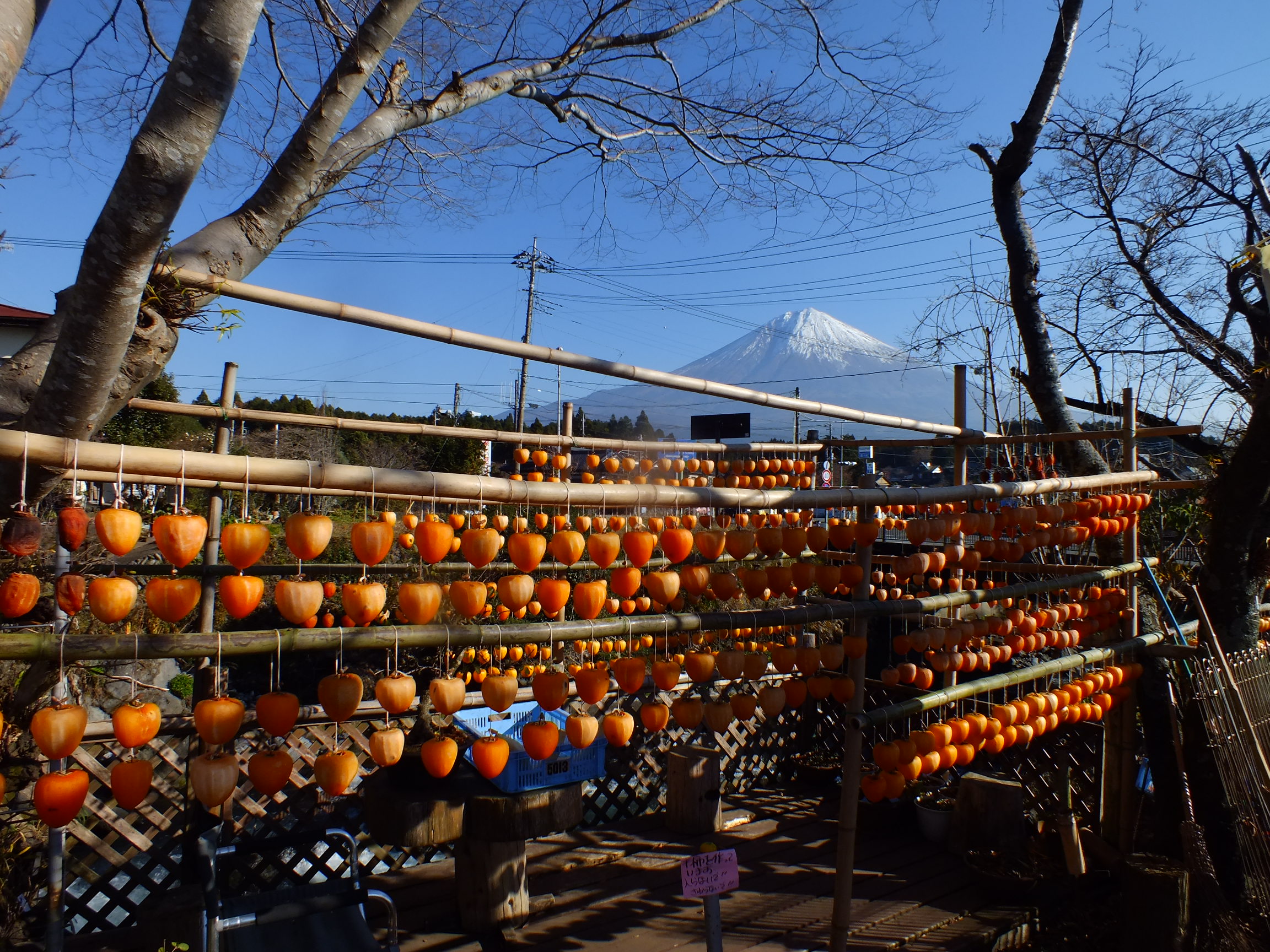 Hoshigaki (dried persimmons) hanging in traditional method—common sight in late autumn throughout mountain regions - Wikimedia Commons
Traditional Preservation Methods: Lactic Acid Fermentation (Salt-Free): Sunki—the most remarkable example, turnip leaves fermented using only naturally occurring lactic acid bacteria from stems and root bases, made by fermenting red turnip stems with dozens of lactic bacterial types creating unique sour taste. Previous year's batch used as starter culture, similar to sourdough bread. Recognized as Nagano Cultural Property of Food. 🔗 🔗 Koji Mold Fermentation: Miso production—cooked soybeans mixed with rice bran, salt, and koji (Aspergillus oryzae), fermented slowly over a year. Particularly important in Hida-Takayama where harsh winters and scarcity of seafood made it critical survival cuisine component. 🔗 🔗 Yukimuro (Snow Storage): Winter snow collected into large piles, covered with straw to prevent melting, used to store food until summer at 0-3°C with 90%+ humidity. Vegetables convert starch to sugar to protect from freezing, making carrots, apples, daikon, and root vegetables sweeter while raising amino acid levels. 🔗 🔗
Specific Regional Foods: Kiso Valley (Nagano): Sunki-zuke (salt-free fermented turnip leaves, highly acidic with unique sour taste, contains "Sunki lactic bacteria" newly discovered species, recognized for health benefits including allergy relief), Pickled Kiso turnips, Hoba-sushi (seasoned rice with local toppings wrapped in magnolia leaves), Nozawana pickles (turnip greens dried and pickled in salt brine with shichimi togarashi and wasabi). 🔗 🔗 🔗 Hida/Takayama (Gifu): Akakaburazuke (red turnip pickles—most iconic Hida pickle, vibrant color from turnip skin, sharp vinegary flavor from lactic fermentation), Hoba miso (red miso grilled on magnolia leaves with walnuts, green onions, mountain vegetables, originated from mountain woodsmen grilling miso on leaves while working), Tsukemono steak (unique local dish where aged, often frozen pickled Chinese cabbage is pan-fried with egg), Ayu nare zushi (traditional fermented sushi—salt-cured sweetfish stuffed with rice, fermented for months). 🔗 🔗 🔗
October Preservation Activities: Harvest Timing: Peak harvest for Hida red turnips planted in late summer, immediately washed and prepared for pickling. Persimmons peeled and hung to dry, becoming hoshigaki—iconic autumn sight with rows of persimmons on strings throughout countryside. Rice harvested September-October with immediate cleaning and drying. Chestnuts, sweet potatoes, mushrooms, and vegetables prepared using traditional techniques. 🔗 🔗 🔗 Fuyujitaku (Winter Preparation): Critical transition period when traditional communities actively prepare preserved foods for coming months, symbolic culmination with Takayama Autumn Festival (October 9-10) marking urgent beginning of winter preparations including pickle-making. 🔗 🔗
Where to Experience Along Route: Yamanashi (Fujikawaguchiko): Michi-no-Eki Narusawa/Fujiyoshida—local pickles including Narusawana Zuke, Korogaki (dried persimmon), Koshu Ko-Umezuke (pickled small plums). Nagano (Kiso Valley): Michi-no-Eki Kiso Narakawa (prime location for sunki products in season, pickled Kiso turnips, Narakawa Market with agricultural products and specialty shop with Kiso lacquerware and local sake), Michi-no-Eki Narai Kiso No Ohashi (Nakasendo Road location selling agricultural products and Kiso lacquerware), Traditional shops in Kiso Fukushima and Narai-juku post town (locally made preserved foods, lacquerware shops). Gifu (Takayama): Miyagawa Morning Market (daily 6 AM-noon, 7 AM in winter, famous for handmade pickles from locally grown vegetables, each store with unique varieties, akakaburazuke prominently featured), Jinya-mae Morning Market (daily 6 AM-noon, 7 AM in winter, smaller scale but equally authentic, bags of hoba miso for home grilling), Sanmachi Suji Historic District (specialty shops including miso purveyors, sake breweries, tsukemono stores), Michi-no-Eki Hida Takayama (wide variety of pre-packaged preserved foods, easy souvenirs). 🔗 🔗 🔗 🔗
Modern Revival & Cultural Significance: Nagano Prefecture launched "Ferment Valley NAGANO" initiatives promoting fermented food culture (miso, sake, pickles) as key to region's renowned longevity. Traditional fermented foods linked to health benefits including prevention of high blood pressure, osteoporosis, and cardiovascular disease. Fermentation creates deep umami through glutamic acid production. Modern interest in traditional preservation as sustainable, zero-waste food practices, with artisanal producers finding new markets for high-quality traditional preserved foods. Lactic acid bacteria in sunki and other fermented foods support gut health and immunity. 🔗 🔗 🔗
Route Integration: The journey from Fujikawaguchiko through Kiso Valley to Takayama traces an elevation gradient where preservation sophistication increases with altitude and isolation. Yamanashi (starting point) introduces mountain preservation with dried persimmons and mountain vegetables. Kiso Valley (midpoint) shows peak of salt-free innovation with sunki, demonstrating maximum resourcefulness under severe isolation. Hida/Takayama (destination) presents rich fermentation culture with salt-based preservation, miso traditions, and sophisticated use of natural antibacterial plants. Late October timing provides exceptional opportunity to witness active preservation season, connecting modern travel to ancestral rhythms that defined mountain life. 🔗
Hida Region Specialties - Hoba Miso and Mountain Preservation Cuisine
Overview: Hida region food culture represents the culmination of centuries of isolation, necessity, and deep cultural philosophy that shaped mountain survival cuisine into celebrated heritage. For route travelers, the transition from Fuji Five Lakes through Kiso Valley to Hida Mountains reveals an evolution in preservation techniques and food traditions, reaching their most sophisticated expression in Takayama's distinctive specialties. Late October represents the post-harvest period when autumn preservation activities conclude and traditional foods transition into winter storage modes. 🔗
 Traditional hoba miso grilled on magnolia leaf over charcoal - Visit Gifu Tourism Board 🔗
Hoba Miso - The Iconic Mountain Dish: Hoba miso originated in the Hida-Takayama region when mountain woodsmen used large magnolia leaves as disposable plates to grill miso while working in forests. What began as survival technique has evolved into Takayama's most iconic regional dish. The magnolia leaf's role extends beyond serving as a plate—it releases subtle, pleasant fragrance when grilled that infuses the miso with distinctive smoky, aromatic quality. 🔗 🔗
Why Magnolia Leaves: Natural antibacterial properties, flame resistance due to moisture content, large sturdy surface (up to 40cm), and aromatic enhancement when slowly grilled. Green leaves harvested in late spring and cured; in autumn, fallen brown leaves collected and preserved before winter for year-round use. 🔗 🔗
Core Ingredients & Preparation: Locally-produced red miso seasoned with sake, sugar, and ginger creates the foundational flavor. Standard additions include green onions, shiitake mushrooms, walnuts. Premium variations feature Hida beef (premium wagyu), seasonal mushrooms, mountain vegetables. Rice is pounded until half-crushed, then shaped and placed on soaked magnolia leaf with miso mixture spread across center. Grilled slowly over medium heat until miso becomes bubbly and caramelized. Diners transfer small portions to rice bowl with chopsticks. 🔗 🔗
October Seasonal Considerations: Late October features mushroom season with wild and cultivated mushrooms at peak availability. Fallen brown magnolia leaves collected in late autumn before winter. While Takayama Autumn Festival (October 9-10) will have concluded by October 24, cultural atmosphere of harvest gratitude and winter preparation remains strong. 🔗
Where to Experience: Kyoya (15 min from JR Takayama Station, extension of family home with hearth and floor seating, hoba miso with excellent Hida beef). Suzuya Restaurant (cozy traditional setting, set meals featuring Hida beef). Kajibashi Shokudo (hoba miso and local tofu specialty). Roadside stations near Takayama West Interchange (Hida beef hoba miso yakiniku gozen set meals). Traditional ryokan (included in breakfast or kaiseki dinner courses). 🔗 🔗
Price Expectations: Basic hoba miso teishoku ¥1,000-1,500; premium with Hida beef ¥2,000-3,500; specialty restaurants ¥3,000-5,000+. Roadside station quick teishoku ¥1,200-1,800. Packaged hoba-miso for home cooking ¥500-1,000. 🔗 🔗
Mountain Preservation Cuisine - Cultural Heritage: The Hida region's profound isolation shaped entire food culture. Geographic seclusion severe during snow-heavy winters when fresh produce became completely unavailable for months. This created "preservation-by-necessity" culture where survival depended entirely on storing autumn harvests. 🔗 🔗
Preservation Techniques: Pickling (Tsukemono) - Hida Red Turnip Pickles (signature preserved food, vegetable lactic acid fermentation without relying on scarce salt, discovered 1918); Sunki-zuke (salt-free fermentation developed where salt unavailable, ancient method using only natural bacteria). Drying (Hoshimono) - mountain vegetables blanched and dried on bamboo screens, mushrooms dried to concentrate umami. River Fish Preservation - iwana and ayu salt-grilled and dried, kanroni (fish simmered until bones soften), ayu nare-zushi (fermented sushi). 🔗 🔗
Mottainai Philosophy: This deeply-held value embodies respect for nature and human labor through complete utilization of every part, repurposing "spoiled" food (tsukemono steak from frozen pickles), and spiritual dimension of honoring nature's gifts. Buddhist Influences: Shojin ryori principles clearly parallel Hida preservation philosophy through mindfulness in preparation, mountain vegetable utilization, "slow food" philosophy (some foods take entire year to prepare), and respect for life. 🔗 🔗
October Availability: Red turnip harvest concludes in October entering fermentation. Final wild mushroom foraging before winter. Autumn mountain vegetables finishing availability. Newly-made red turnip pickles begin appearing in early fermentation stage. Takayama Autumn Festival (October 9-10) celebrates harvest completion; by late October cultural atmosphere of gratitude and transition remains strong. 🔗
Route Food Culture Evolution: Fuji Five Lakes (moderate climate, houtou noodles, yoshida udon, lake fish). Kiso Valley (post-town culture, gohei-mochi, soba, sunki salt-free innovation). Hida Mountains (most isolated, hoba miso unique to region, sophisticated preservation with akakaburazuke, comprehensive fermentation systems). Lower elevations → higher elevations reveals intensification of preservation necessity and innovation. 🔗
Cultural Tourism Experience: Hida Folk Village (over 30 authentic 18th-century buildings, gassho-zukuri farmhouses with traditional hearths, demonstrations of preservation methods, hands-on experiences with traditional crafts). Takayama restaurants balance authentic tradition with contemporary expectations, maintaining traditional core while adapting to modern dining. 🔗 🔗
Seasonal Harvest Foods - Late October Mountain Vegetables and Mushrooms
Overview: Late October represents peak autumn harvest season in Japanese Alps, Kiso Valley, and Hida region. While spring sansai are culturally iconic, autumn brings unique bounty centered on wild mushrooms (kinoko), hearty root vegetables, and traditional preservation activities as communities prepare for winter. October 24 travel date falls within prime mushroom foraging season (kinoko-gari) when cool autumn weather and recent rainfall create ideal conditions for wild mushroom abundance. 🔗 🔗
 Nameko mushrooms showing distinctive amber color and natural gelatinous coating, commonly found in autumn forests - Wikimedia Commons
Late October Mountain Vegetables: Kiso Valley - Red turnip (kabu) harvested in autumn with roots pickled and leaves fermented for sunki; autumn soba buckwheat prized for rich flavor compared to spring. Hida Region - Sukuna kabocha (sweet elongated pumpkin, peak sweetness late October); Hida red turnips (harvested October-November for pickles and tsukemono steak); akishima sasage (purple-striped beans). Foraged Autumn Vegetables - Mukago (wild yam bulbils, nutty earthy flavor, harvested September-November, cooked with rice or grilled with salt). 🔗 🔗
Wild Mushrooms (Peak Season): Over 6,000 mushroom varieties grow in some mountain regions during autumn. 🔗
Matsutake (松茸) - "King of Autumn Mushrooms": Peak September-October, October 24 falls within prime harvesting window. Revered for centuries, symbolizes autumn's fleeting beauty, considered one of three representative autumn foods. Nagano and Gifu are primary harvesting regions. Cannot be cultivated, listed as "endangered" by IUCN, Japan's harvest declined 95% in 70 years. Domestic matsutake cost ¥10,000-¥60,000 per piece, auction records reach ¥11.85 million per kilogram. Prized for intense spicy aroma and rich flavor earning reputation "for aroma - matsutake." 🔗 🔗 🔗
Traditional Matsutake Preparations: Matsutake gohan (rice cooked with mushrooms, mitsuba, sudachi zest—only available in autumn with shinmai new rice). Dobin mushi (delicate broth steamed in ceramic teapot with shrimp, chicken, soy sauce, lime). Yakimatsutake (simply grilled with sudachi citrus). 🔗 🔗
Other Autumn Mushrooms: Nameko (slippery mushroom, natural gelatinous coating, September-November season, used in miso soup and hoba miso). Maitake (dancing mushroom, September-October peak, firm meaty texture, tempura and gohan preparations). Shimeji varieties (mild nutty flavor, traditional saying "for taste - shimeji," Nagano major producer). Hiratake (oyster mushroom, autumn season, Nagano and Niigata production). 🔗 🔗
Kinoko-gari Culture: Cherished autumn tradition of families venturing into mountain forests to forage wild mushrooms, deeply rooted in connection to nature and seasonal cycles. Historical records show matsutake picking was favorite samurai pastime, with tradition including picnicking in forests grilling freshly collected matsutake and drinking sake. Safety: Poisonous mushrooms everywhere and may resemble edible ones, strongly advised to go with local guide or trained expert. Permissions: Picking without landowner permission prohibited. Sustainable Etiquette: Leave some behind for spore dispersal, pick from stem not ground to protect mycelium. 🔗 🔗
Autumn Harvest Integration: Late October ideal timing for experiencing mountain harvest culture. Mushroom season in full swing with wide variety at markets and restaurant menus. Cool rainy weather ideal for matsutake growth. Autumn foliage peak (mid-late October) combines momijigari with seasonal harvest. Food stalls at foliage spots sell roasted chestnuts, grilled dango, yaki imo, seasonal mushroom dishes. 🔗
Weather Impact: Mushrooms reach season when it rains for long time in autumn with appropriate temperature and humidity. Big matsutake flushes caused by cool rainy weather after cold periods. 🔗 🔗
Where to Experience Along Route: Kiso Valley Roadside Stations (Michi-no-Eki Kiso Fukushima sells fresh produce including autumn vegetables and mushrooms; Michi-no-Eki Okuwa Nojiri sells seasonal vegetables and Kiso special products; Michi-no-Eki Yabuhara offers fresh highland vegetables and set meals). Hida Takayama Morning Markets (Miyagawa Morning Market 7 AM-12 noon features seasonal vegetables, fruits, mushrooms from local producers; Jinya-mae Morning Market farmers-only stalls with unusual ingredients including mountain vegetables). Traditional Restaurants (many ryokan and local restaurants feature seasonal autumn menus with foraged mushrooms and local vegetables; upscale restaurants offer matsutake kaiseki courses during autumn). 🔗 🔗
Matsutake Cultural Significance: Arrival signals beginning of fall and is cause for celebration. High price and cultural significance elevate it to symbol of autumn luxury and sought-after seasonal gift. Premium specimens displayed in wooden cases at high-end supermarkets and department stores September-October. 🔗 🔗
Craft Traditions & Artisan Culture
Kiso Lacquerware Techniques - Traditional Regional Craft
Overview: Kiso lacquerware (Kiso-shikki or Kiso-nuri) represents 400-year-old craft tradition deeply rooted in Kiso Valley's natural resources and post-town culture along historic Nakasendo Highway. The craft exemplifies how geographical isolation, abundant forest resources, and trade route proximity shaped one of Japan's most distinctive lacquerware traditions. Developed beginning 17th century under patronage of Owari-Tokugawa clan during Edo period, became popular souvenir for Nakasendo travelers. Today tradition continues in Kiso-Hirasawa with approximately 100 artisans maintaining centuries-old techniques while exploring contemporary innovations. 🔗 🔗
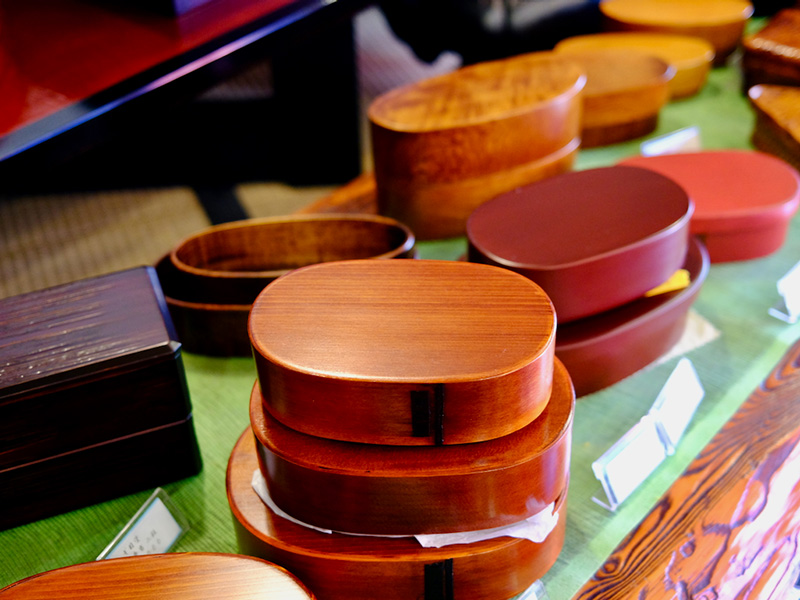 Traditional mempa bent-wood bento box made from Kiso hinoki cypress with lacquer finish - Go! NAGANO 🔗
Historical Significance: Ministry of Economy, Trade and Industry designated traditional craft. Important Tangible Folk Cultural Properties (1991) for tools and products. Important Preservation District for Groups of Traditional Buildings (2006) for Kiso Hirasawa. 🔗 🔗
Natural Resources Foundation: Blessed with abundant forest resources, excellent water quality, suitable climate, durable base materials from Kiso goboku (Five Sacred Trees). Local villagers lived under Owari domain patronage and allowed to use certain wood amount for living, resulting in woodworking industries development. Strategic Nakasendo location made it key transportation/trade point, leading to lacquer introduction and Kiso lacquerware development. 🔗 🔗
Unique Strength - Sabi-tsuchi: During Meiji period, rust soil (sabi-tsuchi) discovered in Narai River basin containing high iron content. This locally produced clay so strong that when mixed with lacquer described as "unbreakable even against blade." Taking advantage of this property, production evolved from practical durable everyday lacquerware to high-end lacquerware using highly advanced techniques. 1998 Nagano Winter Olympics medals used Kiso lacquerware. 🔗 🔗
Traditional Techniques: Three main techniques designated as traditional crafts: Kiso Shunkei (brings out wood beauty by applying unrefined lacquer sap directly to wood, no base applied, raw lacquer repeatedly rubbed to bring out beautiful grain). Kiso Tsuishu (base coat applied then pattern with lacquer pad, multiple colored lacquer layers rubbed down for speckled pattern, 12-18 coats). Nuriwakero-Ironuri (multiple colored lacquer for geometrical patterns, carefully polished after drying, beauty depends on polishing strength). 🔗 🔗
Wood Selection: Base mainly from Five Sacred Trees of Kiso (hinoki cypress, sawara cypress, koyamaki umbrella-pine, nezuko thuja, asunaro hiba). Also katsura and horse chestnut commonly used. Kiso hinoki known for faint pink surface, pleasant odor, straight grain easily worked, durability—considered finest quality hinoki in Japan. 🔗 🔗
Production Process: Takes minimum 30 days completing one piece through applying lacquer to wood, drying, reapplying. Each coat dried before another applied, repeated approximately 12 times. More elaborate pieces have 20+ coats. Pieces require 3-4 days drying each coat. Craftsman must account for humidity changes when applying. Full curing takes several months to year, making more durable over time. 🔗 🔗
Signature Products: Menpa bento boxes (very popular tourist item, bent Kiso hinoki into oval shape, raw lacquer rubbed into wood, unique among traditional Japanese bent-wood lunch boxes). Olympic medals (1998 Nagano Winter Olympics used Kiso lacquer body with gold logo and rings). 🔗 🔗
Current State: At peak 1,000 people worked in Hirasawa lacquer industry, down to around 100 today. Despite decline, Kiso Hirasawa retains atmosphere of old lacquerware craftsman town with historical townscape and many active producers. Production of high quality handmade lacquerware continues in over 100 surviving preserved warehouses. 🔗 🔗
Where to Experience Along Route: Kiso-Hirasawa (primary destination, 2 km from Narai-juku, over 200 lacquerware stores, multiple artisan workshops). Kiso Lacquerware Museum (15 min walk from Kiso-Hirasawa Station, exhibits 3,729 items of nationally designated tools and products, Olympic medal display). Kiso Kurashi no Kougeikan (hands-on experiences making chopsticks/coasters/spoons, suitable for all ages). Narai-juku (many shops selling lacquerware, some offering workshops). 🔗 🔗 🔗
Workshop Experiences: Hands-on lacquerware painting 1-2 hours with artisan assistance (advance booking required). Demonstrations available at various studios, craftsmen willing to show studios even without appointment. QR codes available showing production videos. Typical workshop costs: ¥1,300-3,000 depending on item and experience length. 🔗 🔗
Purchasing Considerations: Authentic indicators - Kiso hinoki wood base, sabi-tsuchi application, traditional techniques (Shunkei/Tsuishu/Nuriwakero-Ironuri), 12-20+ hand-applied layers, hand-polished finishes. Purchase from - workshops producing on-site, multi-generation family businesses, museum shop, established galleries. High quality lacquerware not cheap but if properly cared for can be used over 100 years, making valuable investment passed through generations. 🔗 🔗
Modern Innovations: Hyakushiki Urushi Glass (since 1994, combining glass and lacquer, transparent lacquer developed by founder Yasuto Kosaka, more robust than traditional woodenware, handpainted designs blending innovation with classic feel). This new glass lacquerware represents contemporary expression while maintaining traditional craft essence. 🔗 🔗
October Visit Considerations: Autumn season ideal for Kiso Valley visit with comfortable weather for workshop visits and walking between towns. Late October offers beautiful autumn foliage along Nakasendo route. Plan 2-4 hours for Kiso-Hirasawa/Narai-juku lacquerware exploration on route from Fujikawaguchiko to Takayama. Morning visits likely best for observing active production work. 🔗
Route Integration: Kiso lacquerware context provides mid-route cultural stopping point in Kiso Valley between starting and ending destinations. Part of Nakasendo Highway post-town craft tradition. The following sections detail Hida no Takumi carpentry heritage and Ichii Ittou wood carving in Takayama area, showing evolution of woodcraft traditions from Kiso lacquerware (Five Sacred Trees) to Hida carpentry (different wood species and techniques), demonstrating how geography, resources, and isolation shaped distinct regional expressions. 🔗 🔗
Hida no Takumi Carpentry Heritage - 1,300+ Years Tradition
Overview: Hida no Takumi (飛騨の匠) refers to the legendary master carpenters from the mountainous Hida region of northern Gifu Prefecture who have maintained a prestigious 1,300-year tradition of exceptional woodworking craftsmanship. This tradition, formally established during the Nara Period (710-784 AD), represents one of Japan's most enduring and influential craft heritages, directly shaping the architectural character of historic Japan and continuing as a living cultural practice today. 🔗
 The Takumikan Craft Museum (Hida no Takumi Bunkakan) in Hida-Furukawa - built in 1989 using traditional carpentry techniques without nails, showcasing the living heritage of Hida craftsmanship. Source: Wikimedia Commons
Historical Significance - The Yōrō Code (718 AD): The Hida no Takumi system was formally established through the Yōrō Code (養老律令), compiled in 718 AD during the Nara Period. Due to the Hida region's mountainous terrain unsuitable for rice cultivation, the imperial court established a unique tax exemption system. Instead of paying taxes with rice or cloth, each village in Hida was required to send approximately 100 skilled carpenters annually to the capital (first Nara, then Kyoto) to work on national construction projects. This imperial dispatch system operated for nearly 500 years, from the Nara Period through the Heian Period (794-1185 AD), dispatching an estimated 40,000 to 50,000 master craftsmen to build the nation's most important structures. 🔗 🔗
Architectural Legacy: The Hida no Takumi were the literal builders of ancient Japan, contributing essential craftsmanship to the construction of the nation's most iconic sacred and governmental structures including Tōdai-ji Temple, Hōryū-ji Temple (Hall of Dreams), Kōfuku-ji Temple, Yakushi-ji Temple, Heijō Palace in Nara, and Heian Palace in Kyoto. These master craftsmen possessed preeminent woodworking techniques enriched through time, contributing to the construction of shrines, temples, and imperial capitals continuously for 1,300 years. 🔗 🔗
Kumiki (組木) - Interlocking Joinery: The hallmark of Hida no Takumi craftsmanship is kumiki, a complex system of interlocking wooden joints dating back around 1,300 years. Over 200 joint types including tsugite (vertical connections) and shiguchi (right angle or diagonal connections) allow wood pieces to interlock without the use of nails or metal fasteners to form sturdy three-dimensional objects. Joints fit together with such precision that no nails or reinforcement are needed, while wood can naturally expand and contract with changing humidity, ensuring longevity and providing structural integrity during earthquakes. 🔗
Cultural Impact on Hida Region Architecture: The legacy of Hida no Takumi is visibly woven into the architectural fabric of the region's towns. Takayama's Old Town (Sanmachi Suji) features beautifully preserved merchant houses with dark, latticed facades (mushiko-mado) and sturdy wooden construction directly resulting from Hida no Takumi skills being applied locally. Takayama Festival Floats (Yatai) are considered masterpieces of Hida craftsmanship, comparable to the famous Yomeimon Gate at Nikko Tosho-gu Shrine, featuring intricate wood carvings, complex joinery, carpentry, lacquerwork, gilding, and karakuri marionettes (mechanical puppets). In 2016, "Yama, Hoko, Yatai" festivals in Japan, including the Takayama Festival, were inscribed as UNESCO Intangible Cultural Heritage of Humanity. 🔗 🔗
Gassho-zukuri Farmhouses: The steep-roofed thatched farmhouses (gassho-zukuri) in the Shirakawa-go and Gokayama regions (UNESCO World Heritage since 1995) showcase Hida carpentry principles. The name "gassho" means "two hands in prayer," referencing how the roof sides join together. No nails or metal materials were used in construction, with all wood sourced from surrounding forests. The ground floors were built by local carpenters applying Hida techniques. 🔗
Modern Practice - Hida Sangyo: Hida Sangyo, founded in 1920, represents the successful evolution of Hida carpentry into contemporary furniture design. As a woman-owned company with over 100 years of history, Hida Sangyo bridges the 1,300-year carpentry tradition with 21st-century aesthetics through revolutionary wood compression techniques that make locally abundant cedar suitable for durable furniture and flooring, collaborations with renowned international designers including Sori Yanagi, Kenya Hara (MUJI Art Director), Enzo Mari, architect Kengo Kuma, and Torafu Architects. 🔗 🔗
UNESCO Recognition (2020): In December 2020, "Traditional skills, techniques and knowledge for the conservation and transmission of wooden architecture in Japan" was inscribed on UNESCO's Representative List of the Intangible Cultural Heritage of Humanity. While this recognition encompasses traditional Japanese architectural craftsmanship practiced throughout Japan, the Hida carpentry tradition is a foundational component of this broader heritage. 🔗
Where to Experience Along Route:
-
Takumikan Craft Museum (Hida no Takumi Bunkakan) - Hida-Furukawa - Constructed in 1989 by local carpenters using traditional techniques without nails; features interactive displays of kumiki joinery techniques, hands-on room where visitors can try assembling wooden joint puzzles, exhibition of traditional carpenter tools, display of various wood types used in construction, architectural models showing different joinery techniques; Hours: 9:00-17:00 (March-November), 9:00-16:30 (December-February), Fridays close at 15:30. Best location along the route for understanding the technical aspects of Hida carpentry. 🔗 🔗
-
Takayama Festival Floats Exhibition Hall (Takayama Matsuri Yatai Kaikan) - Permanent display of actual festival floats with close examination of carpentry, lacquerwork, gilding, and woodcarving; karakuri puppet performances; intricate joinery details visible up close. Only facility where actual festival floats are always on display. 🔗 🔗
-
Hida Folk Village (Hida no Sato) - Over 30 traditional houses from Hida region relocated to museum grounds (established 1971); Gassho-zukuri houses and other traditional structures from Edo Period (1603-1868); opportunity to see traditional structures up close and appreciate construction techniques. 🔗 🔗
-
Takayama Old Town (Sanmachi Suji) Walking District - Preserved historic district featuring dark wooden merchant houses with latticed facades (mushiko-mado windows), exposed timber framing, traditional construction techniques; living architectural museum where Hida carpentry is visible in everyday buildings. 🔗
Seasonal Considerations (October 24, 2025): The Takayama Autumn Festival (Hachiman Matsuri) occurs on October 9-10 (before the travel date), but the cultural context remains highly relevant. Visitors arriving on October 24 can still appreciate the craftsmanship through the Takayama Festival Floats Exhibition Hall where actual floats used in the festival are permanently displayed. Post-festival period means fewer crowds at exhibition hall; comfortable temperatures for walking through old town districts; clear autumn weather typical of late October in mountain regions; excellent natural lighting conditions for photographing architectural details. 🔗 🔗
Route Integration - Cultural Corridor Significance: The route from Fujikawaguchiko to Takayama traverses a cultural corridor where travelers experience the architectural evolution from Kiso Valley Post Towns (Nakasendo trail architecture showing traditional construction), through Mountain Passes (transition from lowland to highland cultural zones), into Hida Region Entry (where Hida no Takumi carpentry heritage becomes the dominant architectural influence), to Takayama (cultural culmination showcasing 1,300 years of carpentry mastery). What route travelers should look for: mushiko-mado (latticed windows on merchant houses), chidori-goshi lattices (distinctive geometric window patterns in Hida-Furukawa), kumo signatures (cloud-like carvings under building eaves), exposed beam construction (traditional post-and-beam framing visible in many historic buildings), and no visible nails (traditional structures assembled entirely through joinery). 🔗
Ichii Ittou Wood Carving Lineage - Yew Tree Carving Art
Overview: Ichii Ittou (一位一刀彫) represents one of Japan's most distinctive wood carving traditions, emerging from the Hida region of Gifu Prefecture around Takayama. This craft tradition uses single-chisel techniques to carve ancient Japanese yew wood (ichii), leaving pieces uncolored to showcase the natural beauty of the wood's dual-toned grain. Designated as a National Traditional Craft in 1975, this art form embodies the centuries-long craftsman culture of the Hida region. 🔗 🔗
Historical Background: The Ichii Ittou tradition was established during the late Edo period (1603-1868) by netsuke craftsman Matsuda Sukenaga (1800-1871), who founded the Hida school of netsuke carvers. Matsuda's revolutionary approach departed from traditional netsuke carving by eliminating coloring entirely. After visiting Nara and seeing traditional Itto-bori carvings that used vivid colors, he wanted instead to showcase the natural beauty of yew wood grain. He conducted repeated research using yew wood from the Hida mountains, recognizing its excellent grain, ease of carving, and natural luster. 🔗
Imperial Name Significance: The name "ichii" (一位) itself carries imperial significance. The Japanese yew tree received this designation around eight hundred years ago when a scepter made from the wood was presented to the emperor for his coronation. The beauty and high quality of the scepter earned the title "sho ichii" (the highest rank), leading to the tree being called ichii. 🔗
Materials - Ancient Wood Selection: Ichii Ittou carving uses precious wood from Japanese yew trees (Taxus cuspidata) aged between 150 to 500 years old, with some pieces utilizing wood up to 5,000 years old. The wood has a red-toned heartwood in the center and white-toned sapwood on the outer rings, creating distinctive two-color patterns that give each carving its unique character. One of the most appealing characteristics of ichii woodcarvings is that their color deepens with age, developing increased luster and sheen, particularly when treated with wax finishing. Hida's extreme temperature variation—ranging from 5°F (-15°C) to 86°F (30°C)—and heavy snows create slower tree growth, leading to tighter growth rings and resulting in delicate yet sturdy, high-quality timber. 🔗 🔗
Single-Chisel Technique (Ittou): The craft derives its name from the "ittou" (一刀) technique—carving with only chisels, using no other tools. Forty to fifty different types of chisels are used depending on the process, including round chisels and tsuki-chisels. The carving is characterized by sharp chisel marks being left evident on final products, with the sharpness of chisel blades having a large impact on the appearance. The three-stage carving process includes: (1) Rough Carving with bold strokes, (2) Semi-finish Carving with great attention to overall balance, and (3) Finish Carving where intricate and delicate parts are carved with great care, with every single cut greatly affecting the finished work. Depending on complexity, finish carving alone may take one week or more, with even small items requiring one to two months for completion. 🔗 🔗
Connection to Buddhist Sculpture - Enkū's Influence: The Hida region has deep connections to Buddhist sculpture through the legendary monk-sculptor Enkū (円空, 1632-1695). Born in Mino Province (present-day Gifu Prefecture), Enkū carved thousands of wooden Buddhist statues throughout Japan, with about 5,300 works attributed to him today, mostly in the Hida region. His work is marked by remarkable freedom of style, unrestrained by traditional Buddhist art norms, carved crudely from tree stumps or scrap wood with a few strokes of a hatchet. This unpretentious simplicity and natural vigor influenced the region's approach to wood sculpture. 🔗 🔗
Living Heritage - Master Craftsmen: Contemporary masters continuing the tradition include: Washizuka Hiroshi (born 1971, began apprenticing under Wani Hisayuki in 1990, recognized as 'Traditional Craftsman' by the Japanese government in 2010 at age 38), Hisayuki Wani (recognized traditional craftsman, owner of Wani Chōkoku carving workshop, many pieces characterized by warm smiles), and demonstration artisans at Hida Folk Village with 46 years of yew wood carving experience representing the living practice of the tradition. 🔗 🔗 🔗
Where to Experience Along Route:
-
Takayama Old Town (Sanmachi Street) - Historic "Preservation District for Groups of Traditional Buildings" retaining Edo period (1603-1867) atmosphere, about 10 minutes walk from Takayama station. The area features shops selling Hida's traditional crafts and galleries showcasing local artists' work, including Ichii Itto-bori carvings. Visitors can observe artisans crafting single-cut yew wood carvings in some shops. Many shops allow watching artisans at work, providing authentic experience when purchasing crafts. Each piece is handcrafted and varied in color and shape, making them ideal decorations. Small animal carvings and traditional masks are especially popular. 🔗 🔗
-
Takumikan Craft Gallery - Located at 1-22 Shimosannomachi, Takayama City, facing Miyagawa Asaichi Street, just a minute's walk from the old townscape. First floor features Hida Takayama's specialties and their private brand "TaKuMi craft," featuring woodworking accessories, famous sweets, and ceramics. The café and souvenirs showcase craft works by artisans. Second floor displays Shirakawa furniture with over 50 years of experience. 🔗
-
Hida Folk Village (Hida no Sato) - Live demonstrations at the Kobayashi House feature carving of yew wood from rare 500-year-old trees, carved by hand one by one. Mr. Yamashita, with 46 years of carving experience, demonstrates traditional techniques. Live craft demonstrations are on display every day between 10 am and 3 pm and are free to watch. 🔗 🔗
-
Hands-On Town Interaction Center of Hida Takayama - Offers opportunities to observe and participate in creation and demonstration of traditional crafts including Ichii Ittou Carving, Sarubobo, and Uto Shakushi crafting. Located near the Hida Folk Village, no reservations required for most activities, allowing visitors to drop by during opening hours. Workshops range from 700 to 1800 Yen. 🔗 🔗
-
Hida Takayama Town Museum - Collection comprises approximately 75,000 items with around 900 pieces on permanent display. Spring Traveling Exhibitions (April-June period) have featured exhibits centered around Ichii Itto-bori carvings from the Gifu Prefectural Museum collection. 🔗
Quality Indicators: Authentic Ichii Ittou carvings feature chisel marks clearly visible and intentionally preserved, natural two-tone coloring (red heartwood, white sapwood) without artificial staining, smooth aged patina on older pieces, craftsman signature or seal indicating traditional artisan, and pieces displayed in established craft galleries rather than tourist souvenir shops. 🔗
Seasonal Considerations (October 24, 2025): Late October provides ideal weather for exploring indoor craft galleries and workshops in Takayama's old town, with comfortable temperatures (9-19°C in Takayama) for walking between historic buildings. Daily demonstrations at Hida Folk Village run 10 am - 3 pm year-round, making mid-day arrival ideal for catching live carving demonstrations. The post-harvest period traditionally sees increased artisan activity as craftspeople prepare winter inventory and festival goods, potentially offering richer workshop experiences. Arriving on October 24 follows the Takayama Autumn Festival (October 9-10, 2025), meaning post-festival calm in the old town with better access to craft shops and artisan interactions without festival crowds. [🔗](Route state file context)
Route Integration - Cultural Transition: The Nakasendo-Alps Scenic Route represents a journey through Japan's traditional craft territories: Kiso Valley (early route) introduces lacquerware traditions using urushi (Japanese lacquer) from local trees; Alpine Transition into master carpentry territory where wood is treated as sacred material, shaped by centuries of temple-building expertise; Takayama Arrival represents culmination in Ichii Ittou carving and comprehensive craft culture representing the pinnacle of Hida artisan traditions. This tradition represents one element of Takayama's comprehensive craft ecosystem. Experiencing this tradition alongside Hida-shunkei lacquerware, gassho-zukuri architecture at Hida Folk Village, and traditional furniture making provides complete understanding of why Hida no Takumi (master craftsmen) achieved legendary status in Japanese cultural history. 🔗
Active Artisan Communities - Living Craft Traditions Along Route
Overview: The Fujikawaguchiko to Takayama route passes through one of Japan's most significant artisan corridors, where living craft traditions have been maintained for over 400-1,300 years. The Kiso Valley post towns and Hida region represent active artisan communities where craftspeople continue to practice traditional techniques while adapting to contemporary applications, creating a cultural experience that goes far beyond tourist souvenir shopping. This route provides access to three distinct artisan regions: the Kiso Valley lacquerware communities (Kiso-Hirasawa and Narai-juku), the broader mountain craft traditions of the Nakasendo post towns, and the renowned Hida woodworking heritage culminating in Takayama. 🔗 🔗
Kiso-Hirasawa: Japan's Lacquerware Capital - Kiso-Hirasawa has been producing lacquerware for 400 years in a valley surrounded by the deep mountains of Japan. Unlike other Nakasendo towns that served as traveler lodging, Kiso-Hirasawa was specifically a place for artisans to live and produce lacquerware products. At its peak, approximately 1,000 people worked in Hirasawa's lacquerware industry across about 80 workshops; today, around 100 craftspeople maintain the tradition, with over 20 specialist shops still operating. Production continues in over 100 surviving, preserved warehouses. Active multi-generational workshops include: Itoh Kanji Store (fourth generation, 100 years, only one in the area that produces lacquerware in the back workshop and sells in the front shop, started growing their own lacquer trees in 2016); Urushi Studio Ishimoto-Gyokusui (long-established, president Norio Ishimoto and wife Aiko both lacquer craftspeople and traditional artisans); Harunoya Lacquerware Studio (Master Lacquer Craftsman Mr. Hiroyuki Kobayashi works in second floor workshop); Maruyoshi Kosaka Wood & Urushi Works (since 1994, developing products using new technique combining glass and lacquer); Kiso Kurashi no Kougeikan (Craft Center) (offers descriptive displays and video presentations, workshops to experience making chopsticks, coasters, and spoons). Kiso-Hirasawa is located approximately 2-2.3 km walking distance from Narai-juku along the old Nakasendo highway, creating a natural "craft trail" for travelers. 🔗 🔗
Narai-juku: Post Town Artisan Hub - Narai-juku became a center for Kiso lacquerware (Kiso shikki) thanks to favorable climate and abundance of local timber. People still live and work here, maintaining wooden homes and shopfronts that have stood for centuries. Traditional crafts available include Kiso Shiki lacquered wooden kitchen utensils (plates, chopsticks, spoons, trays), Magemono bento boxes and wooden cups made using very old techniques, and local woodwork and chopsticks. Many shops along the main street sell beautifully crafted items, with some offering hands-on workshops. The Kiso Lacquerware Museum located between Hirasawa and Narai-juku shows the tools used in production. 🔗 🔗 🔗
Hida Region Artisan Communities (Takayama Area) - The Hida region has nurtured a woodworking culture for 1,300 years, with master craftsmen known as "Hida no takumi" possessing preeminent woodworking techniques. The Hida area has produced highly refined techniques respected worldwide, including: Ichii Ittobori (Yew Wood Carving) with active artisans Washizuka Hiroshi (opened own atelier Washizuka Chōkoku), Ayayuki Kosaka II (second-generation woodcarver studying under his father), and Tsuda Chokoku (produces and sells wood sculptures creating both traditional works and modern items); Hida Shunkei Lacquerware (over 400 years of history) with active studios including Fukujyu Shunkei Lacquerware Studio (established 1850, fifth-generation owner Ryota Fukujyu leads work overseeing ten artisans), KUMAZAKI-san (designated craftsperson accredited in 1994, offering experiential programs), and Yamada-Shunkei Co., Ltd. (traditional lacquer ware store striving to preserve Hida-Shunkei); Sarubobo Doll Making (traditional folk doll from Hida region, originally mothers and grandmothers hand-made these dolls for their children and grandchildren as symbols of protection and good fortune); and Hida Ceramics (Shibukusa-yaki) (originated in 1841) with active artisans including Shibukusa Ryuzo kiln (now in its seventh generation, one of the oldest potteries in Hida, with sixth and seventh generations working together today) and Shibukusa Ryuzo VII (launched brand 4293, working as art director). 🔗 🔗 🔗
Traditional Apprenticeship System (Deshi): The Japanese apprentice system, known as "deshi," remains highly valued in Japan even after such relationships became rare in most parts of the world following the Industrial Revolution. The training is informal and based on observation, repetition, and persistence, with apprentices expected to "steal" techniques by watching and assisting the master daily, often without direct instruction. A decade of training is common, with hard work from the pupil almost every day in exchange for little or no pay. For ceramic, metal, lacquer, and bamboo craftsmen, knowledge acquisition usually involved lengthy apprenticeship with the master of the workshop, often the father of the young disciple, from one generation to the next. 🔗 🔗 🔗
Where to Experience Along Route:
- Kiso-Hirasawa workshops with front shops (especially Itoh Kanji Store, 2 km walking "craft trail" from Narai-juku, concentrated lacquerware production, over 200 lacquerware stores, multiple artisan workshops)
- Hida Folk Village with regular demonstrations (ongoing craft demonstrations including weaving, wood carving, lacquerwork, demonstrations held 10 am to 3 pm)
- Hida Takayama Crafts Experience Center (drop-in workshops, over 10 different activities including Sarubobo doll making ¥2,500 ~40 minutes, lacquerware chopsticks/coasters/spoons, senbei rice cracker grilling, traditional woodcarving, beaded key chains, ceramic cups, glass wind chimes; no reservations required though last entry times for some workshops are earlier than usual)
- Specific studios offering experiential programs (KUMAZAKI-san, Kiso Kurashi no Kougeikan with video presentations and hands-on workshops)
- Shops throughout Narai-juku and Takayama selling artisan goods
- Takayama Old Town (Sanmachi Street) - shops selling Hida's traditional crafts and galleries showcasing local artists' work, visitors can observe artisans crafting in some shops
Distinguishing Authentic Craft Workshops from Tourist Shops - Official Certifications: "Densan" (伝産) marks items recognized as officially traditional under METI standards, with criteria including regional origin, historical methods, and manual production, often with an official seal on the tag or box. Most artisan goods include identifying features etched into base, sewn into edges, or printed on boxes with Kanji like "手作り" (handmade), "伝統工芸" (traditional craft), or "本物" (genuine article). For high-quality pieces, check for hand-applied glazes, slight asymmetries in shape, and signatures or kiln stamps often on the base. Quality indicators include signs of handwork including texture and variation, natural materials, knowledgeable vendors who can discuss the craft, unique textures and subtle irregularities from manual work, and signs of age or patina in vintage items. 🔗
Price Ranges and Fair Value: Kiso Lacquerware - A top-quality box for bento lunch can cost a couple hundred dollars, reflecting intensive labor with pieces requiring multiple coats taking three to four days to dry each, with strict working conditions to prevent dust contamination. Properly cared for lacquerware can be used for over a hundred years, making authentic pieces worthwhile investments despite initial cost. Takayama Craft Workshops - For ¥800-¥3,000, visitors can participate in workshops lasting 15-60 minutes, creating items like Sarubobo dolls (from ¥2,500, approximately 40 minutes), beaded key chains, ceramic cups, or glass wind chimes. 🔗 🔗 🔗
Cultural Etiquette for Visiting Working Artisan Studios: In Japan - where respect, privacy, trust and harmony mean a lot - photographing people without their consent can seriously ruffle feathers and even lead to legal problems. When photographing people who are working, such as artisans, shopkeepers, or market vendors, approach them with genuine interest. When in doubt, point your camera at places, not people. Many workshops welcome visitors to browse and watch masters at work; prior reservations may be required for some artisan visits; note that many lessons may only be conducted in Japanese; best to arrange visits in advance and consider hiring guides or using specialized tour companies. Approach with genuine interest and respect for the craftsperson's work. Many workshops allow visitors to purchase items directly; buying directly from craftspeople supports living traditions; ask questions respectfully about techniques and materials; understand that higher prices reflect skilled labor and traditional methods. 🔗 🔗
Seasonal Considerations (October 24, 2025): The Takayama Autumn Festival takes place October 9-10, which is a major event in the area during autumn. While this is before the October 24 travel date, it indicates the autumn season is a culturally significant time in the region. Hida Takayama Crafts Experience Center offers activities without reservation, though last entry times for some workshops are earlier than usual. Individual artisan workshops in Kiso-Hirasawa and Narai-juku typically maintain regular operating hours. October weather is generally favorable for walking the craft trail between Narai-juku and Kiso-Hirasawa (2-2.3 km). 🔗
Route Integration - Cultural Transition: The route from Fujikawaguchiko to Takayama traverses a cultural evolution in Japanese mountain craftsmanship: Kiso Valley (Early/Middle Route) focuses on lacquerware refined over 400 years, smaller-scale household items and utensils, post town artisan communities integrated with traveler infrastructure, intimate workshop settings with multi-generational family businesses; Hida Region/Takayama (Route Destination) focuses on large-scale woodworking and carpentry with 1,300-year heritage, architectural elements and furniture alongside decorative crafts, more diverse craft types (lacquerware, ceramics, folk toys, metalwork), larger artisan operations with contemporary design applications, open-air museum experiences alongside working workshops. 🔗 🔗
Why This Matters for Route Travelers: The artisan communities along this route provide something increasingly rare in modern Japan - living examples of continuous craft tradition stretching back centuries. This is not heritage preservation for its own sake, but active practice where fourth, fifth, sixth, and seventh generation craftspeople still maintain family workshops; apprentices train for a decade to master techniques; traditional methods coexist with contemporary design innovation; economic sustainability depends on appreciation from informed travelers; cultural identity of post towns and mountain communities remains tied to craft production. Unlike craft demonstrations at major tourist sites, the artisan communities along this route represent working production centers where locals still purchase functional items, intimate access to master craftspeople in small workshops, opportunity to understand the economics and challenges of traditional craft preservation, direct connection to 400-1,300 year lineages of knowledge transmission, and the intersection of tradition and innovation as craftspeople adapt to contemporary markets. 🔗
Route Events & Seasonal Factors (October 24, 2025)
Autumn Foliage Viewing (Momiji-gari)
Peak Timing by Elevation - Kamikochi vs. Kiso Valley Progression
 Kamikochi autumn foliage at Kappa Bridge on October 24, 2011 - Wikimedia Commons
The Cascade Effect: The foliage change begins at higher areas and moves down the mountain, with higher elevations experiencing cooler temperatures earlier. Colors begin at highest peaks (Mt. Norikura >2,500m) in late September, then descend to alpine valleys like Kamikochi (~1,500m) in early-mid October, roll down into mid-elevation river valleys and basins in late October, and reach lower-elevation cities like Takayama in early-mid November. The Tateyama Kurobe Alpine Route exemplifies this progression—leaves take six weeks to change color, beginning at approximately 2,450 meters around the end of September and moving down the mountains by the end of October. 🔗
Kamikochi Area (~1,500m elevation): Historical peak timing is mid-October to early November, with optimal window October 5-20. Color characteristics feature golden Japanese Larch (karamatsu) trees, rowan trees, maples, and Japanese white birch in shades of red and yellow contrasting with emerald-green Azusa River. October 24, 2025 Status: Past Peak, but still beautiful. Vibrant reds and yellows of maples will likely be gone, but famous Japanese Larch trees should still hold their golden color. Visitors will catch the very end of the season—a beautiful, slightly melancholic phase of late autumn. 🔗
Kiso Valley Post Towns (700-900m elevation): Narai (900m), Magome (600-801m), Tsumago (420m). Historical peak timing is late October to mid-November, with peak colors typically occurring in first half of November. The forested hills of Kiso turn a wondrous display of red, green and gold in autumn. October 24, 2025 Status: Approaching Peak / Early Peak. This is the sweet spot on the route. The mountainsides surrounding the valley will be a mosaic of red, orange, and yellow. Trees within historic towns themselves will be in process of turning, offering perfect mix of green and vibrant autumn colors—ideal timing for beautiful scenery without absolute peak crowds. 🔗
Takayama Area (~570m elevation): Historical peak timing is end of October to beginning of November, with peak around November 1st. In second half of October, best time to enjoy fall foliage is on Japan Alps encircling Takayama city. By November, leaves on mountains begin to fall, but best time for red leaves in Takayama city itself has just arrived. October 24, 2025 Status: Early Color. Foliage season just getting started. Visitors will see splashes of yellow and red on trees along Miyagawa River and in Shiroyama Park, but full peak is still about one to two weeks away. 🔗
2025 Temperature Outlook and Impact: Temperatures in autumn 2025 expected to remain higher than average nationwide through October. Warmer temperatures may delay peak timing by up to 10 days in Nagano areas. This could extend viewing window at Kamikochi and shift Kiso Valley peak slightly later into early November. Temperature is key factor—leaves begin changing when nighttime temperatures drop below 8-10°C (46-50°F) consistently. 🔗
Strategic Route Planning: Best approach is to start at highest elevation (Kamikochi/Hirayu Onsen area) and drive down toward Takayama, literally following the colors down the mountain. This allows travelers to experience the end, middle, and beginning of the season all in one journey. Shinhotaka Ropeway ascends over 1,000 meters—on October 24th, base station area will be near peak while top station will be past peak, creating unique opportunity to experience multiple foliage stages in single hour. 🔗
Photography Timing: Popular locations are significantly less crowded if you arrive by 8am, with lighting perfect for photography during this time. Switch white balance to cloudy to add warmth and bring out rich red, orange and yellow tones of autumn foliage. 🔗
Traditional Momiji-gari Practices - Contemplative Viewing Philosophy
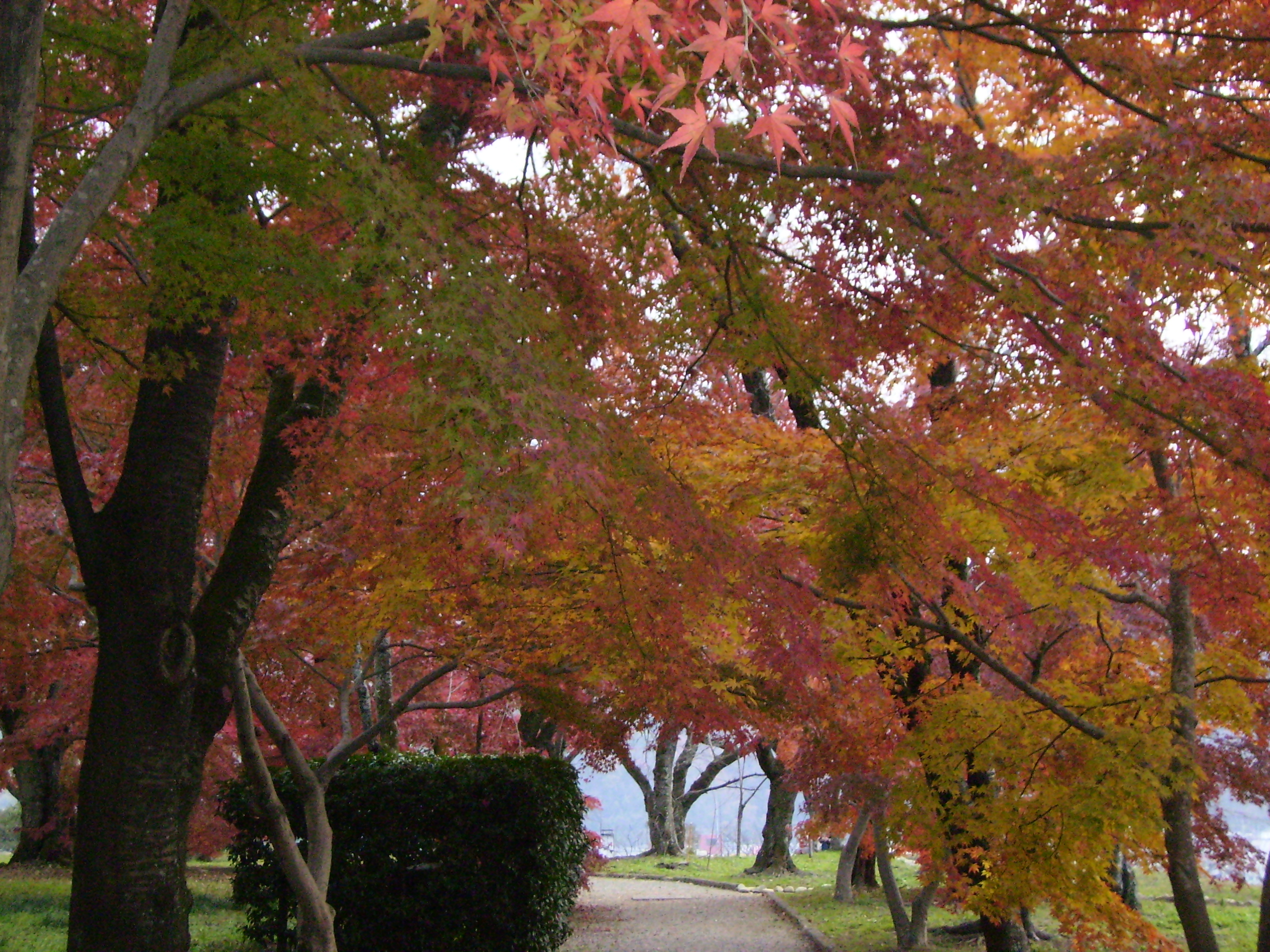 Traditional momiji (autumn maple leaves) in Japanese garden setting. Photo: Vickerman625/Wikimedia Commons (Public Domain)
Historical & Cultural Significance: Momiji-gari (紅葉狩り), literally "hunting autumn leaves," represents one of Japan's most profound cultural traditions—a contemplative practice deeply rooted in Buddhist and Shinto philosophy that transforms seasonal observation into spiritual reflection. This centuries-old tradition offers travelers framework for mindful engagement with nature's impermanence, particularly meaningful along historically significant Nakasendo corridor and sacred mountain regions between Fujikawaguchiko and Takayama. 🔗
The tradition traces back to Heian period (794-1185 AD), when viewing autumn leaves was exclusive activity reserved for nobility and courtiers. During this era, aristocrats hosted elaborate feasts filled with music and waka poetry composition, all set against gardens deliberately landscaped to showcase autumn's fiery colors. An important cultural distinction emerged: while aristocrats enjoyed plum and cherry blossoms (hanami) in their own gardens, they made deliberate trips to mountains for autumn foliage viewing. The term "hunting" (gari) reflected this intentional journey. 🔗
Philosophical Foundations - Mono no Aware: At momiji-gari's philosophical core lies mono no aware (物の哀れ), a classical Japanese aesthetic concept denoting emotional connection to world and ephemeral nature of everything in it. More precisely translated as "the pathos of things," it represents aesthetic appreciation of impermanence accompanied by both transient gentle sadness at things' passing and deeper acceptance of this as life's fundamental reality. Autumn leaves perfectly embody this philosophy. As leaves reach their peak before falling, viewers meditate on life's impermanence and "the beauty that lies in this impermanence." 🔗
Buddhist Influence: Mono no aware connects deeply with Japanese Buddhism, particularly concept of anicca—one of Buddhism's three marks of existence representing impermanence. Buddhist teaching stresses that we should willingly and gracefully let go of attachments to transient things, and momiji-gari provides contemplative practice for this philosophical principle. The tradition invites participants to "pause and reflect before the trees shed their leaves for winter," holding special cultural significance as people "cherish autumn's warm colors before the cold winter." 🔗
Wabi-Sabi - Beauty in Imperfection: Autumn leaves also exemplify wabi-sabi (侘寂), Japanese aesthetic that "centers on acceptance of transience and imperfection" and appreciates beauty that is "imperfect, impermanent, and incomplete." Crucially, "things in bud, or things in decay, as it were, are more evocative of wabi-sabi than things in full bloom because they suggest transience of things." This explains why momiji-gari values not just peak colors but entire progression—from first tinges through brilliant display to gradual falling. 🔗
Traditional Practices & Etiquette: Traditional momiji-gari distinguishes itself from casual tourism through contemplative intentionality. The practice "is much more than simple observation of nature. It's genuine cultural tradition that invites contemplation and meditation." "While it literally means to 'hunt' the autumn leaves, it actually means to 'seek out and admire' them"—emphasizing mindful search rather than acquisition or consumption. Unlike hanami (cherry blossom viewing), which "usually involves having picnic under blossoms," momiji-gari "includes much more hiking and moving around, trying to find very best of season's colors." The tradition is "traditionally time for brisk hikes, nature tours and trips to outdoor onsen (natural hot springs)." 🔗
Seasonal Foods & Cultural Accompaniments: Traditional momiji-gari integrates seasonal cuisine reflecting autumn's abundance: chestnuts (kuri yokan sweet jelly, zenzai sweet red bean stew with roasted chestnuts), matsutake mushrooms (highly prized, aromatic earthy flavor in Dobin-mushi), Pacific saury (sanma), momiji tempura (deep-fried maple leaves), kuri manju (sweet buns with chestnut paste), kaki persimmon (vibrant orange fruit symbolizing changing season). 🔗
Comparison to Hanami: Hanami celebrates spring's renewal through rapid blooming and falling; momiji-gari marks autumn's transition and life's maturation—"autumn's colors evoke reflection and appreciation for life's impermanence." Hanami often involves "social drinking" under cherry trees; momiji-gari emphasizes "brisk hikes, nature tours and trips to outdoor onsen." Hanami can "take place in local park area"; momiji-gari "trips often take place in hillside areas untouched by bustle of city"—maintaining stronger connections to mountain pilgrimage traditions. 🔗
Photography Etiquette at Shared Viewing Spaces

Cultural Foundation - Meiwaku (迷惑): Japanese culture emphasizes "meiwaku"—concept of not causing trouble to others—which extends to photography practices and maintaining harmonious social interactions. This principle underpins all photography etiquette in Japan. 🔗
Privacy and Consent Requirements: Japanese privacy laws are strict; photographing identifiable individuals without permission can result in legal consequences. Japanese concept of "portrait rights" (肖像権, shōzōken) protects people from having their image used without consent. Always ask permission before photographing identifiable people. Essential phrase: "Sumimasen, shashin o totte mo ii desu ka?" (すみません、写真を撮ってもいいですか?) - "Excuse me, may I take a photo?" 🔗
Understanding Prohibition Signs: "Satsuei kinshi" (撮影禁止) = "Photography prohibited" - signs typically show camera with line through it. Flash photography: "Furasshu satsuei kinshi" (フラッシュ撮影禁止). Tripods: "Sankyaku kinshi" (三脚禁止). Selfie sticks/monopods: "Jidoribo kinshi" (自撮り棒) or "Ikkyaku kinshi" (一脚禁止). 🔗
Historic Post Towns (Narai-juku, Tsumago, Magome): These are real residences, not outdoor museums—each house is real residence where people live. Signs mark which buildings are open to public and which are private. Trail passes right alongside houses and fields of local residents. Optimal timing: Narai-juku "photographs beautifully during sunrise when it's at its quietest"—it gets incredibly busy during day with day trippers. Arrive before 9am to beat crowds. Early morning hours (before 9am) in Tsumago can be quiet. 🔗
Temples and Shrines: Photography usually permitted on temple and shrine grounds, but often forbidden inside buildings. It is taboo to directly photograph figures of deities and of Buddha. It is often prohibited to take photos of certain Buddhist statues and other sacred objects. Temples and shrines are not sightseeing spots, but important places of worship. Center of approach is considered "path of gods," and correct etiquette is to walk on side of approach (not in middle) and take photos from slight angle. Be considerate of priests, monks, and worshippers—photos might be forbidden during prayers or other religious ceremonies. Flash photography generally prohibited inside temples and shrines. 🔗
Natural Areas (Kamikochi, Trails, Mountain Passes): Kamikochi is designated national park as well as one of special places of scenic beauty and special natural monuments in Japan. Unmanned aerial vehicles (drones) are NOT allowed inside National Park. Bicycles not permitted on trails. Do not collect plants or living creatures. Do not feed wild animals. Do not bring pets or alien species. Private cars banned from Kamikochi—access possible only by bus or taxi. Respect historical sites by staying on marked trails. Avoid blocking trails when stopping for photos. 🔗
Tripod Regulations: Tripods (including mini tripods and phone tripods) not always allowed in Japan, and even locations that permit photography might ban their use. In crowded areas, carelessly placed tripod could cause someone to trip or even damage historical structures. Most popular temples, shrines, and castles prohibit tripods. Tripods forbidden at certain times, such as during lighting events, and prohibited on stone steps approaching shrines. Best Practice: Always check for signage at each location and ask permission when in doubt. 🔗
Drone Photography Regulations: Since 2015, Japan has strictly regulated use of drones, with Japan Civil Aviation Authority (JCAB) imposing specific rules. Drones weighing more than 100g considered aircraft and subject to regulations. Registration required: Drones weighing 100g or more require registration with MLIT including Remote ID and visible marking. Flight restrictions: Flights only during daylight and within visual line of sight (VLOS), and at least 30m distance to uninvolved people, vehicles, and buildings. Permission required: Flights near airports, above crowds, or with altitude exceeding 150m need to be approved in advance by director of local aviation bureau. Kamikochi: Unmanned aerial vehicles (drones) are NOT allowed inside National Park. 🔗
Crowd Management (October 24 Context): Late October is peak viewing time for Kamikochi and Kiso Valley experiences beautiful autumn colors. Crowd avoidance strategies: Popular locations significantly less crowded if you arrive by 8am, with bonus that lighting is perfect for photography during this time. Avoid weekends when locals will add to foreign crowds; weekdays significantly less crowded than weekends. Visit lesser-known spots to properly enjoy season without shoulder-to-shoulder crowds. At popular spots, arrive before sunrise to experience true beauty and ensure there isn't crowd in your shots. 🔗
Social Media and Geotagging Etiquette: Local stakeholders struggle to cope with surge in visitor numbers whenever location suddenly goes viral. Geotagging specific locations can drive overtourism, exposing more remote or lesser-known natural areas to vast online audience. Massively increased foot traffic has detrimental effects on fragile ecosystems not equipped to handle large crowds, with delicate habitats suffering from trampling, soil erosion, destruction of vegetation, and disturbance to wildlife. Consider impact of geotagging lesser-known or fragile locations. Be thoughtful about sharing exact locations of hidden spots. Develop your own photographic style rather than replicating popular social media images. 🔗
Best Times for Light and Crowds at Major Stops: Kamikochi: Latter half of October tends to have more sunny days, ideal for viewing and photography. Peak crowds occur during autumn leaves peak in October; by October 24, crowds may be lighter as peak passes. Kiso Valley: Walking Nakasendo Trail particularly memorable in autumn, with busiest time of year on trail occurring during peak foliage. October 24 catches approaching peak, offering excellent colors with potentially fewer crowds than early November peak period. Takayama: October marks beginning of peak tourist season (city is packed on October 9-10 for Takayama Matsuri). However, November actually less crowded despite having peak foliage in city itself. Late October represents transitional period with moderate crowds. 🔗
Best Timing for Light and Crowds at Major Stops
Sunrise/Sunset Times for October 24, 2025:
- Sunrise: 6:02 AM (Nagano region)
- Sunset: 4:59 PM (approximately 11 hours of daylight)
- Morning Golden Hour: 6:02 AM - 7:00 AM
- Evening Golden Hour: 4:00 PM - 4:59 PM 🔗
Light Quality Recommendations by Time of Day:
Morning Light (6:00 AM - 9:00 AM):
- Best Locations: Kiso Valley post towns (Narai, Tsumago) for warm golden light illuminating wooden buildings, completely deserted main streets with locals sweeping shopfronts before tour groups arrive
- Azusa River Valley (if taking Kamikochi detour): Mist rising from river, soft golden light filtering through valley, reflections at Taisho Pond
- Temperature Considerations: October mornings in mountain areas can be cold (1°C - 10°C range); dress warmly for early photography sessions
- Strategic Advantage: Complete absence of tour groups and day-trippers 🔗
Midday Light (10:00 AM - 2:00 PM):
- Challenges: Harsh overhead light creates strong contrasts and shadows; not ideal for open valley photography
- Best Strategies: Forest and shaded locations (Kiso Valley forested trails), indoor cultural experiences (post town museums and honjin), embrace overcast conditions (acts as giant diffuser creating soft even lighting with enhanced color saturation)
- Kamikochi Recommendations (major detour): Best midday window 10:00 AM - 3:00 PM for optimal sunlight on larch foliage despite crowds
- Lunch Strategy: Avoid 11:30 AM - 1:00 PM at Kiso Valley post towns (peak lunch rush with long queues at small restaurants); consider early lunch (11:00 AM) or late lunch (after 1:30 PM) 🔗
Afternoon/Evening Light (3:00 PM - Sunset at 4:59 PM):
- Best Locations: Mountain viewpoints and scenic overlooks (Route 19 scenic stops, Atera Gorge, Nezame no Toko) with warm golden light on autumn foliage and reduced crowds as day-trippers depart
- Shinhotaka Ropeway (major detour): Extended October hours specifically for sunset viewing (8:30 AM - 4:45 PM, last ascent ~4:00 PM); "mesmerizing sunset scenery from above the clouds"
- Magome Post Town: Best open view of Kiso Valley for sunset photography; visit in late afternoon after day-trippers leave
- Narai-juku Evening: Warm lights illuminating old buildings, lantern-lit wooden streets showing "completely different face" from morning—dreamlike landscape (best experienced if staying overnight) 🔗
Crowd Patterns at Major Stops:
Friday Advantage (October 24, 2025):
- Significantly fewer crowds than weekends during peak autumn foliage season
- Fewer organized tour groups on Fridays compared to weekends
- Popular spots should be visited on weekdays when possible; Friday offers this strategic advantage 🔗
Kamikochi (Major Detour):
- Peak Foliage Timing: Late October at or near peak autumn colors
- Crowd Patterns: Peak congestion especially on weekends and holidays; Friday moderate crowds compared to weekend chaos
- Optimal Timing Strategy: Weekday mornings before 10:00 AM OR accept moderate crowds during 10:00 AM - 3:00 PM optimal light window
- Shuttle Bus Consideration: Morning shuttle buses arrive in waves bringing visitor influx
- Photography Management: Arrive before 10:00 AM for quieter conditions; accept moderate crowds during optimal light window 🔗
Kiso Valley Post Towns (Narai, Tsumago, Magome):
- Busiest Town: Magome attracts largest tourist crowds; Most Photographed: Narai; Quietest Option: Winter months (but October is peak foliage season)
- Tour Bus Schedules: Buses typically arrive mid-morning (9:00-10:00 AM); Magome buses from Nakatsugawa Station run hourly 7:30/8:00 AM to 5:00/6:00 PM
- Early Morning Strategy (Best for Photography): Before 9:00 AM for deserted main streets, locals sweeping shopfronts, golden hour light, minimal to no crowds—"like a living museum showing a completely different face"
- Midday (Busiest Period): 10:00 AM - 3:00 PM peak tourist activity; Lunch Rush: 11:30 AM - 1:00 PM (long queues at small restaurants with limited capacity)
- Late Afternoon/Evening Strategy: After 4:00 PM through evening as day-trippers depart, quiet charm of lantern-lit streets, evening golden hour, warm lights on buildings (best experienced staying overnight) 🔗
Shinhotaka Ropeway (Major Detour):
- October Status: Busy period with extended hours on weekends and holidays; Friday better than weekends but still moderately busy
- Crowd Management: Arrive early (ropeway opens 8:30 AM), purchase tickets in advance, avoid after 2:00 PM (insufficient time for proper visit)
- Recommended Duration: 2-3 hours minimum, ideally 4-5 hours including meal and exploration
- Operating Details: 8:30 AM - 4:45 PM (April-November); Round trip ¥3,800, one way ¥2,400 🔗
Strategic Timing Recommendations for Route Flow:
Recommended Departure and Route Timeline:
- Optimal Departure from Fujikawaguchiko: 6:30 AM - 7:00 AM
- Rationale: Arrive at first major stop (Kiso Valley post town) by 9:00-9:30 AM for early morning photography before crowds
Option A: Kiso Valley Focus (On-Route & Short Detours, 4-5 hours):
- 6:30 AM: Depart Fujikawaguchiko
- 8:30-9:00 AM: Arrive Narai-juku or Tsumago for early morning photography (golden hour light, no crowds), 1-1.5 hours exploration
- 10:30 AM: Depart for scenic viewpoints
- 11:00 AM - 12:00 PM: Route 19 scenic stops (Nezame no Toko, Atera Gorge) embracing overcast conditions for foliage photography
- 12:30 PM: Early or late lunch to avoid 11:30 AM - 1:00 PM rush
- 1:30 PM - 3:00 PM: Magome post town exploration (accept moderate midday crowds, best open valley views)
- 3:30 PM - 4:30 PM: Afternoon scenic stops with golden hour light
- 5:00-5:30 PM: Arrive Takayama
- Crowd Management: Excellent (early morning at post towns, off-peak at viewpoints)
- Light Quality: Optimal (morning golden hour, afternoon golden hour)
Option B: Alpine Route with Kamikochi Detour (Major Detour, 6-8 hours):
- 6:00 AM: Depart Fujikawaguchiko (earlier start required)
- 8:00-8:30 AM: Arrive Kamikochi for morning mist photography (Taisho Pond, Myojin Pond), beat shuttle bus crowds, 2-3 hours exploration
- 11:00 AM: Depart Kamikochi
- 12:00 PM: Light lunch at Hirayu Onsen area
- 1:00 PM - 2:30 PM: Shinhotaka Ropeway (if including, minimum 2-3 hours needed, moderate crowds acceptable)
- 3:00 PM - 4:00 PM: Evening arrival buffer / final scenic stops
- 4:30-5:30 PM: Arrive Takayama
- Crowd Management: Good (early Kamikochi arrival critical)
- Light Quality: Good (morning at Kamikochi, potential sunset at ropeway)
- Trade-off: Skips Kiso Valley post towns for alpine scenery
Option C: Hybrid Approach (Balanced, 5-6 hours):
- 6:30 AM: Depart Fujikawaguchiko
- 8:30 AM: Brief stop at one Kiso Valley post town (Narai or Tsumago) for 45 minutes early morning photography
- 9:30 AM: Continue to Hirayu Onsen / Shinhotaka area
- 11:00 AM - 2:00 PM: Shinhotaka Ropeway OR Norikura Kogen for 3 hours alpine foliage experience
- 2:30 PM - 3:30 PM: Scenic drive stops with afternoon light
- 4:00-5:00 PM: Arrive Takayama with evening golden hour
- Crowd Management: Very good (early post town visit, midday alpine)
- Light Quality: Excellent (morning and afternoon golden hours utilized)
- Balance: Cultural + alpine experiences
Flexibility Strategies and Alternatives:
Instead of Kamikochi:
- Norikura Kogen (Less Crowded Alpine Alternative): "Not as crowded as Kamikochi, and you can drive there without relying on public transport"; Summit peak colors late September - early October, Maime no Ike pond peak mid-late October (excellent timing for October 24); Direct car access (unlike Kamikochi's shuttle bus requirement) 🔗
Instead of Crowded Post Town at Peak Hours:
- Town Selection Strategy: Magome (busiest, best open valley views), Narai (most photographed, longest post town), Tsumago (moderate crowds, best historical preservation)
- Visit different post town than originally planned if one is unexpectedly crowded; each town offers similar Edo-period atmosphere with unique characteristics
Weather Backup Plans:
- Embrace Overcast Conditions: Soft even lighting perfect for autumn foliage, enhanced saturation without overexposure risk, fewer tourists on cloudy days; Camera Setting: white balance to "cloudy" for warm tones 🔗
Seasonal Cultural Activities (October 24, 2025)
Local Autumn Harvest Festivals - Late October Events
Context: October 24, 2025 falls AFTER Takayama Autumn Festival (October 9-10, 2025) but during peak autumn harvest celebration period in the region.
Confirmed Accessible Activities for October 24, 2025:
Okuhida Onsen Autumn Illuminations ✅ (October 1 - Mid-November)
- Location: Shinhotaka Onsen - Nakao, Fukuji Onsen (directly on Alpine route option)
- Dates: October 1 - Mid-November 2025 (exact end date depends on foliage conditions)
- Time: Sunset to 21:00 (9:00 PM) daily
- Admission: FREE
- Highlights: Nakao Kogen elevation ~1,000m creates fantastical nighttime foliage viewing different from daytime; Fukuji Onsen illuminations starting October 5
- Access: By car directly on Alpine route; parking available at onsen areas
- Photography: Excellent night photography opportunities
- Contact: Okuhida Onsengo Tourism Association: 0578-89-2614 🔗
Shinhotaka Ropeway Autumn Viewing ✅ (Peak autumn foliage period)
- Location: Shinhotaka, Okuhida area (on Alpine route option)
- Season: October peak autumn foliage period; late October may have first snow dustings on higher peaks
- Activities: Extended weekend/holiday hours in October specifically for sunset viewing, vibrant autumn landscapes from ropeway, star-gazing rides
- New Features (2025): Observation deck at 2,156m reborn July 19, 2025 with new wooden terrace and sweeping Northern Alps views, AlpScape monument photo spot
- Operating Hours: Extended on weekends/holidays in October (8:30 AM - 4:45 PM)
- Costs: Adults ¥2,900-3,200 🔗
Fruit Picking - Apple and Grape Harvest ✅ (Throughout Nagano Prefecture)
- Season: Grapes early September - late October; Apples early September - late November
- Activity: Pick-your-own fruit experiences at orchards; Nagano is Japan's second-largest apple and grape production area
- Areas Along Route: Yamanouchi, Toyono, Suzaka, Iizuna, Matsukawa Valley, Azumino
- Access: Various locations accessible by car from main route
- Costs: Varies by farm (typically ¥500-1,500 per person for timed picking)
- Reservations: Recommended for popular farms 🔗
Kamikochi Late Season Activities ✅ (Open until November 15, 2025)
- Location: Kamikochi Alpine Valley (major detour from main route)
- Season Status: Open until November 15, 2025; October 24 is BEFORE closing ceremony
- Late October Characteristics: Larch trees with warm yellow needles, fallen leaves forming mottled carpets on walkways, snow-covered mountaintops (Hotaka range), tail end of autumn foliage season (peak is mid-October)
- Closing Ceremony (Heizan-shiki): November 15, 2025 held near Kappa Bridge—Shinto ritual at Hotaka Shrine, appreciation for nature and safety, sacred sake offered to Azusa River 🔗
Traditional Craft Workshops - Kiso Valley ✅ (Year-round including late October)
- Location: Various locations in Kiso Valley (Narai, Kiso-Hirasawa, Kiso-Fukushima)
- Availability: Year-round including late October
- Workshop Opportunities:
- Kiso-Hirasawa (Lacquerware Town): 400-year lacquerware tradition, craftsmen demonstrations, traditional and innovative techniques
- Narai Post Town: Family-run workshops for lacquerware, wooden combs, bent-wood boxes, traditional methods demonstrations
- Kiso-Fukushima Furusato Experience Center: Chopstick-making workshop using hand-plane (short format for travelers)
- Kiso-mura Folk Museum: Live demonstrations of traditional comb-making (rokugushi), workshop corner recreating artisan's workspace
- Access: All directly on Kiso Valley route
- Costs: Workshop fees vary (typically ¥1,000-3,000 for basic experiences)
- Reservations: Recommended for workshops; walk-in demonstrations usually available
- Language: Mostly Japanese; some English materials available 🔗
Nearby Festivals (Require Specific Planning/Date Adjustment):
Obuse Chestnut Festival (Likely October 25-26, 2025 - day AFTER October 24)
- Location: Obuse Town, Nagano Prefecture (approximately 1.5 hours northeast of Kiso Valley)
- Estimated Dates: Last weekend of October (typically October 25-26, though 2025 dates not yet officially confirmed)
- Festival Details: Celebrates end of chestnut harvest season; Obuse is Japan's second-largest chestnut production area
- Activities: Chestnut tastings, chestnut-and-cream contests, "grab-your-own" chestnut sweets, workshops teaching about chestnuts and traditional preparation, offerings of new chestnut paste, traditional ceremonial events at Kōtai Shrine
- Access: Obuse Station accessible 25-35 minutes by Nagano Dentetsu train from Nagano Station; free parking at festival grounds 🔗
Togakushi Soba Festival (October 30-31, 2025 - week after October 24)
- Location: Togakushi area, Nagano City (moderate detour from Kiso Valley route)
- Confirmed Dates: October 30-31, 2025
- Cultural Significance: Celebrates Togakushi's 1,000+ year soba heritage (one of Japan's "Three Great Soba Noodles"), freshly harvested autumn buckwheat (shin-soba)
- October 30 Evening: Traditional soba tool burning ceremony at Chusha Shrine starting 16:30 (4:30 PM); burning of old soba-making tools as tribute to deities
- October 31: New Soba Dedication Festival at Chusha Shrine Plaza; extended festival runs October 31 - November 22 at 24 soba restaurants in Togakushi 🔗
Post-Takayama Festival Atmosphere:
Takayama Autumn Festival (October 9-10, 2025) occurs BEFORE October 24 travel date. Post-festival period (October 24) offers:
- Festival decorations may still be visible in some areas
- Yatai floats returned to exhibition halls (viewable year-round at Takayama Festival Floats Exhibition Hall, adults ¥1,000)
- Normal city operations resumed; autumn foliage at peak in surrounding mountains; less crowded than festival period
- Brewery District: Traditional sake breweries open for tours; hiyaoroshi (autumn sake) available in October; seasonal sake releases
- Morning Markets: Miyagawa Morning Market (7:00 AM - 12:00 PM), Jinya-mae Morning Market (7:00 AM - 12:00 PM) with seasonal local produce, autumn vegetables and mushrooms 🔗
Traditional Food Preparation at Roadside Stations
Executive Summary: Traditional food preparation experiences along the route are primarily concentrated in the Kiso Valley region at dedicated cultural facilities rather than at michi-no-eki (roadside stations) themselves. Most hands-on experiences occur at specialized facilities rather than roadside stations.
Michi-no-Eki Fuketsu no Sato (On-route, no detour):
- Current Offerings: Wasabi products (local specialty), soba noodles, local sweets and confections, fresh produce, restaurant with local cuisine, retail shop with regional specialties
- Traditional Food Programs: No specific evidence found of traditional food demonstrations or hands-on workshops; facility focuses on retail sales and dining rather than cultural programming
- Recommendation: Contact facility directly for any seasonal programming not advertised online 🔗
Dedicated Food Preparation Venues (Near Route):
Kirira Sakashita Roadside Station ⭐ PRIMARY RECOMMENDATION
- Location: Nakatsugawa, Gifu Prefecture (along Kiso River, accessible from route); 10-minute walk from Sakashita Station (JR Chuo Line) or by car
- Cooking Classes Offered: Gohei Mochi Making Class (family-friendly, pound steamed rice until sticky, prepare rice balls, skewer, grill, add miso flavor, 1-2 hours), Soba Noodle Cooking Class (mix, roll, cut from scratch), Manju Making Class (traditional Japanese sweet bun preparation)
- Current Status: Booking currently unavailable through byFood platform - check back for 2025 updates
- Seasonal Restrictions: Unavailable on regular Japanese holidays; December-March unavailable on Wednesdays and Thursdays
- Note: While technically a roadside station with cooking classes, advance booking required and availability limited 🔗
Kiso Toy Museum 'Furusato Taikenkan' Activities Hall ⭐ PRIMARY RECOMMENDATION
- Location: Old wooden schoolhouse, Kiso Fukushima, Kiso River Valley
- Traditional Food Preparation Workshops:
- Soba Making: ¥1,200 per person (minimum 3 people, up to 60 participants); learn to knead and cut soba noodles with help from local obaa-chan (grandmothers); Kiso has long-standing reputation for growing best soba buckwheat in area
- Gohei Mochi Making: ¥1,000 estimated, approximately 40 minutes; traditional Kiso snack with regional variations in size, shape, and flavor
- Sunki (Traditional Fermented Pickle) Making: Kiso Valley's traditional salt-free fermented pickle; ferment turnip leaves using lactic acid bacteria; historical food from Edo period unique to Kiso's highland climate
- On-Site Restaurant "Shiki": Soba noodles from freshly-ground Kiso buckwheat, Gohei-mochi with sweet egoma (perilla seed) sauce
- Hours: Open daily except Wednesdays during green season; closed in winter
- Reservations: Required (attendant needed for activities) 🔗
Takayama Sake Breweries (Observation & Tasting)
- Location: Sanmachi old town area, walking distance from Takayama Station
- Offerings: Brewery tours available, tastings ¥100/cup, educational information about brewing
- Autumn Specialty: Hiyaoroshi sake (September-November release) - sake from winter brewing pasteurized once in early spring, aged over summer, distinctive depth in umami; seven sake breweries all over 100 years old
- Timing: Most open during business hours; no reservation needed for tastings
- Cultural Integration: Pairs with seasonal autumn foods, celebrates harvest season 🔗
Takayama Restaurants with Hoba Miso (Dining + Demonstration)
- Offerings: Many restaurants prepare tableside with small stone grill; "Hoba Yaki" style with Hida wagyu beef popular variation; cooking classes available in Takayama featuring traditional technique
- Traditional Technique: Spread homemade koji miso paste onto hoba (magnolia) leaf, add ingredients (shiitake mushrooms, Japanese long onions, Hida beef), grill over charcoal or hotplate; leaf releases aromatic oils as it heats
- Historical Origin: Started in Hida region from prosperous forest industry; woodsmen (somabito) used leaves as plates to grill miso in mountains; practical solution became cultural tradition 🔗
Practical Timing and Access for Car Travelers:
Route Integration Strategies:
Option 1: Workshop Focus (requires advance planning)
- Reserve Furusato Taikenkan soba workshop (¥1,200)
- Plan 2-hour stop including workshop + lunch
- Limit other stops to quick michi-no-eki browsing
- Arrive Takayama evening for sake tasting walk
Option 2: Observation Focus (flexible, no bookings)
- Multiple michi-no-eki stops for food purchases
- Narai-juku post town exploration
- Arrive Takayama with time for restaurant hoba miso + sake breweries
- More flexible timing, less dependent on reservations
Option 3: Hybrid (one workshop + observations)
- Single focused workshop (Furusato or Kirira if available)
- 1-2 quick michi-no-eki stops
- Takayama evening activities
Critical Next Steps for Food Experiences:
- Verify Furusato Taikenkan 2025 schedule and make reservation if desired
- Monitor Kirira Sakashita byFood listing for 2025 reopening
- Check October weather forecasts closer to travel date
- Confirm Takayama restaurant recommendations for hoba miso demonstrations
- Plan Sanmachi brewery walk timing based on arrival in Takayama
Weather & Mountain Conditions (October 24, 2025)
Late October Temperature Range
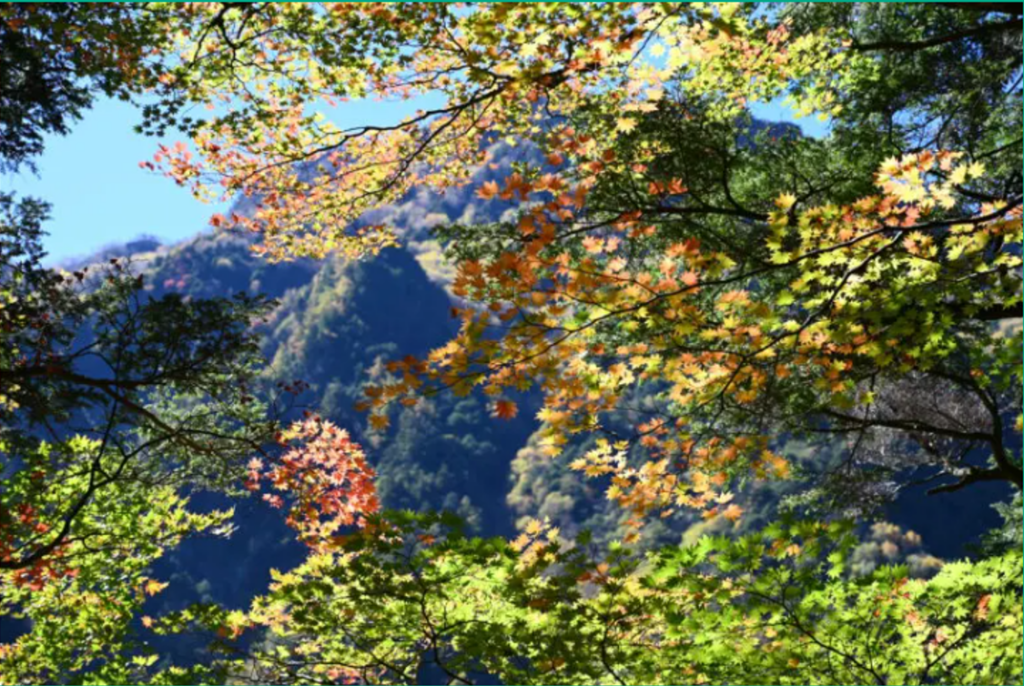 Mid-October autumn foliage in the Japanese Alps mountain landscape, showing the vibrant colors and comfortable weather conditions typical of late October. Source: Kamikochi Official Website 🔗
Late October along the Fujikawaguchiko to Takayama scenic route presents ideal autumn weather with moderate temperatures, significant elevation-based variations, and comfortable conditions for car travel with outdoor stops. The route traverses elevations from ~900m (Fujikawaguchiko) through mountain passes at 1,000-1,500m (Kiso Valley/Alpine routes) to ~570m (Takayama).
Elevation-Based Temperature Variations:
Fujikawaguchiko (~900m): 10-19°C (50-66°F) average daily range, with daytime highs around 17.7°C (63.9°F) and nighttime lows around 9.7°C (49.5°F). 🔗
Mountain Passes & Kiso Valley (1,000-1,500m): 5-15°C (41-59°F) in higher elevations, with broader range of 1-25°C showing substantial day-night variation. At 1,500m (Kamikochi elevation), temperatures run 5-10°C lower than valley cities, with daytime temperatures often not exceeding 10°C by late October. 🔗 🔗
Takayama (~570m): 6-16°C (43-61°F) typical range, with daytime highs around 15.2°C (59.4°F) and nighttime lows around 5.8°C (42.4°F). Morning temperatures around 8°C (47°F) typical. 🔗
Temperature Lapse Rate: Standard mountain lapse rate of 0.6°C per 100m elevation gain means Fujikawaguchiko (900m) to Torii Pass (1,197m) experiences ~2°C temperature drop, while valley roads to 2,000m peaks show ~6.6°C temperature difference. 🔗
Diurnal Temperature Patterns:
- Morning (6:00-9:00 AM): 5-12°C across the route, cool to chilly with frost possible at higher elevations
- Midday (11:00 AM-3:00 PM): 12-19°C, comfortable and pleasant for outdoor activities
- Evening (5:00-8:00 PM): 6-14°C, rapidly cooling with sweater or light jacket needed
- Night (After 8:00 PM): 1-10°C, cold conditions with temperatures below freezing possible at highest elevations
Day-night temperature differential of 10-15°F (6-8°C) typical, with larger swings in mountain areas. 🔗
Recommended Clothing Layers for Car Travelers:
- Base Layer: Long-sleeved shirt, long pants, closed-toe shoes (always wear)
- Mid Layer: Light sweater, cardigan, or hoodie (easy to add/remove for temperature regulation)
- Outer Layer: Light jacket, thin overcoat, or windbreaker (keep accessible in car for mountain passes and evening stops)
- Accessories: Light gloves for morning starts, beanie/light hat for early photography, sunglasses for midday, compact umbrella for rain
Layering Strategy: Morning departure (6-8 AM) requires all three layers (6-8°C in Takayama); midday driving (11 AM-3 PM) comfortable with base + optional mid layer (15-19°C); mountain pass stops require adding mid + outer layer immediately (5-10°C cooler than valleys); evening arrival needs base + mid + outer layer (temperatures dropping to 5-10°C). 🔗 🔗
Potential Early Mountain Snow at Highest Elevations
 Tateyama Mountains photographed on October 3rd, showing typical early autumn conditions in the Northern Japan Alps. Source: Wikimedia Commons
Research indicates minimal snow risk for routes using established road corridors on October 24, 2025. Historical first snow patterns show clear elevation thresholds: high peaks (2,500m+) typically receive first snow in late September to early October, mid-elevation passes (1,800-2,000m) see snow beginning in October, while lower elevations (600-1,200m, Kiso Valley) remain snow-free in October.
Route-Specific Snow Risk Assessment:
Route 158 (Main Alpine Corridor): Abo Tunnel section (1,800m elevation) maintains year-round access and is never closed due to snow even in dead winter according to 15+ years of traveler experience. Well-maintained paved 2-lane road with extensive maintenance crews. Late November may see "flurries of snow but not tons of it." October 24 assessment: Road passable with standard tires; snow accumulation not expected. Studless tires legally required early November to mid-April, but October 24 falls before mandatory winter tire period. 🔗 🔗
Kiso Valley (Nakasendo) Route: Elevation profile from Magome (600m) to Torii Pass (1,197m) to valley towns (420-600m) well below critical snow elevation thresholds for October. October described as having "pleasant climates with limited rain and comfortable temperatures." Snow "generally not expected in October" - valley can go entire winters with only 1-2 days snowfall. October 24 assessment: No snow concerns; autumn foliage conditions expected. 🔗
High Mountain Detours (Above 2,000m): Kamikochi (1,500m base) closes November 15 annually due to heavy snow. October 24 falls within open season but early November forecast shows "colder than average temperatures, which may mean early snowfall." Frosty mornings and snow-capped peaks signal winter approach in late October. October 24 assessment: Accessible but prepare for cold; possible light snow on highest peaks visible from valley. Norikura Skyline (2,700m highest road) closes October 31 annually; first snow on peak recorded October 12 in recent years. October 24 assessment: Accessible but likely snow-dusted peaks; upper sections may be cold and windy. 🔗 🔗 🔗
Freezing Level Analysis: Early October mean freezing level around 3,267m - well above most road elevations. Temperature gradient of 0.5°C per 100m elevation means roads below 2,000m highly unlikely to experience freezing precipitation. October precipitation probability: 44% chance of rain on average day. Below 1,500m: rain only; 1,500-2,000m: primarily rain, possibly sleet in cold fronts; above 2,000m: mixed rain/snow. 🔗
2025 La Niña Forecast Context: 60% likelihood of La Niña development by fall 2024 could deliver colder and snowier winter. First dusting of snow appeared on Mount Myoko and Shiga Kogen in October 2024. La Niña conditions may increase probability of early season cold snaps. Monitor weather forecasts closer to travel date for any unusual early winter patterns. 🔗 🔗
Road Monitoring Systems:
- Japan Road Traffic Information Center (JARTIC): Updates every 5 minutes 🔗
- Route 158 Live Cameras at Abo Tunnel Hirayu 🔗
- Japan Meteorological Agency (JMA): Official snow analysis and mountain weather forecasts 🔗
Overall Snow Risk for Driving Routes on October 24:
- Route 158 via Abo Tunnel: <5% probability of snow affecting driving
- Kiso Valley (Nakasendo) route: <1% probability of snow affecting driving
- Main valley roads: Essentially zero snow risk
- Kamikochi access roads: <10% snow risk; may see light snow at higher viewpoints
- Norikura Skyline upper sections: 20-30% chance of snow-dusted roads (still passable)
Most likely conditions: Cool, crisp autumn weather (5-18°C at valley elevations), possible rain showers (44% daily precipitation probability), snow visible on distant peaks above 2,500m (enhances scenery), dry roads with excellent visibility, comfortable driving conditions on all main routes.
Vehicle Preparation: Standard all-season tires adequate for main routes; no chains or winter tires required for October 24 date. Ensure good tire tread and brake condition for mountain driving. Full fuel tank before entering mountain areas. Warm layered clothing for high elevation stops (0-10°C possible). Rain gear for potential precipitation. Emergency supplies (water, snacks, blankets) for mountain driving.
Shorter Daylight Hours - Sunset ~5:00 PM Timing Considerations
 Autumn foliage in the Japanese Alps showing the golden light conditions typical of late October. Source: Wikimedia Commons
For October 24, 2025, travelers will experience approximately 11 hours of daylight with sunset occurring around 5:00 PM. This significantly impacts route planning, photography opportunities, and safety considerations for mountain driving.
Precise Sunrise and Sunset Times:
- Fujikawaguchiko: Sunrise 5:59 AM, Sunset 4:59 PM (10 hours 59 minutes daylight)
- Nagano (Kiso Valley): Sunrise 6:02 AM, Sunset 4:59 PM (10 hours 56 minutes daylight)
- Takayama: Sunrise 6:05 AM, Sunset 5:03 PM (10 hours 58 minutes daylight)
The route experiences minimal variation in sunrise/sunset times (only 4 minutes difference in sunset between start and end points). 🔗 🔗 🔗
Twilight Duration and Evening Planning:
Civil twilight (when sun is 0-6 degrees below horizon) lasts approximately 20-22 minutes in late October at this latitude. Complete twilight progression: Civil twilight ~20 minutes (suitable for outdoor activities without artificial lighting), Nautical twilight ~19 minutes (horizon still visible), Astronomical twilight ~18 minutes (complete darkness for stargazing). Total twilight duration approximately 57 minutes from sunset to complete darkness. 🔗
Practical Evening Timeline for October 24:
- 4:59 PM: Sunset along most of the route
- 5:00-5:20 PM: Civil twilight - sufficient natural light for most activities
- 5:20-5:40 PM: Nautical twilight - headlights essential, landscape still visible
- 5:40-6:00 PM: Astronomical twilight - approaching complete darkness
- ~6:00 PM: Full darkness across the mountain route
The rapid transition from daylight to darkness means limited flexibility for evening activities. Travelers should plan to complete outdoor stops and arrive at destination before 5:00 PM. 🔗
Golden Hour and Photography Timing:
- Morning Golden Hour: 5:59-7:00 AM (first hour after sunrise) - calm water reflections, soft mountain light, autumn foliage photography
- Evening Golden Hour: 4:00-4:59 PM (hour before sunset) - warm lighting on autumn leaves, long dramatic shadows, mountain scenery
- Blue Hour: Evening 4:59-5:20 PM (approximately 10 minutes after sunset through civil twilight) - deep blue tint in sky, excellent for mountain silhouettes
Schedule major scenic stops between 3:30-4:45 PM to capture peak golden hour light while leaving adequate time for safe driving before darkness. 🔗 🔗
Impact on Route Planning:
With only 11 hours of usable daylight (5:59 AM - 4:59 PM), combined with 4-5 hour base drive time, travelers have approximately 6-7 hours for stops and exploration along the route.
Recommended Departure Times:
- Photography-Focused Drive: Optimal departure 5:30-6:00 AM from Fujikawaguchiko. Captures morning golden hour at early stops, maximizes daylight hours, allows 2-3 major stops plus several shorter stops, ensures arrival in Takayama before sunset. 🔗
- Leisurely Cultural Drive: Optimal departure 7:00-8:00 AM. Reasonable morning start, allows 8-9 hours for journey, includes time for 1-2 major stops and several short stops. Arrival in Takayama by 4:00-5:00 PM before darkness.
- Latest Recommended Departure: No later than 9:00 AM. Even with minimal stops, ensures safe arrival before complete darkness. Limited time for stops, may need to skip some attractions.
Safety Considerations for Mountain Driving:
Reduced Visibility During Twilight: Grey and black vehicles blend into asphalt as light fades. Many Japanese drivers delay turning on headlights until full darkness. Heavy tree coverage on mountain roads creates darker conditions requiring headlights well before actual sunset. Rural mountain roads have no supplementary lighting, creating complete darkness. Narrow roads without shoulders adjacent to cliffs. 🔗
Wildlife Activity During Twilight Hours: Deer, tanuki (raccoon dogs), and foxes most active at dawn and dusk. October-November: deer descend from mountains for mating season. Nearly 40% of wildlife-related accidents occur in late autumn. Nearly half of all wildlife accidents occur during early morning or dusk hours. High-risk locations include thick forest areas along roadsides and curved sections with limited visibility. 🔗
Recommended Safety Protocols:
- Turn on headlights by 4:30 PM (30 minutes before sunset) for increased visibility
- Reduce speed significantly during twilight hours (4:00-5:30 PM)
- Increase following distance to allow more reaction time
- Strongly Recommended: Arrive at Takayama destination before 4:30 PM (sunset minus 30 minutes)
- Latest Safe Arrival: 5:30 PM (end of civil twilight, still some natural light)
- Not Recommended: Arrival after 5:30 PM requires full mountain driving in darkness
Key Takeaways for Route Planning:
- Sunset occurs at 4:59-5:03 PM across the entire route on October 24, 2025
- Civil twilight ends by 5:30 PM, after which complete darkness sets in rapidly
- Total usable daylight: 11 hours (approximately 6:00 AM - 5:00 PM)
- Base drive time: 4-5 hours, leaving 6-7 hours for all stops and meals
- Golden hour for photography: 3:30-4:59 PM, requiring careful late-day planning
- Depart no later than 9:00 AM from Fujikawaguchiko to ensure safe arrival
- Plan arrival in Takayama by 4:30 PM to avoid twilight/dark driving
- Turn on headlights by 4:30 PM regardless of perceived visibility
- Complete all outdoor stops by 4:00 PM to allow buffer for safe driving
Realistic Expectations: With 4-5 hour drive time and 11 hours daylight, expect 3-4 total hours for stops. This allows 1-2 major stops (1-1.5 hours each) and 2-3 short stops (20-30 min each). Photography-focused itineraries require earlier departure and strategic stop selection. Safety and arrival before dark should take precedence over additional stops. 🔗
Morning Frost on Highest Roads - Driving Considerations
 Black ice on road surface - the transparent ice allows the dark pavement to show through, making it nearly invisible to drivers. Source: Wikimedia Commons
Morning frost and black ice conditions on Japanese mountain roads at 1,500-2,000m elevation in late October represent a significant driving safety concern requiring careful planning and preparation. For the October 24, 2025 route traversing elevations from ~900m (Fujikawaguchiko) through mountain passes at 1,000-1,500m (Kiso Valley/Alpine routes) to ~570m (Takayama), understanding frost formation patterns, road surface impacts, and safety protocols is essential for safe journey execution.
Frost Formation and Black Ice Hazard:
The primary hazard is "black ice" (romen tōketsu in Japanese) - a thin, transparent layer of ice that forms on road surfaces and is extremely difficult to detect because it allows the dark pavement beneath to show through. Unlike heavy snow which is obvious and prompts cautious driving, black ice appears as merely a wet road surface, leading drivers to unknowingly encounter slippery conditions at normal speeds. 🔗
Frost primarily forms from late night through early morning (dawn) through radiative cooling - the road surface loses heat and its temperature drops below freezing even when ambient air temperature is slightly positive (3-5°C). Wet patches from rain, fog, or mountain springs freeze under these conditions, creating the invisible hazard. Icy patches can persist for several hours after sunrise, with melting highly dependent on direct sun exposure. 🔗
Critical Insight for Late October Travel: Beautiful autumn colors are triggered by temperatures dropping to 5-8°C, while road surface freezing begins when temperatures drop to 0-5°C. This means the period of peak autumn color in high-altitude regions coincides exactly with the beginning of the road-freezing season, making scenic mountain routes simultaneously attractive and hazardous.
High-Risk Locations Requiring Extra Caution:
Bridges and Overpasses: Cold air circulates both above and below the road surface, causing these sections to freeze much faster than regular roads. Air circulation both above and below the elevated roadway causes pavement temperature on bridges to fall rapidly. 🔗
Tunnel Entrances and Exits: The abrupt change in temperature and airflow at these points creates ideal conditions for condensation and freezing. The road inside a tunnel may be fine while the entrance/exit is a sheet of ice.
Shaded Areas and North-Facing Sections: Areas receiving little to no direct sunlight - such as roads cut into the north side of a mountain or sections shaded by dense forests - will remain frozen much longer, often throughout the day. On many major highways, Japan utilizes "Shosetsu" snow-melting systems that spray warm groundwater onto roads to prevent freezing. However, on smaller mountain roads without these systems, shaded or north-facing areas can remain frozen throughout the day, especially if ambient temperature stays near or below freezing. 🔗
Visibility Impacts: Mountainous areas are prone to morning fog, which reduces visibility and keeps the road surface damp, contributing to ice formation. The combination of fog and frost creates a double visibility hazard. Low-angle sun in autumn mornings can create intense glare on wet or icy patches, making it even harder to spot hazards. This sun glare combined with the transparent nature of black ice creates a particularly dangerous situation.
Driving Safety Techniques:
The cardinal rule is to avoid any sudden or abrupt (急, kyū) maneuvers. Drive significantly slower than posted limits. Always proceed with caution and avoid abrupt driving maneuvers during lane changes, braking, and acceleration. Brake gently and much earlier than normal. Utilize engine braking where appropriate, but avoid abrupt downshifts. Make all steering inputs smooth and deliberate. Maintain at least double your normal following distance - the normal dry road following distance of three to five seconds should be increased to eight to ten seconds on potentially icy roads. 🔗
The primary warning sign for icy conditions is the "Slippery Road" sign - a yellow, diamond-shaped sign with a black pictogram of a skidding car, indicating the road surface may be slippery due to ice, snow, heavy rain, or other hazards.
Route-Specific Frost Risk Assessment for October 24:
Kiso Valley Nakasendo Route (Route 19, ~800-1,200m elevation): The Kiso Valley route is fairly far south in Nagano Prefecture and typically experiences milder conditions. The area can sometimes go entire winters with only one or two days of snowfall. For late October specifically, conditions should be relatively mild with minimal snow/ice concerns. Mountain trekking is possible until mid-October. November reference (one week later): Conditions should be relatively mild with minimal snow/ice concerns, though approaching winter season requires monitoring weather forecasts. 🔗
Route 158/Abo Tunnel Area (1,200-1,500m elevation): October 24 falls outside mandatory winter tire period (typically December 1 - March 31). Normal all-season tires are legally acceptable. However, frost formation on higher passes and shaded sections remains a concern even before the main winter season. 🔗
Alpine Route Areas (1,500-2,000m+ elevation): Higher elevation sections approaching or crossing the Japan Alps require more caution. In October, it starts to snow at Murodo (elevation 2,450m), and there is a noticeable temperature difference compared with surrounding plains. The weather gets chilly and warm jackets are advisable. 🔗
Road Maintenance Context: Japanese road authorities and highway management companies like NEXCO are proactive, officially beginning their "snow and ice countermeasure period" around mid-October in colder regions. This involves 24/7 monitoring of road and weather conditions and preparing for deployment of de-icing agents and snowplows. There is a strong public awareness campaign each autumn encouraging drivers to switch to winter tires early - often recommended about a month before the first expected snowfall. For high-altitude travel, this means by mid-to-late October.
Departure Timing Strategy for October 24:
Mid-morning departures (9-10 AM) offer safer driving conditions as frost has had time to melt from sun-exposed sections, though shaded and north-facing areas may still be hazardous. The trade-off is less time for the full journey and potentially missing optimal morning light for photography.
Early morning departures (6-7 AM) maximize available time and capture beautiful morning light conditions, including frost-glittered landscapes, but require extra caution and slower speeds due to maximum frost prevalence. If departing earlier for maximum time or photography, plan for significantly slower speeds and add 30-50% to estimated travel times to account for cautious driving on potentially frosted sections.
Recommended Strategy: A strategic mid-morning departure around 8-9 AM balances safety and opportunity - allows frost to begin melting on sun-exposed sections, still captures good morning light for photography, provides adequate time for the journey without rushing, reduces exposure to peak frost hours, and enables checking real-time road conditions via JARTIC before departure.
Real-Time Road Monitoring Systems:
JARTIC (Japan Road Traffic Information Center):
- Website: www.jartic.or.jp (primarily Japanese)
- Multilingual Service: http://b-event.jartic.or.jp/MultilingualInformationView/
- Update Frequency: Current road traffic information announced every 5 minutes, general updates every one minute
- Coverage: Road conditions, closures, snow conditions, and ice warnings 🔗 🔗
NEXCO Central Japan:
- Website: www.c-nexco.co.jp/en/jam/ (English traffic information)
- iHighway System: https://www.c-ihighway.jp/ (real-time traffic map)
- Coverage: Detailed, real-time traffic and closure information for expressways 🔗
Live Road Cameras: Many regional development bureaus and highway operators provide live camera feeds on their websites, invaluable for checking current weather and road surface conditions in mountainous areas.
Vehicle Preparation and Requirements:
Winter Tire Status for October 24: Normal all-season tires are legally acceptable for October 24 travel on Route 158, as the date falls before the mandatory winter tire period (typically early November to mid-April for Abo Tunnel specifically). However, equipping with winter tires (studless tires / スタッドレスタイヤ, sutaddoresu taiya) is essential for mountain driving in late October if planning multiple high-elevation detours. The common guideline is to switch to winter tires when the minimum temperature consistently falls below 7°C - a condition met at 1,500-2,000m elevations in late October. 🔗
Snow Chains as Essential Backup: Ensure the car comes equipped with a jack stand and snow chains, regardless of having studless winter tires. Always have tire chains ready in case of sudden weather changes such as heavy snowfall. For rental cars, winter tire options vary in price between companies but usually cost 2,000 yen or less. 🔗
Emergency Contact Information:
Road Emergency Services:
- Road Emergency Dial: #9910 (24 hours, toll-free) - Report hazards, breakdowns, road damage
- Police (Accidents): 110 - Legal requirement to report every traffic accident, no matter how minor. Say "Jiko desu" (There has been an accident)
- Fire/Ambulance (Injuries/Fire): 119 - For injuries say "Kyūkyū desu" (Medical emergency); for fire say "Kaji desu" (There's a fire)
- JAF (Japan Automobile Federation): #8139 (or 0570-00-8139) - Offers over-the-phone interpretation services
Photography Opportunities with Frost Conditions:
Despite the hazards, frost conditions create exceptional photography opportunities. In Hokkaido and mountainous regions on Honshu, on fine windless mornings when it's extremely cold, trees become enveloped in hoar frost. Shooting around sunrise makes the frost glitter in the backlight, creating a magical landscape. Frost-covered landscapes combined with autumn foliage can create spectacular photographic subjects, but requires stopping at safe locations with proper parking rather than attempting roadside stops on potentially icy surfaces. 🔗
Pre-Trip Planning Checklist:
- Check road status via JARTIC before departure on travel day
- Monitor weather forecasts for the route 3-7 days in advance
- Check live road cameras for current conditions if available
- Confirm rental car has winter tires (studless) equipped if planning high-elevation detours
- Verify snow chains are included and accessible
- Test hazard lights and ensure warning triangle is in vehicle
- Program emergency numbers into phone: 110 (police), 119 (fire/ambulance), #9910 (road emergency)
- Understand high-risk frost areas: bridges, tunnel entrances/exits, shaded sections, north-facing roads
- Pack warm layers, emergency supplies (water, snacks, blankets) for mountain driving
Seasonal Access Verification (October 24, 2025)
Kamikochi 2025 Closure Date - VERIFIED:
Official Season Dates:
- Season Opening: April 27, 2025 (official Kaizanshiki Opening Ceremony) 🔗
- Kama Tunnel Opens: April 17, 2025 (bus/taxi access begins) 🔗
- Season Closure: November 15, 2025 🔗
- Final Shuttle Buses: November 15, 2025 🔗
- Winter Closure: November 16, 2025 - April 16, 2026 (no access, all facilities closed) 🔗
October 24, 2025 Visit Status: ✅ FULLY OPERATIONAL - 22 days before closure, well within safe visiting window with full services available.
Early Closure Possibilities: While the official closure is November 15, some individual facilities may close earlier than this date depending on conditions. The main shuttle bus services and core facilities remain operational through November 15. October 24 provides a comfortable 22-day buffer before any closure concerns. 🔗
Shuttle Bus Access - No Reservations System:
From Hirayu/Akandana Parking (Recommended for route):
- Parking capacity: ~850 spaces at ¥600/day
- Shuttle frequency: Every 30-60 minutes depending on season
- Duration: 30-40 minutes to Kamikochi
- One-way fare: ¥1,500 (adult), ¥750 (child)
- Round-trip fare: ¥2,800 (adult), ¥1,400 (child) - valid 7 days
- No reservations possible - first-come, first-served, non-reserved seating
- Critical planning note: During peak October foliage season, parking lots can fill completely on busy weekends, with long bus queues possible (though extra buses added)
- Recommended arrival: Before 8:00 AM on weekdays, before 7:00 AM on weekends/holidays during October 🔗 🔗
Late Season Considerations (October 24, 2025):
- Reduced shuttle frequency in late October
- Facility operating hours changes (Visitor Center: 8:00 AM - 5:00 PM)
- Temperature conditions: Daytime ~20°C (68°F), morning/evening ~12°C (54°F)
- Trail accessibility and maintenance status: Well-maintained but potentially slippery from fallen leaves
- Crowd levels: October weekends/holidays VERY CROWDED during peak autumn foliage season
- Autumn Foliage Status: Larch trees entering golden peak period (late October focus); peak timing for October 24 🔗 🔗
Mountain Pass Conditions and Early Snow Impact:
First Snow Timing in the Northern Alps: The Northern Alps region spanning Gifu and Nagano prefectures experiences first snow typically in early to mid-October, with significant elevation-dependent variation. Historical first snow data shows Tateyama Range (Northern Alps) average first snow around October 8, with high year-to-year variability. Shinhotaka area documents snow season from mid-October to early July at elevations above 2,150m. 🔗 🔗
October 24 Probability Assessment:
- High elevations (2,000m+): High probability of snow presence, especially at Kamikochi (1,500m) and Shinhotaka Ropeway (2,150m) areas
- Mid-elevations (1,200-1,500m): Possible but not guaranteed; early snow typically melts within days at these altitudes
- Route 158/Abo Tunnel (1,400m): Low probability of sustained snow accumulation; road designed for year-round operation
Abo Pass/Tunnel - Route 158 Conditions:
Old Mountain Road (Scenic Route):
- Winter Closure Period: Early November to late May annually (2021 reference: Closed November 4 to late May 2022)
- October 24 Status: Fully open and accessible; closure typically begins in early November
- Characteristics: Winding mountain road over the pass, offering scenic views but more exposed to weather 🔗
Abo Tunnel - Year-Round Route:
- Status: Open year-round (通年通行可能)
- Details: 4.5km tunnel, toll road (750 yen for vehicles under 11 seats)
- Winter Operations: Main route during winter closure of old pass road; studless tires legally required early November to mid-April
- October Conditions: No special requirements; normal tires acceptable; "not as tough in early November as one might expect" 🔗 🔗
Shinhotaka Ropeway Operations - Weather-Dependent Status:
Official Suspension Policy:
- Service may be suspended due to adverse weather conditions or scheduled maintenance 🔗
- Operations suspended in strong winds regardless of other weather conditions 🔗
- Specific wind speed thresholds NOT publicly disclosed (operational safety information maintained internally)
October 24 Operational Outlook:
- HIGH PROBABILITY OF OPERATION: October shows generally stable weather with light winds (4-12 mph typical)
- Weather-related closures much less frequent than winter months (December-March)
- Morning visits (8:30-9:30 AM) offer highest success probability for clear conditions
- Visibility more critical concern than wind - clouds/fog can obscure views even when ropeway operates
- Snow Season: Mid-October to early July at upper station elevation (2,150m) - possible snow at summit enhances scenic experience 🔗 🔗
Real-Time Status Monitoring:
- Official live camera: Shows current conditions at upper station (2,156m) on shinhotaka-ropeway.jp
- Current operational status: Homepage displays real-time weather, temperature, and ropeway status (Open/Closed)
- Phone contact: +81-578-89-2252 for same-day status inquiries (after 8:30 AM) 🔗
Decision Timeline for 60+ Minute Detour:
- October 23 evening: Preliminary go/no-go based on weather forecasts and live camera
- October 24, 6:00-7:30 AM: Final decision before departure using live camera and updated forecasts
- Hirayu Onsen checkpoint: Last pivot point (~40 min before ropeway) for final assessment
Backup Plan if Weather-Suspended:
- Hirayu Onsen (20 min toward Takayama): Traditional hot springs, Hirayu Great Falls, less weather-dependent 🔗
- Kamikochi (30 min bus from Hirayu): Alternative alpine experience if valley weather permits
- Skip detour: Return to main route if conditions unfavorable
- Refund policy: Ropeway tickets refundable at ticket window if closed 🔗
Overall Snow Risk for October 24 Driving Routes:
- Route 158 via Abo Tunnel: <5% probability of snow affecting driving
- Kiso Valley (Nakasendo) route: <1% probability of snow affecting driving
- Main valley roads: Essentially zero snow risk
- Kamikochi access roads: <10% snow risk; may see light snow at higher viewpoints
- Norikura Skyline upper sections: 20-30% chance of snow-dusted roads (still passable, closes October 31)
Most Likely Conditions: Cool, crisp autumn weather (5-18°C at valley elevations), possible rain showers (44% daily precipitation probability), snow visible on distant peaks above 2,500m (enhances scenery), dry roads with excellent visibility, comfortable driving conditions on all main routes.
Post Town Facilities - Hours and Accessibility (October 24, 2025):
Critical Planning Factors:
- Daylight constraint: Sunset ~5:00 PM in late October; most shops/restaurants close by 17:00 (5pm)
- Thursday-specific: October 24 = 4th Thursday → Tsumago Wakihonjin CLOSED, Tsumago Honjin CLOSED (weekday policy)
- Museum hours: All close at 17:00 (last admission often 16:45)
- Autumn season: Peak foliage period with moderate domestic tourism crowds on weekdays
Narai-juku Facilities (Best Infrastructure):
- Tourist Information: 9:00-17:00 daily, English support, 0264-34-3160 🔗
- Museums: Kamitoiya 9-17 (✓ Open Oct 24), Nakamura Residence 10-17 (✓ Open Oct 24)
- Parking: Free parking at south end (most convenient), additional paid lots near station
- Accessibility: Flat 1km walking path, excellent for all mobility levels
- Status: BEST FACILITY ACCESS - All services available on Thursdays 🔗
Magome-juku Facilities:
- Tourist Information: 8:30-17:00 (April-Nov), English staff, info@kiso-magome.com 🔗
- Museums: Toson Memorial 9-17 (✓ Open Oct 24), Other museums 8-17
- Luggage Service: Available (drop 8:30-11:30am, pickup after 1pm, ¥500) - service available before Nov 30 cutoff
- Parking: Free/paid seasonal options, 20-min walk from Misaka parking
- Dining: Restaurants/shops close by 5pm 🔗
Tsumago-juku Facilities (Limited Oct 24):
- Tourist Information: Open (hours unclear), English staff, 0264-57-3123, tsumago@coral.ocn.ne.jp
- Museums: ✗ ALL CLOSED THURSDAY (Wakihonjin: 4th Thursday closure; Honjin: weekday closure)
- Parking: ¥500, 15-minute walk with stairs from parking to village
- Car Access: ✗ Vehicles prohibited on main street during daytime
- Dining: Limited restaurants, close by 5pm, some follow 2nd/4th Thursday closure pattern
- Focus: Atmospheric street experience and photography (museums unavailable) 🔗
Kiso-Fukushima Facilities:
- Tourist Information: Directly across from railway station
- Museums: Checkpoint 8-17:30 (✓ Open Oct 24, shorter Nov hours may apply), Kozenji Temple 8:30-16:30
- Free Foot Bath: Overlooks river
- Restaurants: Upscale soba/sake tasting, limited lunch hours then reopen for dinner
- Parking: Free at accommodations 🔗
Optimal Visit Sequence for October 24 (Thursday):
- Morning Start (8:30-9am): Narai-juku - best infrastructure, all services open
- Midday (11am-2pm): Magome-juku - lunch before 5pm closures, museums accessible
- Afternoon (2:30-4pm): Tsumago-juku - atmospheric visit, accept museum closures, paper lantern lighting 4-5pm
- Brief stop or skip: Kiso-Fukushima (if time allows, morning before Narai)
Thursday-Specific Limitations:
- ✗ Tsumago museums unavailable (focus on street photography and shops)
- ✓ Narai fully accessible (prioritize for cultural/museum experience)
- ✓ Magome tourist center + Toson Memorial open until 17:00
Emergency Contacts:
- Narai: 0264-34-3160 / info-naraijuku@tokimeguri.jp
- Tsumago: 0264-57-3123 / tsumago@coral.ocn.ne.jp
- Magome: info@kiso-magome.com
Real-Time Road Information Systems:
JARTIC (Japan Road Traffic Information Center):
- Website: https://www.jartic.or.jp/ (primarily Japanese)
- Update Frequency: Every 5 minutes
- Coverage: All expressways and general national highways including Route 158 🔗
NEXCO Central Japan:
- Website: https://www.c-nexco.co.jp/en/jam/ (English traffic information)
- iHighway System: https://www.c-ihighway.jp/ (real-time traffic map)
Abo Tunnel Live Cameras:
- Hirayu Side: https://www.cbr.mlit.go.jp/takayama/cctv/cctv_awa.html
- Update Interval: 15 minutes
- Coverage: Tunnel entrances, toll gates, Route 158, Route 471 intersections 🔗
Weather Forecast Resources:
- Japan Meteorological Agency (JMA): https://www.jma.go.jp/jma/en/Activities/forecast.html
- Mountain Weather Forecasts: https://en.yamakei-online.com/weather (50 major mountains including Northern Alps)
Backup Route Options:
Primary Backup: Tokai-Hokuriku Expressway
- Route: Fujikawaguchiko → Kofu → Nagoya area → Tokai-Hokuriku Expressway → Takayama
- Distance: Significantly longer (~4.5 hours vs. 2.5-3 hours direct)
- Characteristics: "Extremely rarely closed" and "well maintained during winter"
- Elevation: Lower elevation coastal/inland route avoiding highest mountain passes
- When to Consider: Only if extreme weather advisories or unexpected Route 158 closures 🔗
Secondary Option: Route 158 Abo Tunnel (Minimal Stops)
- Strategy: Skip high-elevation detours, use Abo Tunnel, proceed directly to Takayama
- Elevation: Avoids peaks above 1,500m
- When to Consider: Light snow or poor weather forecast for high elevations but clear tunnel route
Decision Timeline for Route Selection:
One Week Before (October 17): Monitor long-range weather forecasts for Northern Alps region, check JMA and mountain weather forecasts for cold front patterns, review live camera feeds for early snow at high elevations.
3 Days Before (October 21): Confirm current road conditions via JARTIC and NEXCO, check Kamikochi access status and Shinhotaka Ropeway conditions, finalize detour priorities based on weather forecast.
Day Before (October 23): Check Abo Tunnel live cameras for current conditions, verify rental car equipment (chains included), review emergency contact information, monitor weather forecast for October 24.
Morning of October 24: Final check of live cameras and road conditions, assess real-time weather, confirm route choice: Old Abo Pass (scenic) vs. Abo Tunnel (efficient) vs. Tokai-Hokuriku Expressway (alternative).
Practical Route Research Topics
Navigation & Route Planning: Route 19 to Takayama Turn-by-Turn Options
Route 19 Context: National Route 19 parallels the historic Nakasendo through the Kiso Valley, connecting with the Chuo Expressway at Nakatsugawa Interchange (south) and Shiojiri Interchange (north). Multiple route options exist from Route 19 to Takayama, ranging from scenic mountain roads to efficient expressway routes. 🔗
Distance & Time Overview: 43-57 miles (69-92 km) depending on starting point and route chosen; travel times 1 hour 14 minutes to 2+ hours. 🔗
Option 1: Via Nakatsugawa IC → Route 257 → Gero → Route 41 (Most Direct Highway Route)
Navigation Summary:
- Exit Route 19 at Nakatsugawa → Access Chuo Expressway at Nakatsugawa Interchange View on Maps
- Take Route 257 north from Nakatsugawa IC to Gero (famous hot spring town) View on Maps
- Continue north on Route 41 from Gero to Takayama
- Total: ~48 miles (77 km), ~2 hours 🔗
Key Junction Points:
- Nakatsugawa Interchange (中津川IC): Exit from Chuo Expressway, connects to Route 19
- Note: Sonohara IC to Nakatsugawa IC tolls are 1.6x normal rate due to Enasan Tunnel 🔗
- Gero Junction (下呂): Route 257 meets Route 41, major navigation landmark
Characteristics:
- Most efficient option using national highways
- Well-maintained roads with clear signage
- Passes through Gero Onsen (potential stop)
- Bilingual signage (Japanese/English) on major routes 🔗
Option 2: Via Route 361 Scenic Mountain Route (Kiso Fukushima/Narai to Takayama)
Navigation Summary:
- From Narai-juku or Kiso Fukushima area on Route 19
- Head south, then take Route 361 west through Japanese Alps
- Route 361 connects directly to Takayama area
- Total: ~57 miles (92 km) from Narai, ~1 hour 20 minutes 🔗
Route Details:
- Route 361: National highway connecting Takayama (Gifu) and Ina (Nagano), 131.7 km (81.8 mi) total 🔗
- Passes close to Kiso Valley through Japanese Alps terrain
- Features scenic mountain views and autumn foliage (peak late October) 🔗
Navigation Considerations:
- Longer, more scenic alternative to highways
- Mountain roads with winding sections
- May have limited English signage in rural areas 🔗
- GPS reliability good but verify routes 🔗
Option 3: Via Chubu-Jukan Expressway (For Expressway Priority)
Navigation Summary:
- Access Tokai-Hokuriku Expressway system
- Connect via Hida-Kiyomi Interchange View on Maps to Chubu-Jukan Expressway (E67)
- Exit at Takayama Interchange View on Maps
- Designated Highway Route E67 🔗
Key Interchanges:
- Hida-Kiyomi IC (飛騨清見IC): Junction connecting Tokai-Hokuriku and Chubu-Jukan Expressways
- Matsunoki Pass (1,086m elevation) between Shokawa IC and Hida-Kiyomi IC is highest point in Japan's national expressway network 🔗
- Takayama IC (高山IC): Direct expressway exit for Takayama City 🔗

Characteristics:
- Fastest expressway option from northern Kiso Valley
- Toll expressway with modern facilities
- Well-signed with expressway-standard green signs and English text
- Note: Chubu-Jukan Expressway incomplete in some sections 🔗
GPS and Navigation Technology
Rental Car GPS:
- Most rentals equipped with English satellite navigation 🔗
- Mapcode search recommended for rural destinations 🔗
- Some menu items may remain in Japanese even with English GPS
- Navigation systems may show outdated routes - verify with current conditions 🔗
Mobile Navigation:
- Google Maps works well for route planning
- Cell coverage generally good on main routes
- GPS reliability may decrease in deep mountain valleys
- Recommended: Download offline maps as backup
Road Signage and Language
Signage Standards:
- National highways: Dark blue backgrounds with bilingual text (Japanese/English) 🔗
- Expressways: Dark green backgrounds with white text
- Rural areas: May have Japanese-only signage 🔗
- Route numbers clearly marked: 19, 41, 257, 361
Key Confirmation Landmarks:
- Nakatsugawa City signage (中津川市)
- Gero Onsen signage (下呂温泉)
- Takayama City signage (高山市)
Recommended Routes by Preference
For Scenic Experience (Route 361):
- Best for autumn foliage viewing and photography
- Allow extra time for photo stops
- Consider morning departure for best lighting
For Efficiency (Nakatsugawa IC → Route 257 → Route 41):
- Most predictable travel time
- Better for schedule-conscious travelers
- Stop potential in Gero for onsen break
- Clear signage and easy navigation
For Expressway Travel (Chubu-Jukan):
- Fastest from northern Kiso Valley
- Weather-independent (minimal exposure)
- Higher tolls but most efficient
- Modern facilities and services at SA/PA
Practical Driving Considerations (October)
Road Conditions:
- All routes generally excellent condition
- No snow concerns in late October
- Rain possible - wet road caution advised
- Mountain roads: gentle slopes, well-engineered curves 🔗
Vehicle Recommendations:
- Compact car (kei car) recommended for mountain roads - 30cm narrower than standard 🔗
- Standard vehicles fine for highway routes
- No 4WD required in October
Fuel and Services:
- Fill up in Nakatsugawa or Kiso Fukushima before mountain sections
- Service areas available on expressways
- Limited services on Route 361 mountain section
- Gero has full services on Route 257/41 corridor
Connecting to Kiso Valley Stops
From Post Towns to Takayama:
- Narai-juku → Takayama via Route 361: Most scenic option
- Kiso Fukushima → Takayama via Route 361: Balanced scenic/efficient
- Magome/Tsumago area → Nakatsugawa IC → Takayama: Most efficient from southern Kiso Valley
Timing Considerations:
- Allow 1.5-2 hours minimum for any route
- Add 30-60 minutes for scenic stops on Route 361
- Peak autumn foliage may increase traffic late October
- Gero Onsen stop adds 30-60 minutes
Route Flow Recommendations
Suggested Stop Combinations
Post Town Focus (4-5 hours):
- Magome (1.5 hours) → Tsumago (1.5 hours) → Narai (1.5 hours)
- Focus on architecture, local crafts, traditional food
- Skip intermediate stops for concentrated cultural experience
Cultural Immersion (6-7 hours):
- Narai (1.5 hours) → Torii Pass Trail partial hike (1.5 hours) → Kiso Fukushima lunch (1 hour) → Michi-no-Eki Fuketsu no Sato (45 min) → Hirayu Onsen foot bath (30 min)
- Balanced mix of walking, driving, cultural sites, and relaxation
Scenic & Nature (7-8 hours):
- Route 19 scenic driving → Brief post town stop (1 hour) → Michi-no-Eki Fuketsu no Sato with wind cave tour (1.5 hours) → Kamikochi major detour (4+ hours) → Hirayu Onsen (45 min)
- Emphasizes natural scenery and alpine experience
Alternative Route Strategies
Time-Limited Strategy: Select 1-2 post towns maximum, skip Kamikochi detour, use roadside stations for quick cultural exposure and rest breaks. Allows arrival in Takayama with time to explore destination.
Cultural Deep-Dive: Focus entirely on Nakasendo heritage with multiple post towns, Torii Pass hiking, traditional dining experiences. Accept slower pace and later Takayama arrival.
Alpine Emphasis: Prioritize Route 158 alpine corridor, Kamikochi detour, mountain passes over post towns. Different route character emphasizing natural scenery.
Route Attractions
On-Route Stops
Stops directly on the route with no detour
- Michi-no-Eki Fuketsu no Sato (Road Station Wind Cave Village)
- Route 19 Service Areas & Rest Stops
- Kiso Valley Scenic Corridor (Route 19)
- Magome-juku
- Hirayu Onsen Village
- Alps Kaido Hirayu
- Kiso Fukushima
- Narai-juku
- Tsumago-juku
Short Detour Stops
15-30 minutes off the main route
Major Detour Stops
30+ minutes detour, significant attractions
- Kaida Kogen Highland
- Post Town Dining Experiences - Kiso Valley Traditional Traveler Cuisine
- Northern Alps Bridge (Kita-Alps Ohashi)
- Fukuji Onsen
- Korobokkuru Hutte (Mountain Lodge Café)
- Hirayu Pass
- Hirayu Folk Museum
- Shinhotaka Ropeway
- Lake Shirakaba (白樺湖, Shirakabako)
- Narai-juku Detailed Exploration
- Craft Experience Centers (Sarubobo & Ichii Ittou)
- Shosenkyo Gorge (Mitake Shosenkyo)
- Azusa River Valley (Kamikochi)
- Hida Folk Craft Experiences
- Magome-Tsumago Walking Trail
- Hida Folk Village (Hida no Sato)
- Anbo Pass (安房峠 Abo-toge)
- Kamikochi Alpine Valley
Source: routes/fujikawaguchiko-to-takayama-scenic-route/fujikawaguchiko-to-takayama-nakasendo-alps-scenic.md
🗺️ Route Stops Map
Click on any pin to visit the stop's detail page