About
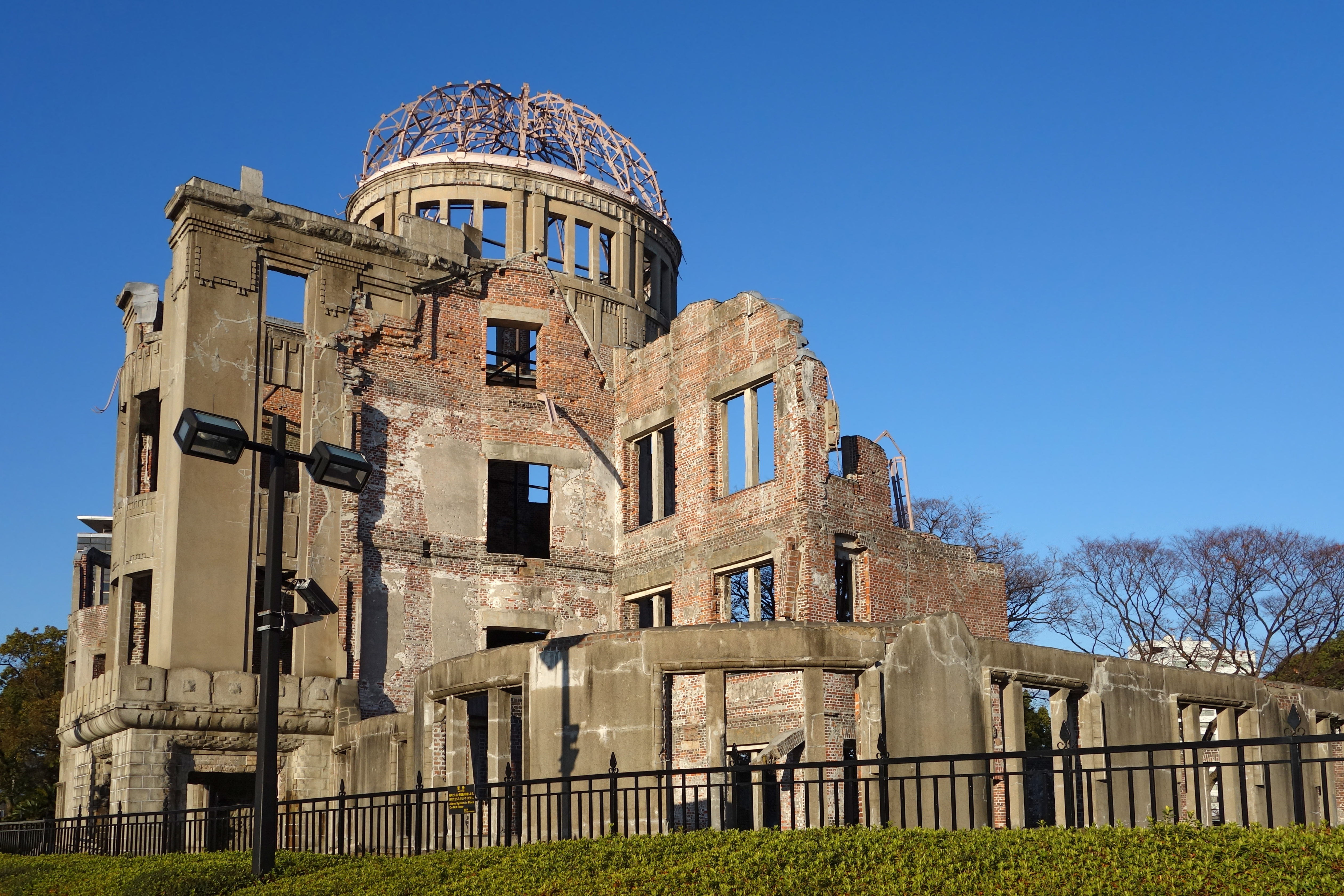 The Atomic Bomb Dome, the only structure left standing near the hypocenter, preserved exactly as it appeared after the August 6, 1945 bombing. Source: Wikimedia Commons
Hiroshima represents one of the most profound stops possible along any Japan journey - a city that encompasses both unimaginable tragedy and remarkable resilience. This combined visit offers two complementary perspectives on Hiroshima's identity: the Peace Memorial Park complex documenting the atomic bombing and its aftermath, and Hiroshima Castle representing the city's 400-year feudal heritage that was destroyed in 1945 and subsequently rebuilt.
The Peace Memorial Complex centers on the Atomic Bomb Dome (Genbaku Dome), originally the Hiroshima Prefectural Industrial Promotion Hall built in 1915 by Czech architect Jan Letzel. When the atomic bomb exploded on August 6, 1945, at 8:15 AM, the hypocenter was only 160 meters from this building. Because the blast traveled straight down through its center, the steel frame and some walls survived while everything else in the vicinity was obliterated. This skeletal ruin, preserved exactly as it appeared after the bombing, achieved UNESCO World Heritage status in 1996 and stands as the most powerful physical symbol of nuclear devastation. 🔗 🔗
The surrounding Peace Memorial Park was established between 1950-1964 on the ground where the bomb detonated. The park contains numerous monuments including the Children's Peace Monument (honoring child victims, particularly Sadako Sasaki), the Cenotaph for the A-bomb Victims (aligned with the Dome and Peace Flame), and the Peace Memorial Museum. The museum houses personal artifacts, survivor testimonies, and graphic documentation that together create what visitors describe as "one of the most emotional experiences of their lives." The focus is intensely personal - clothing, belongings, and individual stories that put human faces to the tragedy. 🔗 🔗
 Hiroshima Castle's reconstructed main keep rising above the moat, symbolizing the city's feudal heritage and post-war resilience. Source: Wikimedia Commons
Hiroshima Castle (also called Carp Castle) provides essential historical context for understanding what was lost. Originally built between 1589-1599 by powerful feudal lord Mōri Terumoto, this flatland castle controlled both land and sea routes via the Seto Inland Sea. The city of Hiroshima grew around it as a planned castle town with samurai residences, merchant quarters, and temples. The castle served as the region's administrative and economic center for centuries, even hosting the Imperial General Headquarters during the First Sino-Japanese War (1894-1895) and being designated a National Treasure in 1931. 🔗 🔗
The atomic bomb completely obliterated the castle on August 6, 1945. The reconstruction in 1958 (just 13 years after the war) using reinforced concrete was a powerful symbol of Hiroshima's determination to recover. While not historically authentic in materials, it faithfully replicated the five-story structure's external appearance. A more authentic reconstruction of the Ninomaru (second defensive circle) was completed in 1994 using traditional materials and building methods. Notably, the current main keep is scheduled to close in March 2026 for a new reconstruction project that will rebuild the entire tower from wood using original techniques - representing a deeper commitment to historical authenticity. 🔗 🔗
Today, the castle houses a museum focused on Hiroshima's history before 1945 - samurai culture, the ruling clans, and castle town life. The top floor offers panoramic views of the modern city that rose from the ashes. Within the castle grounds, a Eucalyptus tree and Willow tree that miraculously survived the atomic blast are marked as living links to that fateful day.
Cultural & Historical Significance
The "Two Histories" Experience:
Visiting both the Peace Memorial and castle together creates powerful dialogue:
- Castle represents: Pre-war Hiroshima's 400-year heritage, feudal culture, the civilization that existed before 1945
- Peace Memorial represents: The tragedy of 1945, the human cost of war, forward-looking mission for nuclear disarmament
- Together they show: What was lost, what was preserved through memory, and what was rebuilt
This dual perspective allows understanding Hiroshima as more than "the atomic bomb city" - it's a city with deep historical roots that was devastated but chose to rebuild while maintaining its commitment to peace. 🔗
The Battle of Dan-no-ura legacy also connects to Hiroshima's Peace Memorial through the broader theme of tragedy leading to transformation—both the 1185 battle that ended an era and established samurai rule, and the 1945 bombing that ended a war and established peace advocacy as the city's core identity.
Visiting Information
Access from Chugoku Expressway:
- Exit at Hiroshima IC
- Take Route 54 south toward Hiroshima Castle or Hiroshima Bus Center
- Head toward Heiwa-Odori (Peace Boulevard) and Peace Memorial Park
- Driving time: Approximately 23 minutes from Hiroshima IC to Peace Memorial Park area 🔗
- Total detour from expressway: 30-45 minutes one-way depending on traffic
Route Context: Mid-journey stop on long expressway route (Kinosaki to Itoshima, 568 km total). This major detour provides essential cultural depth between scenic coastal driving and relaxed seaside destination. The 4-5 hour visit fits well with overnight accommodation strategy or extended lunch/early dinner break.
Navigation between sites: Peace Memorial Park and Hiroshima Castle are 15-20 minutes walking distance apart. Most efficient strategy: Park once in central location and walk between both sites.
Parking Information:
- IMPORTANT: Neither Peace Memorial Park nor museum have parking for public use (except disabled visitors). Must use nearby paid parking lots. 🔗
- Hiroshimashi Shiei Nakajimacho 2 Parking Lot: 300 yen per hour (150 yen per half hour) - closest to Peace Memorial Park 🔗
- Typical parking costs: 300-600 yen per hour throughout downtown area
- Strategy: Park near Peace Memorial Park first, then walk to castle to avoid moving the car
Peace Memorial Park & Museum:
- Hours (October): Park open 24/7; Museum 7:30 AM - 7:00 PM (last admission 6:30 PM) 🔗
- Extended hours require reservation: 5:30-6:30 PM slots (book online via official website)
- Admission: 200 yen adults, 100 yen high school students, FREE for junior high and younger 🔗
- Closures: December 30-31, three days mid-February (dates vary annually)
- Atomic Bomb Dome: FREE to view from outside; cannot enter structure 🔗
Hiroshima Castle:
- Hours (October): 9:00 AM - 4:30 PM (admission until 30 minutes before closing) 🔗
- Admission: Main keep 370 yen adults, 180 yen seniors 65+/high school, FREE junior high and younger 🔗
- Closures: December 29-January 2
- CRITICAL: Main keep closes March 22, 2026 for reconstruction - October 30, 2025 visit arrives well before closure 🔗
Seasonal Considerations (October 30, 2025):
- Weather: Comfortable daytime highs around 22°C (72°F), cooler nights around 13°C (55°F), mild climate excellent for outdoor exploration 🔗
- Fall Foliage: Late October marks beginning of autumn colors; castle grounds particularly scenic with early fall foliage
- Crowds: Weekday visit on October 30 (Thursday) advantageous for avoiding weekend crowds. Early morning or late afternoon much less crowded. 🔗
The Experience
Peace Memorial Park Complex:
-
Atomic Bomb Dome - Begin here with the iconic skeletal structure. Walk around the building from multiple angles along the Motoyasu River. Cannot enter, but exterior viewing is deeply impactful.
-
Peace Memorial Museum - The emotional heart of the visit. Two buildings with personal artifacts: clothing, watches stopped at 8:15 AM, children's belongings, survivor testimonies, graphic documentation of immediate aftermath and long-term effects. Allow 2-3 hours minimum; many visitors find it overwhelming and need breaks. 🔗 🔗
-
Children's Peace Monument - Moving tribute topped by statue of Sadako Sasaki, the young girl who folded paper cranes while dying of leukemia caused by radiation. Thousands of colorful paper cranes left by visitors.
-
Cenotaph for the A-bomb Victims - The park's central memorial arch, aligned perfectly with the Peace Flame and Atomic Bomb Dome. Contains names of all known victims (updated annually).
-
Peace Flame - Has burned continuously since 1964, pledged to remain lit until all nuclear weapons are eliminated from the world.
Hiroshima Castle:
-
Main Keep Museum - Five floors of exhibits ascending to observation deck with samurai armor, castle history, and 360-degree panoramic views of modern Hiroshima from top floor 🔗
-
Ninomaru (Second Circle) - Authentically reconstructed using traditional materials (completed 1994), providing better sense of original defensive architecture than concrete keep. FREE to explore. 🔗
-
Survivor Trees - Marked Eucalyptus and Willow trees that survived the atomic blast. Poignant connection between feudal grounds and 1945 tragedy.
Practical Visiting Tips
For Driving Visitors:
- Route Optimization: Exit Chugoku Expressway at Hiroshima IC, visit both sites during single stop (4-5 hours total), re-enter expressway heading toward Kyushu via Kanmon Bridge. Total detour adds 1-1.5 hours to driving time but provides essential cultural experience.
Timing Options:
- Option A (Early): Arrive 7:30 AM, reserved museum entry, explore park, walk to castle by 10:30 AM, depart by noon
- Option B (Standard): Arrive 9:00 AM, castle first (fresh, less intense), lunch, Peace Memorial afternoon, depart 3-4 PM
- Option C (Late): Arrive 1:00 PM, Peace Memorial first (2-3 hours), walk to castle, visit until 4:30 PM closing, depart early evening
Cultural Etiquette:
- At Peace Memorial: Maintain respectful, quiet demeanor - this is a place of mourning. Speak softly, dress modestly, avoid casual selfies at solemn memorials. Bowing at Cenotaph is customary but not required for international visitors. 🔗
- At Museum: Content is graphic and emotionally intense - allow yourself breaks if needed. Consider audio guide for proper context.
- At Castle: Remove shoes before entering main keep; standard Japanese temple/castle customs apply.
Photography:
- October's mild weather and comfortable lighting excellent for photography
- Morning light on Atomic Bomb Dome particularly striking (side-lit along the river)
- Late afternoon light on castle beautiful, especially with early fall colors
- Golden hour ideal for outdoor monument photography in Peace Park 🔗
Emotional Preparation:
- Peace Memorial Museum is emotionally challenging - graphic images, personal stories of suffering, child victims
- Many visitors report crying or needing breaks
- Not recommended rushing through; allow time to process
- Museum provides context essential for understanding modern Japan, but requires emotional readiness 🔗
Route Integration:
- Single downtown stop combining two related but distinct historical perspectives
- Walking distance between sites reinforces connection
- Provides emotional and cultural depth between scenic coastal driving (Kinosaki area) and relaxed seaside destination (Itoshima)
- Acts as reflective pause in long expressway journey - opportunity to process and learn
- Complements other cultural sites along route with uniquely Japanese perspective on resilience
Location: Peace Memorial (Atomic Bomb Dome) | Hiroshima Castle
Source: attractions/kinosaki-to-fukuoka-main-route/hiroshima-peace-memorial-and-castle.md