
About
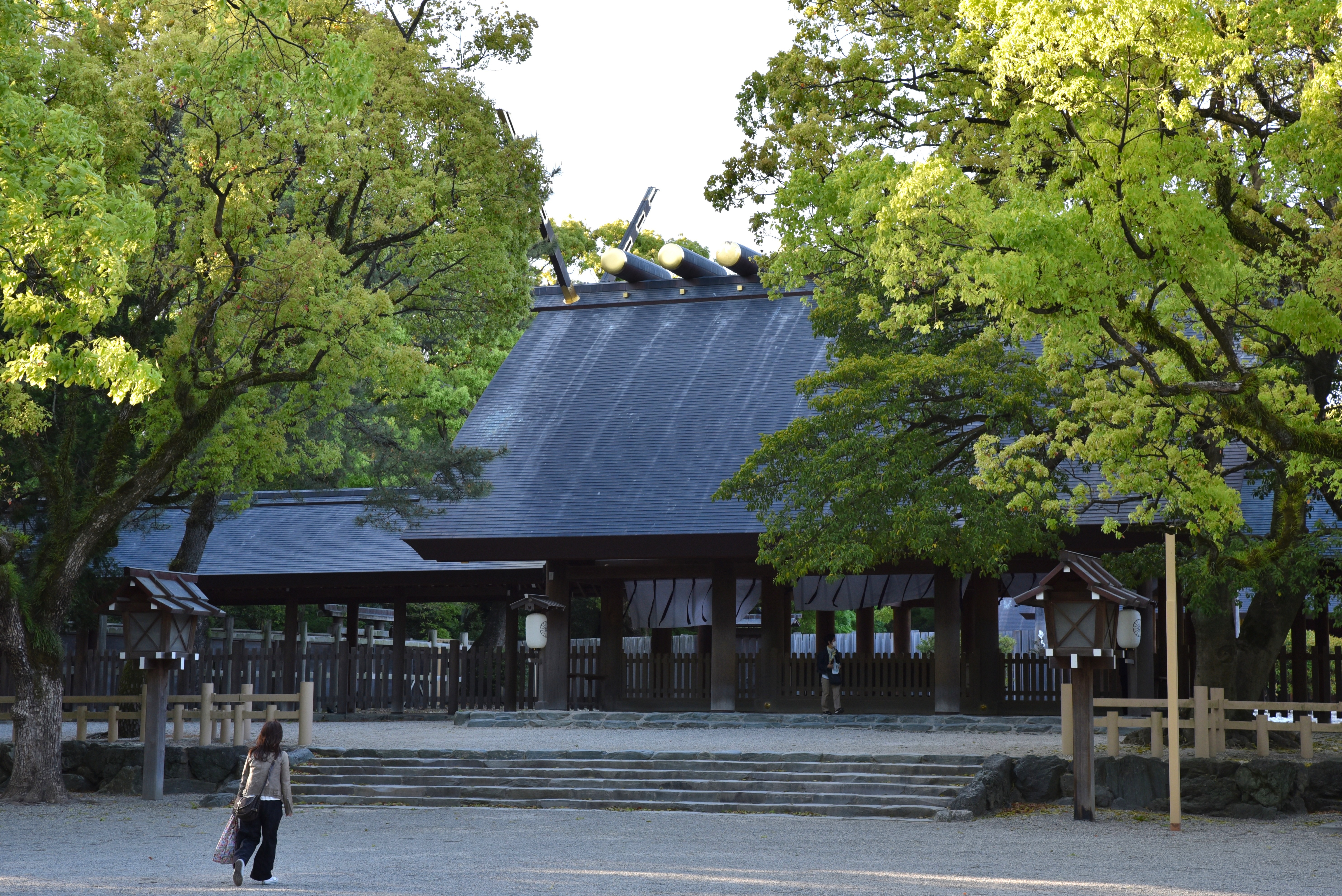 The haiden (prayer hall) of Atsuta Shrine, showcasing the traditional Shinmei-zukuri architectural style. Photo: Wikimedia Commons
Atsuta Shrine (熱田神宮, Atsuta-jingū) is one of Japan's most sacred Shinto shrines, second only to Ise Grand Shrine in religious importance. Located in Nagoya, Aichi Prefecture, the shrine houses the legendary Kusanagi-no-Tsurugi (Grass-Cutting Sword), one of the Three Imperial Regalia of Japan that symbolize the divine authority of the Emperor. 🔗
Atsuta Shrine traces its founding to 113 CE, when Miyazu-hime, wife of the legendary Prince Yamato Takeru, enshrined the sacred Kusanagi sword after her husband's death. The shrine has maintained continuous worship for nearly two millennia, drawing over 9 million visitors annually. The Kusanagi-no-Tsurugi originally bore the name "Ame-no-Murakumo-no-Tsurugi" (Heavenly Sword of Gathering Clouds) and was discovered by the storm god Susanoo-no-Mikoto in the body of the eight-headed serpent Yamata no Orochi. Prince Yamato Takeru later used its supernatural powers to escape enemies who trapped him in burning grasslands - cutting through the flames and controlling the wind, earning the sword its current name. 🔗 🔗
The Three Imperial Regalia - the sword (representing valor), the mirror Yata no Kagami (wisdom), and the jewel Yasakani no Magatama (benevolence) - collectively symbolize the Emperor's divine right to rule. While Ise Grand Shrine houses the sacred mirror and embodies the sun goddess Amaterasu herself, Atsuta's custodianship of the Kusanagi sword places it as the second-most important shrine in Shinto tradition. 🔗
Cultural & Religious Significance
The sword itself is never displayed publicly, residing in the innermost sanctuary. This invisible but spiritually overwhelming presence forms the heart of the shrine's sacred atmosphere and draws pilgrims seeking connection with Japan's mythological foundations. Historical figures including Oda Nobunaga prayed at Atsuta before his decisive victory at the Battle of Okehazama, cementing the shrine's connection to samurai culture and Japanese military heritage. 🔗
The shrine was reconstructed in 1955 following destruction during World War II aerial bombings, built in the traditional Shinmei-zukuri architectural style - the same ancient design used for Ise Grand Shrine. This style features simplicity, natural unfinished cypress wood, raised floors, and distinctive thatched roofs with forked finials (chigi) and horizontal billets (katsuogi). The naked wood pavilions are enhanced by beautiful golden ornaments following the 2009 renovation. 🔗
The 200,000-square-meter shrine complex is nestled within a dense, sacred forest called "Atsuta no Mori" - a thousand-year-old grove of cedar, camphor, zelkova, oak, beech, gingko, and camellia trees. The forest itself is considered a dwelling place for kami (deities) and spirits, left deliberately untouched in accordance with Shinto beliefs about nature's sacred character. A highlight is the 1,300-year-old giant camphor tree (ookusu) encircled by a sacred shimenawa rope, representing the timeless continuity of Shinto worship at this location. 🔗 🔗
The Bunkaden treasury museum houses over 6,000 artifacts, including 174 Important Cultural Properties and a dagger designated as a National Treasure. The collection features ancient swords, bronze mirrors, Bugaku masks for traditional court performances, historical documents, and donations from emperors and shoguns spanning Japanese history. The Kusanagi Museum, opened in late 2021, showcases over 450 swords, including 20 designated as national treasures and important cultural properties - a testament to the shrine's deep connection with Japan's sword-making tradition and samurai heritage. 🔗 🔗
Visiting Information
Access from Route: Atsuta Shrine is located in southern Nagoya, approximately 6 miles (8 minutes by car) from Nagoya Castle. Nagoya sits approximately 1.5-2 hours WEST of Osaka, making this a backtrack detour from the Osaka→Izu route. However, Atsuta is DIRECTLY on the Osaka→Nagoya→Izu corridor, making it far more viable than a side trip to Ise Jingu (which requires 60-90 minute detour south). 🔗 🔗
Hours:
- Shrine Grounds: April-September 5:00 AM - 6:00 PM, October-March earlier closing
- Bunkaden Treasury Museum: 9:00 AM - 4:30 PM (last entry 4:10 PM), closed December 25-31 and last Wednesday of each month plus following day 🔗
Admission: Shrine grounds free, Bunkaden Treasury Museum ¥300 adults / ¥150 children 🔗
Parking: Free parking available at East side entrance (near Meitetsu station) and West gate entrance. Can become crowded during peak times and festivals. Public transportation strongly recommended during New Year's (December 31-January 3). 🔗
Route Context: While Nagoya represents a geographic backtrack from Osaka (2 hours west vs. continuing east toward Izu), Atsuta Shrine's central Nagoya location makes it accessible for travelers choosing to overnight in Nagoya or make a morning stop. Distance/time from main Tomei/Shin-Tomei route: approximately 10-15 minutes from highway exits. Total detour impact: 3+ hours (travel to Nagoya + visit + return to route).
Current Status: Shrine open and operational. Latest renovation completed in 2009; Kusanagi Museum opened 2021. 🔗
Seasonal Considerations: November offers comfortable temperatures (15-20°C), clear autumn skies, and autumn foliage in shrine grounds. Shichi-Go-San festival season (throughout November, official date Nov 15) brings families in traditional kimonos - expect more crowds on weekends but beautiful cultural atmosphere. Weekday mornings provide most serene experience. 🔗
The Experience
The Sacred Approach: Your visit begins at massive torii gates decorated with shide (zigzag folded paper) and fresh cut branches. Bow upon entering and leaving to acknowledge the sacred nature of the forest and powerful spiritual presence within. The rectilinear path through the ancient forest creates immediate transition from secular to sacred, with thousand-year-old cedars towering overhead. The sound of gravel underfoot and dappled sunlight through trees help quiet the mind. 🔗
Purification Ritual (Temizu): Before approaching the main buildings, perform symbolic cleansing at the purification fountain:
- Take ladle with right hand and pour water over left hand
- Switch ladle to left hand and rinse right hand
- Cup water in left hand and rinse mouth (do not drink directly)
- Rinse left hand again
- Place ladle upright so remaining water rinses handle
- Return ladle 🔗
Main Sanctuary (Honden): The main hall, rebuilt in 1955 in Shinmei-zukuri style, houses the innermost sanctuary where the Kusanagi sword resides. While visitors cannot enter or see the sword, standing before the hall and offering prayers connects you to nearly two millennia of continuous worship. The simple wooden architecture and golden ornaments create a powerful aesthetic that embodies Shinto principles of purity and natural beauty. 🔗
The Giant Camphor Tree: The 1,300-year-old camphor tree (ookusu) stands as a living monument to the shrine's ancient continuity. Encircled by a thick shimenawa rope marking its sacred status, the tree represents the Shinto belief that natural elements harbor divine spirits. Many visitors pause here for contemplation and photography. 🔗
Bunkaden Treasury Museum: Over 6,000 cultural artifacts tell the story of the shrine's historical importance and its patronage by emperors, shoguns, and powerful clans. Rotating monthly displays ensure repeat visitors see different treasures. Highlights include ancient swords, ceremonial masks, imperial donations, and religious artwork spanning Japanese history. 🔗
Kusanagi Museum: Recently opened museum showcasing the shrine's extraordinary sword collection - over 450 blades including 20 national treasures. This collection reflects both the shrine's connection to the legendary Kusanagi sword and its centuries-long relationship with samurai culture. 🔗
November Experience: Shichi-Go-San Celebrations: During November visits, you may witness Shichi-Go-San ceremonies at the Kaguraden hall. Families bring children aged 3, 5, and 7 dressed in elaborate traditional kimonos to pray for health and prosperity. Children receive chitose-ame ("thousand-year candy") - long red and white candies symbolizing longevity. This creates a festive, photogenic atmosphere throughout the shrine grounds. 🔗
Practical Visiting Tips
Cultural Etiquette:
- Bow slightly when passing through torii gates
- Maintain quiet, contemplative demeanor on grounds
- Photography allowed but avoid disrupting worshippers
- Never photograph people in prayer without permission
- Dress modestly out of respect for sacred space 🔗
Prayer Etiquette at Main Hall:
- Make small monetary offering (typically ¥5 or ¥100 coin)
- Bow twice deeply
- Clap twice
- Bow once more
- Step aside promptly for other worshippers 🔗
Photography Strategy:
- General photography permitted on shrine grounds for personal use
- No flash photography inside buildings
- Be especially mindful during private ceremonies
- Best photo spots: Giant camphor tree, approach paths through forest, torii gates, main sanctuary exterior (from respectful distance), Shichi-Go-San families (with appropriate distance) 🔗
Crowd Avoidance:
- Weekday mornings (arrive when grounds open at 5:00 AM for ultimate tranquility)
- Avoid weekends during mid-November Shichi-Go-San peak
- Early arrival provides best parking availability
- Museum opens at 9:00 AM - arrive then to beat crowds
- Busiest periods: New Year's (Dec 31-Jan 3 with over 2 million visitors), June 5 Atsuta Matsuri festival, weekend afternoons throughout November 🔗
November Preparation:
- Layer clothing: Mornings cool, afternoons comfortable (15-20°C)
- Comfortable walking shoes essential for gravel paths
- Hat for sun protection in open areas
- Small daypack for museum visit
- Bring hand sanitizer and tissues (standard Japanese practice)
What NOT to Do:
- Don't walk through center of torii gates (reserved for kami)
- Don't drink directly from purification fountain ladle
- Don't use flash photography inside buildings
- Don't be loud or disruptive
- Don't touch sacred ropes (shimenawa) or trees
Combined Visit with Nagoya Castle: Atsuta Shrine is located approximately 6 miles from Nagoya Castle (8 minutes by car/taxi), making them excellent paired attractions for visitors to Nagoya. Both sites rank among Nagoya's top cultural attractions. 🔗
Route Integration Assessment:
Geographic Context:
- Osaka to Nagoya: ~180 km, 2-2.5 hours west (OPPOSITE direction from Izu)
- Shrine visit: 1.5-2 hours
- Nagoya to Izu: ~260-300 km, 3.5-4 hours east
- Total: 8.5+ hours (transforms 6-hour direct Osaka→Izu into exhausting 9-hour journey)
Comparison with Ise Grand Shrine: Ise Jingu, while the most important Shinto shrine, requires a 3-4 hour geographic detour SOUTH from the Osaka-Izu corridor and needs 3-4 hours for the visit itself. This makes Ise unfeasible as an en-route stop - it demands an overnight stay or dedicated day trip. Atsuta is far more viable as an actual route stop due to its central Nagoya location on the Osaka→Izu corridor. 🔗
Practical Assessment:
For Most Travelers: NOT RECOMMENDED as a driving stop. The time commitment (adding 3+ hours to an already long driving day) and fatigue factors outweigh the benefits. Better visited as a Shinkansen day trip from Kyoto/Osaka (35-55 minutes by bullet train). 🔗
For Shrine Enthusiasts: If deeply interested in Japanese mythology, imperial regalia, and Shinto tradition, the stop is physically possible but demanding:
- Start from Osaka by 7:00 AM
- Accept a very long, tiring day
- Arrive at Izu destination late and exhausted
- Consider if spiritual significance outweighs practical downsides
Alternative Recommendations:
- Separate Kyoto/Osaka Day Trip: Take Shinkansen to Nagoya (35-55 minutes), visit shrine, return same day - far more enjoyable and less exhausting
- Overnight in Nagoya: Break journey with evening arrival in Nagoya, morning shrine visit, continue to Izu refreshed
- Skip for This Route: Save energy for Izu Peninsula arrival and explore destinations that don't require marathon driving days
Final Assessment: Atsuta Shrine ranks as the second-most important Shinto shrine in Japan, housing one of the Three Imperial Regalia. For visitors interested in Japanese mythology, imperial history, and religious tradition, this is among the most meaningful cultural sites in the country. However, the 3+ hour time commitment on an already long driving day requires careful consideration of priorities and stamina. The shrine's profound religious and historical significance must be weighed against the substantial detour impact on route efficiency.
Location: View on Google Maps
Source: attractions/osaka-to-izu-main-route/atsuta-shrine-nagoya.md