
About
Shizuoka City is the capital of Shizuoka Prefecture and a historic center deeply connected to Tokugawa Ieyasu, the founder of the Tokugawa Shogunate. The city serves as Japan's premier tea-producing region and offers exceptional Mount Fuji viewpoints along with UNESCO World Heritage sites. For travelers on the Osaka to Izu Peninsula route, Shizuoka City represents a major cultural detour featuring the Fujisan Hongu Sengen Taisha shrine in Fujinomiya (the head shrine of over 1,300 Sengen shrines), the spectacular Shiraito and Otodome waterfalls, and panoramic observation points overlooking Mount Fuji and Suruga Bay.
Shizuoka City, with over 700,000 residents, is positioned halfway between Tokyo and Nagoya. 🔗 The city's identity is deeply intertwined with two defining elements: its role as Japan's premier tea-producing region and its connection to Tokugawa Ieyasu, who spent his youth in Shizuoka and later chose it as his retirement base, continuing to wield ultimate authority over Japan from Sunpu Castle until his death in 1616. 🔗
Cultural & Historical Significance
Fujisan Hongu Sengen Taisha - Mount Fuji's Sacred Shrine
 Main hall of Fujisan Hongu Sengen Taisha, head shrine of Mount Fuji worship. Source: Wikimedia Commons
Fujisan Hongu Sengen Taisha is the head shrine of over 1,300 Sengen shrines across Japan and serves as the spiritual heart of Mount Fuji worship. 🔗 The shrine's origins trace back to around 27 BCE during Emperor Suinin's reign, established to appease Mount Fuji's volcanic deity. In 806 CE, it was moved to its current location at the foot of the mountain in Fujinomiya City. 🔗
The shrine is dedicated to Konohanasakuya-hime, the goddess of Mount Fuji, revered for fire prevention, safe childbirth, and prosperity in fishing and farming. The entire summit of Mount Fuji, from the 8th station upwards, is considered part of the shrine's sacred grounds. 🔗
The main hall features the unique two-storied "Sengen-zukuri" architectural style, designated as an Important Cultural Property of Japan and reconstructed in the early 1600s with patronage from Tokugawa Ieyasu. 🔗 In 2013, the shrine was registered as a component of the Fujisan Cultural Site, a UNESCO World Heritage Site. 🔗
Wakutama Pond, a Special Natural Monument within the shrine grounds, holds particular significance. Fed by snowmelt from Mount Fuji filtering through volcanic rock, the pond maintains a constant temperature of 13°C year-round with 2.4 liters flowing per second. 🔗 Historically, pilgrims performed purification rituals in these sacred waters before ascending Mount Fuji. The pond's name means "Gushing Jewels," reflecting the reverence for Mount Fuji's sacred waters in Shinto worship traditions. 🔗
Location: View on Google Maps
Shiraito and Otodome Falls - UNESCO World Heritage Waterfalls
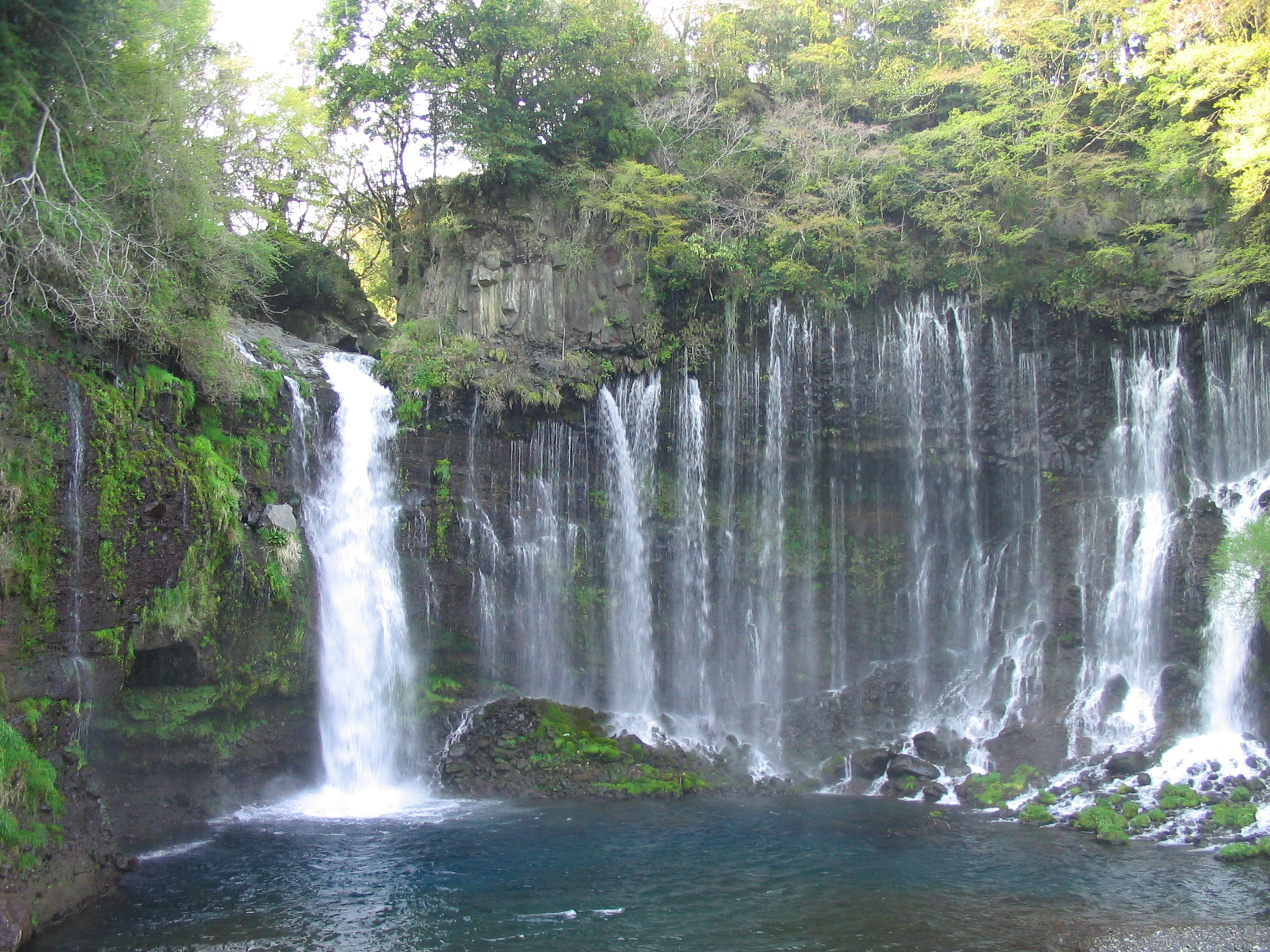 Shiraito Falls cascading 150 meters wide, fed by Mount Fuji snowmelt. Source: Wikimedia Commons
Just 30 minutes from the Tomei Expressway's Mount Fuji Interchange lies a pair of spectacular waterfalls that exemplify the natural beauty and spiritual significance of the Mount Fuji region. 🔗
Shiraito Falls cascades from a 20-meter high, 150-meter wide curved cliff, with hundreds of delicate streams creating the appearance of white silk threads (the meaning of "Shiraito"). 🔗 The water originates from Mount Fuji's snowmelt, filtering through layers of volcanic rock before emerging as springs that maintain a constant 12°C temperature. 🔗
The falls have served as a sacred site for practitioners of the Fujiko faith, a religious group that worships Mount Fuji. The founder, Hasegawa Kakugyo, performed religious austerities in its waters, and for centuries, pilgrims purified themselves in the falls' basin before climbing Mount Fuji. 🔗
 Otodome Falls, a powerful 25-meter cascade near Shiraito Falls. Source: Wikimedia Commons
Otodome Falls, located just a five-minute walk away, offers a dramatic contrast - a single, powerful 25-meter cascade plunging into a basin below. 🔗 The name "Otodome" means "sound-stopping," derived from the legend of the Soga brothers from the Kamakura period. According to legend, the brothers were plotting revenge near the waterfall but couldn't hear each other speak over the thunderous roar. They prayed to the gods for the sound to cease, and miraculously it did, allowing them to finalize their plans. 🔗
Both waterfalls were designated a Natural Monument in 1936 and selected as one of Japan's 100 Greatest Waterfalls in 1990. 🔗 In 2013, they were added to the World Heritage List as part of the Fujisan Cultural Site. 🔗
Shiraito Falls Location: View on Google Maps Otodome Falls Location: View on Google Maps
Tokugawa Ieyasu's Legacy and Tea Culture
Ieyasu spent his youth in Shizuoka (then called "Sunpu") as a political hostage under the Imagawa clan. After establishing the Edo Shogunate, he chose to "retire" to Sunpu Castle in 1607, establishing a "shadow government" from which he continued to wield ultimate authority over Japan. 🔗 His choice of Sunpu was strategic - positioned between the political capital of Edo (Tokyo) and the imperial capital of Kyoto, allowing him to monitor both crucial centers of power. Ieyasu remained in Sunpu until his death in the castle in 1616. 🔗
 Momijiyama Garden at Sunpu Castle Park, Tokugawa Ieyasu's retirement residence. Source: Wikimedia Commons
The castle grounds now serve as Sunpu Castle Park in the heart of the city. The Momijiyama Garden, opened in 2001, features a traditional landscape garden divided into four sections representing scenic landscapes of the Suruga region, including miniature representations of Mount Fuji and tea plantations. 🔗 The garden is particularly beautiful during late November when autumn foliage reaches peak colors. 🔗
Shizuoka Prefecture produces 40% of Japan's green tea, making it the nation's leading tea-producing region. 🔗 Tea cultivation began during the Kamakura Period (1185-1333) when Buddhist monk Shoichi Kokushi brought tea seeds from China and planted them in Ashikubo. 🔗 Tokugawa Ieyasu, an avid green tea drinker and accomplished master of chado (tea ceremony), was particularly fond of tea grown in the Abe River basin. 🔗 Still today, every autumn, tea is carried in a ceremonial procession (Ocha Tsubo Dōchū) from Ikawa village to Kunōzan Tōshō-gū temple, where Ieyasu was originally buried. 🔗
Sunpu Castle Location: View on Google Maps
Mount Fuji Viewpoints
 Mount Fuji viewed from the pine grove of Miho no Matsubara, UNESCO World Heritage Site. Source: Wikimedia Commons
Nihondaira Yume Terrace sits atop a 307-meter hill offering spectacular 360-degree panoramic views of Mount Fuji, Suruga Bay, the Izu Peninsula, and Shizuoka City. 🔗 Designed by renowned architect Kengo Kuma (who also designed Tokyo 2020's New National Stadium), this wooden observation facility opened in 2018 and features an outdoor aerial corridor accessible 24 hours a day. 🔗 The facility is about 25 minutes driving from Shizuoka Station with free parking for 140 vehicles. 🔗
Miho no Matsubara is a legendary pine grove stretching 6 kilometers along Suruga Bay's coastline, featuring 30,000 pine trees. 🔗 The site offers iconic views of Mount Fuji across the bay and was listed as a UNESCO World Heritage component in 2013 as a "sacred place and source of artistic inspiration." 🔗 The landscape was famously depicted in woodblock prints by Hokusai and Hiroshige. 🔗 From JR Shimizu Station, the grove is about 20-25 minutes by car, with free parking available. 🔗
November offers some of the best Mount Fuji visibility of the year, with winter and early spring mornings providing the clearest views. Mount Fuji is visible on many days between November and February, while rarely visible between April and August. 🔗
Miho no Matsubara Location: View on Google Maps
Visiting Information
Access from Tomei Expressway
To Fujinomiya (Shrine & Waterfalls):
- Exit at Fuji IC → 20 minutes via West Fuji Bypass to Fujisan Hongu Sengen Taisha 🔗
- Exit at Shin-Fuji IC → 15 minutes via West Fuji Bypass to shrine 🔗
- From shrine to Shiraito/Otodome Falls: 30 minutes via expressway 🔗
- Detour Impact: Approximately 1.5-2 hours total for shrine and waterfalls visit (30-40 minutes driving each way plus visit time)
To Shizuoka City Center:
- Exit at Shimizu IC → Take National Route 1 toward city center 🔗
- City center is around Shizuoka Station area
- Between Shizuoka and Fujinomiya: 26 miles (42 km), 35 minutes drive 🔗
Parking:
- Fujisan Hongu Sengen Taisha: On-site parking available (15 minutes walk from JR Fujinomiya Station) 🔗
- Shiraito/Otodome Falls: Parking lots open 8:30 AM - 4:30 PM, fee ¥300-500 🔗
- Nihondaira Yume Terrace: Free parking for 140 vehicles 🔗
- Miho no Matsubara: Free/paid parking available near beach entrance 🔗
Practical Details by Attraction
Fujisan Hongu Sengen Taisha Shrine:
- Hours: 6:00 AM - 7:00 PM in November 🔗
- Admission: Free (typical for Shinto shrines) 🔗
- Visit Duration: 1-1.5 hours including Wakutama Pond
- Current Status: Open year-round; Autumn Annual Festival November 3-5 (biggest festival of the year) 🔗
Shiraito and Otodome Falls:
- Hours: Parking lots 8:30 AM - 4:30 PM daily 🔗
- Admission: Parking fee ¥300-500 🔗
- Visit Duration: 45-60 minutes for both waterfalls (5-minute walk between them)
- Walking Trail: Easy access, just a few minutes from parking to falls 🔗
- Current Status: Open year-round; part of UNESCO World Heritage Site 🔗
Sunpu Castle Park & Momijiyama Garden:
- Hours: Last entry 4:00 PM, closes 4:30 PM 🔗
- Closed: Mondays (open if national holiday), December 29 - January 3 🔗
- Admission: Momijiyama Garden ¥150 adults, ¥50 children; Combo ticket (garden + towers) ¥360 adults, ¥120 children 🔗
- Visit Duration: 1-2 hours for castle park and garden
- Current Status: Open; 15-minute walk from JR Shizuoka Station 🔗
Nihondaira Yume Terrace:
- Hours: Sunday-Friday 9:00 AM - 5:00 PM, Saturday 9:00 AM - 9:00 PM; Outdoor corridor accessible 24 hours 🔗
- Closed: 2nd Tuesday of month (following weekday if holiday), December 26-31 🔗
- Admission: Free 🔗
- Visit Duration: 30-45 minutes
- Current Status: Open; 25 minutes drive from Shizuoka Station 🔗
Miho no Matsubara:
- Hours: Open 24 hours (outdoor site) 🔗
- Admission: Free 🔗
- Visit Duration: 1-1.5 hours for pine grove walk
- Current Status: Open year-round; UNESCO World Heritage Site 🔗
Tea Museum, Shizuoka (Fujinokuni Tea Museum):
- Location: Shimada on Makinohara Plateau, 10 minutes from Sagara Makinohara IC (Tomei Expressway) 🔗
- Hours: Hours not specified in research
- Admission: ¥300; free parking 🔗
- Experience: Tea ceremony with English audio guides 🔗
Seasonal Considerations for November 7, 2025:
- Mount Fuji Visibility: 60-70% visibility on clear days - significantly better than summer months 🔗
- Autumn Foliage: Late November marks peak viewing at Momijiyama Garden and Shiraito Falls area 🔗
- Cultural Events: Shichi-Go-San Festival season (November 15 observance); Fujisan Hongu Sengen Taisha's Autumn Annual Festival November 3-5 🔗
- Temperature: 15-20°C daytime, comfortable for outdoor exploration
- Crowd Levels: November is outside peak tourist season, offering more peaceful experiences 🔗
The Experience
Fujisan Hongu Sengen Taisha
Main Shrine Complex:
- Two-storied main hall in unique Sengen-zukuri architectural style (Important Cultural Property) 🔗
- Traditional purification rituals at temizuya fed by Wakutama Pond's sacred water 🔗
- Observation of Shichi-Go-San Festival ceremonies (if visiting November 3-5) 🔗
Wakutama Pond:
- Special Natural Monument with crystal-clear spring water from Mount Fuji 🔗
- Historical pilgrimage purification site 🔗
- Constant 13°C water temperature year-round 🔗
Cultural Immersion:
- Over 150 annual festivals; November Autumn Festival is the year's biggest 🔗
- Traditional shrine architecture and spiritual atmosphere 🔗
Waterfall Exploration
Shiraito Falls:
- 150-meter wide cascade resembling white silk threads 🔗
- Autumn foliage backdrop (late November peak) 🔗
- UNESCO World Heritage Site photography opportunities 🔗
Otodome Falls:
- Powerful 25-meter single cascade 🔗
- Legend of the Soga brothers historical context 🔗
- Natural Monument designation 🔗
Trail Experience:
Mount Fuji Viewpoint Photography
Best Vantage Points:
- Nihondaira Yume Terrace: 360-degree panoramic observation deck 🔗
- Miho no Matsubara: Classic pine grove foreground with Mount Fuji backdrop 🔗
- Shiraito Falls: Waterfall with mountain views 🔗
Photography Conditions in November:
Tea Culture Experiences
Tea Museum, Shizuoka:
- Located on Makinohara Plateau tea production area 🔗
- Tea ceremony experiences with English audio guides 🔗
- November: Tea planting activities available (harvest season ended mid-October) 🔗
Nihondaira Yume Terrace Tea Lounge:
- Second-floor lounge offering seasonal teas and sweets 🔗
- Panoramic Mount Fuji views while enjoying Shizuoka tea 🔗
Practical Visiting Tips
Route Planning Strategy:
Efficient Sequencing:
- Exit Tomei Expressway at Shin-Fuji IC (if coming from Osaka direction)
- Fujisan Hongu Sengen Taisha (1-1.5 hours including Wakutama Pond)
- Shiraito/Otodome Falls (45-60 minutes, 30 minutes from shrine)
- Optional: Return via Shizuoka City for Nihondaira viewpoint or tea experiences
- Total detour time: 3-4 hours including driving
Prioritization for Limited Time:
- Must-see (2 hours): Fujisan Hongu Sengen Taisha + Shiraito Falls
- Full experience (4 hours): Add Otodome Falls + Nihondaira Yume Terrace
- Extended cultural detour (6+ hours): Include Sunpu Castle, tea experiences, Miho no Matsubara
Photography Best Practices:
Mount Fuji Visibility:
- Check weather forecast for clear conditions
- Arrive early morning for best visibility and lighting
- Bring telephoto lens for Nihondaira and Miho no Matsubara shots 🔗
Waterfall Photography:
- Tripod useful for long exposures capturing silk-like water flow
- Midday offers best light filtering through foliage 🔗
Shrine Etiquette:
- Photography generally permitted in grounds but not inside buildings
- Avoid flash during ceremonies 🔗
Cultural Etiquette:
Shrine Visits:
- Bow at torii gates before entering 🔗
- Purification ritual at temizuya: Rinse left hand, right hand, mouth (don't drink), then handle 🔗
- Two bows, two claps, one bow when praying 🔗
- Dress respectfully (covered shoulders and knees preferred)
Natural Sites:
- Stay on designated paths at waterfalls 🔗
- Pack out all trash (limited facilities in natural areas)
Money-Saving Tips:
Free Attractions:
- Fujisan Hongu Sengen Taisha (free shrine entry) 🔗
- Nihondaira Yume Terrace (free admission and parking) 🔗
- Miho no Matsubara (free pine grove access) 🔗
Budget-Friendly Options:
- Shiraito/Otodome Falls parking (¥300-500) plus free trail access 🔗
- Momijiyama Garden admission only ¥150 (skip combo ticket if short on time) 🔗
- Tea Museum ¥300 for comprehensive tea culture experience 🔗
Driving Considerations:
- Waterfalls parking closes 4:30 PM - plan accordingly 🔗
- Arrive early at popular viewpoints for best parking availability
- GPS coordinates provided for all major attractions
- Consider pocket WiFi or data plan for real-time navigation 🔗
Weather and Safety:
Mount Fuji Visibility: While November offers excellent viewing odds (60-70%), visibility is never guaranteed. Check morning weather forecasts and be flexible with viewpoint priorities. 🔗
Waterfall Conditions: Early November follows autumn rains; water flow should be good but not at peak summer snowmelt levels. Trails may be damp - wear appropriate footwear. 🔗
Driving in November: Generally good conditions, but mountain areas near Mount Fuji can experience early cold snaps. Check road conditions if weather turns. 🔗
Timing Considerations:
Autumn Festival Dates: If traveling November 3-5, expect special ceremonies and larger crowds at Fujisan Hongu Sengen Taisha. November 7 falls just after this festival period, offering post-festival calm. 🔗
Foliage Timing: Late November typically marks peak autumn colors, with November 7 likely showing early-to-mid season foliage. 🔗
Operating Hour Restrictions:
- Shiraito/Otodome parking closes 4:30 PM 🔗
- Momijiyama Garden last entry 4:00 PM 🔗
- Plan morning/early afternoon visits to avoid closures
November Closures: Check specific closure days:
- Nihondaira: 2nd Tuesday of month 🔗
- Momijiyama Garden: Mondays (or following weekday if holiday Monday) 🔗
Location: Multiple locations - see individual GPS coordinates above
Source: attractions/osaka-to-izu-main-route/shizuoka-city.md