
About
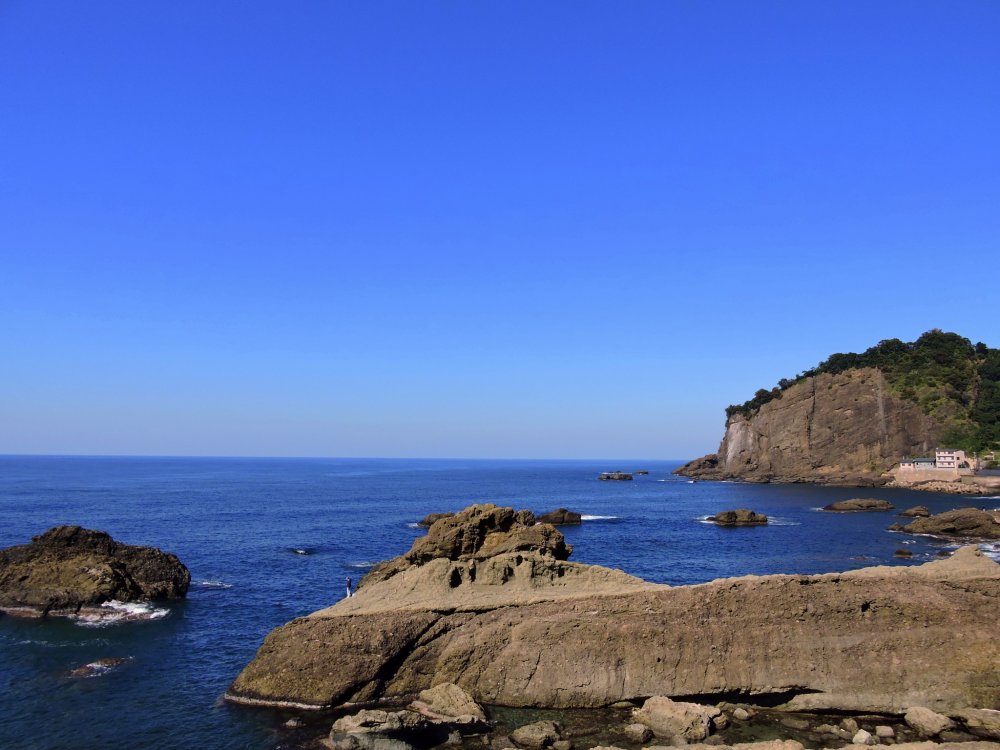 Kochomon Gate natural rock arch carved by Sea of Japan waves - Source: Japan Travel
The Echizen Coast along National Route 305 in Fukui Prefecture features a remarkable collection of natural rock formations carved by the relentless waves of the Sea of Japan over millions of years. Three distinctive geological features - Kochomon Gate arch, Yobitorimon tunnel, and Torikuzu Iwa (Bird Droppings Rock) - offer driving visitors dramatic coastal scenery with minimal detours from the main route. 🔗
The Echizen Coast geological feature is an uplifted coast resulting from seafloor uplift in shallow water, creating the dramatic vertical cliffs and rock formations visible today. 🔗 The area is designated as part of the Echizen-Kaga Kaisan Quasi-National Park due to its many strikingly oddly shaped rocks and scenic spots. 🔗
Cultural & Geological Significance
The Echizen Coast stretches from Tojinbo in the north to Suizu in Tsuruga City in the south, featuring dramatic cliffs and unique rock formations sculpted by the rough waves of the Japan Sea. 🔗 National Route 305, also called the Isaribi Kaido (Fishermen's Fire Road), runs approximately 70km along this coastline, offering some of Japan's most accessible coastal geological wonders. 🔗
Kochomon Gate: A massive natural rock arch measuring approximately 15 meters in maximum height and 30 meters in maximum width, carved by erosion caused by wind and waves over thousands of years. 🔗 The arch once served as a natural tunnel through which National Highway 305 passed directly, making it the only natural tunnel on a national highway in Japan. However, a new tunnel has since been built for safety reasons due to potential rock falls. 🔗
Yobitorimon Tunnel: Located 1.7 kilometers north of Echizen Cape on the ocean side of the national highway, it used to be part of the national highway and was known as the only natural tunnel on a national highway in Japan, with dimensions similar to Kochomon (maximum height ~15 meters, maximum width ~30 meters). 🔗
Torikuzu Iwa (Bird Droppings Rock): The most famous spot on the Echizen Coast - a 100-meter-high cliff that rises vertically out of the Japan Sea. The cliff gets its distinctive name because the tip serves as a habitat for seabirds, whose droppings stain part of the cliff white, creating a dramatic visual contrast against the dark volcanic rock. 🔗
The Echizen Coast showcases spectacular geological formations shaped by volcanic activity millions of years ago and ongoing erosion from the Sea of Japan's waves. 🔗 The basalt columns in the region, particularly at nearby Tojinbo, were created as lava from 13 million years ago cooled and contracted, with the fissures assuming polygonal shapes that were then eroded by wave action. 🔗
Visiting Information
Access: National Route 305 runs along the coastline with parking areas near the most scenic spots 🔗
By Car along Route 305:
- From Fukui City: Take Route 305 southward along the coast (30-40 minutes) 🔗
- From Tsuruga Interchange: 1 hour drive 🔗
- From Sabae Interchange: 45 minutes drive 🔗
Hours: Open 24/7 (natural formations along public route)
Route Context: Located directly on Route 305 with roadside parking areas. Kochomon and Yobitorimon cannot be driven through but can be approached on foot for viewing. There is a parking area along the national highway on the south side of Torikuzu Iwa. 🔗
Seasonal Considerations: Late October offers comfortable temperatures (14-20°C/57-68°F), low humidity (70%), and extended golden hour light ideal for photography. 🔗 October provides excellent post-typhoon visibility with clear autumn conditions.
The Experience
Coastal Photography: The Echizen Coast west-facing orientation makes sunset photography particularly spectacular, with the sun setting directly over the Sea of Japan. 🔗 The Echizen Cape Observation Deck, located at the end of a winding road from the parking area near Torikuzu Iwa, offers panoramic views of the coastline and horizon.
In October, the sun is lower in the sky, extending golden hour light and creating fantastic shadows that add great contrast to photos. The warm backlighting really accentuates the rugged coastal features. 🔗
Kochomon Gate: Approach on foot to see the natural arch framing the Sea of Japan, with towering cliffs and greenery creating a photogenic composition. The contrast between the dark volcanic rock, white-capped waves, and coastal vegetation is particularly striking. 🔗
Yobitorimon: View the natural tunnel from the roadside or parking area, watching for seabirds flying through the opening. If lucky, visitors can see birds flying through the gate, adding to the natural spectacle. 🔗
Torikuzu Iwa: The 100-meter vertical cliff is best appreciated from the roadside parking area and observation deck. The white staining from seabird droppings creates a distinctive visual against the dark rock face. Binoculars can help spot the seabirds nesting at the cliff top.
Practical Visiting Tips
Driving Considerations:
- Strategic parking areas at each formation allow sequential viewing
- Can be visited in sequence northbound: Torikuzu Iwa → Yobitorimon → Kochomon (following natural route order)
- 30-45 minutes total for all three formations with brief photo stops
- Route 305 accessible 24/7; parking areas varied access
Route Integration:
- Located between Tojinbo Cliffs (30km north) and Echizen Cape Observatory
- Ideal for comprehensive Echizen Coast geological tour
- Free access with no time pressure makes ideal quick stops
- Combines naturally with Echizen Cape sunset viewing for complete coastal experience
Photography Tips:
- Late afternoon for sunset photography (Echizen Cape selected as one of "100 best sunsets in Japan") 🔗
- Set camera white balance to "Cloudy" or "Shade" mode to enhance warm tones 🔗
- Bring tripod for steady shots in coastal wind conditions
- After sunset, capture fishing boat lights on the water (Isaribi Kaido - "Fishermen's Fire Road" name) 🔗
Safety Considerations:
- Rock fall hazard: Kochomon and Yobitorimon are off-limits for passing through due to potential rock falls 🔗
- Coastal conditions: Watch for slippery rocks near the water's edge
- Weather changes: Coastal weather can shift quickly; check forecasts before extended stops
- Wildlife: Do not disturb seabirds nesting on cliff faces
What to Wear:
- Long-sleeved shirts and light jackets for coastal breezes 🔗
- Rain cover recommended for unpredictable autumn weather
- Comfortable walking shoes for brief walks from parking areas
Location:
- Kochomon Gate: View on Google Maps (Nashigadaira, Echizen-cho, Nyu-gun, Fukui)
- Yobitorimon: View on Google Maps (1.7km north of Cape Echizen)
- Torikuzu Iwa: Located near Yobitorimon at northern tip of Echizen Town
Source: attractions/takayama-to-kinosaki-coastal-route/natural-rock-formations-route-305.md