
About
The Gotemba to Fujikawaguchiko route via Route 138 offers three strategic roadside stations (Michi-no-Eki) that combine essential rest facilities with regional specialties and spectacular Mount Fuji views. These government-designated rest areas serve as cultural gateways to the Mount Fuji region.
Cultural Significance of Michi-no-Eki
Michi-no-Eki roadside stations represent a uniquely Japanese approach to road travel, established in 1993 to serve both travelers and local communities. These facilities embody chisan-chisho (producing and consuming local food), supporting rural communities through direct-to-consumer agricultural markets. 🔗
Unlike typical highway rest stops, Michi-no-Eki function as regional cultural centers, hosting farmers' markets, local events, and traditional performances. With over 1,193 stations across all 47 prefectures, they provide authentic encounters with local culture. 🔗
Primary Roadside Stations
1. Michi-no-Eki Fuji Oyama (道の駅ふじおやま)
Location: Oyama Town, Shizuoka Prefecture, on Route 246 Distance: Short detour via Route 246 from Route 138
Hours:
- Direct-Sales Office: 7:00 AM - 8:00 PM daily
- Restaurant: 8:00 AM - 8:00 PM daily
- Closures: New Year's holidays
Highlights:
- Celebrates Kintaro legend (golden boy folk hero)
- Extensive direct-sales agricultural market
- Kintaro Bakery with fresh bread daily
- Unobstructed Mount Fuji panoramas
- Free "Kintaro's Water" (Mount Fuji spring water)
October Features:
- Fresh persimmons, newly harvested Koshihikari rice
- Autumn vegetables and seasonal pickles
- Cultural events featuring local crafts
TripAdvisor: 4.0/5 (36 reviews), #7 of 85 attractions in Oyama-cho
2. Michi-no-Eki Subashiri (道の駅すばしり)
Location: 338-44 Subashiri, Oyama-cho, Shizuoka Prefecture Distance: Directly on Route 138 (no detour)
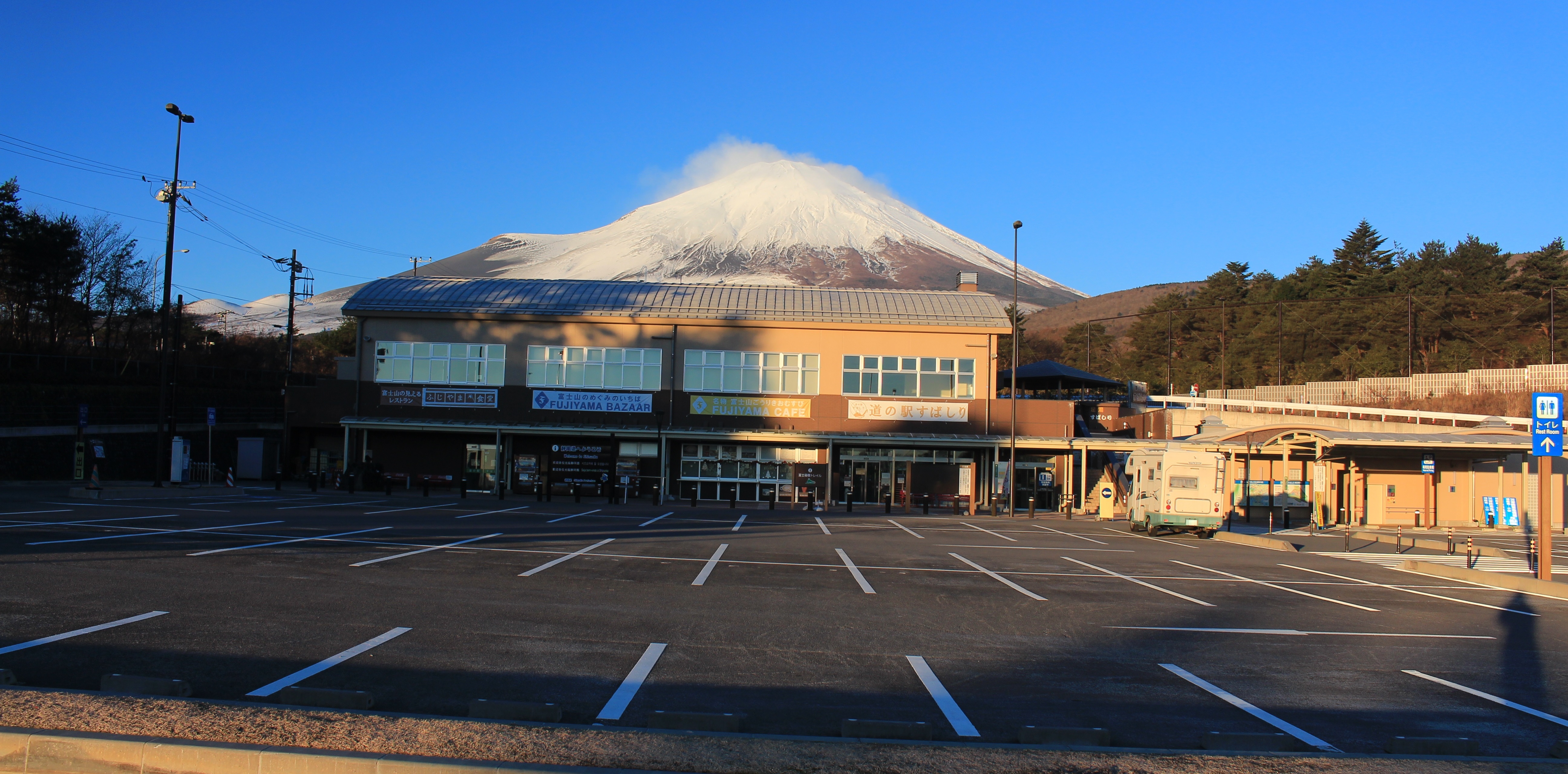 Michi-no-Eki Subashiri with Mount Fuji view. Source: Wikimedia Commons
Hours:
- General facility: 9:00 AM - 6:00 PM (varies by season)
- Information corner: 24 hours
- No regular holidays
Highlights:
- "Closest roadside station to Mt. Fuji"
- FUJIYAMA BAZAAR with regional products
- Second-floor restaurant with panoramic Mount Fuji views
- Free outdoor foot bath (ashiyu) with mountain views
- Dog run facility for pet travelers
- Signature "Gouriki Udon" (made with Gotemba Koshihikari rice)
October Features:
- Freshly harvested Gotemba Koshihikari rice
- Foot bath still operational before winter closure
- Pleasant autumn temperatures ideal for outdoor facilities
- Off-season means quieter crowds
Best For: Practical rest stop directly on Route 138, unique foot bath experience, mountain-view dining
3. Michi-no-Eki Narusawa (道の駅なるさわ)
Location: 8532-63 Narusawa Village, Minamitsuru District, Yamanashi Prefecture Distance: On Route 139 (alternate route from Subashiri to Fujikawaguchiko)
 Mount Fuji view from Michi-no-Eki Narusawa observation deck. Source: Wikimedia Commons
Hours:
- Product Hall: 9:00 AM - 6:00 PM daily
- Light Restaurant: 9:30 AM - 5:30 PM
- Hours vary by season
Highlights:
- Premier Mount Fuji observation deck (finest among roadside stations)
- Highland produce market (900m elevation specialty vegetables)
- Adjacent Narusawa Mt. Fuji Museum (lava tree molds from 864 eruption)
- Specialty ice cream (Fujizakura cherry, corn gelato, rhubarb & Narusawa greens)
- "Sendo Soba" (buckwheat noodles with heaps of daikon radish)
October 23, 2025 Special:
- JA Agricultural Festival: October 18, 2025 (5 days before visit)
- Festival atmosphere may linger with special autumn products still available
- Hands-on harvest experiences (if visiting Oct 18)
- Peak highland daikon radish, purple yam manju, autumn mushrooms
Best For: Mount Fuji photography, most extensive produce selection, October Agricultural Festival experience
Comparative Analysis
Best Mount Fuji Views: Michi-no-Eki Narusawa
- Premium observatory deck with panoramic perspectives
- Highland elevation provides sweeping vistas
Traditional Onsen Experience: Michi-no-Eki Subashiri
- Free outdoor foot bath with Mount Fuji views
- Available in October before winter closure
Cultural Connection: Michi-no-Eki Fuji Oyama
- Kintaro legend theming provides folklore immersion
- Less crowded, authentic local atmosphere
Food & Agricultural Products: Michi-no-Eki Narusawa
- Most extensive produce selection (highland specialties)
- Comprehensive local menu at restaurant
Practical Rest Stop: Michi-no-Eki Subashiri
- Directly on Route 138 (no detour)
- 24-hour information center
- Dog run for pet travelers
Route Integration Strategies
Option 1: Single Strategic Stop
- Michi-no-Eki Subashiri as primary stop (on Route 138)
- 45-minute visit including foot bath
- Practical rest + cultural experience + Mount Fuji views
Option 2: Dual Experience
- Michi-no-Eki Fuji Oyama (early, 30 min) - Kintaro culture, morning produce
- Michi-no-Eki Subashiri (mid-route, 30 min) - foot bath, Mount Fuji viewing
Option 3: Premium Cultural Experience
- Michi-no-Eki Narusawa as featured destination (1.5-2 hours)
- Post-festival atmosphere with special autumn products
- Best Mount Fuji viewing conditions
October 23 Considerations:
- 5 days post-festival at Narusawa (special products, no festival crowds)
- Foot bath at Subashiri operational (closes approaching winter)
- Autumn harvest products at peak across all stations
- Clear autumn weather likely for excellent Mount Fuji visibility
Practical Visiting Tips
Money-Saving:
- Direct-from-farmer pricing (lower than supermarkets)
- Free parking at all locations
- Free foot bath at Subashiri (equivalent to ¥300-500)
- Free Mount Fuji spring water at Fuji Oyama
Crowd Avoidance:
- Weekday mornings (9:00-10:00 AM) least crowded
- October off-season means lower tourist volumes
- Avoid October 18 if seeking quiet (Narusawa festival)
What to Buy:
- Seasonal October products: Fresh rice, autumn vegetables, mushrooms
- Specialty items: Purple yam manju (Narusawa), Gouriki Udon (Subashiri)
- Regional pickles and preserves
- Morning-baked bread (Fuji Oyama)
Local Etiquette:
- Greet farmers directly when purchasing
- Respect cultural displays and quiet atmosphere
- Use designated photo areas
- Pack out all trash
Important Notes
Language: Tourist information centers have some English materials; product labels primarily Japanese
Payment: Cash preferred at farmer's market stalls; credit cards at main restaurants/shops
Seasonal: Foot bath at Subashiri closes for winter (October is last opportunity)
October 23 Timing: Post-festival at Narusawa means special products available without festival crowds
Location Pins:
Source: attractions/tokyo-to-fujikawaguchiko-alternative-route/regional-roadside-stations.md